Debris type is what moves dumpster rental prices more than yard size alone in 2026. Heavy fill hits weight caps fast. Light cleanout debris fills volume first. Contractors who sort loads before the truck arrives keep schedules and invoices under control.
- Dumpster rental prices by debris type track density and disposal rules, not yard count alone.
- Concrete, dirt, and roofing sit at the highest disposal pressure in 2026.
- Mixed C&D and household cleanouts sit mid-range when kept free of heavy fill.
- Valley Services owns its San Jose C&D transfer station, so haul and drop-off stay on one schedule.
- Call (408) 297-5404 with debris type and site access details before you order.
Why this matters
A 20-yard box of shingles is not the same job as a 20-yard box of furniture. Transfer stations and landfills bill by weight. Haulers set tonnage caps by debris class. Load the wrong mix and you eat overage, a rejected load, or a second haul.
Bay Area jobsites in San Jose, Santa Clara, Sunnyvale, Mountain View, and Milpitas face tight streets and tight windows. Wrong container choice burns both. Valley Services runs roll-off containers, restrooms, fencing, and its own C&D transfer station from the same San Jose yard, which keeps disposal timing inside one call.
In 2026, dumpster rental prices by debris type follow weight density first, then contamination rules, then haul distance.
Short answer: how debris type ranks in 2026
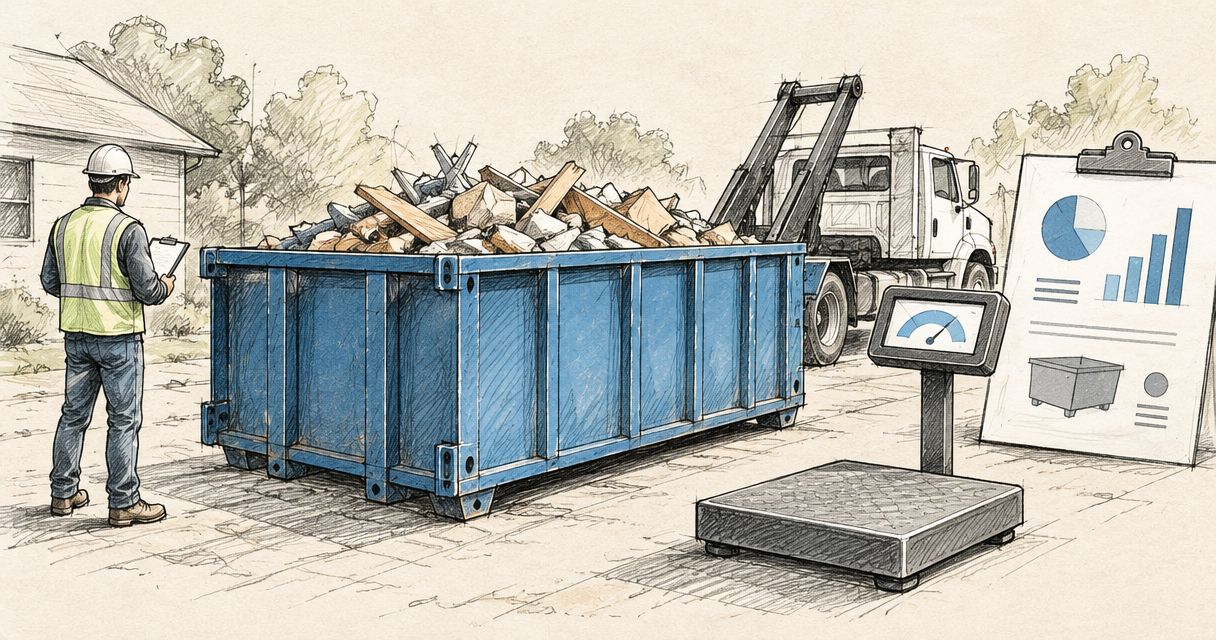
The average dumpster rental cost structure in 2026 is weight-led. Very heavy debris (concrete, dirt, asphalt, brick) carries the highest disposal pressure and often requires a smaller roll-off so the load stays legal on the truck. Mid-weight mixed C&D and roofing sit next. Light household junk and sorted bulky items sit lower on disposal pressure when the load stays free of soil, concrete, and prohibited materials.
Relative range across common debris classes runs from low pressure (clean bulky junk) to highest pressure (clean concrete or dirt). Yard size still matters for volume. Debris class decides whether you hit the tonnage cap before the box is full.
Debris type comparison table (2026)
| Debris type | Density tier | Typical roll-off size | Primary cost driver | Relative disposal pressure |
|---|---|---|---|---|
| Concrete, brick, block, asphalt | Very high | 10-yard common | Weight per cubic yard | Highest |
| Clean dirt and fill | Very high | 10- to 20-yard | Weight and moisture | Highest |
| Roofing shingles and underlayment | High | 10- to 20-yard | Weight per square | High |
| Mixed construction and demolition (C&D) | Moderate to high | 20- to 40-yard | Mix quality and tonnage | Moderate to high |
| Household junk and cleanout debris | Moderate | 15- to 30-yard | Volume over weight | Moderate |
| Yard waste and brush | Moderate | 10- to 20-yard | Local acceptance rules | Moderate |
| Appliances, mattresses, furniture | Low to moderate | 15- to 30-yard | Piece handling and sort rules | Lower when sorted |
| Overall mixed jobsite baseline | Moderate | 20- to 30-yard | Tonnage cap plus haul | Yardstick row |
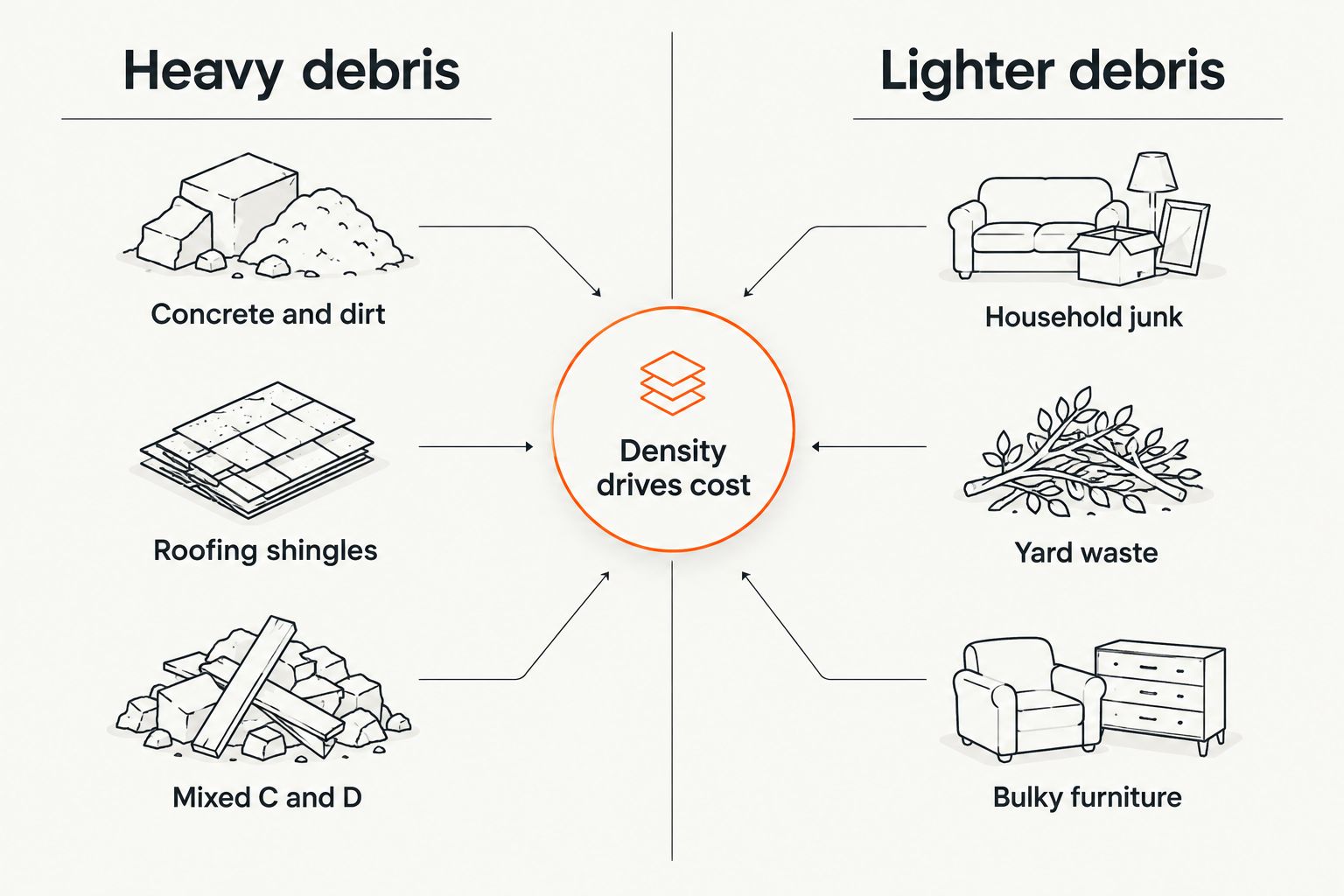
High and low: what the table shows
Concrete, brick, asphalt, and clean dirt lead disposal pressure. They pack massive weight into a small volume. Crews that order a large box for slab breakout often cannot fill it without crossing safe haul weight. A smaller roll-off, swapped more often, is the standard field fix.
Roofing tear-off debris sits just under that tier. Asphalt shingles are dense. Underlayment and flashings add weight fast. A full 20-yard of shingles is a different ticket than a full 20-yard of cabinet demo.
Mixed C&D is the everyday Bay Area baseline. Framing scrap, drywall, flooring, and finish debris land in the middle when the load stays free of dirt and concrete. Contaminate a C&D load with soil or wet plaster and the pressure jumps.
Household junk, furniture, and sorted bulky items trail on pure disposal pressure when heavy fill stays out. Volume fills the box before weight does. That is why cleanouts and unit turnovers often run larger containers than slab or roof work.
Yard waste sits mid-table because acceptance rules and load prep matter as much as weight. Brush, sod, and soil-mixed piles get treated differently than clean vegetative loads. Confirm what the receiving site takes before the truck leaves the curb.
For heavy fill jobs, read the field notes on concrete and dirt disposal before you lock a size.
Methodology and limits
This ranking reflects common 2026 roll-off and transfer-station practice in the Bay Area: weight-based disposal, debris-class rules, and standard container sizing used on construction and cleanout work. It is a relative pressure map, not a rate card. Valley Services does not publish dollar figures here because haul distance, tonnage caps, access, and contamination change every ticket.
Limitation: this page cannot predict your weight ticket. Moisture in dirt, stacked shingles, or hidden concrete in a "light" cleanout will move you up a tier. A phone quote with debris type, address, and access notes still beats any table.
How debris type changes the rental in practice
Concrete, brick, and asphalt
Treat these as weight jobs, not volume jobs. Breakout from driveways, patios, and slabs fills a small box by mass long before it looks full. Keep concrete loads clean. Mixed dirt or trash can change how the transfer station handles the drop-off.
Order the smaller roll-off. Plan swaps around pour and demo phases. Do not stack beyond the rail. Over-height concrete loads are a safety problem and a refusal risk.
Clean dirt and fill
Dirt looks cheap until water weight shows up on the scale. Wet soil from irrigation, rain, or washdown pushes the same volume into a higher tier. Keep dirt loads separate from C&D when the job allows. That separation protects the rest of your waste stream and keeps the dirt ticket predictable.
Roofing tear-offs
Shingle tear-offs are a classic density trap. Crews underestimate squares-to-weight. Stage the roll-off where the tear-off can drop straight in. Avoid long carries that tempt side-loading and spill. If the roof is large, plan a mid-job swap rather than one oversized box you cannot legally fill. Operational notes for tear-off logistics sit in the roofing roll-off guide.
Mixed C&D on active builds
Framing, drywall, tile, and finish scrap are the default Bay Area mix. Keep soil, concrete, and liquids out. A clean C&D load moves through drop-off with fewer holds. A dirty mix slows the yard and can bounce back as a contaminated load.
Size for the phase, not the whole project fantasy. Rough framing peaks differ from punch-list debris. Multi-phase sites often need a right-sized box per phase instead of one 40-yard that sits half empty between trades.
Household junk and property cleanouts
Unit turnovers, estate clears, and garage cleanouts fill by volume. Mattresses, furniture, and bagged trash eat cubic yards fast at lower density. Pull out anything the site rejects before loading. Paint cans, batteries, tires, and chemicals do not belong in a standard roll-off.
Property managers running several turnovers in one week should stage delivery and pickup against unit keys, not against a vague "sometime Thursday."
Yard waste and brush
Confirm acceptance rules before the load leaves. Sod with heavy soil, treated lumber mixed into brush, and bagged debris can change handling. Keep yard waste loads as clean vegetative material when the receiving site requires it. Do not assume a construction C&D box and a yard waste box are interchangeable.
Appliances and bulky items
Fridges, washers, and large furniture often need prep (doors, freon rules, or separate handling depending on local practice). Call out appliance counts when you book. A clean bulky load is lower pressure than the same box half-filled with dirt and concrete chunks.
How to use these benchmarks on a real job
- Name the dominant debris before you name the yard size. If the load is slab or dirt, start small and plan swaps. If the load is cleanout junk, volume leads.
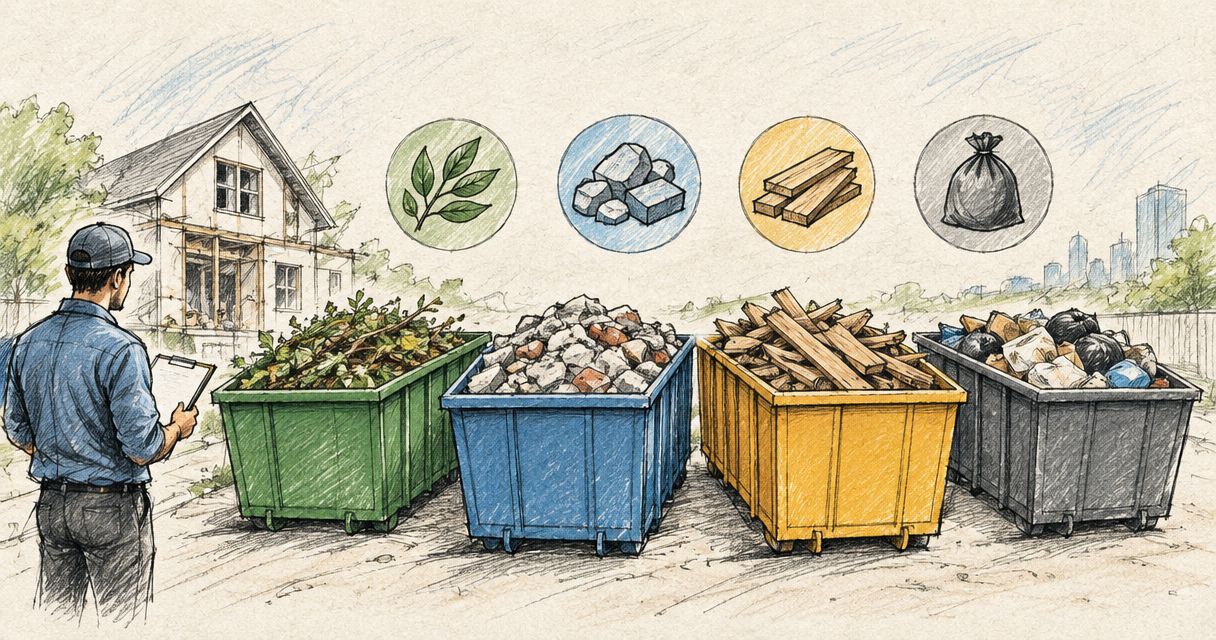
- Separate heavy fill from light C&D when the schedule allows. One clean dirt box and one C&D box beat one contaminated mix that stalls at drop-off.
- Match container size to the densest material in the pile, not the lightest. A "mostly wood plus some concrete" pile behaves like concrete when the scale reads out.
- Build haul timing into the critical path. Valley Services controls its own San Jose transfer station endpoint, so pickup-to-drop-off stays on one schedule instead of waiting on a third-party gate.
Plan your debris mix
Tell us debris type, site access, and timing. We will size the roll-off to the load.
Weight, contamination, and overage in 2026
Three field failures drive most invoice surprises:
- Filling past safe weight on heavy debris. The box looks half empty. The truck is already at limit.
- Mixing prohibited or high-risk materials into a standard load. Liquids, certain chemicals, and unsorted appliances create holds.
- Loading above the rail or beyond the rear door line. Overfilled boxes get left, adjusted, or billed as a problem load.
Train the crew on a simple rule: heavy materials stay low and centered. Light materials can fill remaining volume only after weight headroom is clear. For load technique that protects the ticket, use the field checklist in how to load a roll-off safely.
Bay Area notes for 2026 jobsites
Street placement in San Jose and nearby cities may need permits or tight delivery windows. Driveways, HOA rules, and low wires change where a roll-off can sit. Share gate codes, low-clearance notes, and surface limits when you book. Soft ground and new concrete need protection so the truck does not mark the slab.
Valley Services has operated from the same family yard since 1986. Third-generation ownership, Super Bowl LX and San Jose Marathon site work, and a company-owned C&D transfer station are the operating facts behind the schedule control. One call covers containers, restrooms, and temporary fencing for the same site when the job needs all three.
FAQ
What affects dumpster rental prices by debris type in 2026?
Weight density and disposal rules drive dumpster rental prices by debris type in 2026. Concrete, dirt, and roofing hit tonnage caps first. Light cleanout debris usually fills volume before weight.
Which debris type costs the most to haul?
Concrete, brick, asphalt, and clean dirt carry the highest disposal pressure because of weight. Roofing shingles sit just under that tier. Light household junk sits lower when heavy fill stays out.
Can I mix concrete and household junk in one roll-off?
You can physically load them together, but the mix often behaves like a heavy load on the scale and can complicate drop-off. Separate heavy fill from light junk when the schedule allows.
What size roll-off should I use for concrete?
Most concrete and slab jobs run a smaller roll-off, commonly a 10-yard, with planned swaps. A large box of concrete hits legal haul weight long before it looks full.
Does yard waste go in the same container as C&D?
Not by default. Yard waste and mixed construction debris often follow different acceptance rules at the receiving site. Confirm the debris class when you book so the load is not rejected.
How do I avoid overage on a heavy load?
Name the debris type up front, keep heavy materials low and centered, stop at the rail, and swap early instead of overfilling. Share moisture and access notes so the hauler sets the right tonnage expectation.
Who should I call for Bay Area roll-off service?
Valley Services at (408) 297-5404 handles roll-off containers across San Jose and the surrounding Bay Area and drops C&D at its own transfer station.
Do I need the debris type before I request a quote?
Yes. Debris type, address, access limits, and timing are the minimum details for a usable quote. Yard size alone is not enough in 2026.
One last thing
The quiet tell on a well-run site is empty air at the top of a heavy box. Crews that leave vertical space on concrete and dirt loads are not wasting capacity. They are protecting the axle weights and the pickup window. In 2026, that empty foot of rail on a dense load is often the difference between a clean haul and a second truck.
For a quote on your debris mix, call Valley Services at (408) 297-5404 or reach the team through valleyservices.biz. Give debris type, site address, and access notes. We will size the blue steel roll-off to the load and the schedule.