Running restrooms on sand or gravel shoreline is a different job than running them on a paved lot. Wheels sink, stakes don't hold, and delivery trucks can't always get within 50 feet of the setup point. This guide covers what event producers and municipal staff need to know before booking portable toilet rental for beach events anywhere along the Bay Area shoreline in 2026.
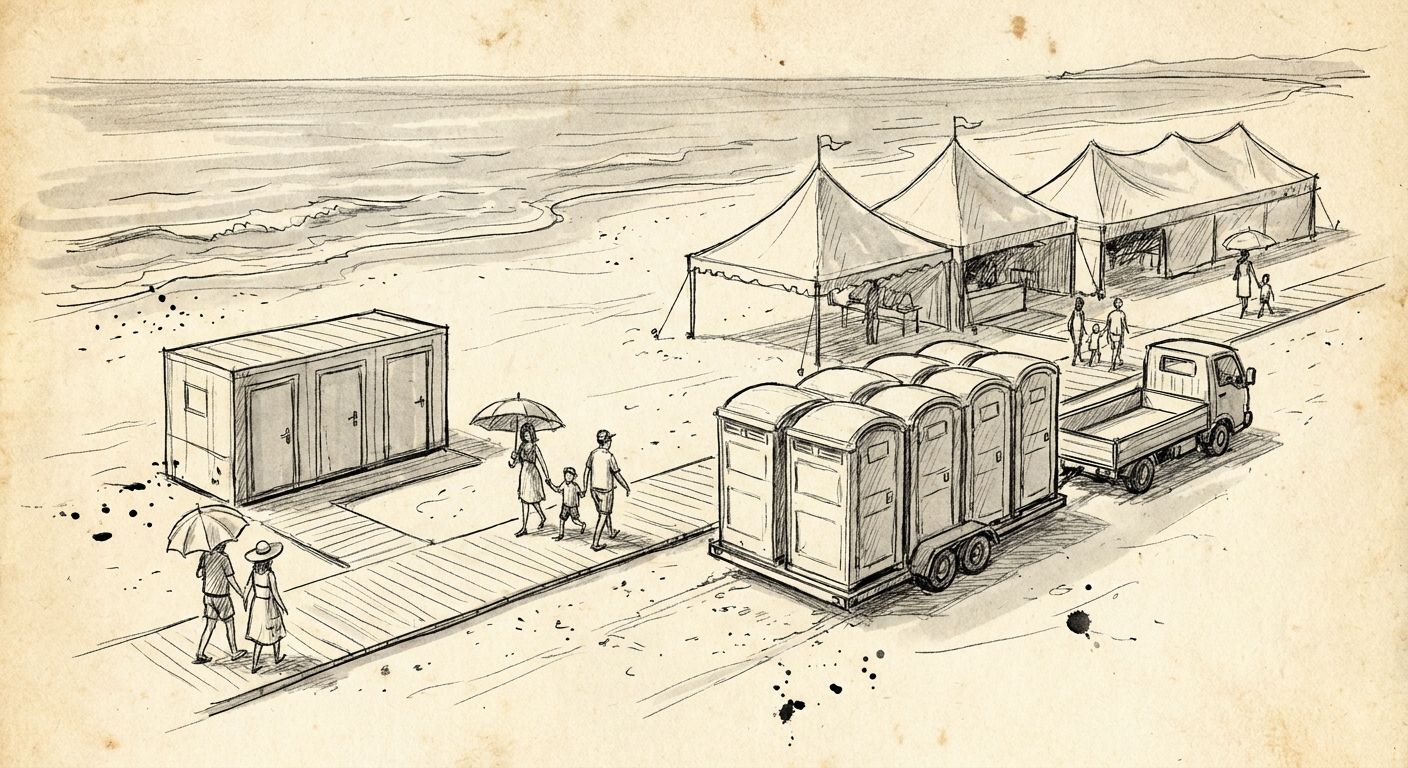
- Standard portable restrooms need ground protection boards on sand or they tip and sink within hours. Buy the boards, not the cheapest unit.
- ADA-compliant portable toilet rental is required for any permitted public beach or waterfront event in 2026, not optional.
- Plan one unit per 50 guests for a four-hour event, then add units for heat and multi-day duration.
- Restroom trailers work for upscale waterfront weddings but need a level pad and vehicle access within 100 feet.
Why this matters
A beach or waterfront event has three problems a parking-lot event doesn't: soft ground, limited truck access, and permit requirements tied to public shoreline. Get the unit count wrong and lines form during the first hour of a festival. Get the ground protection wrong and a restroom tips in the sand mid-event, which is a liability problem, not just an inconvenience.
Counties and cities that permit beach and waterfront gatherings, from county park departments to marina event staff, generally require documentation of restroom capacity before they'll sign off. Calculating how many units you need up front is the difference between a smooth permit approval and a resubmission.
Who this is for
This is for event producers, municipal park and recreation staff, marina and yacht club event coordinators, and wedding planners booking ceremonies on Bay Area beaches, lakefronts, or waterfront parks. If your site has sand, loose gravel, or a grass strip over soft soil within 30 feet of the water, the standard job-site restroom setup doesn't apply as-is.
What to look for in portable toilet rental for beach and waterfront events
Ground stability and anchoring
Sand and wet grass do not hold a standard restroom base the way a paved lot does. Units placed directly on sand can settle unevenly within a few hours, which throws off door alignment and creates a tip risk in wind. Ground protection boards or plywood pads under each unit solve this and take under 10 minutes per unit to place.
Access for delivery trucks
Most beach and waterfront sites don't allow vehicle access past a certain point, sometimes a boardwalk, sometimes a dune fence line. Confirm the closest legal staging point during the site walk, because a unit that has to be hand-carried 150 feet changes both the delivery time and which units are even practical to bring.
Heat, sun exposure, and service frequency
A restroom sitting in direct sun on a beach in July runs hotter and fills faster than one in shade. For any event running past four hours in full sun, plan for a mid-event service or position units near whatever shade structure exists. This matters more on waterfront sites than inland ones because there's rarely a building nearby to block the sun.
ADA accessibility across soft surfaces
An ADA-compliant unit needs a level, firm approach path, which on sand means a mat or boardwalk section leading to the ramp. Most permitted public events in San Jose, Santa Clara, and surrounding jurisdictions require at least one ADA unit regardless of total headcount. Skipping it is the single most common reason a beach event permit gets kicked back for revision.
Unit-to-headcount ratio for duration
A four-hour beach cleanup for 100 volunteers needs a different ratio than a two-day waterfront festival for 5,000. Base the count on peak concurrent attendance and event length, not total ticket sales, and add a buffer for events where alcohol is served since usage rates climb.
Top picks for beach and waterfront restroom setups
Standard portable restroom, the workhorse pick. Placed on ground protection boards, one unit per 50 guests covers a four-hour daytime event without lines. Skip the boards on sand and you're looking at uneven settling by hour three. Buy for single-day festivals, cleanups, and casual gatherings under six hours.
ADA-compliant unit, the permit pick. Requires a 60-inch turning radius approach and a firm, level path to the ramp. Any permitted public waterfront event needs at least one, and larger events need one per roughly 300 to 500 guests. ADA-compliant portable toilet rental covers the compliance detail. Buy, non-negotiable for permitted public events.
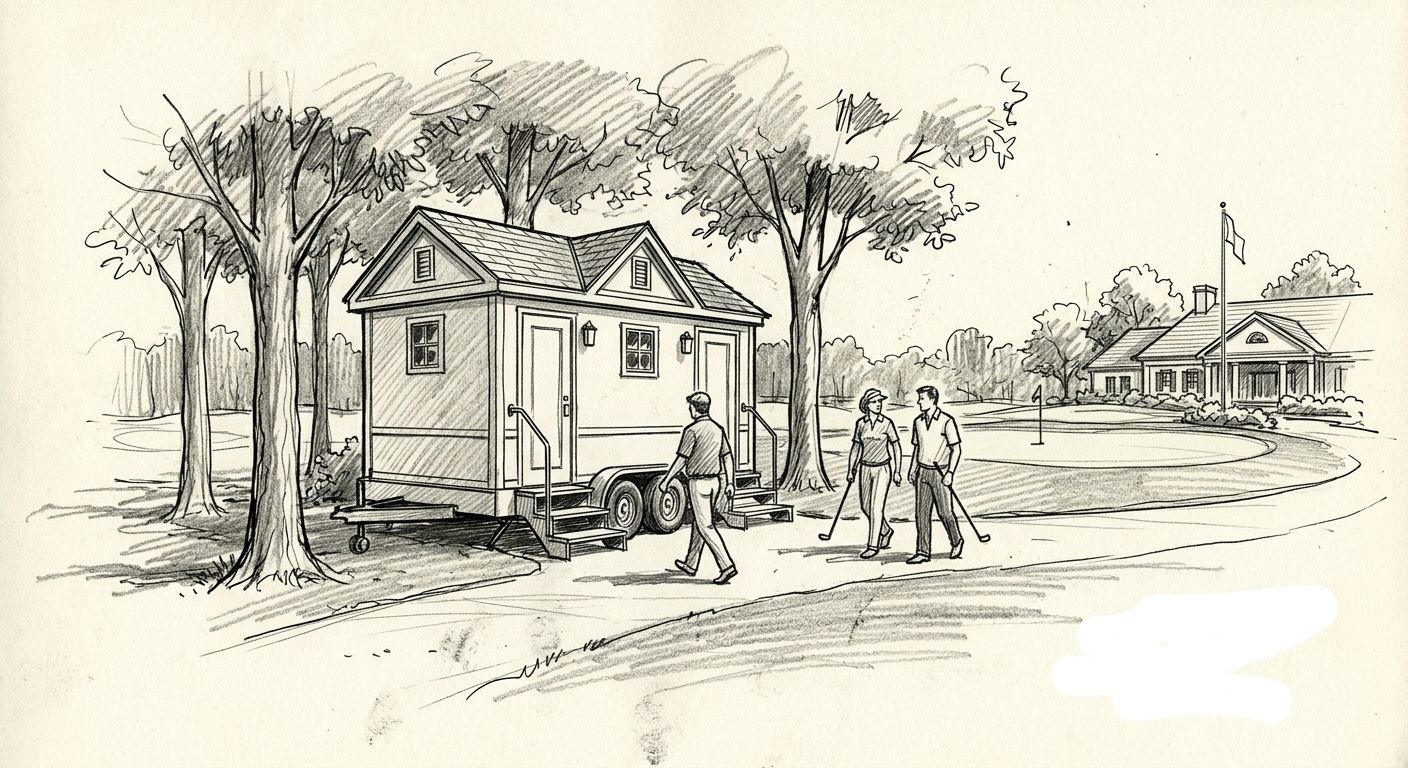
Restroom trailer, the upscale pick. Works for waterfront weddings and marina receptions where guests expect climate control and running water instead of a hand sanitizer pump. Needs a level pad and truck access within roughly 100 feet, which rules out true beach-sand ceremonies but fits lawn-adjacent waterfront venues well. Consider for weddings and corporate events on a paved or grass staging area near the shoreline.
Hand wash station, the add-on. Pairs with any restroom bank where food or beverage service is happening, which covers most beach festivals and concerts. Runs independent of the restroom unit itself, so it doesn't affect your headcount ratio math. Buy for any event with food vendors.
Holding tank, the no-access workaround. For remote shoreline sites with zero plumbing hookup and no truck access for standard servicing, a holding tank setup extends the interval between pump visits. Consider only for multi-day events in locations a standard service truck can't reach on the usual schedule.
Larger waterfront festivals and concerts carry their own planning math beyond the basics above. Portable toilet rental for festivals and concerts breaks down the ratio adjustments for multi-day, multi-stage events.
Plan your waterfront event restrooms
Call to walk through unit count, ground protection, and access before you submit your permit.
What to avoid
- Skipping ground protection on sand. A unit that looks fine at delivery can list to one side within a few hours once foot traffic compacts the sand unevenly underneath it.
- Treating ADA as optional for a small event. Permitting staff check for it regardless of guest count once the event is on public shoreline property.
- Under-ordering for heat. A unit count that works fine for a spring cleanup will run short for a July concert where usage rates jump and service intervals matter more.
Verdict comparison
| Unit type | Best for | Surface need | Verdict |
|---|---|---|---|
| Standard restroom | Day events, cleanups | Ground protection boards on sand | Buy |
| ADA-compliant unit | Any permitted public event | Firm, level approach path | Buy |
| Restroom trailer | Weddings, upscale receptions | Level pad, truck access nearby | Consider |
| Hand wash station | Events with food or beverage service | Any firm surface | Buy |
| Holding tank | Remote multi-day sites | No plumbing access needed | Consider |
FAQ
How many portable restrooms do you need for a beach event?
Plan one unit per 50 guests for a four-hour event, adding units for heat, alcohol service, or events running past six hours. Multi-day festivals need a higher ratio because usage compounds across days.
Do beach events require ADA-compliant restrooms?
Yes, permitted public events on Bay Area shoreline generally require at least one ADA-compliant unit regardless of total headcount. Larger events need additional ADA units scaled to guest count.
Can portable restrooms be placed directly on sand?
Not without ground protection boards or a plywood pad underneath. Sand settles unevenly under foot traffic and a unit without protection can tip or sink within a few hours.
What's the difference between a portable restroom and a restroom trailer for a waterfront wedding?
A standard restroom works on any firm surface with minimal setup, while a restroom trailer needs a level pad and vehicle access but offers running water and climate control for guests.
How close does a delivery truck need to get to a beach restroom setup?
Most standard units can be hand-carried up to roughly 100 to 150 feet from the nearest legal staging point, but confirm this during the site walk since dune fencing or boardwalks can restrict access further.
How often do restrooms need servicing at a multi-day waterfront festival?
Daily servicing is standard for multi-day events, with a mid-day service added for high-heat days or events with heavy alcohol service.
Are hand wash stations required separately from restrooms?
They're not required by most permits but are standard practice for any event with food or beverage vendors, and they run independent of restroom unit counts.
One last thing
The detail most event planners miss until the day of: shoreline wind picks up in the afternoon on nearly every Bay Area waterfront site, and a lightweight unit without ground anchoring can shift or tip once gusts hit 20 miles per hour. Ground protection isn't just about sand settling, it's what keeps a unit anchored when the afternoon wind comes in.
Valley Services has been running site services out of the same San Jose yard since 1986, third generation, same family. Call (408) 297-5404 or reach out through valleyservices.biz to talk through unit count, ground protection, and ADA requirements before your permit is due.