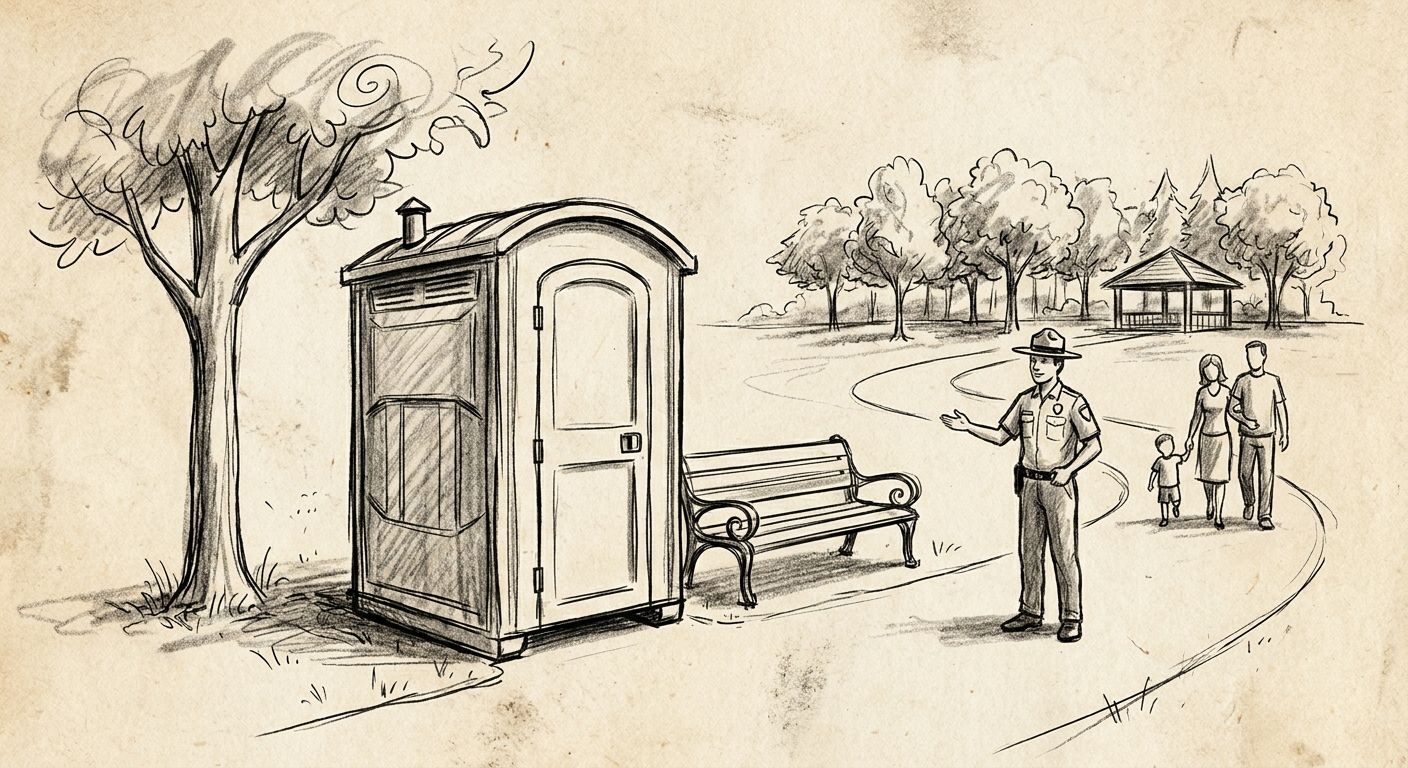
Parks and recreation departments run restroom rental across ballfields, trailheads, dog parks, community centers, and rented event lawns, often on a dozen different schedules at once. Getting unit counts, ADA access, and service intervals right keeps facilities open instead of generating complaints to the parks board.
- Portable restroom rental for parks departments works best on standing monthly service for daily-use parks, not one-off calls.
- ADA-compliant units are required wherever a park facility offers public restroom access. Skip standard units at ballfields and playgrounds.
- Tournament weekends and festivals need surge units added to standing park service, not year-round upsizing.
- Valley Services runs its own San Jose yard, so swap and pickup schedules stay on the department's calendar, not a broker's.
Why this matters
A locked or overflowing restroom at a packed ballfield generates more calls to a parks office than almost any other maintenance failure. Unlike a broken drinking fountain, a restroom failure hits families with kids mid-game and shows up in public comment at the next council meeting.
Budget cycles make this worse. Most departments set restroom counts once a year and then get surprised by a tournament weekend or a food truck festival that draws three times the normal park traffic. Valley Services runs its own San Jose yard and transfer station, which means restroom swaps, pumping, and pickup stay on a schedule the department controls, not one set by a third-party hauler.
Who this is for
This guide is for facilities and parks staff managing restroom rental across multiple sites: ballfield complexes, community centers, trailheads, dog parks, and permitted special events on park land. It applies whether the department runs standing service for daily park use or books restrooms for a single weekend tournament.
What to look for in restroom rental for parks departments
Unit count tied to peak attendance, not average
A park that draws 40 people on a Tuesday and 400 on a tournament Saturday needs two different restroom counts, not one average number. The standard industry guidance for events runs about 1 restroom per 250 attendees for the first four hours, with additional units added per hour after that. Calculating restroom counts for a park event before the season starts avoids a scramble two days before opening day.
ADA compliance at every publicly accessible facility
Any park restroom open to the public needs an ADA-compliant unit on site, not just at the main building. Ballfields, playgrounds, and trailheads all count as publicly accessible facilities under this standard. A department that places one ADA unit at the community center and standard units everywhere else is exposed at every satellite location.
Service frequency matched to foot traffic
A restroom serviced once a week works for a low-traffic trailhead. A ballfield complex running games five nights a week needs pumping and restocking two to three times weekly during season. Mismatched service frequency is the single most common complaint driver in park restroom programs.
Winter and off-season standby plans
Bay Area parks don't freeze the way inland sites do, but off-season traffic still drops enough that departments often cut service frequency or remove units entirely between November and March. A standing plan that scales down instead of shutting off avoids scrambling when an off-season tournament or trail race gets scheduled.
One vendor across restrooms, fencing, and containers for special events
A single permitted event on park land often needs restrooms, temporary fencing for crowd control, and a roll-off container for teardown debris. Coordinating three separate vendors on one event day multiplies the chance something arrives late or gets missed. One vendor covering all three cuts that coordination down to a single phone call.
Top picks for parks and recreation departments
Standard park restroom line, the daily-use workhorse. This covers trailheads, dog parks, and low-traffic satellite sites where a single non-ADA unit handles routine foot traffic. Service runs on a fixed weekly schedule rather than per-event calls. Monthly restroom service for long-term facilities fits this use case exactly. Buy for any site with year-round public access.
ADA-compliant unit, the compliance non-negotiable. Every ballfield, playground, and community center restroom needs one of these on site alongside standard units, not instead of them. ADA-compliant restroom rental covers unit specs and clearance requirements departments get audited on. Buy for every publicly accessible facility, full stop.
Tournament weekend surge package, the game-day add-on. Youth sports complexes running back-to-back tournament weekends need units added above standing service, then pulled back down Monday morning. Restroom rental for sporting events and tournaments is built for exactly this add-and-remove cycle rather than a permanent upsize. Buy for any complex hosting more than one tournament weekend per season.
Single-day festival package, the one-day multiplier. A community festival or food truck event on park land needs a short-term restroom count that's higher than any standing park service and gone by Monday. Treat this as its own line item, not an extension of daily park service. Consider for permitted one-day events, and confirm teardown timing matches the permit window.
What to avoid
- A single restroom line covering both daily use and event days. Daily park traffic and a tournament weekend need different unit counts. Sizing for the average instead of the peak leaves lines out the door on the busiest day of the season.
- Standard units at every ballfield with no ADA unit on site. This is the fastest way to end up out of compliance at a facility the department assumed was covered by the main building's restroom.
- A broker-based vendor for a multi-site park system. A vendor that hauls to a third party's disposal site loses schedule control the moment that third party has its own backlog. A department managing restrooms across a dozen sites needs a vendor that controls its own pickup timing.
“A locked restroom at a packed ballfield is worse than no restroom rental at all.”
Verdict comparison
| Configuration | Best for | Service frequency | Verdict |
|---|---|---|---|
| Standard park line | Trailheads, dog parks, low-traffic sites | Weekly | Buy |
| ADA-compliant unit | Ballfields, playgrounds, community centers | Weekly, matched to standard units | Buy |
| Tournament surge package | Sports complexes, multi-weekend seasons | Game-day only | Buy |
| Single-day festival package | Permitted one-day events | Delivery through teardown | Consider |
Set restroom service for your park calendar
Coordinate restrooms, fencing, and containers for one park system.
FAQ
How many restrooms does a park need for a youth sports tournament?
Tournament weekends generally need one restroom per 250 attendees for the first four hours, with additional units added for longer event days. A complex running back-to-back games all day should plan surge units above standing park service, not a permanent upsize.
Is ADA-compliant restroom rental required at public parks?
Yes, any park facility with public restroom access needs at least one ADA-compliant unit on site. This applies to ballfields, playgrounds, and trailheads, not just the main community center building.
How often should park restrooms be serviced?
A low-traffic trailhead can run on weekly service, while a ballfield complex running games five nights a week needs service two to three times per week during season. Off-season traffic usually supports a reduced schedule instead of full shutdown.
Can a parks department rent restrooms for a single event day?
Yes, single-day festival or event packages are booked separately from standing park service and are removed after teardown. Treat single-day counts as their own line item since event traffic runs well above typical daily park use.
What's the difference between standard and ADA-compliant portable restrooms?
ADA-compliant units have wider door clearance, interior turning space, and grab bars that standard units don't include. Every publicly accessible park facility needs at least one ADA unit alongside standard units.
How far in advance should a parks department book restroom rental for a festival?
Booking several weeks ahead of a permitted festival date gives a vendor time to confirm unit counts, delivery windows, and teardown timing against the permit. Waiting until the week of the event limits which configurations are available.
Do restrooms need winterizing at Bay Area parks?
Bay Area sites rarely freeze hard enough to require full winterization, but off-season traffic usually drops enough to justify reduced service frequency or fewer units from November through March.
Can one vendor handle restrooms, fencing, and containers for a park project?
Yes, a single vendor covering restrooms, temporary fencing, and roll-off containers cuts coordination down to one phone call for a permitted event or a park renovation project.
One last thing
Valley Services has serviced restroom rental for Super Bowl LX and the San Jose Marathon, two events where unit counts and pickup timing had to hold on a fixed public schedule with zero room for delay. That same scheduling discipline is what a multi-site park system needs on a normal Tuesday, not just on a headline event day.
Call (408) 297-5404 or visit valleyservices.biz to talk through restroom counts for your park system in 2026.