A job site without a controlled perimeter is a liability claim waiting to happen. Temporary fence rental for a construction site does three things at once: keeps unauthorized people out, keeps materials and equipment from walking off, and gives inspectors a clean line to check against your site plan.
- Standard 6-foot chain link is the workhorse for temporary fence rental for construction site perimeters in 2026 - Buy for most GC jobs.
- K-rail beats chain link for vehicle separation on active traffic sites - Buy when equipment moves near public right-of-way.
- Privacy screen panels add dust and noise control but need 15-20% more wind load capacity - Consider for neighbor-facing sites.
- Valley Services runs fencing, containers, and restrooms off one yard in San Jose, which shortens the coordination chain for multi-phase jobs.
Why this matters
Most General Liability policies and municipal encroachment permits reference perimeter control directly. Santa Clara County and City of San Jose inspectors will red-tag a site for an unsecured perimeter faster than almost any other citation, because it's visible from the street. Get the fence wrong and you're rescheduling inspections, not just re-renting hardware.
The other cost is quieter: a poorly planned fence layout blocks your own equipment access. A 10-foot gate opening that looked fine on paper turns into a half-day delay when the boom lift can't clear it.
Who this is for
This guide is for general contractors and subcontractors running active job sites in San Jose, Santa Clara, Sunnyvale, Mountain View, and Milpitas who need perimeter control that satisfies Cal/OSHA and local permit requirements without slowing down equipment moves. If you're managing a multi-week demo, a ground-up build, or a phased renovation with rotating trade crews on site, the fence decisions below apply directly to your schedule.
What to look for in temporary fencing for a construction site
Panel height and wind load rating
Six feet is the practical standard for job site security fencing across the Bay Area, and most municipal codes treat it as the floor, not the ceiling. Panels rated for standard wind exposure hold up fine on most in-town lots, but exposed sites near open ground or elevated grading need a higher-rated panel or added bracing. Skimping here means re-setting fence after the first windstorm of the season.
Gate width for equipment access
Measure your largest piece of equipment before you order gates, not after. A single swing gate under 12 feet won't clear most skid steers with attachments, and a double-swing at 20 feet is the safer call for sites expecting concrete trucks or a crane setup. Get this wrong and every equipment delivery becomes a two-person job to walk gear through a gap.
Privacy screening for dust and site control
Mesh screen fabric attached to chain link panels cuts visibility, reduces dust drift onto neighboring properties, and knocks down some noise complaints before they start. It also adds wind surface area, so panels need better anchoring than bare chain link. On sites next to occupied buildings or residential lots, screening is close to mandatory in practice even when it's not required on paper.
Ground conditions and anchoring
Concrete or asphalt lots take weighted rubber-block feet. Dirt and gravel sites need driven stakes or, in soft soil, wider footing blocks to keep panels from walking during wind events. Anchoring method affects both stability and how fast the fence can be moved when your site plan shifts between phases.
Permit and code compliance
San Jose and Santa Clara County both reference perimeter fencing in active construction permits, and inspectors check fence condition alongside site safety during routine visits. Confirm height and gate placement against your approved site plan before the fence goes up, not after the inspector flags it.
Lead time and swap flexibility
Job sites move in phases. A perimeter set for demo won't match the layout you need for foundation pour or vertical framing. Ask about swap flexibility before you sign anything, and plan for a 3 to 5 business day lead time on initial delivery so the fence is up before your first load of material arrives.
Top picks for construction site fencing
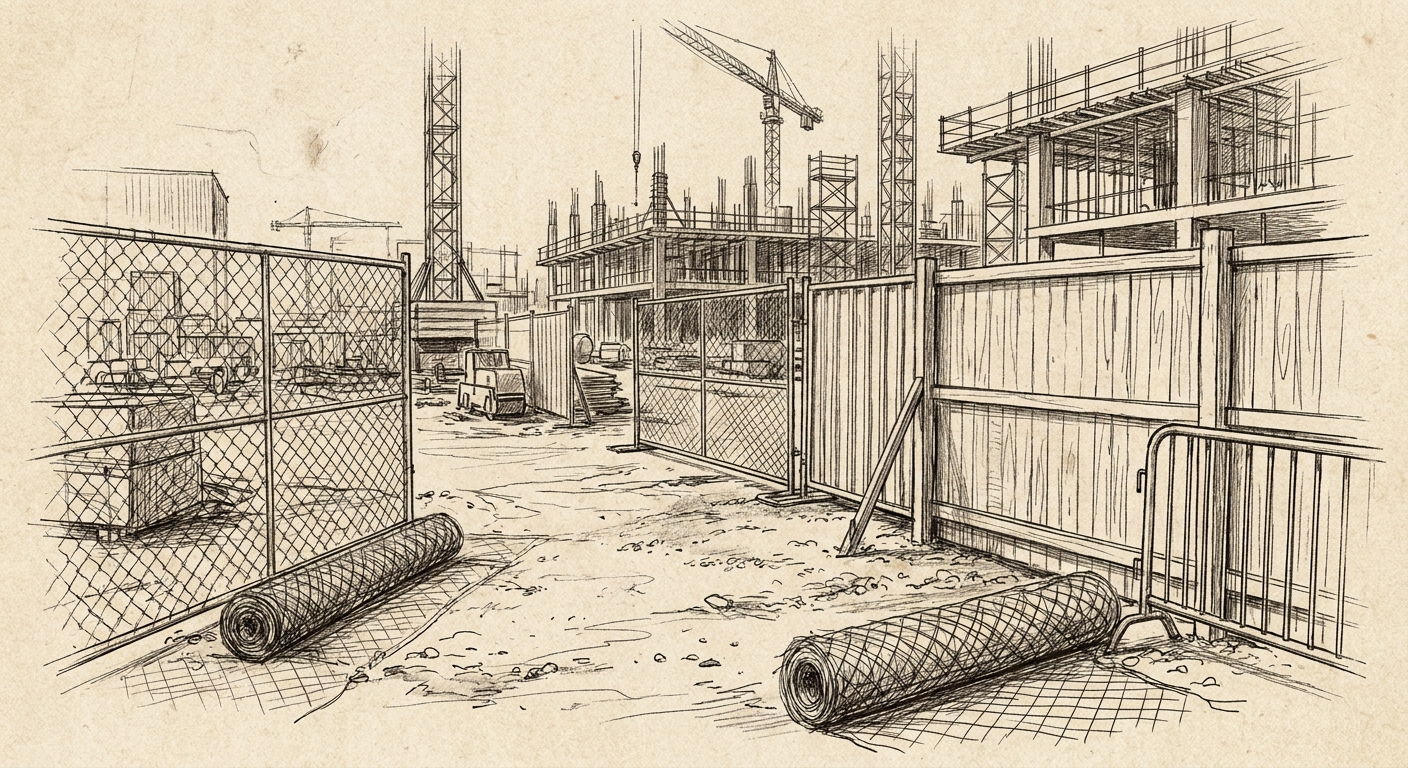
Standard 6-foot chain link, the workhorse pick. Panel widths run 8 to 10 feet, which covers most perimeter runs without excess seams. This is the default for demo through framing on a typical Bay Area lot. Buy for the majority of general contracting jobs.
K-rail (Jersey barrier), the traffic control pick. Concrete barriers stand roughly 32 to 42 inches and separate vehicle lanes from active work zones on sites bordering public streets or shared driveways. Pair it with chain link above for full height where code requires it. Buy when equipment and public traffic share the same access point.
Privacy screen panels, the neighbor-relations pick. Screen fabric mounted on standard chain link adds dust and sightline control on sites next to occupied homes, schools, or offices. Confirm anchoring is rated for the added wind load before ordering. Consider for any site with adjacent residential exposure.
Combined site services package, the one-call pick. Coordinating containers, restrooms, and fencing through a single point of contact removes a scheduling variable that costs more time than any single piece of hardware. Construction dumpster rental for general contractors covers the container side of that same logistics chain. Buy for multi-phase jobs where trade crews rotate through the site.
Plan your site perimeter now
Talk through fence layout, gate width, and lead time before delivery day.
What to avoid
- Event-style picket fencing. It looks tidy on a brochure but isn't rated for the wind exposure or foot traffic of an active job site.
- Gates under 12 feet on equipment-heavy sites. Fine for a small remodel, a bottleneck the day a lift or concrete truck shows up.
- Skipping the anchoring conversation. A fence that isn't rated for its ground surface is the first thing to fail in a wind event, and the first thing an inspector notices.
Verdict comparison table
| Fencing type | Typical height | Best for | Verdict |
|---|---|---|---|
| Standard chain link | 6 ft | General perimeter, demo through framing | Buy |
| K-rail | 32-42 in | Vehicle and traffic separation | Buy for street-facing sites |
| Privacy screen add-on | 6 ft + screen | Dust, noise, neighbor sightlines | Consider |
| Event picket fencing | Varies | Not rated for job site conditions | Skip |
FAQ
How much does temporary fence rental for a construction site cost?
Cost depends on panel count, rental duration, and whether K-rail or privacy screening is added. Call (408) 297-5404 for a quote sized to your site plan.
What height fencing does San Jose require for construction sites?
Six feet is the standard height referenced in most active construction permits across San Jose and Santa Clara County. Confirm exact requirements against your approved site plan before the fence goes up.
How is temporary fencing anchored on concrete or asphalt lots?
Weighted rubber-block feet anchor panels on hard surfaces without drilling into pavement. Dirt or gravel sites use driven stakes or wider footing blocks depending on soil condition.
Can temporary fencing include privacy screening?
Yes, mesh screen fabric attaches to standard chain link panels to cut dust drift and sightlines. Screened panels need anchoring rated for added wind load.
How far in advance should I book temporary fencing for a construction site?
Plan on 3 to 5 business days lead time for initial delivery so the perimeter is set before material or equipment arrives on site. Multi-phase jobs benefit from booking swap dates at the same time.
What's the difference between temporary fencing and K-rail?
Chain link fencing controls perimeter access and sightlines, while K-rail (Jersey barrier) is concrete and rated for vehicle impact separation. Many street-facing sites use both together.
Does fencing rental come with container and restroom rental on the same job?
Valley Services coordinates containers, restrooms, and fencing off one San Jose yard, which lets a general contractor manage all three through one point of contact.
What happens if my fence layout needs to change mid-project?
Confirm swap flexibility before signing the initial order. Job sites move from demo to foundation to framing, and the perimeter often needs to shift with each phase.
One last thing
Valley Services has fenced perimeter work tied to events at the scale of Super Bowl LX and the San Jose Marathon, and the same crew logic applies to a single-lot renovation: get the gate width right before delivery day, not after the crane shows up. Third-generation, same yard on 7th Street since 1986.
Call (408) 297-5404 or reach out through valleyservices.biz to talk through fence layout, gate placement, and lead time for your site.