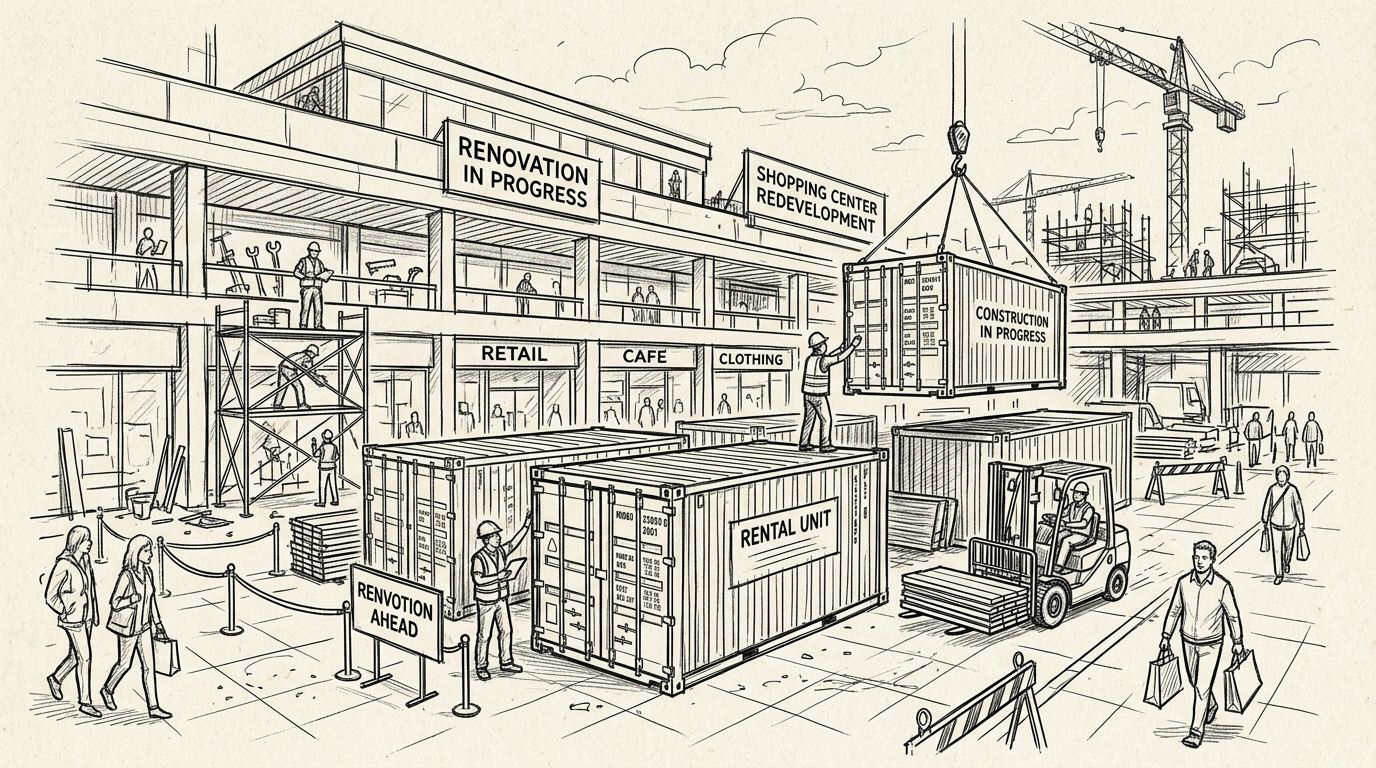
Best overall for container rental for shopping center renovation work: a 30-yard roll-off container. Best for anchor store demolition: a 40-yard roll-off container. Best for a single tenant improvement: a 20-yard roll-off container. Best for a quick storefront turnover: a 10-yard roll-off container. Best for centers staying open during construction: a compactor paired with a scheduled roll-off swap program.
- A 30-yard roll-off container handles most container rental for shopping center renovation jobs with mixed demo and buildout debris.
- 20-yard containers fit tight loading dock and parking stall footprints for single tenant improvements.
- 40-yard containers suit full anchor store demolition, not tenant-level scope work.
- Centers that stay open during construction need a compactor and a container swap schedule, not one oversized box.
- Valley Services runs its own San Jose transfer station, which keeps swap-out timing predictable across every renovation phase.
Why this matters
Shopping center renovations rarely run as one job. A property manager might have an anchor store demo, three tenant buildouts, and a parking lot resurface happening in the same 90 days, each on a different schedule. Container placement that blocks a fire lane or a loading dock during business hours creates a problem for every other tenant on the property, not just the crew doing the work.
Valley Services has run container, restroom, and fencing rentals out of the same San Jose yard since 1986, now in its third generation of family ownership. That matters for shopping center work specifically because one contact covers containers for demo, restrooms for crews working long days, and temporary fencing around active construction zones, all coordinated against a single site schedule instead of three separate vendor calendars.
What makes the best container rental for shopping center renovation
- Size matched to scope. A tenant improvement generates different volume and weight than an anchor store teardown.
- Swap-out scheduling that respects retail hours. Deliveries and pulls timed around loading docks and customer parking, not against them.
- Placement that clears fire lanes and ADA paths. Shopping centers have fixed access requirements a job site doesn't.
- One yard receiving the debris. A hauler who controls the disposal endpoint controls the pickup schedule; a broker waiting on a third-party site does not.
- Restrooms and fencing available from the same order. Multi-trade renovation sites need more than a container.
- Capacity for mixed debris. Drywall, ceiling tile, flooring, and concrete each weigh differently, and the wrong container fills before the job does.
At a glance: container options for shopping center renovation
| Option | Best for | Standout feature | Key limitation |
|---|---|---|---|
| 40-yard roll-off | Anchor store demolition | Holds full big-box teardown debris in fewer swaps | Needs a large drop zone, doesn't fit tight loading docks |
| 30-yard roll-off | General shopping center renovation | Handles mixed demo and buildout debris across trades | Still oversized for a single small storefront turnover |
| 20-yard roll-off | Single tenant improvement | Fits a standard loading dock or parking stall footprint | Fills fast on heavy debris like tile or concrete |
| 10-yard roll-off | Quick storefront turnover, punch-list cleanout | Smallest footprint, easiest same-day placement | Limited capacity beyond a light cleanout |
| Compactor plus swap schedule | Centers open during construction | Keeps daily retail waste separate from construction debris | Requires a service agreement and a defined pad location |
1. 40-yard roll-off container: best for anchor store demolition
A 40-yard container is built for full-scale teardown work: a vacated anchor tenant, gutted to the shell before a new occupant builds out. It carries the volume of studs, drywall, flooring, and fixtures that comes out of a space that size without forcing daily swaps.
40-yard roll-off pros:
- Fewest total swaps for a full demolition scope
- Handles heavier mixed debris loads without hitting capacity fast
- Reduces truck trips in and out of the property during active demo
40-yard roll-off cons:
- Needs a large, level drop zone, which rules out most tenant-level spaces
- Too large for anything short of full demolition
- Slower to place in a lot with limited turning radius
Best for: anchor store demolition ahead of a full rebuild. Verdict: Buy when the scope is a full gut, Skip for anything smaller.
2. 30-yard roll-off container: best overall for general shopping center renovation
This is the size that fits most mid-scope shopping center work: multiple tenant spaces being refreshed at once, common area upgrades, or a renovation that mixes demo debris with buildout material. It's large enough to avoid constant swaps but still fits in a standard drop zone behind most centers.
30-yard roll-off pros:
- Wide enough capacity for mixed trades working the same timeline
- Fits most rear-of-building drop zones without special access planning
- Balances swap frequency against footprint
30-yard roll-off cons:
- Overkill for a single small storefront job
- Still requires clear access for delivery and pickup trucks
Best for: general shopping center renovation with multiple trades on site. Verdict: Buy as the default choice for 2026 multi-tenant renovation scopes.
3. 20-yard roll-off container: best for a single tenant improvement
When the work is one storefront build-out, not a center-wide renovation, a 20-yard container matches the debris volume without eating the whole loading zone. It's the size most tenant improvement contractors default to because it fits a single parking stall or dock apron.
The container rental for retail store renovation guide breaks down sizing for individual storefront scopes if the job is one unit rather than a full center.
20-yard roll-off pros:
- Fits a single parking stall or loading dock apron
- Matches typical tenant improvement debris volume
- Easier to place without blocking neighboring tenants
20-yard roll-off cons:
- Fills quickly on heavy material like tile, concrete, or cabinetry
- Not enough volume for a full anchor-scale scope
Best for: a single tenant improvement or storefront buildout. Verdict: Buy for standard TI scope in 2026.
4. 10-yard roll-off container: best for a quick storefront turnover
A fast turnover between tenants, cosmetic updates, or a punch-list cleanout doesn't need a large container. The 10-yard size handles light debris volume and clears out of the way fast, which matters when a new tenant's move-in date is already set.
10-yard roll-off pros:
- Smallest footprint, easiest same-day delivery and pickup
- Fits in a single parking stall with room to spare
- Lowest overall site impact for short jobs
10-yard roll-off cons:
- Limited capacity, fills fast on anything beyond light material
- Not suited to structural demo or heavy flooring removal
Best for: fast storefront turnovers and cleanout work. Verdict: Buy for turnover jobs under a few days, Wait and size up for anything structural.
5. Compactor plus scheduled roll-off swaps: best for centers staying open during construction
A center running renovation work while stores stay open needs two separate waste streams: daily retail trash from operating tenants, and construction debris from the active work zone. Mixing them into one container creates overage problems and slows down pulls. A compactor on a defined pad handles the daily retail volume, while roll-off containers on a set swap schedule handle construction debris on their own timeline.
The compactor sizing guide for retail and grocery stores covers tonnage and pad requirements for centers running this setup.
Compactor plus swap pros:
- Keeps daily retail waste separate from construction debris
- Predictable swap schedule that doesn't interrupt store hours
- Scales across a multi-phase renovation timeline
Compactor plus swap cons:
- Requires a service agreement and a fixed pad location
- Adds coordination overhead compared to a single container
Best for: centers that stay open to customers during construction. Verdict: Buy for any multi-phase 2026 renovation with active tenants on site.
“If a shopping center stays open during construction, the container plan has to work around retail hours, not the other way around.”
How we ranked these options
Each size was ranked against the criteria above: scope match, swap-out scheduling, access and permit fit, disposal control, ability to add restrooms and fencing, and mixed-debris capacity. The 30-yard container wins the overall spot because it fits the widest range of shopping center renovation scopes without oversizing the footprint. Every other option owns a scope the 30-yard doesn't fit well, which is why none of the five compete for the same job.
Talk through your renovation schedule
Container, restroom, and fencing coordination from one San Jose yard.
Which container rental should you choose for a shopping center renovation?
For most 2026 shopping center renovation scopes, start with a 30-yard roll-off container and adjust from there. Go up to a 40-yard for a full anchor store demolition, down to a 20-yard for a single tenant improvement, and down to a 10-yard for a fast turnover between tenants. If the center is staying open to customers during the work, pair a compactor with a scheduled roll-off swap instead of trying to run one container through the whole job.
FAQ
What's the best container rental for shopping center renovation projects?
A 30-yard roll-off container fits most shopping center renovation scopes that mix demolition and buildout debris. Anchor store demolition calls for a 40-yard, and a single tenant improvement is usually better served by a 20-yard.
Is a 30-yard or 40-yard container better for retail demolition?
A 40-yard container is built for full anchor store teardown, while a 30-yard fits general renovation work across multiple tenant spaces. Match the size to whether the scope is a full gut or a partial renovation.
How much does container rental cost for a shopping center renovation?
Cost depends on container size, debris weight, and rental length, and varies by project. Call (408) 297-5404 or visit valleyservices.biz for a quote specific to the scope.
Can container rental work while stores stay open during construction?
Yes, but it usually requires a compactor for daily retail waste plus a separate roll-off schedule for construction debris. Running both waste streams through one container tends to cause overage and access problems.
Do shopping centers need a permit for a roll-off container?
Placement on private property, like a shopping center parking lot, generally doesn't require a street-use permit the way public right-of-way placement does, but fire lane and ADA access rules still apply. Check with the property manager and local jurisdiction before placement.
What's the difference between a compactor and a roll-off container for a retail renovation?
A compactor sits on a fixed pad and handles ongoing daily waste from operating tenants, while a roll-off container is delivered and pulled for a specific construction phase. Centers running renovation work while open often need both.
How fast can a container be delivered for an urgent tenant improvement?
Delivery timing depends on container size and current yard availability. Same-day or next-day delivery is often possible for standard sizes when the request comes in early in the day.
Can restrooms and temporary fencing be added to the same container order?
Yes. Containers, restrooms, and temporary fencing can be coordinated through one point of contact for a shopping center renovation site, which keeps delivery and pickup timing aligned across all three.
One last thing
The detail most property managers miss until mid-project: a hauler that owns its own transfer station controls its own pickup schedule, while a broker waiting on space at someone else's site does not. On a shopping center renovation with three or four trades running staggered timelines, that difference shows up as containers that get pulled when the schedule says they will, not when a third-party site has room.