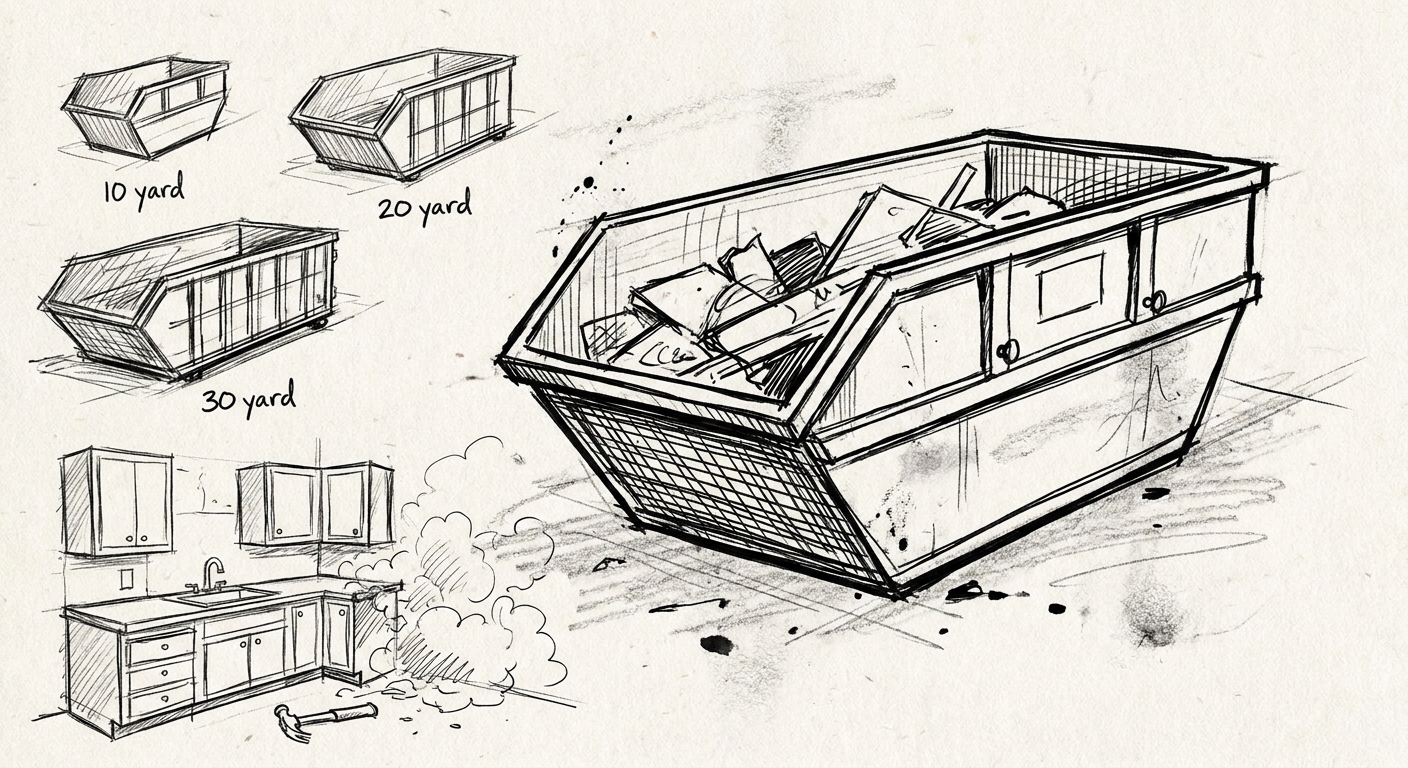
A kitchen remodel produces more debris than most homeowners and contractors plan for: cabinet boxes, countertop sections, subfloor, drywall, and sometimes old appliances and plumbing fixtures pulled out in one weekend. Pick the wrong roll-off container and you either pay for a swap mid-project or watch a truck leave half full.
- The best dumpster size for a kitchen remodel is the 15-yard roll-off for a standard full gut. Buy.
- Cosmetic refreshes, cabinet swaps and countertop-only jobs, fit an 8 or 10-yard container. Hold.
- Wall removal or subfloor tear-out pushes most kitchen jobs into a 20-yard container. Buy.
- A 30 or 40-yard container is oversized for kitchen-only scope in 2026 unless bundled with other rooms. Skip.
Why This Matters
Getting container size wrong on a kitchen remodel costs you a day, not a dollar figure worth guessing at. A container that fills up on day two of a five-day demo means a second delivery, a second load-out, and a schedule slip that a general contractor has to explain to the homeowner.
Bay Area driveways make this worse. Narrow lots in San Jose, Santa Clara, and Sunnyvale limit where a container can sit, so the size decision also has to account for access, not just debris volume. Valley Services sizes roll-off containers for Bay Area kitchen jobs every week, and the pattern is consistent enough to rank.
Most kitchen remodels in 2026 fall into one of four scopes: cosmetic refresh, full gut without structural change, full gut with wall or subfloor removal, or a kitchen remodel bundled with a bathroom or laundry room. Each scope has a size that fits it and two that don't.
How We Ranked These Sizes
The ranking below is based on debris type, not square footage. Cabinets and countertops are bulky but light. Drywall, subfloor, and tile are dense and heavy for their size. A container that looks right by volume can still be the wrong pick once the debris mix changes partway through demo.
Site access in San Jose and the South Bay factors in too. A container that needs street placement usually requires a permit and has a placement window, while a driveway container does not. The rank order below reflects what fits the debris, the schedule, and the site, in that order, for 2026 remodel scopes.
The Ranked List: Dumpster Sizes for a Kitchen Remodel
8-Yard Container: the tight-driveway pick
An 8-yard blue steel roll-off container fits in a single-car driveway or alongside a garage, which matters in dense San Jose neighborhoods where street parking permits are limited. It holds cabinet doors, small countertop sections, and flooring scraps from a partial update.
This size does not carry a full kitchen gut. Once drywall or subfloor demo enters the picture, an 8-yard container fills before the crew finishes day one. Hold for full remodels, Buy only for cosmetic refreshes with no demo.
10-Yard Container: the light remodel pick
A 10-yard container adds room for old flooring, a demoed island, and some drywall without spilling into a second load. It's a common request for condo and townhome kitchen updates in Santa Clara and Sunnyvale, where HOA rules often cap how long a container can sit on site.
It still runs short on a standard full gut that includes cabinets, countertops, flooring, and drywall down to the studs. Hold for full kitchen remodels, Buy for light updates only.
15-Yard Container: the standard kitchen remodel pick
This is the size most Bay Area kitchen remodels land on in 2026. A 15-yard roll-off handles cabinets, countertops, flooring, and drywall demo for a standard kitchen without structural changes, and it's sized to sit in a residential driveway without a street permit in most jurisdictions.
Homeowners and contractors running full home renovation projects that include the kitchen consistently order this size first, then upsize only if scope grows mid-project. Buy.
20-Yard Container: the structural-change pick
Once a kitchen remodel includes removing a wall, tearing out subfloor, or pulling old cast-iron plumbing, a 15-yard container runs out of room fast. A 20-yard container carries that extra weight and volume without a second haul.
This is also the size most general contractor projects default to when a kitchen job is one part of a larger scope of work with a tighter timeline. Buy when structural demo is part of the job.
30-Yard Container: the bundled-remodel pick
A 30-yard container makes sense when the kitchen remodel isn't standing alone, when it's paired with a bathroom, laundry room, or an adjacent living space gut in the same pull. On its own, a kitchen job rarely generates enough debris to justify this size.
Ordering a 30-yard container for a kitchen-only job usually means paying for space that never fills, and it takes up more of the driveway or curb than the job needs. Wait on this size until the scope is confirmed to include more than the kitchen.
40-Yard Container: the whole-house pick
A 40-yard container belongs on a whole-house renovation or new construction site, not a kitchen remodel. Even a large kitchen with an adjoining dining room rarely produces enough debris to need this size, and its footprint is hard to place on most residential lots.
Skip this size for kitchen-only scope in 2026. It's the wrong tool for the job even when the price looks like a bulk deal.
Comparison Table
| Size | Best For | Kitchen Remodel Scope | Verdict |
|---|---|---|---|
| 8-yard | Tight driveways | Cabinet swap, countertop only, no demo | Hold |
| 10-yard | Light updates | Flooring, some drywall, no wall removal | Hold |
| 15-yard | Standard full gut | Cabinets, counters, flooring, drywall to studs | Buy |
| 20-yard | Structural changes | Wall removal, subfloor, old plumbing | Buy |
| 30-yard | Bundled remodels | Kitchen plus bath or laundry room | Wait |
| 40-yard | Whole-house jobs | Multi-room gut, not kitchen-only | Skip |
Get the right size the first time
Call to talk through your kitchen remodel scope before it's on site.
Where to Rent by Size
Matching size to site access matters as much as matching size to debris in the South Bay. Follow these rules before you book:
- Confirm placement location first. Driveway placement usually skips the permit process; street or curb placement in San Jose typically requires one, and that adds lead time to your schedule.
- Ask what happens to the debris after pickup. A company that runs its own construction and demolition debris drop-off controls its own schedule. One that brokers to a third-party site is at the mercy of someone else's yard hours.
- Book the swap before you need it. If your remodel runs past a single container's capacity, schedule the exchange in advance rather than calling once the crew is already stacking debris outside the container.
Valley Services has run its own C&D transfer station in San Jose since 1986, third generation, same family, same yard. That means container swaps for a kitchen remodel don't wait on another company's disposal schedule.
FAQ
What's the best dumpster size for a kitchen remodel?
A 15-yard roll-off container is the best dumpster size for a standard full kitchen remodel in 2026, covering cabinets, countertops, flooring, and drywall demo. Smaller jobs fit an 8 or 10-yard container; jobs with wall removal need a 20-yard.
Is a 15-yard dumpster big enough for a full kitchen gut?
Yes, a 15-yard container handles a standard full kitchen gut including cabinets, countertops, flooring, and drywall down to the studs. If the remodel also removes a wall or old subfloor, size up to a 20-yard container instead.
What size dumpster do I need for cabinets and countertops only?
An 8 or 10-yard container covers a cosmetic kitchen update limited to cabinets and countertops with no demo. Once drywall or flooring demo enters the job, upsize to a 15-yard.
Do I need a permit for a dumpster in my driveway in San Jose?
Driveway placement typically does not require a permit in San Jose, while street or curb placement usually does. Check placement with the container company before delivery to avoid a delay.
Can old appliances go in a kitchen remodel dumpster?
Old appliances like ovens and dishwashers generally can go in a roll-off container, but confirm with the rental company first since some items carry separate handling rules. Ask before demo day, not after the appliance is already sitting curbside.
What's the difference between a 15-yard and 20-yard dumpster for a kitchen remodel?
A 15-yard container fits a standard kitchen gut with no structural changes, while a 20-yard container covers the same scope plus wall removal, subfloor tear-out, or old plumbing. The difference matters most when demo goes past drywall.
How long can I keep a roll-off container on site during a kitchen remodel?
Rental duration depends on the company and any local placement rules tied to permits. Confirm the rental window when you book so the container timeline matches your remodel schedule, not the other way around.
Is a 30-yard dumpster overkill for a kitchen remodel?
Yes, a 30-yard container is oversized for a kitchen-only remodel and only makes sense when the kitchen job is bundled with a bathroom, laundry room, or larger gut. For kitchen-only scope, a 15 or 20-yard container is the right call.
One Last Thing
The detail that trips up most first-time remodelers isn't size, it's timing. Ordering the container for delivery on the same day demo starts sounds efficient, but debris piles up in the driveway or garage while you wait, and that's when neighbors and HOAs start asking questions. Book the container to land the day before demo starts in 2026 remodels, not the morning of.
Call (408) 297-5404 or visit valleyservices.biz to talk through your kitchen remodel scope before you book a size.