Golf course renovations run through live turf, active cart paths, and paying members, so a job-site fence pulled from a standard construction catalog will not hold up the same way it does on a residential lot. This guide ranks the temporary fence rental for golf course renovation options that actually work on a course, from chain link perimeter panels to ground protection mats, and tells you which one fits each phase of the job.
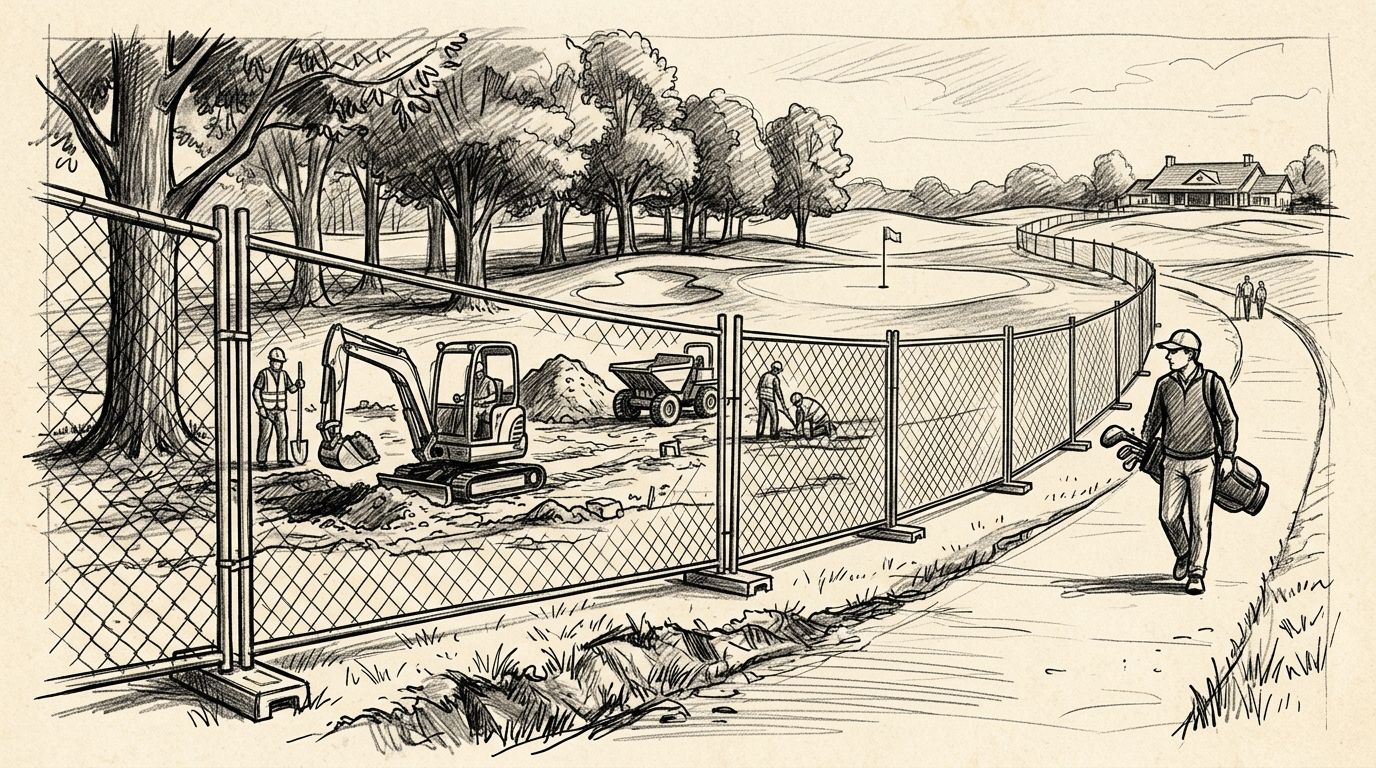
- Chain link fence panels rank best overall for closing a hole during green and bunker rebuilds.
- Windscreen panels control dust and sightlines when shaping work sits next to open holes.
- K-rail separates heavy equipment lanes from cart paths on multi-hole 2026 renovations.
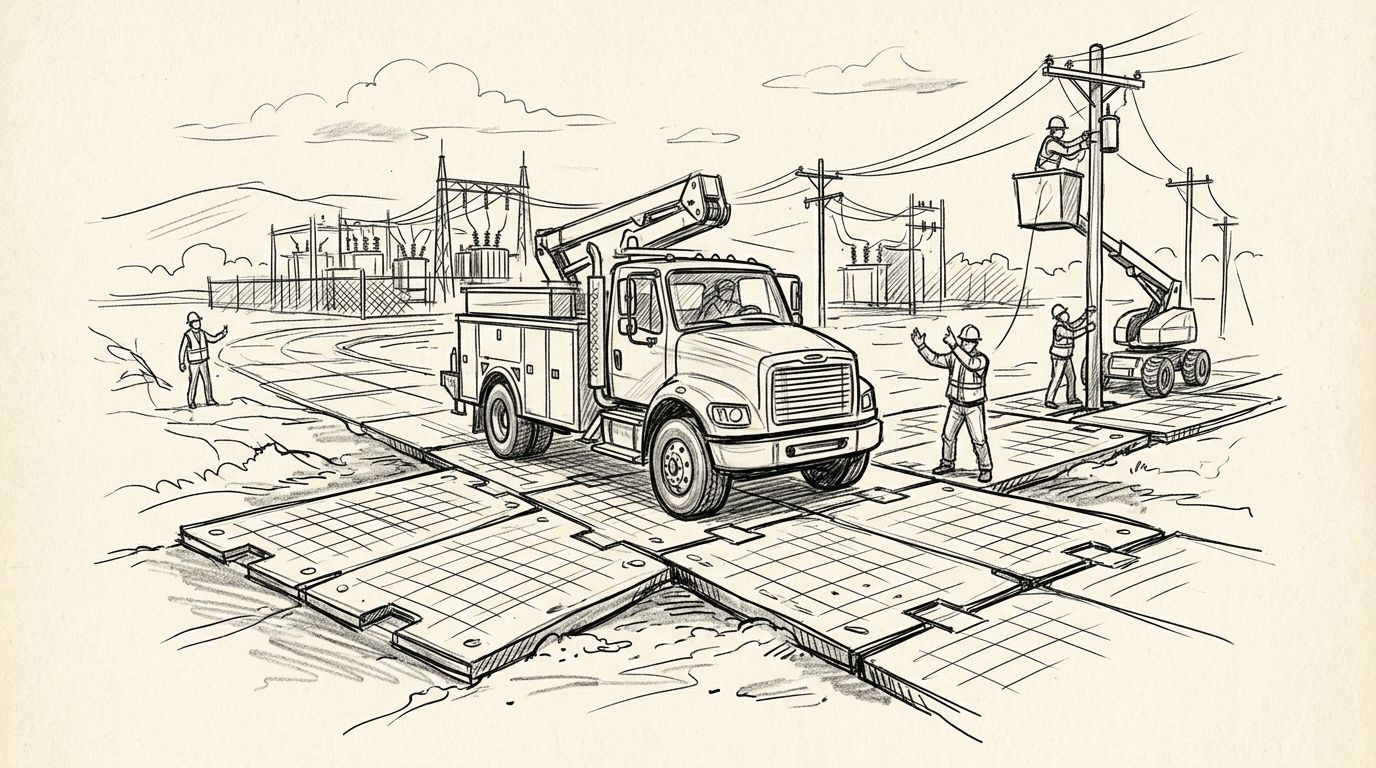
- Ground protection mats keep excavators and dump trucks from tearing up fairway turf.
- Pedestrian barrier fencing manages player flow during phased hole reopening.
Why this matters
A golf course is not a vacant lot. Members are still walking fairways two holes over, cart traffic keeps moving on adjacent paths, and a stray line drive or a golf cart wandering into an open trench is a liability problem, not just a schedule delay.
The renovation crew also answers to two clients at once: the superintendent who needs the course playable and the contractor who needs the site secured under Cal/OSHA excavation rules. Fencing has to satisfy both, and it has to move fast because renovation phases on a golf course shift hole to hole, sometimes week to week.
Valley Services supplies temporary fencing and K-rail out of the same San Jose yard that runs its roll-off containers and restroom fleet, which matters on a golf project because clubhouse work, cart path tear-outs, and green rebuilds usually need all three at once.
What makes the best temporary fence rental for a golf course renovation
- Turf protection. No ground penetration into greens, tees, or fairway turf that the superintendent has to repair later.
- Sightline and dust control. Shaping and grading work near an open hole needs a barrier that blocks dust drift and blind spots, not just a boundary line.
- Mobility across phases. Panels and barriers have to relocate as the renovation moves from hole to hole without a full re-permit each time.
- Cal/OSHA site security. Excavation zones, irrigation trenching, and equipment staging areas need barrier compliance the same as any construction site.
- Coordination with other site services. Cart path removal and clubhouse renovation generate C&D debris and crew restroom needs on the same schedule as the fence.
Temporary fence options for golf course renovations at a glance
| Fence type | Best for | Standout feature | Key limitation |
|---|---|---|---|
| Chain link fence panels | Full-hole closure during green and bunker rebuilds | Panels link into almost any shape around irregular hole boundaries | No dust or sightline control on its own |
| Windscreen / privacy screen fencing | Dust and sightline control during shaping and grading | Screen clips onto chain link panels and blocks dust drift onto open holes | Wind load means anchors need more frequent checks in open course settings |
| K-rail (concrete barrier) | Separating heavy equipment lanes from cart paths and staging areas | Barrier weight holds position without stakes or turf penetration | Needs equipment to place and cannot follow tight, curved hole boundaries |
| Ground protection mats | Protecting fairways and greens from equipment traffic on access routes | Distributes equipment weight so turf underneath survives repeated passes | Works as a surface layer, does not restrict access by itself |
| Pedestrian barrier fencing | Phased hole reopening and player wayfinding | Lightweight panels move fast as work zones shift hole to hole | Not rated for equipment separation or overnight site security |
1. Chain link fence panels: best for full-hole closure during green and bunker rebuilds
Standard temporary chain link runs 6 feet tall in modular panels that clip together, which lets a crew wrap an irregular hole boundary, a bunker complex, or a green surround without cutting fence to fit. It sets on rubber feet so nothing goes into the turf, and it comes down and moves to the next hole once the shaping crew finishes.
Chain link fence panel pros:
- Wraps irregular boundaries around greens, bunkers, and tee complexes
- Sets without ground penetration, so turf underneath stays intact
- Relocates fast between phases as work moves hole to hole
Chain link fence panel cons:
- Provides no dust or visual screening by itself
- Open mesh does not stop a stray ball or club head from passing through
Best for: courses closing one hole at a time for a full green or bunker rebuild. Verdict: buy.
2. Windscreen / privacy screen fencing: best for dust and sightline control near open holes
When shaping and grading equipment works within sight or downwind of an active hole, plain chain link is not enough. Mesh or solid windscreen clips onto the same chain link panels and cuts dust drift toward golfers and blocks sightlines into a construction zone that has heavy equipment moving.
Windscreen fencing pros:
- Blocks dust drift toward active fairways and greens
- Cuts sightlines into equipment zones, which reduces distraction complaints from members
- Attaches directly to existing chain link, no separate structure needed
Windscreen fencing cons:
- Higher wind load means panels need anchor checks more often on an open course than on a walled lot
- Adds a labor step to install and remove versus bare chain link
Best for: shaping, grading, or sod work that sits close to a hole still in play. Verdict: buy for active-course phases, skip for fully closed holes.
3. K-rail (concrete barrier): best for separating equipment lanes from cart paths
Multi-hole renovations move heavy equipment across the property on temporary haul roads that often cross or run parallel to cart paths still in use. K-rail holds a hard line between the two without stakes, which means it will not compromise turf or irrigation lines on either side of the barrier.
K-rail pros:
- Holds position under equipment traffic without ground anchors
- Creates a hard, visible separation between construction lanes and cart paths
- Withstands repeated equipment contact better than fence panels
K-rail cons:
- Requires a forklift or boom truck to place and reposition
- Straight-line segments do not follow tight, curved hole boundaries the way chain link does
Best for: multi-hole projects with a haul road running near active cart paths. Verdict: buy for equipment-heavy phases, hold for single-hole rebuilds.
4. Ground protection mats: best for protecting fairway and green turf from equipment traffic
Equipment access routes across live turf are the fastest way to turn a renovation into a turf-repair bill the superintendent did not budget for. Ground protection mats distribute the weight of excavators, dump trucks, and skid steers across a wider footprint so the turf underneath survives repeated passes.
Ground protection mat pros:
- Spreads equipment weight to reduce turf compaction and rutting
- Works over sensitive areas like collars, approaches, and irrigation heads
- Reusable across multiple access routes as the project phases move
Ground protection mat cons:
- Does not restrict who or what can access the area, it protects the surface, not the boundary
- Needs a fence or barrier layered on top for actual site security
Best for: any access route where equipment has to cross a fairway, approach, or green surround. Verdict: buy.
5. Pedestrian barrier fencing: best for phased hole reopening and player wayfinding
Once a hole reopens while the crew still finishes cleanup on an adjacent one, players need a clear, low-effort barrier that says where to go without the weight of full chain link. Lightweight barrier panels serve that job and relocate in minutes as the reopening line shifts.
Pedestrian barrier fencing pros:
- Fast to place and move as reopened holes shift the boundary
- Low profile keeps sightlines open for golfers on adjacent holes
- Cheapest labor lift of any option on this list to reposition daily
Pedestrian barrier fencing cons:
- Not rated for equipment separation or overnight security
- Skippable on holes that stay fully closed for the whole renovation
Best for: the reopening phase, not the active construction phase. Verdict: buy for reopening weeks only.
How this ranking works
Each option above gets scored against the same five criteria: turf protection, dust and sightline control, mobility across renovation phases, Cal/OSHA site security compliance, and how easily it coordinates with the rest of the site service schedule. Chain link ranks first because it is the only option that satisfies boundary and security needs on its own across the widest range of golf course renovation phases. The other four fill in specific gaps chain link leaves open.
Which temporary fence rental fits your golf course renovation?
Most golf course renovations start with chain link fence panels around whichever hole is closed. Add windscreen fencing on any phase where equipment works near a hole still in play. Bring in K-rail once heavy equipment starts crossing or running parallel to active cart paths on a multi-hole job. Lay ground protection mats under any equipment access route that crosses live fairway or green turf. Switch to pedestrian barrier fencing once a hole reopens but cleanup work is still finishing nearby.
Plan fencing for your renovation
Talk through hole-by-hole phasing and equipment access before the crew mobilizes.
FAQ
What is the best temporary fence rental for a golf course renovation?
Chain link fence panels rank best overall because they wrap irregular hole boundaries without ground penetration into turf. Add windscreen, K-rail, ground protection mats, or pedestrian barrier fencing depending on the renovation phase.
How tall does temporary construction fencing need to be on a golf course?
Standard temporary chain link runs 6 feet tall, the same height used on most construction sites. That height is enough to mark a closed boundary and discourage foot traffic without blocking views from adjacent holes.
Can temporary fencing move between holes during a phased renovation?
Yes, modular chain link panels and pedestrian barrier fencing both relocate quickly since they set on feet rather than stakes. That mobility is why phased, hole-by-hole renovations rely on panel systems instead of fixed fencing.
Does a golf course renovation need K-rail or just chain link fence?
K-rail is only necessary when heavy equipment crosses or runs parallel to cart paths still in use. Single-hole rebuilds without a haul road crossing an active path usually get by on chain link and windscreen alone.
How do ground protection mats help during a golf course renovation?
Ground protection mats spread equipment weight across a wider footprint so fairway and green turf under an access route does not compact or rut. They work alongside fencing, not in place of it, since mats protect the surface rather than restrict access.
How far in advance should temporary fencing be scheduled for a golf course project?
Fencing scheduling should line up with the same lead time as roll-off containers and restrooms on the project, since all three typically arrive for the same mobilization date. Confirm exact lead times directly with the rental provider for the specific renovation phase.
Is windscreen fencing necessary for every golf course renovation?
No. Windscreen matters most when shaping, grading, or sod work sits close to a hole still in play, since it blocks dust drift and sightlines into the work zone. Fully closed holes with no adjacent play often skip windscreen and use plain chain link.
Does Valley Services serve golf courses outside San Jose?
Valley Services covers San Jose, Santa Clara, Sunnyvale, Mountain View, Milpitas, and the surrounding Bay Area. The company's C&D transfer station is located in San Jose only.
One last thing
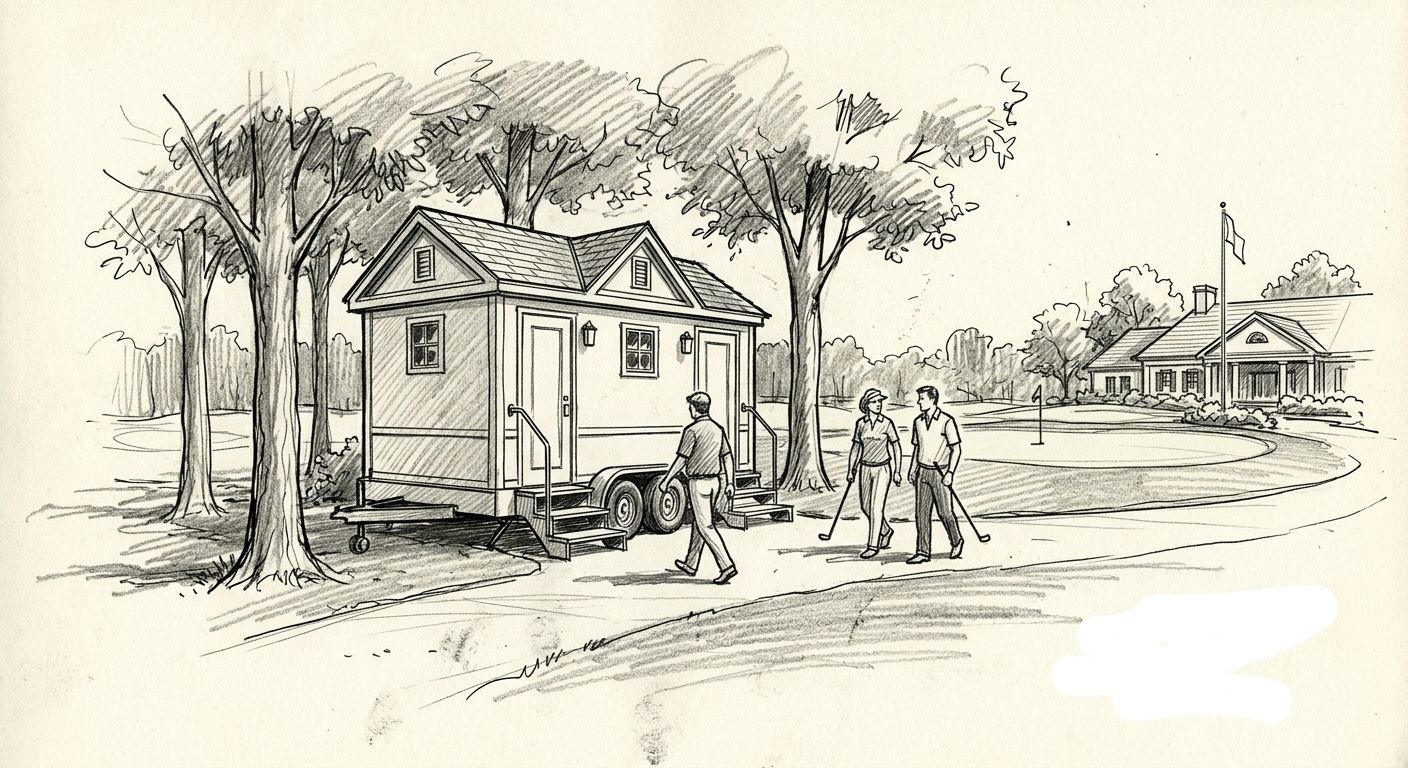
Cart path tear-outs and clubhouse renovation work tied to a golf course project generate C&D debris on the same timeline as the fencing goes up, and crews working multi-week phases still need restrooms on site. Valley Services runs its own transfer station in San Jose rather than brokering disposal to a third party, so containers, restrooms, and fencing schedule off one call instead of three separate vendor windows. That matters most on multi-hole 2026 renovations where the fence line, the haul road, and the dumpster pickup all move together as each phase closes out.
For a golf course renovation moving through multiple phases this season, call (408) 297-5404 or reach out through Valley Services to talk through hole-by-hole fencing before equipment mobilizes.