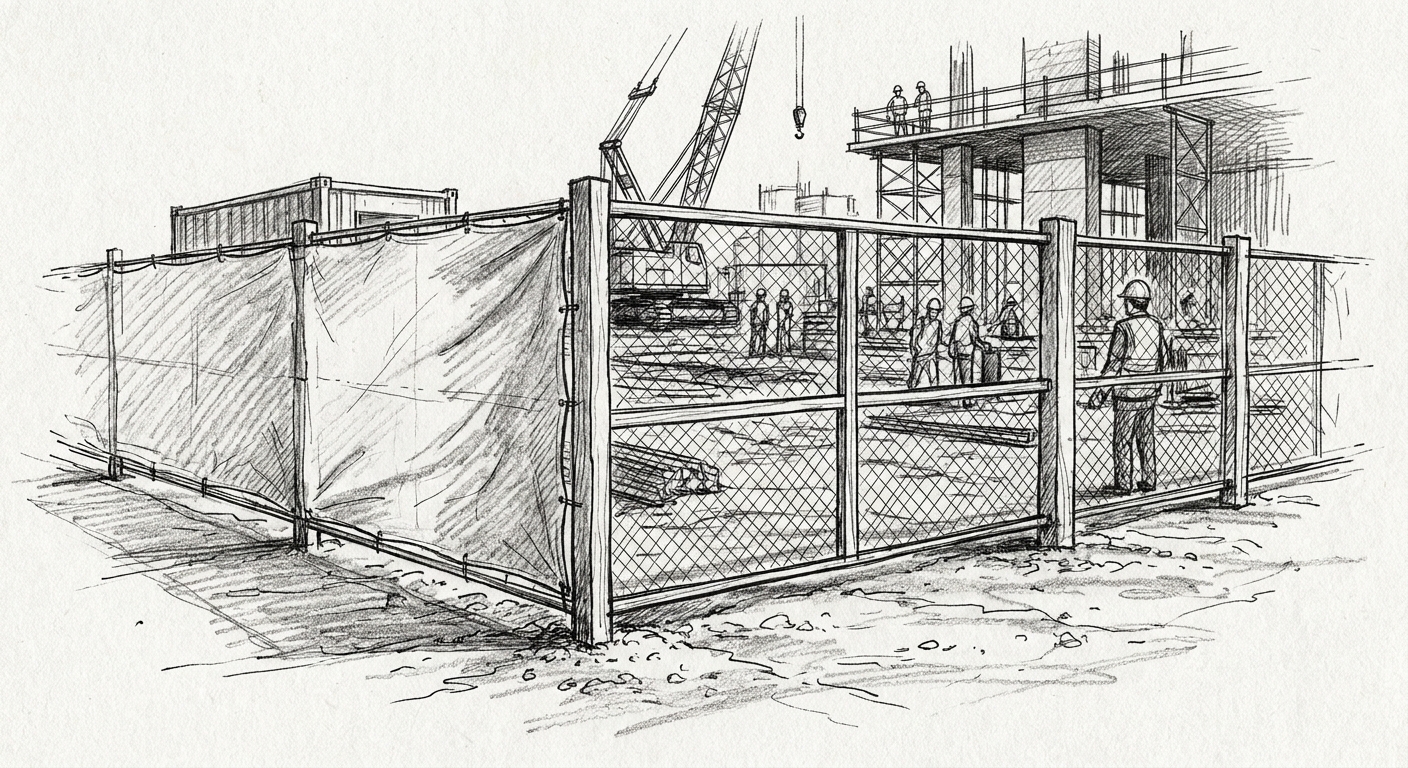
A windscreen fence rental for construction sites controls dust drift, blocks sightlines on demo work, and keeps loose debris off the sidewalk, but the right setup in 2026 depends on wind exposure, jobsite duration, and what the inspector is checking for at final walkthrough.
- Windscreen fence rental for construction sites works best at 80-90% mesh density for dust control on demo jobs.
- Chain link plus windscreen fabric handles most Bay Area sites, K-rail with windscreen suits street-facing perimeters.
- Shade cloth is not a substitute for rated windscreen fabric, it tears loose in gusts above 25 mph.
- Valley Services runs temporary fencing and windscreen panels across San Jose, Santa Clara, Sunnyvale, Mountain View, and Milpitas in 2026.
Why this matters
A jobsite without windscreen loses material off the top of an open dumpster, kicks dust onto neighboring cars, and gives every passerby a clear view into an active demo zone. Cities in the South Bay increasingly tie dust and debris containment to site inspection sign-off, and a bare chain link fence does none of that work on its own.
The fix is a mesh or solid windscreen panel zip-tied or clipped to temporary fencing for construction sites, sized and anchored for the wind the site actually sees. Get the density and anchoring wrong and you either fail an inspection or watch a 100-foot run peel off the fence line in a February storm.
Who this is for
This guide is for general contractors running demo or urban infill work next to occupied buildings, property managers securing a vacant lot from foot traffic and dumping, and homeowners doing a pool or backyard remodel where a neighbor's fence line sits ten feet from the excavation. Event producers needing wind block behind staging or signage fall into the same decision tree, just with a shorter rental window.
What to look for in windscreen fence for construction sites
Mesh density and wind block rating
Windscreen fabric is rated by how much open weave it has, typically 80 to 90 percent block on standard construction-grade panel. Higher density blocks more dust and more wind load at the same time, which means more strain on the fence posts and clips holding it up. A site with heavy demo dust wants density on the high end, a site mainly hiding materials from the street can run lower.
Panel height and site-line control
Standard chain link temporary fence runs 6 feet, and windscreen panel is cut to match. If the goal is blocking sightlines from a sidewalk or adjacent second-story window, 6 feet may not cut it, and a taller run or added top rail becomes part of the order. Measure from the actual vantage point people are viewing from, not just from street level.
Anchoring and ballast for wind load
A windscreen panel turns a chain link fence into a sail. Concrete feet or ballast blocks that hold an empty fence panel fine will not hold the same run once windscreen fabric is attached, especially on runs over 100 linear feet with no building to break the wind. This is the single most common failure point on Bay Area sites.
Attachment method to the fence system
Windscreen fabric clips or zip-ties to chain link differently than it mounts to K-rail. K-rail-based perimeter fencing uses bracket-mounted panel, chain link uses zip ties or bungee clips along the top and mid rail. Confirm which fence system is already on site or being delivered before ordering panel, mismatched attachment hardware means a second trip.
Local permit and setback rules
San Jose and neighboring cities have setback and sidewalk clearance rules for temporary fencing that windscreen panel does not exempt you from. A fence line that's compliant bare can become a violation once solid windscreen blocks a required sightline at a driveway or crosswalk. Check the permit before the panel goes up, not after.
Duration flexibility for multi-phase jobs
A demo phase might need dense windscreen for six weeks, while the framing phase that follows needs none. Renting fence and panel that can be reconfigured or partially removed as the job moves phases saves a second full teardown and reinstall.
Top picks by setup
Chain link plus mesh windscreen panel, the standard pick. Runs at 80 to 90 percent density on standard 6-foot chain link, clipped along top and mid rail. It handles dust containment and basic sightline blocking for most active construction jobs in 2026. Buy for any GC-run site inside city limits. See how to set up temporary fencing on a job site before the panel arrives.
Solid privacy screen for demo containment, the heavy-duty pick. Solid or near-solid panel blocks close to 100 percent of sightline and holds back more airborne debris than standard mesh, at the cost of higher wind load on the fence run. It earns its keep on active demolition where dust and falling debris are the main concern. Buy for demo phases, and check temporary fencing for demolition sites for anchoring specifics before ordering. Consider it overkill for a framing-only phase.
K-rail with windscreen fabric, the street-facing pick. K-rail gives a fence line mass and stability that chain link posts can't match, useful where the fence sits directly against a public sidewalk or active traffic lane. Windscreen panel mounts to K-rail with brackets rather than clips. Consider this setup for any perimeter within a few feet of vehicle or pedestrian traffic. Skip it for interior lot lines where chain link does the job at lower cost.
Chain link with residential-height windscreen, the backyard pick. For pool builds and home remodels, a shorter fence run with mid-density windscreen blocks a neighbor's direct view into an open excavation without the wind load of a full commercial run. Consider this for any residential job where the property line sits inside 15 feet of the work zone.
Short-duration event fencing with windscreen, the temporary pick. Built for job durations under two or three weeks, this setup trades long-term anchoring for fast install and teardown. It works for staging areas and signage backdrops but is not built to hold through a multi-month demo phase. Buy for short events, Skip for anything running past a month without reinforced anchoring.
What to avoid
- Shade cloth instead of rated windscreen fabric. Shade cloth is built for sun, not wind load, and it tears or pulls loose from clips in gusts that rated windscreen fabric handles without issue.
- Fence height that ignores the actual vantage point. A 6-foot run looks fine from the sidewalk but does nothing to block a view from an adjacent second-story window, measure from where people are actually looking.
- Skipping ballast on long exposed runs. A 100-foot straight run of windscreen-covered fence with no building or terrain break needs real ballast, not the minimum feet rated for bare chain link.
“A windscreen panel turns a chain link fence into a sail, and the anchoring has to match that, not the bare fence weight.”
Verdict comparison
| Setup | Mesh Density | Best Suited For | Anchoring Needed | Verdict |
|---|---|---|---|---|
| Chain link + mesh windscreen | 80-90% | Active construction, general dust control | Standard concrete feet | Buy |
| Solid privacy screen | Near 100% | Active demolition | Reinforced feet, tighter post spacing | Buy for demo |
| K-rail + windscreen | 80-90% | Street-facing perimeter | K-rail mass, bracket mount | Consider |
| Chain link, residential height | 70-85% | Pool builds, backyard remodels | Standard feet | Consider |
| Short-duration event fencing | Varies | Events under 2-3 weeks | Light ballast | Buy for short jobs |
FAQ
What's the best windscreen fence rental for a construction site?
For most active jobsites, chain link fencing with 80 to 90 percent density windscreen fabric handles dust control and sightline blocking without the wind load risk of a solid screen. Demo-heavy sites often step up to a near-solid privacy screen instead.
Is windscreen fence rental required by code in San Jose?
Dust and debris containment requirements vary by permit and project type, and windscreen panel is one of the common ways contractors meet them. Check the specific permit conditions for the job before assuming windscreen is optional.
How much wind can a windscreen fence panel handle?
Wind tolerance depends on mesh density, panel height, and anchoring, denser fabric blocks more wind and puts more load on the fence posts. Runs over 100 linear feet without a building break generally need reinforced ballast, not the minimum rating for bare fence.
Can windscreen panel attach to K-rail instead of chain link?
Yes, K-rail-based perimeter fencing uses bracket-mounted windscreen panel rather than the zip ties or clips used on chain link. Confirm which fence system is already specified for the site before ordering panel.
What's the difference between mesh and solid windscreen fencing?
Mesh windscreen runs 80 to 90 percent block and lets some wind pass through, reducing load on the fence line. Solid privacy screen blocks close to 100 percent of sightline and airborne debris but carries a higher wind load and needs stronger anchoring.
How long can a windscreen fence stay up on a job site?
Windscreen fencing can stay up for the full duration of a multi-phase project as long as anchoring is rated for long-term exposure. Short-duration setups built for events or quick jobs are not built to hold through months of continuous wind load.
Does windscreen fencing require its own permit?
Windscreen panel typically falls under the same permit as the temporary fencing it's attached to, but setback and sightline rules can change once solid panel blocks a required clearance. Confirm with the city before installing dense panel near a driveway or crosswalk.
One last thing
Valley Services has run the same San Jose yard since 1986, third generation, same family. Fencing, windscreen panel, roll-off containers, and restrooms come off the same order, which means one call covers the whole perimeter and the whole jobsite instead of coordinating three vendors on three schedules. That matters most on multi-phase jobs where the fence line, the dumpster placement, and the restroom location all shift together as the work moves.
Call (408) 297-5404 or reach out through valleyservices.biz to talk through what your site actually needs in 2026, from fence height to anchoring to how long the panel needs to stay up.