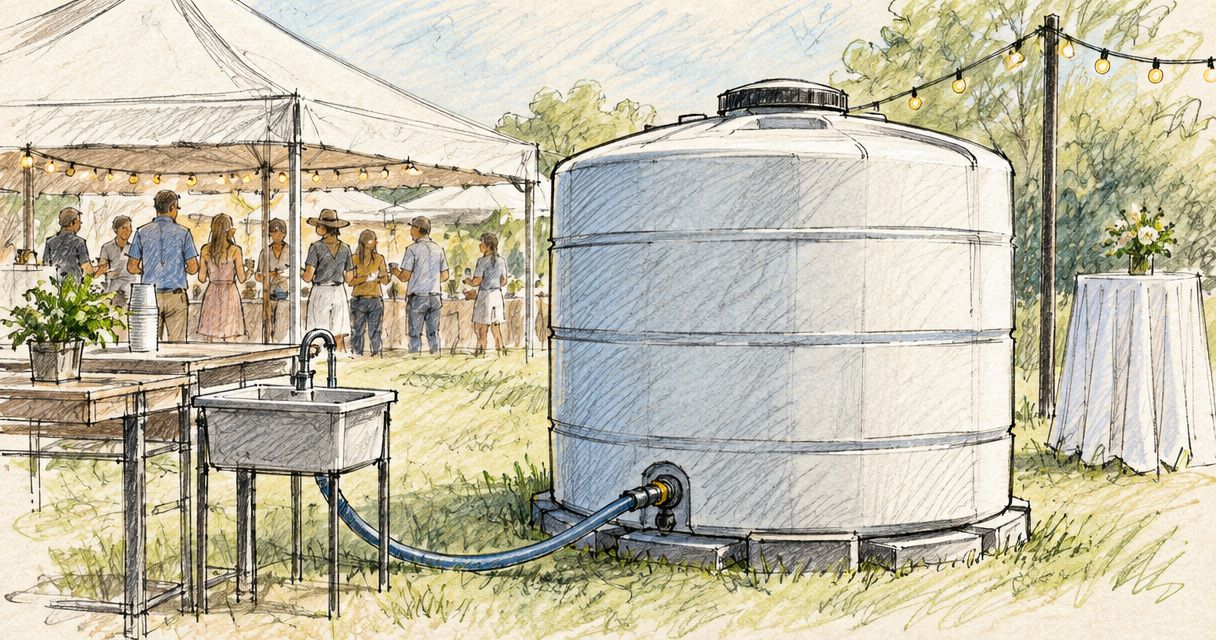
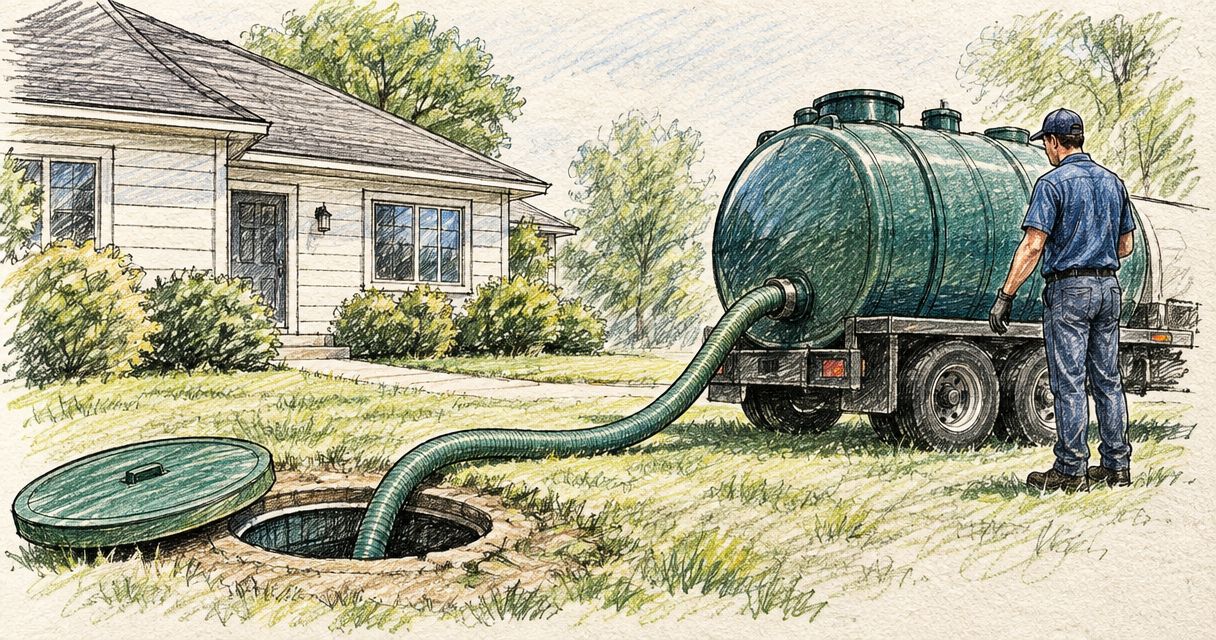
Yes, you can rent a wastewater holding tank for residential use during a septic repair, provided your septic contractor confirms a suitable connection and the local permitting authority accepts the temporary arrangement. A tank rental alone does not restore household plumbing: you also need installation, level monitoring, pump-out service, and an approved wastewater disposal arrangement. For a 2026 repair, settle those responsibilities before the contractor disconnects your septic system.
- Can I rent a holding tank for residential septic repair? Yes, with a suitable connection and local approval.
- A wastewater holding tank stores sewage. It does not repair or replace the septic treatment system.
- Arrange installation, level monitoring, pump-outs, and removal before disconnecting household plumbing.
- Valley Services site service rentals suit homeowners coordinating temporary restrooms and fencing during repair work.
Can I rent a holding tank for residential use during a septic repair?
Yes, but approve the entire temporary setup, not just the tank. Your septic contractor or plumber must determine which household drains will connect to it, how wastewater will reach it, and how the permanent system will be isolated during repairs. The rental provider must confirm that the selected equipment is intended for the wastewater involved.
A tank used with a temporary restroom is not automatically suitable for receiving the discharge from an entire house. Connection fittings, operating capacity, placement, and servicing access all matter. Start with the household plumbing requirements, then review how to choose the right holding tank size.
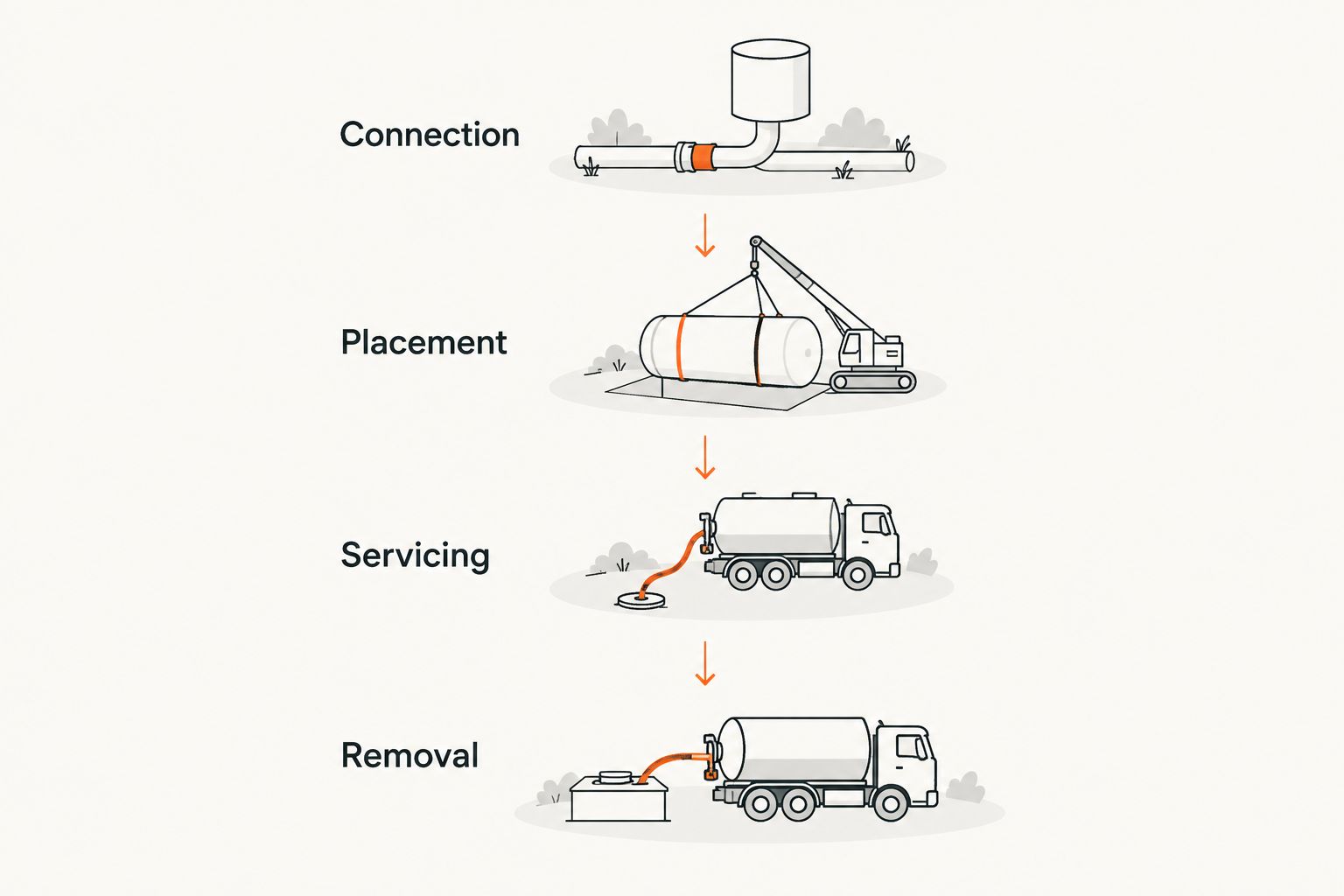
Use this sequence before booking equipment:
- Confirm the outage. Ask the repair contractor when the existing system will be disconnected and what must happen before it returns to service.
- Check local approval. Ask the authority responsible for your property's septic system whether a temporary holding arrangement is permitted and what documentation it requires.
- Define the connection. Have the contractor identify the drains served, the connection point, and any pumping or electrical requirements.
- Arrange servicing. Confirm who monitors the tank, who performs pump-outs, and where the collected wastewater goes.
- Plan removal. Coordinate final emptying, disconnection, and collection after the permanent system is cleared for use.
Do not treat a delivery confirmation as permission to keep using every fixture. A workable rental order and an approved residential wastewater arrangement are separate decisions.
Why this matters during a septic repair
A septic repair affects more than restroom access. Sinks, showers, laundry, and other connected fixtures also discharge wastewater. Temporary restrooms address restroom use, but they do not take over those household drains.
For your 2026 repair plan, identify what must remain usable while work proceeds. If you need the house fully occupied, the temporary arrangement must address the connected household wastewater, not just provide a restroom outside.
A holding tank also needs continuing service. Its usable storage is finite, and wastewater must be removed before that storage is exhausted. Book the service plan at the same time as the equipment.
Which temporary arrangement fits the repair?
The right arrangement depends on whether you need household plumbing, separate restroom access, or an unoccupied property during the outage. None of these choices eliminates the need to complete the septic repair.
| Temporary arrangement | Suited to | What it handles | Advantage | Limitation |
|---|---|---|---|---|
| Wastewater holding tank connected to the house | An occupied home with an approved temporary connection | The household drains included in the approved setup | Provides temporary wastewater storage for connected fixtures | Requires installation, monitoring, pump-outs, and removal |
| Portable restrooms or a restroom trailer | A household or repair crew needing separate restroom access | Use of the temporary restroom equipment | Provides restroom access without relying on the household restroom connection | Does not receive wastewater from household sinks, showers, or laundry |
| Temporary relocation | A household that cannot use an approved temporary wastewater arrangement | No household wastewater storage during the absence | Avoids depending on temporary household plumbing | Requires another place to stay and coordination around property access |
A holding tank connected to the house
A temporary wastewater holding tank makes sense when the contractor can establish a suitable connection and the authority accepts the arrangement. The connection plan must identify what enters the tank and how flow is controlled while the septic system is disconnected.
The benefit is specific: storage for the household drains included in that plan. The trade-off is continuing dependence on monitoring and pump-out service. Do not assume that a larger tank removes those obligations.
Temporary restrooms at the property
Portable restrooms or a restroom trailer serve a different purpose. They give occupants or workers separate restroom access while the repair proceeds.
They do not make the home's showers, sinks, or laundry usable. Before selecting this approach, ask the contractor which indoor fixtures must remain unused and whether the temporary restroom equipment needs water, power, or separate wastewater storage.
Leaving the house unoccupied during the outage
Temporary relocation is the practical choice when the house cannot support an approved temporary wastewater arrangement. Confirm access for the repair contractor and decide who will remain responsible for the property while you are away.
Do not return to normal plumbing use solely because excavation has finished. Follow the contractor's instructions and any required inspection or authorization before using the repaired system.
Why holding tank requirements vary
Residential wastewater arrangements are not interchangeable. For a 2026 booking, give the contractor and rental provider the actual repair scope rather than asking for a tank based only on household size.
- Connected fixtures. A setup serving selected drains has a different flow requirement from one receiving the whole home's wastewater.
- Household use. Occupancy, showers, laundry, and other water use affect how quickly storage fills.
- Repair duration. The anticipated outage and the procedure for extending it affect the service schedule.
- Connection layout. Elevation, pipe routing, fittings, and any required pumping determine how wastewater reaches the tank.
- Service access. Tank placement must allow delivery, inspection, pump-outs, and eventual removal without conflicting with excavation.
- Local requirements. The property's permitting authority determines what temporary arrangement it accepts and what conditions apply.
Ask the provider to explain usable operating capacity, not just the tank's nominal size. Have the contractor base the pump-out plan on expected discharge and the equipment's operating limits. Do not substitute an unrelated jobsite estimate for a residential connection assessment.
What should I confirm before tank delivery?
Prepare a written handoff between the repair contractor, equipment provider, and person arranging pump-outs. Name the responsible party for every task. A homeowner should not have to resolve an installation question while a delivery truck waits at the driveway.
Connection
Confirm the intended wastewater type and the exact drains the temporary arrangement will serve. Ask who supplies the fittings, who installs them, and who checks the connection before use.
If the layout requires a pump, have the installer specify the equipment and its operating requirements. Do not connect household plumbing to a rental tank yourself or adapt a tank intended for a different use.
Placement
Have the provider approve the proposed location. Check the supporting surface, delivery route, gates, overhead obstructions, and space needed for servicing.
Keep the location coordinated with the excavation plan. A tank that blocks repair equipment or sits where the contractor needs to work creates a preventable conflict. Show both providers the same site sketch.
Servicing
Identify who checks the level and how that person knows when to request service. If the selected equipment has a level indicator or alarm, ask the provider to explain its use and response procedure.
Confirm pump-out access and scheduling before household discharge begins. Get instructions for stopping use if the tank approaches its operating limit, an alarm activates, or a connection fails.
Removal
Ask who authorizes the return to the permanent septic system. Then establish the order for final pump-out, disconnection, and tank collection.
Keep access clear through removal. Do not schedule landscaping, driveway work, or material deliveries across the service route before the temporary equipment is collected.
These handoffs should stay visible throughout the repair. A simple written plan is easier to follow than separate conversations about equipment, plumbing, and servicing.
Can I keep using showers and laundry during septic repairs?
Only use showers and laundry when the contractor confirms that their drains are included in the approved temporary arrangement. A holding tank beside the house does not establish that connection. Temporary restrooms do not handle household shower or laundry discharge.
For a 2026 outage, put fixture restrictions in writing so everyone in the house follows the same instructions. Ask specifically about sinks, bathing, dishwashing, and laundry. Do not assume that water use is acceptable because a fixture still drains.
Is a holding tank rental the same as a septic pump-out?
No. A septic pump-out removes contents from the existing septic tank, while a temporary holding tank provides separate storage for wastewater routed to it. Neither action, by itself, completes a septic repair.
Ask the repair contractor whether the existing system can receive wastewater during the work. If it must remain disconnected, an initial pump-out does not establish a temporary receiving system. The plumbing and servicing plan still needs approval.
Do I need permission for a temporary residential holding tank?
Confirm permission with the authority responsible for the property's septic system before arranging a temporary connection. A rental company's willingness to deliver equipment does not establish approval for residential wastewater use.
Ask what applies to placement, connection, inspection, servicing, and removal. For Bay Area properties, start with the actual property address rather than assuming that another city's requirements apply. Reconfirm the requirements for your 2026 repair instead of relying on an older project's paperwork.
How do temporary site services fit into the repair schedule?
Valley Services site service rentals suit homeowners who need temporary restrooms and fencing coordinated around Bay Area repair work. Those services support access and site control. They do not replace the septic contractor's connection design or the authority's approval.
For a San Jose, Santa Clara, Sunnyvale, Mountain View, or Milpitas project, separate the requests clearly: household wastewater handling, temporary restroom access, and protection around the work area. Describe each need without assuming that a single piece of equipment covers all of them.
Review the site service scope with Valley Services. Confirm residential holding tank suitability with the equipment provider and septic contractor before making it part of the repair schedule.
FAQ
Can I rent a holding tank while my home's septic system is being repaired?
Yes, provided the equipment suits the wastewater, the contractor establishes a suitable connection, and the local authority accepts the arrangement. Include monitoring, pump-outs, and removal in the plan.
Will a temporary holding tank let me use all the plumbing in my house?
Only the drains included in the approved temporary connection can discharge to the holding tank. Ask the contractor to identify permitted fixture use before the septic system is disconnected.
Can portable restrooms replace a holding tank during septic repair?
Portable restrooms provide separate restroom access, but they do not receive wastewater from household sinks, showers, or laundry. Your repair plan must address those drains separately.
How do I choose a holding tank size for my home?
Choose capacity with the contractor and provider using the connected fixtures, expected household discharge, repair duration, and pump-out plan. Nominal tank size alone does not establish a workable service interval.
Who should connect the temporary tank to my house?
Have your septic contractor or qualified plumber establish the connection responsibilities and installation requirements. Do not assume that equipment delivery includes plumbing work.
What should I do if the holding tank alarm activates?
Stop using the connected fixtures and follow the provider's service instructions. Contact the designated service provider rather than continuing discharge while waiting for a routine pump-out.
Does Valley Services replace the septic repair contractor?
No. Valley Services provides site service rentals, while your septic contractor remains responsible for the repair and temporary plumbing plan. Confirm equipment suitability and local approval separately.
One last thing
Plan the end of the rental before you plan delivery. A repaired system, a completed inspection, a final tank pump-out, and equipment collection are different milestones. Assign responsibility for each so temporary storage does not remain connected after its purpose ends.
For your 2026 repair, keep the fixture-use instructions and service contact details available to everyone staying at the property. The person arranging the rental is not always the person home when an alarm or scheduling change occurs.
Related guides
- Holding tank rental versus a septic pump-out
- How long a holding tank lasts before pumping
- How to rent a holding tank for a construction project
To talk through temporary restrooms, fencing, and the site service needs around your repair, call Valley Services at (408) 297-5404.