
A holding tank rental is not a substitute for pumping an existing septic tank. In 2026, arrange a septic pump-out when the existing system needs service; consider a temporary holding tank when a jobsite or event needs separate wastewater collection. A rented tank still needs a pump-out plan, and neither step repairs a failed septic system.
- For holding tank rental vs septic pump out, service the existing septic tank when that is the source of the problem.
- Choose temporary collection when a jobsite or event needs wastewater capacity separate from an existing septic system.
- A holding tank still needs scheduled pump-outs, access for a service vehicle, and a clear handoff at load-out.
- Valley Services fits Bay Area teams coordinating site restrooms, containers, and fencing; septic pump-outs are not a stated service.
Why this matters on a Bay Area site
A renovation can interrupt restroom access while the septic system on the property remains in use. An outdoor event can need restrooms where there is no permanent connection. Those are different logistics problems from a septic tank that needs pumping. Start by identifying which system is collecting the wastewater, then work through how to choose a holding tank size for a jobsite if temporary collection is part of the plan.
In 2026, the decision affects more than equipment placement. A pump-out needs access to an existing tank. A rental needs a location, a connection plan where applicable, service-vehicle access, and removal after use. If the existing septic system has an unresolved fault, adding temporary capacity keeps that fault on the repair list.
Is a holding tank rental better than a septic pump-out?
No. Choose by what needs service. A septic pump-out removes material from an existing septic tank. A temporary holding tank collects wastewater during a defined period and must itself be emptied. One services infrastructure already on the property; the other adds collection capacity for a separate use.
| Decision point | Septic pump-out | Temporary holding tank rental |
|---|---|---|
| What it addresses | An existing septic tank that needs service | A site or event that needs separate wastewater collection |
| What must be accessible | The existing tank and a route for the service vehicle | A suitable placement area, any required connections, and a service-vehicle route |
| What follows | Assessment or repair if an underlying fault remains | Pump-outs during use, then disconnection and removal |
| Main limitation | Pumping does not repair a malfunctioning system | A rented tank does not repair or replace the existing septic system |
| Suitable for | Property managers servicing an existing system | Contractors or event teams arranging temporary facilities |
The distinction holds even when both options appear on the same schedule. A property could need service on its septic tank while a construction crew uses separate temporary restrooms. Treat those as separate work orders. Confirm who owns each connection, who schedules each pump-out, and which vehicle needs access at each stage.
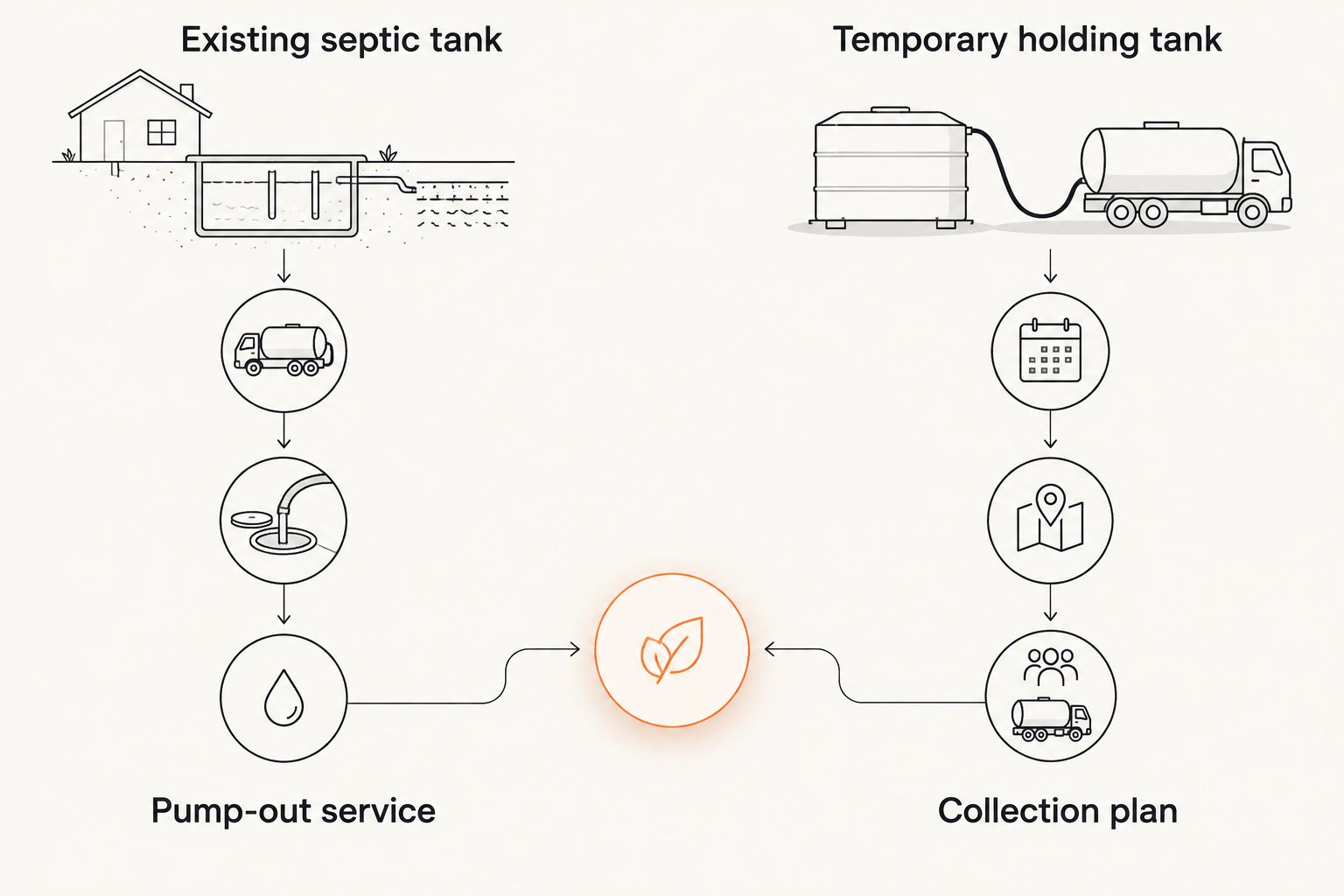
Before committing to either route, locate the actual collection point. A restroom trailer, a building, and an existing septic tank are not automatically connected to the same system. The site plan should show what receives wastewater now and what will receive it while work or an event is underway.
When should you schedule a septic pump-out?
Schedule a septic service provider when the question concerns the tank already serving a property. This is the relevant path for planned tank maintenance, a service request from the property team, or an investigation of a system that is not operating as expected. Tell the provider what you have observed rather than assuming pumping alone resolves it.
For a San Jose property manager preparing a turnover, identify the tank location before other crews occupy the access route. Keep vehicles, stored materials, and temporary fencing from blocking the service area. Confirm access with the provider rather than moving equipment on the day of service.
A pump-out has a clear limit: it removes material from the tank. It does not establish why wastewater backed up, why fixtures stopped working, or whether another part of the system needs attention. If there is an active failure, ask the septic provider to assess the condition. Do not treat a freshly pumped tank as proof that the system is ready for continued use.
That distinction matters during a renovation. A general contractor can schedule a pump-out before demolition and still need a separate restroom plan for the crew. The building's service work and the crew's facilities have different start dates, access needs, and responsible parties. Put both on the job schedule.
When should you plan for a temporary holding tank?
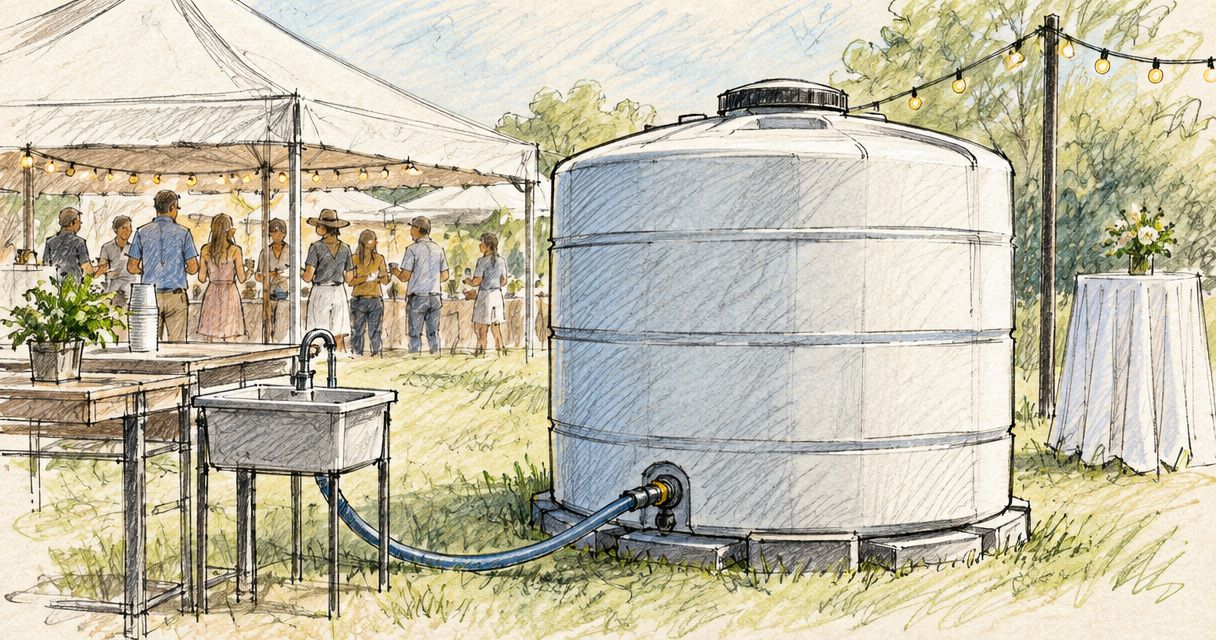
Plan temporary collection when restrooms or other facilities need a wastewater destination for a limited project or event and the proposed setup calls for a holding tank. Confirm the connection and servicing requirements with the facility provider before selecting a tank. Do not order a tank based on the assumption that every portable restroom or restroom trailer needs one.
For a South Bay jobsite, begin with the period of use and the placement area. Show the restroom location, the proposed tank location if one is required, and the route a service vehicle will use. Check whether construction materials, gates, or roll-off containers will occupy that route later. A location that works at load-in can become inaccessible after the next trade mobilizes.
For an event, coordinate wastewater servicing with the event schedule. The setup needs a defined load-in window, an operating period, and a load-out plan. Keep the servicing route separate from areas that will be occupied by attendees when service is due. If the site layout changes, update the plan with the provider before equipment is placed.
A holding tank has its own operating limit: it stores wastewater until a service provider empties it. It is not an indefinite workaround for a property septic failure. If a permanent system is out of service, arrange appropriate temporary facilities while the property team addresses the underlying problem.
What should you confirm before choosing either option?
Work through the collection path in order. In 2026, a clear diagram and a named contact for each service prevent a simple access issue from becoming a site stoppage.
- Identify the source. Is wastewater coming from an existing building system, a temporary restroom setup, or both? Write down which facilities will remain in use during the work.
- Locate the collection point. Mark the existing septic tank if it needs service. If a temporary tank is proposed, confirm its placement and connections with the facility provider.
- Confirm access. Check the route for the vehicle performing each pump-out. Account for gates, parked equipment, work zones, and event barriers.
- Assign scheduling responsibility. Name the person who will request service, confirm completion, and respond if the site layout changes. Do not leave pump-outs as an unnamed task between vendors.
- Plan the handoff. For a rental, establish when temporary facilities arrive, when service is needed, and when the equipment leaves. For an existing septic system, establish who handles assessment if pumping exposes a continuing problem.
The sequence is more useful than guessing a tank size first. Capacity depends on the actual facilities, use pattern, and service plan. Give the provider those details, then confirm the equipment and servicing arrangement that fit the site.
Why does the right choice vary by site?
The deciding factors are operational, not interchangeable product features:
- Existing system condition. Pumping addresses an existing tank. A suspected failure needs assessment as well as a service decision.
- Temporary facilities. A separate restroom setup creates a separate collection question. Confirm whether that setup requires a holding tank.
- Project duration. A temporary arrangement needs a service plan for the full period it is in use, not just delivery and pickup dates.
- Vehicle access. The provider must be able to reach the relevant tank when service is scheduled. Recheck the route after the site layout changes.
- Site control. Gates, fencing, containers, and public access affect where equipment can sit and when a service vehicle can enter.
- Ownership of the task. A contractor, property manager, and event producer can each control different parts of the site. Assign one contact for every service handoff.
In 2026, those factors matter on a small property turnover as much as on a multi-phase construction site. The equipment decision follows the wastewater route. If the route is not clear, pause the order and confirm it with the appropriate provider.
Can you rent a holding tank instead of repairing a septic system?
No. A temporary holding tank can serve a separately planned collection setup, but it does not repair an existing septic system. Arrange an assessment of the fault and confirm which facilities can be used while that work proceeds.
Do not connect equipment based on an assumed workaround. The facility provider and the septic service provider need to understand the same site plan before work begins. This keeps the temporary arrangement distinct from the permanent repair.
Does a holding tank rental still need pump-outs?
Yes. A holding tank needs pump-outs as part of its service plan because its contents remain in the tank until they are removed. Confirm who monitors the setup and who requests service before the facilities open for use.
For a jobsite, keep that responsibility on the active schedule. A tank installed at the start of a project can be overlooked when crews shift areas or the site contact changes. Record the provider's access requirements alongside the other site-service bookings.
Can septic pumping and temporary facilities happen on the same project?
Yes. Septic pumping can address a property's existing tank while temporary facilities support people on site. Keep the work orders separate so the crew does not mistake one completed service for the other.
Valley Services is a fit for Bay Area site teams coordinating restrooms, roll-off containers, and temporary fencing on one schedule. Its stated services do not include septic pump-outs, so direct that part of the work to a septic service provider. Valley Services also owns its San Jose C&D transfer station; that is a separate endpoint for construction and demolition material, not a destination for wastewater.
Talk through your site plan
Coordinate restrooms, containers, and fencing around your project schedule.
FAQ
Is a holding tank rental better than a septic pump-out in 2026?
No. Use a septic pump-out to service an existing tank; consider a temporary holding tank when a separate setup needs wastewater collection. A rented tank also requires pump-out service.
Will pumping a septic tank fix a system that is backing up?
Pumping removes material from the tank but does not establish or repair the cause of a backup. Ask a septic service provider to assess the system if the problem continues.
Does every portable restroom need a separate holding tank?
No. Do not assume a separate holding tank is required. Confirm the collection setup with the restroom provider before ordering equipment.
Can a holding tank serve a jobsite during septic work?
A temporary holding tank can be part of a separately planned restroom setup during septic work. Confirm connections, servicing, placement, and access with the providers involved.
Who schedules pump-outs for a rented holding tank?
Assign that responsibility before the rental begins. Confirm the service arrangement with the tank or facility provider and give the site contact the access plan.
What matters most when placing a temporary holding tank?
Placement must account for the facility connection and access for servicing and removal. Check the route again as fencing, containers, and work zones change.
Does Valley Services perform septic pump-outs?
Septic pump-outs are not among Valley Services' stated services. Valley Services offers Bay Area site services including restrooms, roll-off containers, temporary fencing, and K-rail.
One last thing
The common scheduling mistake is treating delivery as the whole plan. In 2026, write down who empties the tank, who opens the gate, and what happens if the service route is blocked. If the question instead concerns an existing septic system, start with a septic service provider, not a rental order.
Valley Services has operated from the same San Jose yard since 1986. For a Bay Area project that also needs restrooms, containers, or fencing, call Valley Services at (408) 297-5404 to talk through the site schedule.