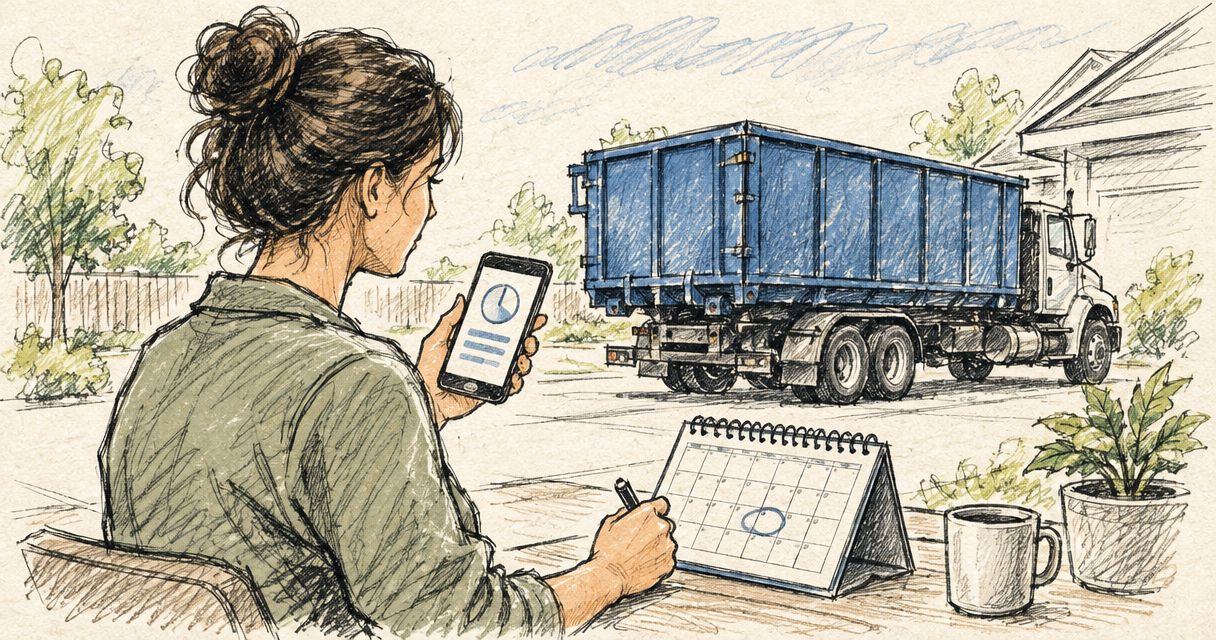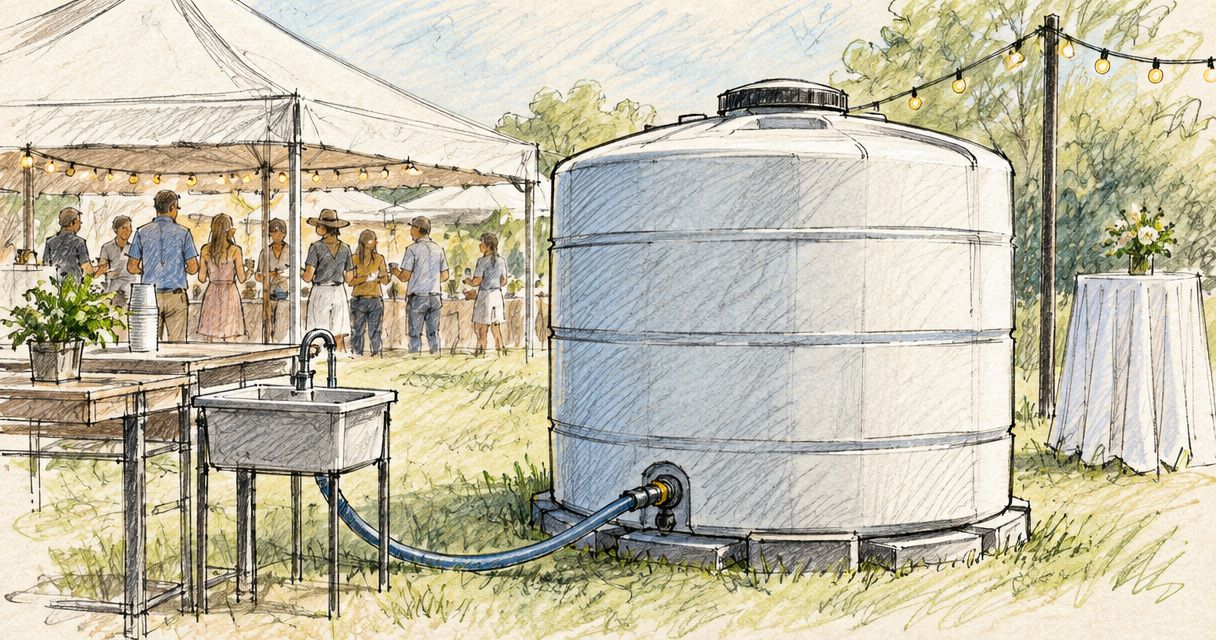
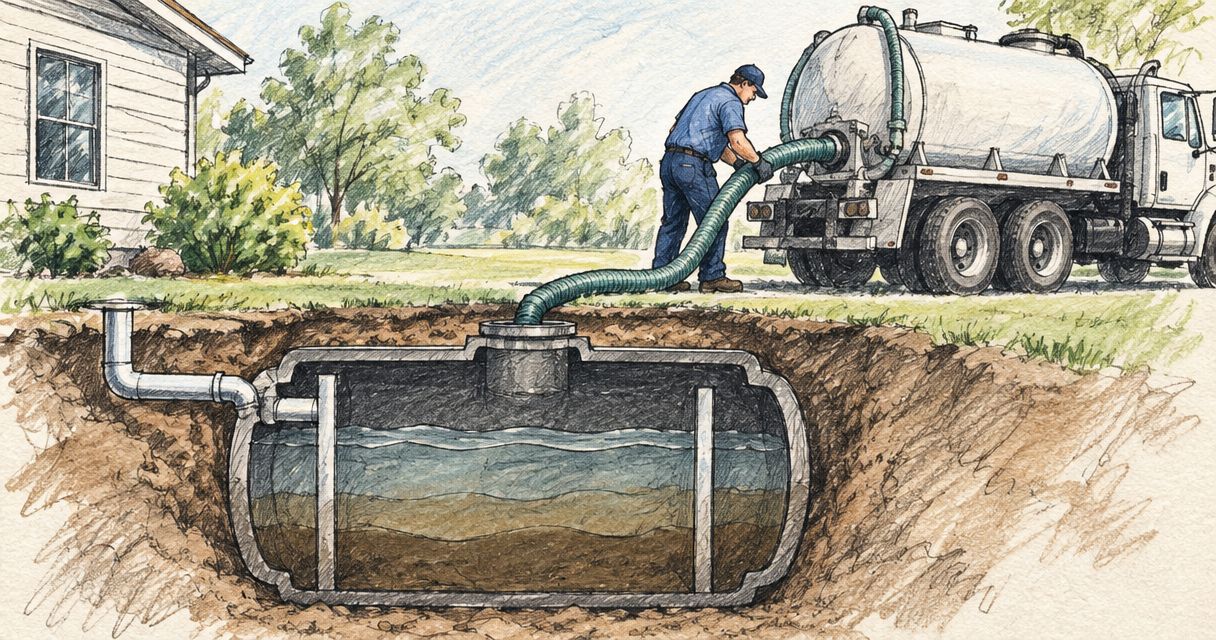
A holding tank lasts until its usable capacity is consumed, not for a fixed number of days. To estimate how long a holding tank lasts before pumping in 2026, divide the usable capacity by the volume entering it each day, then schedule service before the tank reaches its pump-out threshold. An event surge, an added restroom, or delayed service can shorten that window.
- For how long does a holding tank last before pumping, divide usable capacity by daily inflow and book service before the threshold.
- A level reading checks the estimate; it does not replace a pump-out schedule.
- Valley Services coordinates restrooms and site services, but holding-tank pump-out arrangements must be confirmed separately.
How long does a holding tank last before it needs pumping?
There is no fixed interval that applies to every holding tank. The working interval depends on usable capacity, actual inflow, the level at which the tank must be pumped, and when a service crew can reach it. A tank that serves an event crowd has a different fill pattern from one serving a steady jobsite crew.
Use the jobsite holding-tank sizing guide to frame the capacity question. For a pump-out schedule, keep capacity and usage separate: a large tank still fills quickly when several fixtures feed it, while a smaller tank with intermittent use has a different service window.
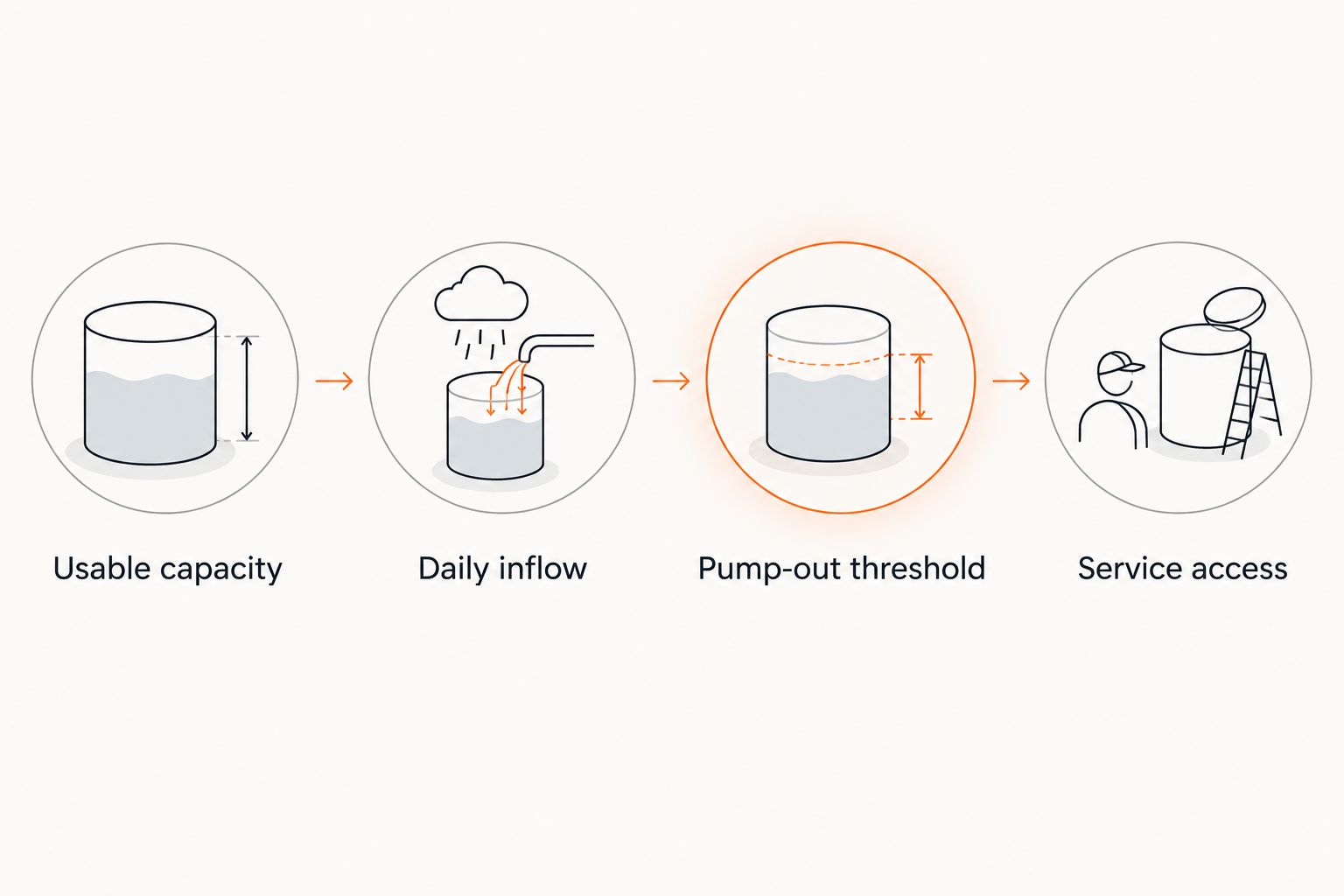
The calculation needs three inputs:
- Usable capacity: The amount the tank can hold before it reaches the agreed pump-out threshold, not simply its stated total capacity.
- Daily inflow: The combined volume entering the tank from every connected fixture during a working day or event day.
- Service lead time: The time needed to arrange access and complete a pump-out before that threshold is reached.
Divide usable capacity by daily inflow to estimate days between pump-outs. Treat the result as a planning interval, then check the tank level against it. If you do not know the usable capacity or the pump-out threshold, ask the tank provider before assigning a date on the 2026 site schedule.
Why this matters on a Bay Area site
A pump-out date is a site-control decision. If the tank reaches its limit while restrooms are in use, the crew or event team has an immediate logistics problem. If service access is blocked by deliveries, fencing, parked equipment, or load-in, a scheduled visit does not solve it.
For San Jose construction work, put tank access on the same site plan as restroom placement and vehicle circulation. For an event in Santa Clara, Sunnyvale, Mountain View, or Milpitas, check access during both load-in and public hours. Those are different operating conditions, even when the tank stays in the same place.
Valley Services rents restrooms and other site services across the Bay Area. Confirm who supplies, monitors, and pumps the holding tank before you treat a restroom booking as a complete wastewater plan. The scope of each service needs to be clear to the contractor or event producer responsible for the schedule.
How do you calculate the pump-out interval?
Start with the tank’s usable capacity in gallons and an estimate of inflow in gallons per day. Use the same units for both. The calculation produces a number of days, but the service appointment belongs before the projected threshold, not at it.
| Scheduling method | Best for | What it tells you | Limitation |
|---|---|---|---|
| Capacity divided by daily inflow | Planning before a job or event starts | An initial service interval | The result changes when actual use differs from the estimate |
| Tank-level checks | An occupied site with changing use | Whether the tank is filling faster than planned | A reading alone does not secure a service appointment |
| A standing pump-out schedule with level checks | A continuing operation | A planned service window and a way to catch changes | The schedule still needs revision when fixtures or users change |
The practical approach in 2026 is to calculate an interval, book access around it, and revise it from observed levels. Do not use the calculation as permission to run the tank to its limit. A service vehicle must be able to reach the tank when the appointment arrives.
If several restrooms or other fixtures discharge into the same tank, count all of them in the inflow estimate. If a connected fixture is added mid-project, redo the calculation that day. The previous interval describes the previous setup.
The same rule applies when the operating schedule changes. A site that moves from intermittent work to daily occupancy needs a new inflow estimate. An event that adds a setup day or extends public hours needs another look before load-in begins.
Why does the time before pumping vary?
The tank is only one part of the system. Check these factors whenever you set or revise a pump-out date:
- Usable capacity. Confirm the working volume and the level that triggers service. A nominal tank size does not tell you when pumping must occur.
- Connected fixtures. List every restroom or other fixture feeding the tank. An overlooked connection makes the inflow estimate incomplete.
- Site population and operating hours. A full crew and an intermittent crew do not generate the same pattern of use. Event load-in can also differ from public hours.
- Change in use. Added shifts, additional event areas, or a longer operating window change the volume entering the tank.
- Level visibility. Check how the level will be read and who is responsible for checking it. A calculation cannot identify an unexpected rise on its own.
- Pump-out access. Keep the approach to the tank open for the service vehicle. A blocked gate or staging area can turn an adequate capacity plan into a missed appointment.
Do not copy the pump-out interval from a previous project without checking those factors. Even two jobsites in the South Bay with similar crews can have different fixture connections and working hours. The schedule must describe the current site, not the last one.
What should a jobsite manager confirm before booking service?
Write down the tank location, connected fixtures, usable capacity, pump-out threshold, and the person assigned to check levels. Then identify where the service vehicle will enter, stop, and leave. Keep that route clear on the days service is planned.
Ask the tank provider to identify the servicing responsibility in the rental arrangement. Do not assume restroom delivery includes tank-level monitoring or pumping. If separate crews handle the restrooms and the holding tank, give both the same site access instructions and the same current contact.
For a multi-phase project, revisit the plan at each change in occupancy or site layout. A gate that works during demolition can be blocked by later material staging. The tank may still have capacity, but access determines whether it can be serviced on schedule.
Valley Services can coordinate its stated site-service rentals, including restrooms, roll-off containers, and temporary fencing. Its San Jose C&D transfer station is a separate construction-and-demolition drop-off operation, not a reason to assume a holding-tank pump-out is included. Confirm the wastewater scope directly before putting it on a shared jobsite calendar.
What changes for events and restroom trailers?
An event does not have a steady daily pattern by default. Load-in, staff preparation, public hours, and load-out create distinct periods of use. Count the fixtures connected to the tank and build the service plan around the period that places the greatest demand on it.
Place the tank where it can be serviced without crossing a closed event area or interrupting a scheduled delivery. Confirm the access window with the person controlling the venue. If the route changes after fencing or vendor staging is installed, update the pump-out plan before the event opens.
For a restroom trailer, establish where its wastewater goes before confirming placement. A trailer booking and a holding-tank service plan are separate decisions unless the provider expressly includes both. In 2026, the useful question is not how many calendar days a tank usually lasts; it is whether the planned service window remains clear during the event’s actual operating schedule.
Valley Services rents portable restrooms and luxury restroom trailers for Bay Area sites and events. Ask which equipment and servicing tasks are included in the specific booking. That distinction gives the event producer one clear schedule rather than an assumption between vendors.
What if the tank fills sooner than expected?
Treat an unexpectedly high level as a change to the schedule. Check for a new fixture connection, a change in occupancy, or longer use hours. Arrange service before the agreed threshold, and update the next appointment using the observed rate of fill.
Do not wait for a calendar date simply because it was set before the project started. If the tank is approaching its threshold, contact the responsible service provider and keep the service route clear. The level reading now matters more than the original estimate.
If a level reading appears inconsistent with expected use, have the responsible provider assess it. Do not assume the reading is wrong or change the pump-out date without a check. The person managing site access should know when service is expected and which gate the vehicle will use.
Can you wait until the holding tank is full?
No. Pump the tank before it reaches its operating threshold. A full tank leaves no working capacity for continued use while service is arranged. The correct trigger is the agreed pump-out level and the lead time needed to complete service, not the point at which the tank can hold no more.
Build that lead time into the initial 2026 plan. On a jobsite, coordinate it with deliveries and changes in crew size. At an event, coordinate it with load-in, public access, and load-out so the service vehicle has a clear route.
Does a larger holding tank need pumping less often?
A larger usable capacity extends the calculated interval only when daily inflow stays the same. Added restrooms, longer hours, or more users can consume that extra capacity. Compare usable capacity and expected inflow together rather than choosing a pump-out date from tank size alone.
The larger tank also needs a workable placement and service route. A capacity decision that blocks the pump-out vehicle does not protect the schedule. Confirm both the location and the service approach before installation.
How often should you check the tank level?
Check it often enough to catch a change before the scheduled pump-out. The inputs provide no universal inspection interval, and a calendar rule cannot account for changing use. Assign a responsible person, record the level, and increase attention when the job or event enters a heavier-use phase.
A record of levels helps you compare actual fill with the planned interval. If those diverge, change the service date. Keep the update with the site schedule so the access team and the service provider work from the same plan.
FAQ
How long does a holding tank last before pumping?
A holding tank lasts until its usable capacity reaches the pump-out threshold. Divide usable capacity by daily inflow to estimate the interval, then schedule service before that threshold.
Is there a standard number of days between holding-tank pump-outs?
No fixed number of days fits every holding tank. Capacity, connected fixtures, hours of use, and actual inflow determine the interval.
Can I schedule pumping based on tank size alone?
No. Tank size must be considered alongside the volume entering the tank and the level at which service is required.
Should a jobsite holding tank be pumped before it is full?
Yes. Arrange pumping before the tank reaches its operating threshold so there is capacity while service is completed.
Does a restroom trailer booking include holding-tank pumping?
Do not assume it does. Confirm the wastewater setup and pump-out responsibilities with the providers named in your booking.
What should I do if a holding tank fills faster than planned?
Check the current level and contact the responsible service provider before the tank reaches its threshold. Then revise the pump-out schedule using the observed fill rate and current site use.
Can a missed pump-out affect an event schedule?
Yes. If the service vehicle cannot reach the tank during the planned window, the tank remains in use without the scheduled service. Set an access route and confirm it before load-in.
One last thing
The service route is part of the tank’s usable capacity plan. A tank with room left but no clear route for a pump-out vehicle still creates a scheduling problem. On the 2026 site plan, mark the tank, its access route, and the person who can clear that route before service arrives.
Valley Services has operated from the same San Jose yard since 1986 and provides restrooms alongside other site-service rentals. Keep the holding-tank servicing responsibility explicit when coordinating those rentals. A shared jobsite schedule works only when every service has an owner.
Related guides
- How to rent a holding tank for a construction project
- Restroom trailer bookings and event timelines
- How to winterize a jobsite holding tank
For a 2026 Bay Area jobsite or event, call Valley Services at (408) 297-5404 to talk through the restroom setup and confirm which holding-tank arrangements need a separate provider.