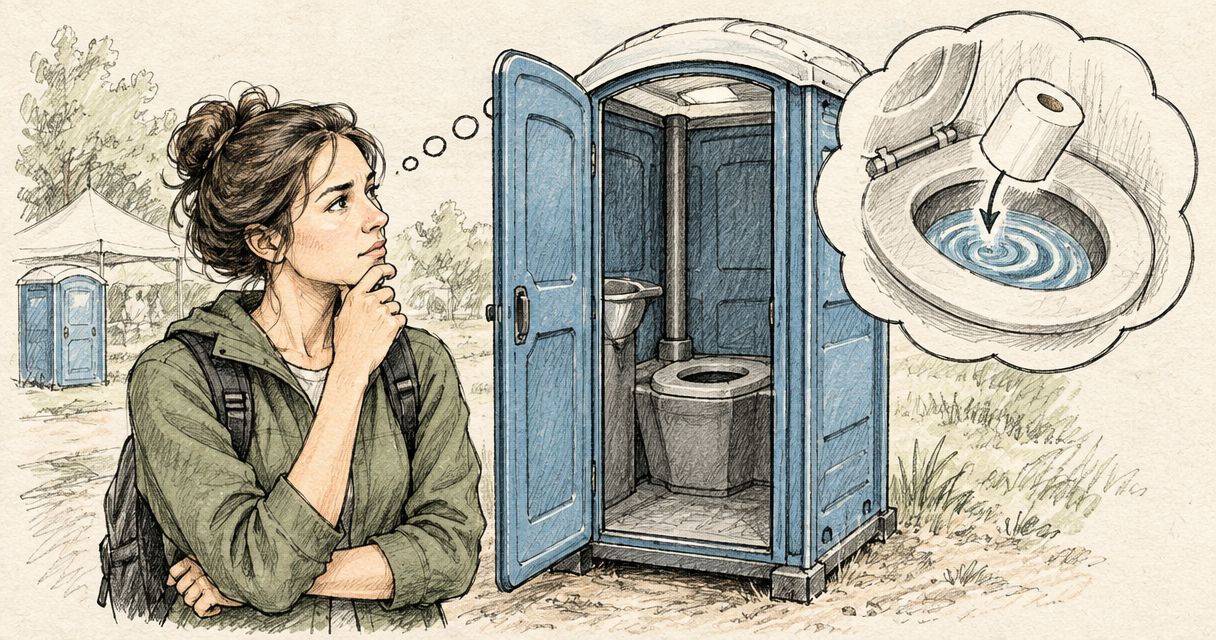
Yes, you can flush restroom paper in a portable restroom that has a working flush mechanism and permits paper in its waste tank. In a standard non-flushing unit, put the paper directly into the waste opening. Do not put wipes, paper towels, or packaging into either type of unit.
- In 2026, flush restroom paper only when the portable restroom has a working flush mechanism and permits paper in its tank.
- In a non-flushing portable restroom, put restroom paper directly into the waste opening.
- Keep wipes, paper towels, and packaging out of portable restroom waste tanks.
- Valley Services rents portable restrooms for Bay Area jobsites and events; confirm unit operation before guests or crews arrive.
Why this matters on a jobsite or at an event
A crew arrives before the site office opens. Guests reach an event restroom before the producer can brief staff. Neither group should have to guess how the unit works. A clear instruction at the restroom prevents the wrong material from entering its waste tank and gives the site lead one less issue to handle during load-in.
For a 2026 Bay Area jobsite, portable restroom service planning belongs on the setup list alongside access and placement. The paper question is simple, but its answer depends on the unit in front of you. A flush button is the deciding feature, not the fact that the restroom is portable.
Can you flush paper in a portable restroom?
Yes, if the unit is designed to flush and its operating instructions allow restroom paper in the waste tank. Otherwise, there is nothing to flush. Place ordinary restroom paper directly into the waste opening of a standard non-flushing unit. Follow any instructions posted inside the unit or supplied with the rental.
| Restroom setup | What to do with restroom paper | What not to assume |
|---|---|---|
| Standard non-flushing portable restroom | Put restroom paper into the waste opening. | Do not look for or try to operate a flush control. |
| Portable restroom with a flush mechanism | Use the flush control for permitted restroom paper. | Do not assume wipes or paper towels are acceptable. |
| Restroom trailer | Follow the instructions for that trailer's fixtures. | Do not assume its waste system accepts the same materials as a permanent building restroom. |
These are operating distinctions, not a promise that every rental has the same equipment. Before a 2026 event or construction phase starts, identify the units being delivered and pass their use instructions to whoever manages the site.
What should go into the waste tank?
Keep the rule narrow: human waste and permitted restroom paper belong in the waste opening. Put wrappers, packaging, paper towels, and wipes somewhere else. A product being labeled flushable does not establish that it belongs in a rented unit's tank.
That distinction matters when a jobsite shares restrooms across trades. One subcontractor can follow the instructions while the next treats the unit like a general waste bin. Put the instruction where users encounter the restroom, and make the site lead responsible for raising any servicing concern with the rental provider. Do not ask a crew member to reach into the tank or dismantle a fixture to clear a blockage.
At an event, assign the same responsibility to the person overseeing restroom placement and service access. A volunteer directing guests should know whom to notify, not how to repair equipment. For a 2026 event plan, keep restroom instructions with the rest of the load-in information so staff receive one consistent answer.
What about wipes labeled flushable?
Do not put wipes into a portable restroom waste tank unless the rental provider explicitly permits them for that unit. The label on a wipe does not tell you how a particular restroom's waste system operates. If you need a disposal location for wipes, arrange a separate waste receptacle rather than using the restroom opening.
What about paper towels and packaging?
Keep both out of the waste opening. Paper towels and packaging serve different purposes from restroom paper, and neither should be treated as a substitute for it. Check that the restroom has the supplies users need before the shift or event begins, then report missing supplies through the agreed site contact.
Why the answer changes between units
The question is about the equipment and its instructions, not a universal rule for every portable restroom. Check these factors before telling crews or guests what to do:
- Flush mechanism: A standard non-flushing unit has no flush action. A flush-equipped unit has a control that users can operate as directed.
- Waste system: A portable unit or trailer holds waste for service. Do not assume it works like a fixture connected to a permanent building.
- Posted instructions: Directions inside the unit take precedence over habits from another rental.
- Permitted paper: Use the restroom paper provided or the type the rental provider specifies. Do not substitute wipes or paper towels.
- Service access: Keep the route to the units clear so scheduled service does not compete with deliveries, fencing, or event load-out.
- Site communication: Crews and event staff need the same instruction. A correct answer that never reaches users will not help the site lead.
A facilities manager handling a turnover faces the same decision as a general contractor: confirm the delivered equipment, then tell users how to operate it. In 2026, that check belongs in the handoff before the unit sees regular use. It is faster to settle the rule at setup than to investigate an unavailable restroom during a working shift.
How to brief crews and event staff
Give users a short instruction tied to the actual unit. Do not post a blanket instruction saying every portable restroom flushes or that none does.
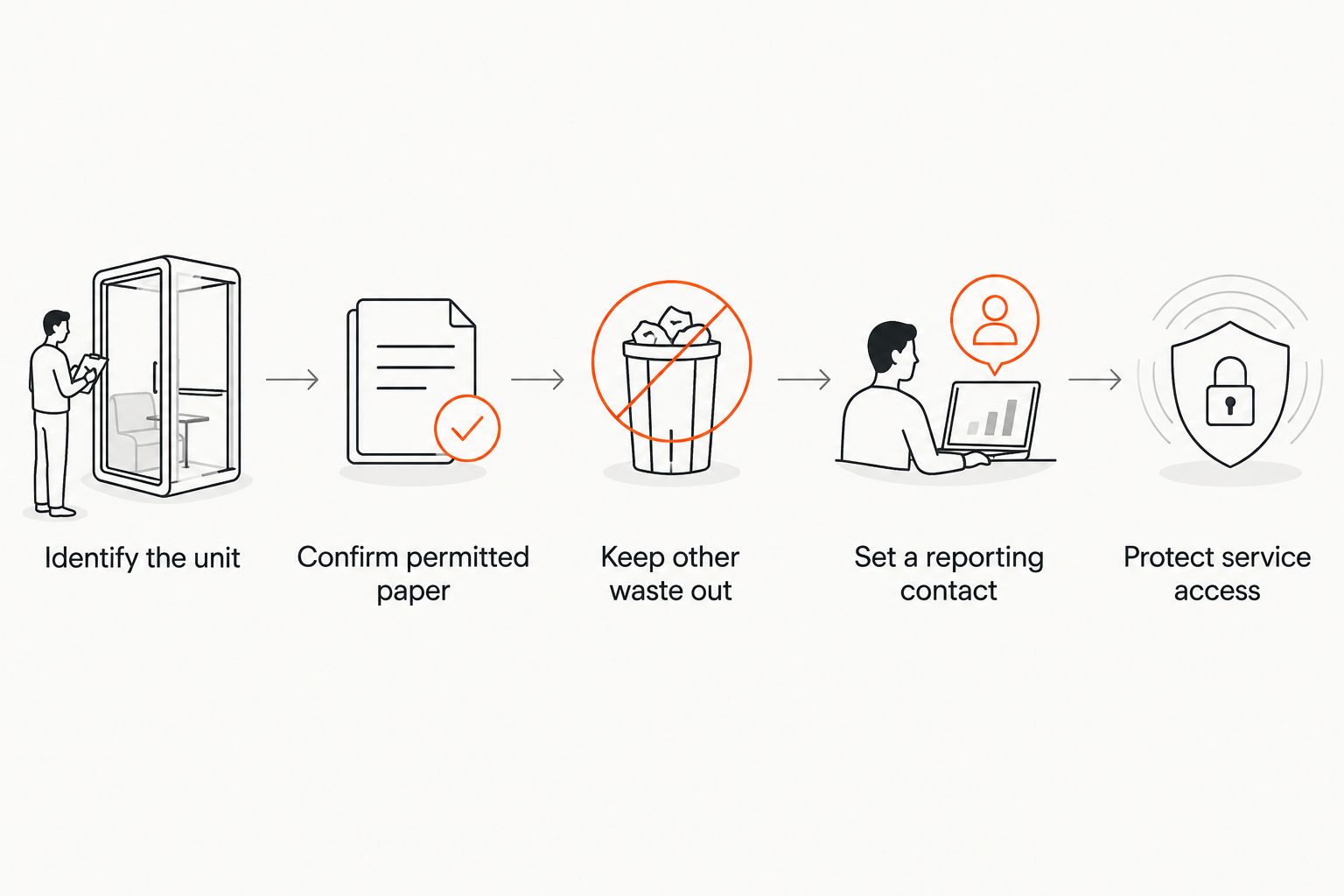
- Identify the unit. Ask the rental contact whether it is non-flushing, flush-equipped, or part of a restroom trailer setup.
- Confirm permitted paper. Use the instructions for the delivered unit, not an assumption based on another site.
- Keep other waste out. Tell users where wipes, towels, and packaging belong instead.
- Set a reporting contact. Name the site lead or event staff member who will call if a unit stops working or needs attention.
- Protect service access. Leave a usable route to the restrooms throughout the job or event.
For a San Jose construction site, make this part of the morning site handoff. For a South Bay event, give the instruction to the team responsible for restrooms before doors open. If the units change during a project or event, check the instructions again rather than carrying over the first setup's rule.
The sequence also helps when more than one kind of restroom is on site. A trailer near an event entrance and a standard portable unit near a work area should not share an instruction unless their operating directions match. Point staff to the relevant unit instead of asking them to apply one rule everywhere.
What if the flush does not work?
Stop using the flush control and report the issue to the site contact or rental provider. Do not keep pressing it, add water, or attempt to open the waste system. If other restrooms are available, direct users to a working unit while the issue is addressed.
Record which unit has the problem and where it sits. A useful report describes what happened without diagnosing a mechanical cause: the flush did not operate, the bowl did not clear, or the unit cannot be used. That gives the service contact a practical starting point without asking an event producer or contractor to repair rental equipment.
If a non-flushing unit has no flush control, that is not a fault. Explain the difference to the person who raised the concern and check that the waste opening and restroom paper are accessible. For 2026 site planning, this is another reason to identify unit types before users arrive.
Does restroom paper change the service plan?
Restroom paper is part of normal use when the unit's instructions permit it. Service planning still depends on how the restrooms will be used and whether the provider can reach them. Give the rental provider the project schedule, anticipated use, location, and access constraints so the service arrangement fits the site.
Do not solve a service concern by telling users to put ordinary restroom paper in a separate bin unless the provider's instructions require that for the equipment delivered. That creates a new handling task without addressing the underlying question. Confirm the rule for the unit first, then set clear directions for users.
Valley Services rents portable restrooms for jobsites and events across San Jose, Santa Clara, Sunnyvale, Mountain View, Milpitas, and the surrounding Bay Area. Valley Services portable restrooms are a fit for Bay Area crews and event teams that need the delivered unit's operating instructions settled before use. Ask what type of unit is planned and how users should dispose of paper; do not infer a specific flush feature from the word portable.
Valley Services also provides roll-off containers and temporary fencing. If those services share a site with restrooms, plan placement and access together. A container exchange or a fenced work area should not block the route needed to reach the restrooms. That is a site-control question, separate from what goes into the waste tank.
Can you use regular restroom paper in a portable restroom?
Use the restroom paper provided with the unit or follow the rental provider's instructions for replacement supplies. Regular restroom paper is not permission to add wipes, towels, or packaging. If the supplied paper runs out, report it instead of guessing which substitute the equipment accepts.
For a multi-phase 2026 project, keep this instruction with the site setup details when responsibility passes between crews. The restroom type and its permitted supplies need to remain clear after the first shift. An event producer can use the same approach when handing the site from load-in staff to operations staff.
FAQ
Can you flush restroom paper in a portable restroom?
Yes, if the portable restroom has a working flush mechanism and its instructions permit restroom paper. Put paper directly into the waste opening of a standard non-flushing unit.
Where does paper go in a non-flushing portable restroom?
Restroom paper goes into the waste opening of a non-flushing portable restroom. Keep wipes, towels, and packaging out of the opening.
Can you put flushable wipes in a portable restroom?
Do not put wipes in a portable restroom waste tank unless the rental provider permits them for that unit. A flushable label does not establish what a particular rental accepts.
Do restroom trailers flush paper?
Follow the operating instructions for the restroom trailer delivered to your site. Do not assume its fixtures accept every material you would put into a permanent building restroom.
What should you do if a portable restroom stops flushing?
Stop operating the flush control and report the affected unit to your site contact or rental provider. Direct users to another working restroom if one is available.
Can paper towels go into a portable restroom tank?
No. Keep paper towels and packaging out of the waste opening and use a separate waste receptacle for them.
How do you tell event guests which restroom units flush?
Identify each delivered unit and give staff its operating instructions before guests arrive. Do not apply a single flush instruction to different restroom setups without checking them.
One last thing
The most useful restroom instruction is specific to the unit that arrived. Check it during delivery, before a San Jose crew starts work or a Bay Area event opens. If the setup includes both standard units and a trailer, brief staff on each separately. That small handoff protects the schedule better than a sign based on a guess.
Related guides
- How to choose the right holding tank size for a jobsite
- How to plan portable restrooms for a corporate outdoor event
- How to meet jobsite sanitation requirements with portable restrooms
For a 2026 jobsite or event, call Valley Services at (408) 297-5404 to talk through restroom placement, use instructions, and service access.