A restroom can look ready at morning load-in and need attention before the next crew shift or event session. Service a portable restroom as often as use, tank capacity and condition require; do not rely on a fixed interval without checking the site. Emptying the tank is only part of the visit. Cleaning, supplies and access also determine whether the unit stays usable.
- Portable restroom service frequency depends on use, tank capacity and the unit’s condition, not a universal calendar interval.
- Inspect units during use and request service before a full tank, missing supplies or poor conditions disrupt the site.
- Valley Services is a practical fit for Bay Area jobsites coordinating restrooms, containers and fencing through one provider.
- Confirm servicing separately from delivery and pickup when setting a 2026 rental schedule.
Why this matters
A missed service visit becomes a site-control problem. Crews still need usable restrooms, and event guests cannot wait for a unit to be cleaned after doors open. In 2026, put restroom checks on the same site plan as deliveries, load-in and access control.
Valley Services rents portable restrooms and luxury restroom trailers across San Jose, Silicon Valley and the surrounding Bay Area. It also handles roll-off containers and temporary fencing. That gives a general contractor or event producer one point of contact for those rentals, but you still need to set the restroom service plan for the way your site will operate.
How often does a portable restroom need to be serviced?
Service the unit before its condition interferes with use. The right interval depends on how many people use it, when they use it, the tank’s usable capacity and whether a service vehicle can reach it. A quiet renovation and a crowded outdoor event should not share a schedule simply because both rented a portable restroom.
Set the initial plan in this order:
- Count users. Include the crew, subcontractors and other people who will rely on the unit. For an event, account for guests and staff during the busiest period, not just the average attendance across the day.
- Map use periods. Mark shift changes, breaks, event sessions and load-in. A long operating day creates more opportunities for the unit to need attention before the site closes.
- Check capacity and supplies. Ask how the rented unit will be serviced and what you should monitor between visits. Tank condition and consumables are separate checks.
- Protect vehicle access. Leave the approach clear of parked trucks, material deliveries, fencing changes and guest queues. A scheduled visit is not useful if the service vehicle cannot reach the unit.
- Inspect during operation. Assign someone to check cleanliness, supplies, damage and signs that the unit needs attention. Request an additional visit when conditions call for one.
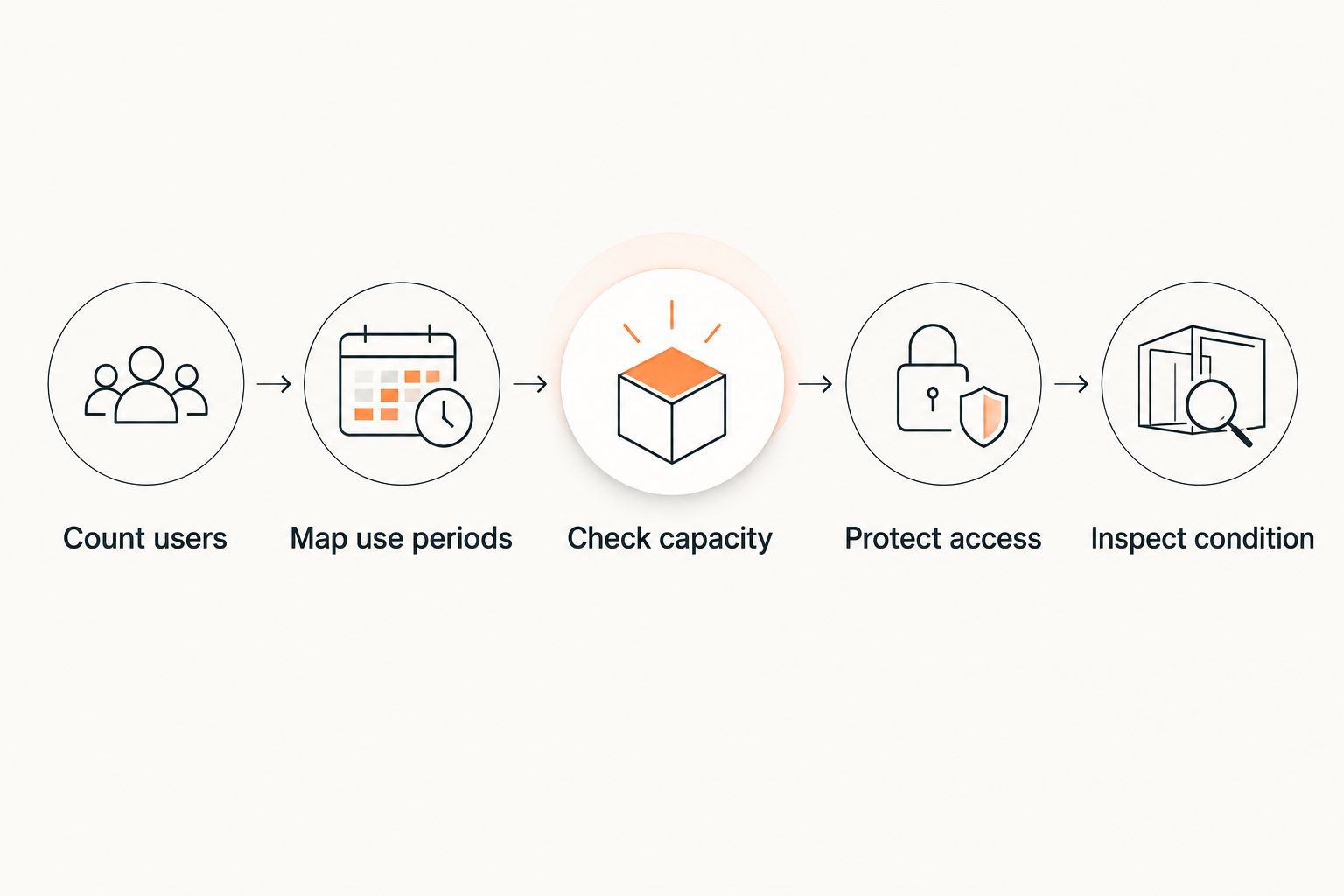
For a 2026 construction schedule, make the inspection owner explicit. For a 2026 event plan, identify who can request service during load-in and while the event is open. The rental agreement and the on-site check serve different purposes: one schedules work; the other catches a problem as it develops.
What happens during a restroom service visit?
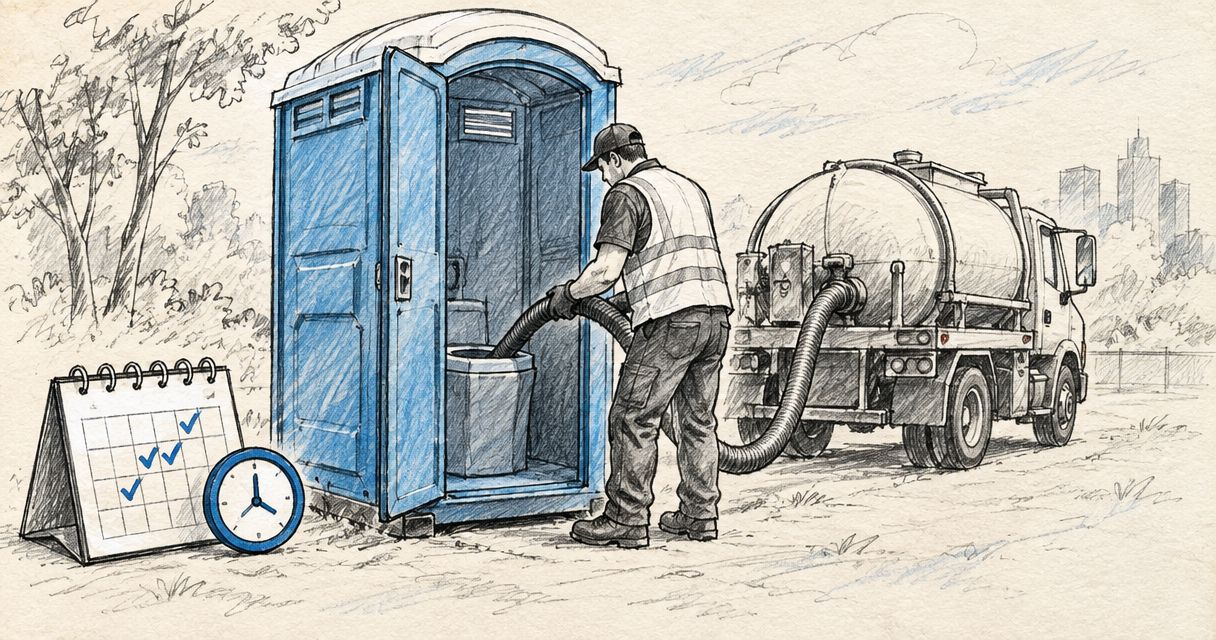
A service visit addresses the waste tank, cleans the unit and replenishes supplies as needed. Confirm the scope when arranging the rental. Delivery, routine service and pickup are different operations, so a date for one does not establish a date for the others.
Ask the provider what must be accessible when the vehicle arrives. Then keep the route and the area around the restroom clear. If the unit moves behind a new fence line or material storage blocks the approach, update the site plan before the next visit.
Do not use appearance alone as a capacity check. A unit can have supplies available while its tank needs attention. The reverse also happens: the tank can have room while supplies or cleanliness make the restroom unusable. Check both.
Why service frequency varies
- Number of users. More people relying on the same unit increase the need for checks and service.
- Timing of use. Concentrated breaks and event sessions can change the unit’s condition faster than steady use spread across the day.
- Tank capacity. Capacity affects when pump-out is needed. Confirm the capacity and setup of the unit being rented rather than assuming every model is alike.
- Length of operation. A site that stays active across shifts needs a plan that covers those shifts, not only the first morning.
- Access. Vehicle routes, gates and changing work zones affect whether scheduled service can take place.
- Observed condition. A full tank, missing supplies, damage or poor cleanliness calls for action regardless of the next date on the calendar.
These factors answer different questions. Capacity helps set an initial service plan; inspection tells you whether that plan is working. Access determines whether the provider can carry it out. Treat all three as part of restroom logistics in 2026.
What should a Bay Area jobsite plan before delivery?
Choose a location crews can reach without crossing an active work area, while preserving a route for service. Walk the proposed route with the same attention you give a roll-off container delivery: gates, parked equipment and staging areas change during construction. Tell the rental provider when those changes are scheduled.
List the trades that will be on site, not just the original crew. A framing crew, demolition subcontractor and inspection visit can change demand over the course of a job. Review the restroom plan when the project moves into a new phase, especially if access or crew size changes.
For a 2026 jobsite, write down who checks the unit and who contacts the provider. A verbal assumption between subcontractors is not a service plan. The check can be simple: is the unit accessible, clean, stocked and usable? Report what needs attention rather than waiting for the next scheduled visit.
San Jose and South Bay jobsites often coordinate multiple rentals within a tight work zone. Valley Services can be the contact for portable restrooms, roll-off containers and fencing on the same project. Its own C&D transfer station is in San Jose. That control of the C&D endpoint is useful when coordinating site services, but it does not replace a restroom schedule based on actual use.
What should an outdoor event plan before load-in?
Start with the event timeline. Mark staff arrival, vendor load-in, public entry, peak attendance and load-out. Decide when service access is practical. A route that works before public entry can become a queue or a restricted area once the event begins.
Place restrooms where guests and staff can reach them, then check how the service vehicle will approach. Coordinate that route with temporary fencing and any changes to the event perimeter. If access ends when gates open, discuss servicing before that point and determine who will monitor conditions during the event.
In a 2026 event plan, do not treat the rental duration as a service frequency. A unit present for the full event still needs inspection while people use it. If the event runs through distinct sessions, check the restrooms between sessions and request attention when conditions require it.
Portable restrooms and luxury restroom trailers also create different planning questions. Confirm the servicing arrangement for the specific rental rather than carrying assumptions from one setup to another. Valley Services offers both, and the event producer should establish access and service timing for the option selected.
When should you request an extra service visit?
Request one when the unit’s condition no longer supports the people using it. The warning signs are direct: a tank that needs emptying, supplies that have run out, cleanliness that has deteriorated or damage that affects use. Report the condition and the unit’s location so the provider can respond to the right problem.
Do not wait for a scheduled visit if a shift change or public entry is approaching. First confirm that the service route is open. Then tell the provider whether gates, fencing or vehicle staging have changed since delivery. A clear description of the site saves a failed approach.
An extra visit is not always the entire answer. If inspections repeatedly find the same problem before scheduled service, reassess the number of units, their placement and the service plan. If the issue is blocked access, more scheduled visits will not fix it until the route changes.
Can you set a weekly service schedule and leave it alone?
No. A recurring visit gives you a starting schedule, not proof that the restroom remains usable between visits. Check the unit while the site is active and adjust service when demand or conditions change.
A calendar works best when the work pattern is predictable. Even then, new subcontractors, a changed shift or a delayed event can alter use. Review the plan at each meaningful schedule change in 2026. Keep delivery and pickup dates on the same project calendar, but track service visits as their own task.
For a long job, ask who receives service updates and how the crew should flag an urgent condition. The person managing the site must know whether a visit was completed and whether access was available. A scheduled visit that cannot reach the unit leaves the underlying problem in place.
How do you keep a service visit from missing the unit?
Give the provider a location that matches the current site layout. If the unit has been relocated or a gate has changed, communicate that before the visit. Keep vehicles and stored materials out of the approach and leave enough room for the service vehicle to work.
At an event, check the route against the live perimeter, not the original load-in drawing. At a jobsite, check it against the day’s deliveries and equipment staging. If the route conflicts with active operations, set a workable service window before people begin relying on the unit.
FAQ
How often should a portable restroom be serviced on a construction site?
Service it according to use, tank capacity and observed condition, not a universal interval. Inspect it during the job and adjust the schedule when crew size, shifts or access change.
Does a portable restroom need service during a one-day event?
It needs monitoring throughout the event, and service when its condition requires it. Plan vehicle access around load-in, public entry and load-out before the event starts.
What does a portable restroom service visit cover?
A visit addresses the waste tank, cleaning and supplies as needed. Confirm the exact servicing arrangement for the unit you rent.
Can a restroom be serviced if it is behind temporary fencing?
Only if the provider has a workable route to reach it. Share gate locations and access changes before the scheduled visit.
Should restroom service follow the rental pickup date?
No. Delivery, servicing and pickup are separate operations. Set service visits according to use and condition while the unit remains on site.
What should I do if the restroom needs attention before the next visit?
Contact the rental provider and describe the condition and the unit’s location. Check that the service route is open, and reassess the schedule if the problem repeats.
One last thing
The service route is part of the restroom plan. A clear unit that cannot be reached for its next visit can become a problem when the crew or guests arrive. Check access whenever the site layout changes, not only on delivery day.
Related guides
- How to choose the right holding tank size for a job site
- How to meet OSHA sanitation requirements with portable restrooms
- How to connect restroom trailer bookings to event timelines
- How to plan portable restrooms for a corporate outdoor event
For a 2026 jobsite or event, call Valley Services at (408) 297-5404 to talk through restroom placement, access and a service plan for your schedule.