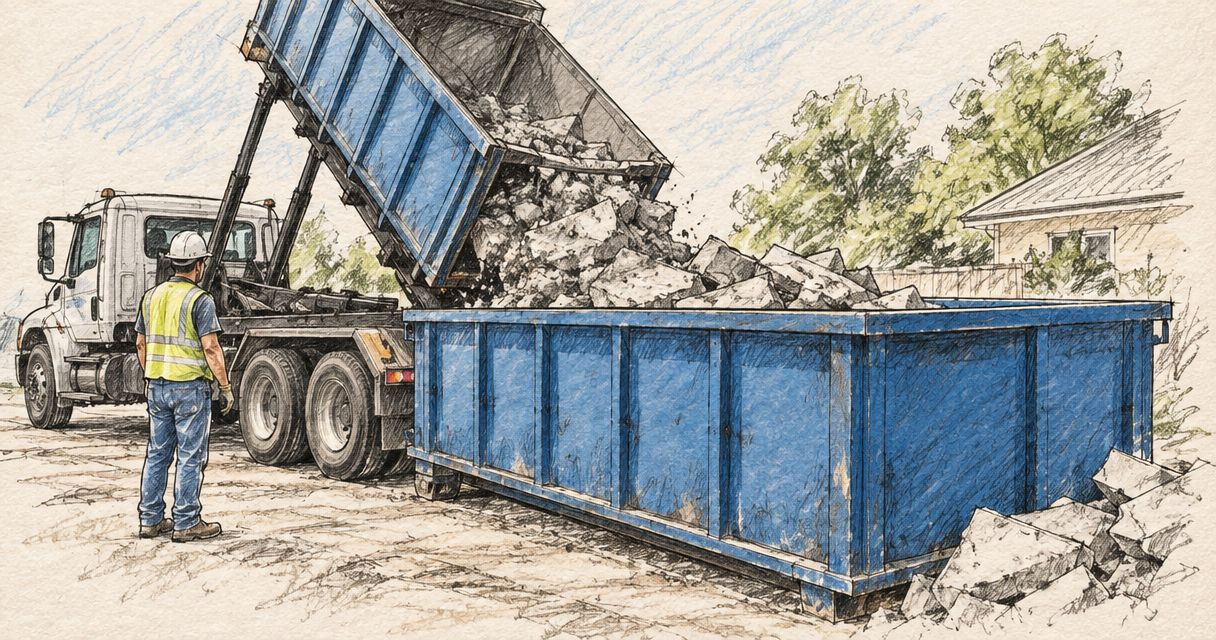
Yes, concrete goes in a roll-off container, but only in a dedicated concrete or heavy-debris box, never mixed into a general construction and demolition (C&D) load. Concrete is dense: a cubic yard weighs close to 4,000 pounds, so mixing it with wood, drywall, and metal blows past the weight limit long before the box looks full.
- Concrete goes in a roll-off container only as a clean, dedicated load, never mixed with general C&D debris.
- A cubic yard of concrete weighs roughly 4,000 pounds, so weight, not box size, decides how much fits.
- 8- and 10-yard containers usually handle a concrete-only job better than a 30- or 40-yard box.
- Rebar embedded in a slab rides fine in a dedicated concrete container; loose scrap metal does not.
Why this matters
Order the wrong container for a concrete tear-out in 2026 and you find out the hard way: the box hits its weight limit at half full, the driver can't legally haul it, and the job stalls waiting on a second container. Concrete demolition, driveway removal, and slab tear-outs are some of the most common calls a Bay Area yard fields, and picking the wrong box for the material is the most common mistake behind a stalled pickup. A dedicated concrete and dirt disposal setup avoids that stall entirely.
Weight, not volume, runs the show here. A wood-frame demo load can fill a 30-yard box to the brim and still weigh a fraction of that same box loaded with broken concrete.
Can you put concrete in a roll-off dumpster?
Concrete goes in a roll-off container as a clean, dedicated load. The rules change depending on what else rides in that load:
| Load type | Accepted in a roll-off container? | Why |
|---|---|---|
| Clean concrete only | Yes, in a dedicated container | Densest common demo material; weight limit hits fast |
| Concrete with rebar | Yes, in a dedicated container | Rebar embedded in a slab is standard; exposed ends get flagged for driver safety |
| Concrete mixed with wood, drywall, or general C&D | No | Weight limit is exceeded long before the box looks visually full |
| Concrete with dirt or asphalt | Sometimes | Depends on what the receiving transfer station accepts that day; confirm before loading |
The short version: keep concrete separate, and size the container for weight, not for cubic footage.
8-yard and 10-yard containers: sized for concrete-only loads
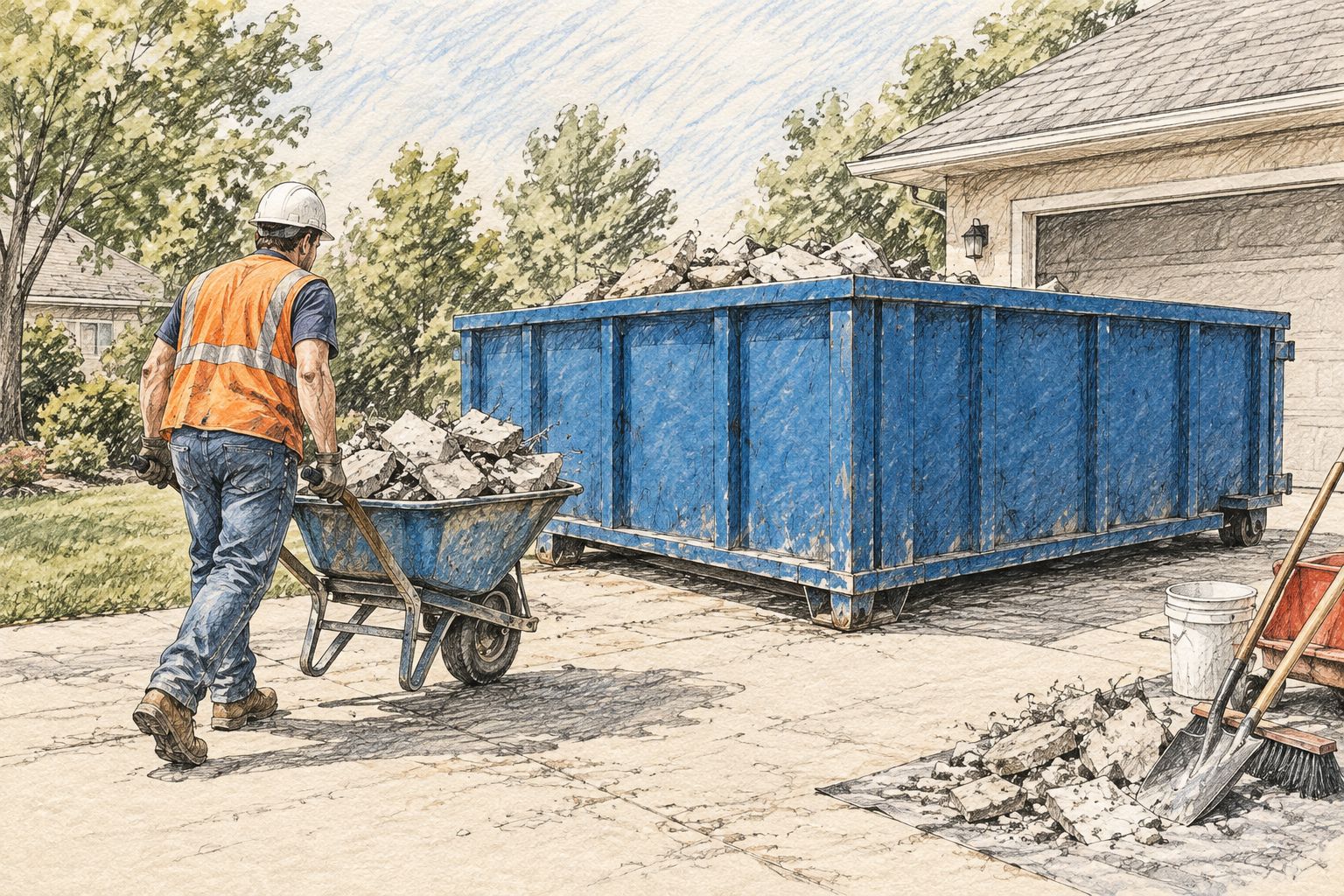
Small containers handle concrete tear-outs better than they look like they should. A driveway section, a small patio slab, or a walkway removal fits weight-wise into an 8- or 10-yard box long before it fits volume-wise.
- Best for: driveway sections, walkways, small patio slabs, single-room flooring tear-out.
- Watch for: dumping concrete into one corner instead of spreading it across the container floor, which shifts weight during transport.
- Verdict: Buy for any concrete-only job under a few hundred square feet.
20-yard and larger: mixed demolition with limited concrete
A 20-yard or larger container works when concrete is a smaller piece of a bigger demolition job, mixed with wood framing, drywall, and other lighter C&D debris.
- Best for: full room demos, garage teardown with a slab, projects where concrete is one material among several.
- Watch for: loading the heaviest material (concrete, tile, brick) first and low, then building lighter debris on top.
- Verdict: Hold the concrete portion separate if the volume is large. Two containers, one for concrete and one for mixed C&D, often move a job faster than one oversized box waiting on a special pickup.
Why concrete weight limits vary
- Container size: an 8-yard box and a 40-yard box carry different weight allowances even though both can technically hold concrete.
- Density of the material: broken concrete rubble packs tighter and heavier than the same volume of wood or drywall.
- Clean load vs. mixed load: a concrete-only load is weighed and handled differently than a mixed C&D load with concrete inside it.
- Rebar and embedded metal: slabs with heavy rebar reinforcement weigh more per cubic yard than plain unreinforced concrete.
- Transfer station acceptance: not every drop-off site takes concrete mixed with dirt or asphalt on the same load, which affects what the container can carry. Confirm what your local site takes before you find a dump near you for construction debris.
- Truck and axle limits: the hauling truck carries its own legal weight limits, independent of what the container itself is rated to hold.
Get the concrete job sized right
Call before you order and skip the second-container delay.
Can you mix concrete and dirt in the same roll-off container?
Sometimes, but confirm with the yard before loading. Whether concrete and dirt can share a load depends on what the receiving transfer station accepts that day, since dirt adds its own weight and some sites process the two materials separately.
How much concrete fits in a 10-yard dumpster?
A 10-yard container reaches its weight limit well before it reaches its visual capacity when loaded with concrete. Contractors typically use a 10-yard box for driveway sections, walkways, or small slab removals rather than filling it to the brim in 2026, since weight caps the load first, not the yard measurement painted on the side.
Do you need a permit to dispose of concrete debris in San Jose?
Permit requirements depend on where the container sits, not what's inside it. Placing a roll-off container on a public street in San Jose typically requires a placement permit, while a container on private property usually does not. Check with the city before delivery day if the container needs to sit in the street or right-of-way, and load safely to avoid an overage charge once you load a container without overage fees as your reference.
FAQ
Can you put concrete in a regular dumpster rental?
Concrete belongs in a dedicated concrete or heavy-debris container, not a regular mixed C&D dumpster. Mixing it with wood, drywall, and general demolition debris exceeds the weight limit long before the box fills up.
How much does concrete weigh compared to other demo debris?
A cubic yard of concrete weighs roughly 4,000 pounds, several times heavier than the same volume of wood framing or drywall. That density is why concrete needs its own load and often a smaller container.
Can rebar go in a roll-off dumpster with concrete?
Yes, rebar embedded in a concrete slab is standard in a dedicated concrete container. Loose scrap metal separate from concrete is a different material and should not be mixed into that load.
What size dumpster do I need for a concrete driveway removal?
An 8-yard or 10-yard container handles most single driveway or walkway concrete removals in 2026, since weight limits the load before volume does. Larger driveways or multiple slabs may need more than one pickup.
Can you put asphalt in the same container as concrete?
Sometimes, depending on what the receiving transfer station accepts on a given day. Confirm before loading, since some sites process concrete and asphalt separately.
Is there a weight limit for concrete in a roll-off dumpster?
Yes, every container has a weight limit tied to its size and the truck hauling it, separate from how full the box looks. Concrete-only loads hit that limit well before the box is visually full.
Does a construction and demolition transfer station take concrete drop-off?
Most C&D transfer stations accept concrete drop-off, but hours and load requirements vary by site. Confirm accepted materials before hauling a load in yourself.
Can homeowners rent a container for a small concrete job?
Yes, homeowners doing a patio removal or small slab tear-out can rent an 8- or 10-yard container sized for the weight of concrete rather than the footprint of the job.
One last thing
Most callers ask about the size of the concrete job in square feet. The number that actually matters is weight, and a broken concrete driveway that looks small on paper can outweigh a full room of wood-frame demo debris several times over. Size the container for pounds, not for how much space the rubble takes up on the driveway, and the pickup goes out on schedule instead of getting bumped for a second load.
Valley Services has run roll-off containers out of the same San Jose yard since 1986, sizing concrete and mixed C&D jobs across the Bay Area every week in 2026. Call (408) 297-5404 or check valleyservices.biz before ordering if the job includes concrete, dirt, or a mix of both.