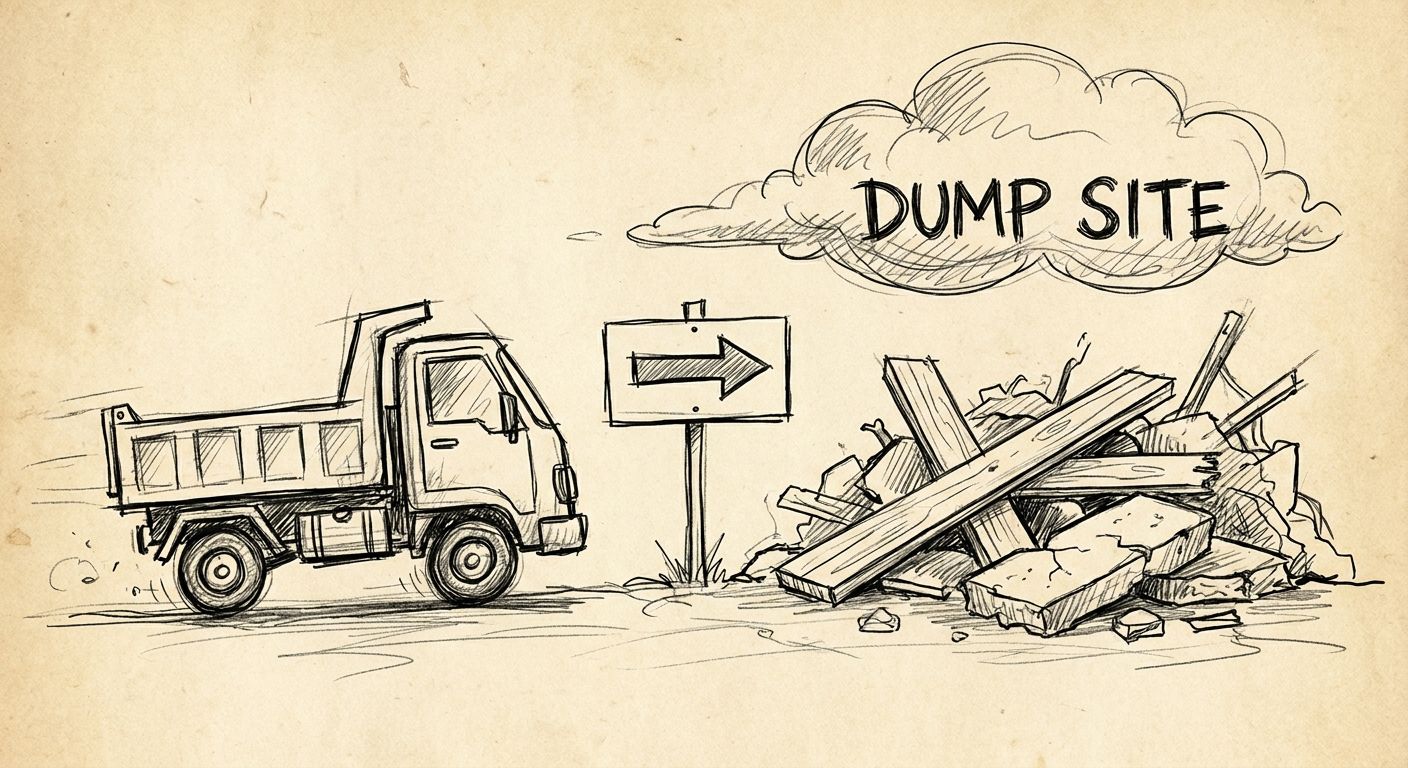
Searching "dump near me" on a job site usually means one thing: you have debris piling up and no clear place to put it. This guide walks through how to find the right disposal option for construction debris in the Bay Area, whether that's a public transfer station, a licensed hauler, or a roll-off container delivered straight to your site.
- A "dump near me" search for construction debris usually means choosing between self-haul to a transfer station or a delivered roll-off container.
- Valley Services runs its own C&D transfer station in San Jose, which controls scheduling instead of relying on a third-party disposal site.
- Mixed loads (wood, metal, concrete, trash) get rejected or charged more at most facilities: sort before you haul.
- Gate cutoff times matter more than distance: call ahead before you load the truck.
Why this matters
Construction debris is not household trash. Most municipal landfills and transfer stations have separate rules for concrete, drywall, roofing material, and mixed C&D loads. Show up with the wrong load or after the gate closes and you drive home with a full truck.
Contractors in San Jose, Santa Clara, Sunnyvale, Mountain View, and Milpitas deal with this weekly. A general search for "dump near me" pulls up landfills that don't accept C&D at all, or transfer stations that require a permit you don't have yet. Knowing the process before you load anything saves a wasted trip.
Valley Services operates its own C&D transfer station in San Jose, which means the disposal endpoint isn't outsourced to a third party. That matters for scheduling: when the yard that receives the debris also delivers the container, the two ends of the job talk to each other.
What you'll need
- The type of debris: concrete, wood, drywall, roofing, metal, mixed C&D
- An estimate of volume: pickup truck load, half a roll-off, a full 20 or 30 yard container
- A vehicle or container rated for the weight (concrete and dirt are heavier than they look)
- Any permit required for placement if you're using a container on a street or public right-of-way
- The facility's accepted materials list and gate hours
- A plan for how the debris gets from the site to the truck or container (this is where load-in time gets lost)
If your project is generating more than a truck bed's worth of debris, a delivered roll-off container usually beats multiple trips to a facility. See how to dispose of construction debris in San Jose for a breakdown of both paths.
The steps
1. Identify what kind of debris you actually have
Sort mentally before you sort physically. Concrete, asphalt, and dirt are usually billed and handled separately from wood, drywall, and general C&D. Roofing tear-off (shingles, felt, flashing) often has its own category too.
Why it matters: facilities reject mixed loads that combine categories they process separately. A load that's 70% wood and 30% concrete can get turned away at the gate, and you lose the trip.
Common mistake: assuming "construction debris" is one bucket. It isn't, at almost any facility in the Bay Area.
2. Decide between self-haul and a delivered container
Self-hauling to a transfer station works for small jobs: a bathroom demo, a fence teardown, a garage cleanout. For anything generating more than one or two truck loads, a roll-off container delivered to the site is faster and keeps your crew working instead of driving.
Why it matters: driving time to and from a facility adds up fast. A 20-yard container holds roughly four pickup truck loads of mixed debris, which is the break-even point for most remodels.
Expected outcome: you land on one method before the debris starts accumulating, not after.
3. Confirm the facility accepts your material before you load anything
Call ahead. Don't rely on a website list from last year. Facilities change accepted materials, especially for items like treated lumber, insulation, or anything with suspected asbestos content.
Why it matters: showing up with a rejected material means reloading the truck and finding another destination the same day.
Common mistake: assuming all "dump near me" results are C&D transfer stations. Many are municipal solid waste facilities that don't take construction debris at all.
4. Check permit requirements for your city
If you're placing a roll-off container on a street, sidewalk, or public right-of-way in San Jose, you likely need a placement permit. If the container sits entirely on private property, you usually don't. Rules differ by city, so confirm with your local jurisdiction before delivery day.
Why it matters: an unpermitted container on a public street can get a citation or a tow order, which stalls your whole schedule. How to permit a dumpster placement in San Jose covers the specific process.
Expected outcome: the container sits legally for the length of your rental with no surprise citations.
5. Load correctly to avoid rejection and overage
Distribute weight evenly, keep the load level with the container walls, and don't overhang the top. Heavy debris (concrete, tile, dirt) should go in first and stay low.
Why it matters: overloaded or overfilled containers get flagged for extra handling, and unevenly loaded trucks can shift material during transport.
Common mistake: tossing everything in as it's generated instead of loading in order of weight. See how to load a dumpster safely and avoid overage fees for the load order that actually works.
6. Confirm the address, hours, and gate cutoff time
Most transfer stations close their gates well before their listed closing time to process the last loads. Arriving at 4:45 for a 5:00 close often means turned away at the scale.
Why it matters: a wasted trip means a full truck sitting on your site overnight, which slows the next phase of work.
Expected outcome: you arrive with buffer time and know exactly where the scale house is before you get there.
7. Weigh in, unload, weigh out
At a transfer station, your loaded vehicle crosses a scale on the way in and again empty on the way out. The difference in weight determines what you're charged. Keep the ticket.
Why it matters: that ticket is your proof of proper disposal if a permit, insurance claim, or property manager ever asks for documentation.
Common mistake: tossing the receipt. Keep it with your job file, not in the truck.
8. Schedule pickup if you're using a rented container instead
If a roll-off container is on site, coordinate pickup timing around your project phase, not around when the container looks full. How to schedule a dumpster delivery and pickup walks through the timing that keeps a multi-week job moving without a container sitting empty or overflowing.
Skip the trip to the transfer station
Get a roll-off container delivered to your San Jose job site instead.
Troubleshooting
- Load rejected for mixed materials. Sort before you arrive. Separate concrete and dirt from wood and drywall in the truck bed if you're unsure of the facility's rules.
- Gate closed before you arrived. Call the facility the morning of your trip to confirm the actual last-entry time, not just the posted closing hour.
- Truck won't fit or clear the scale house. Confirm vehicle height and weight limits before you drive across town with a full load.
- No permit for a container placed on the street. Apply before delivery day. Processing takes longer than most contractors expect.
- Debris volume underestimated. A single-story kitchen remodel commonly needs a 20-yard container. See best dumpster size for a kitchen remodel before you order.
- Costs higher than expected. Overage almost always comes from overloading past the container's fill line or mixing prohibited material into the load.
Tools and resources
- A tape measure or estimate of cubic yardage for your debris pile
- The facility's current accepted-materials list, confirmed by phone
- Your city's permit portal if the container sits on a public right-of-way
- Construction dumpster rental for general contractors if you're running multiple jobs and need container access on a recurring basis
- How to estimate dumpster rental costs for a remodel for budgeting before the project starts
What to do next
Once you know your debris type and volume, the next decision is container size versus number of self-haul trips. A 10-yard container handles a small bathroom gut. A 30 or 40-yard unit handles a full teardown. Get the sizing right before delivery day, not after the first load goes in.
FAQ
What's the best way to find a dump near me for construction debris?
Call the facility directly to confirm it accepts C&D material before you load a truck. A transfer station that handles construction debris is different from a general municipal landfill, and not every "dump near me" search result takes mixed demolition waste.
Is a roll-off container better than self-hauling to a dump?
For more than one or two truck loads, a delivered roll-off container saves time because the crew keeps working instead of driving back and forth. Self-haul makes sense for small jobs under a single truck bed.
Do I need a permit to place a dumpster on my street in San Jose?
Yes, if the container sits on a public street or right-of-way. Containers placed entirely on private property usually don't need a placement permit, but confirm with your city before delivery.
Can I mix concrete and wood in the same load?
Most facilities charge more or reject loads that mix heavy material like concrete with wood and drywall. Sort debris by category before hauling to avoid a rejected or reweighed load.
What happens if I arrive after the gate closes?
You get turned away and drive home with a full load. Gate cutoff times are often earlier than the posted closing hour, so call ahead the morning of your trip.
How much debris does a 20-yard container hold?
A 20-yard roll-off container holds roughly four pickup truck loads of mixed construction debris, which covers most single-room remodels.
Does Valley Services operate its own disposal site?
Yes. Valley Services runs its own C&D transfer station in San Jose rather than hauling to a third-party facility, which keeps container delivery, drop-off, and scheduling under one operation.
What should I do with the weigh ticket from a transfer station?
Keep it with your job file. It's proof of proper disposal if a permit office, property manager, or insurer ever asks for documentation of where the debris went.
One last thing
Valley Services has run its own San Jose transfer station since 1986, now in its third generation of family ownership, and has supported site logistics for events including the San Jose Marathon and Super Bowl LX. Owning the disposal endpoint means container delivery and drop-off scheduling happen under one roof instead of two separate companies coordinating around each other.
If your next job in San Jose, Santa Clara, Sunnyvale, Mountain View, or Milpitas needs a container, a drop-off slot, or both, call (408) 297-5404 or reach out through valleyservices.biz to talk through the job.