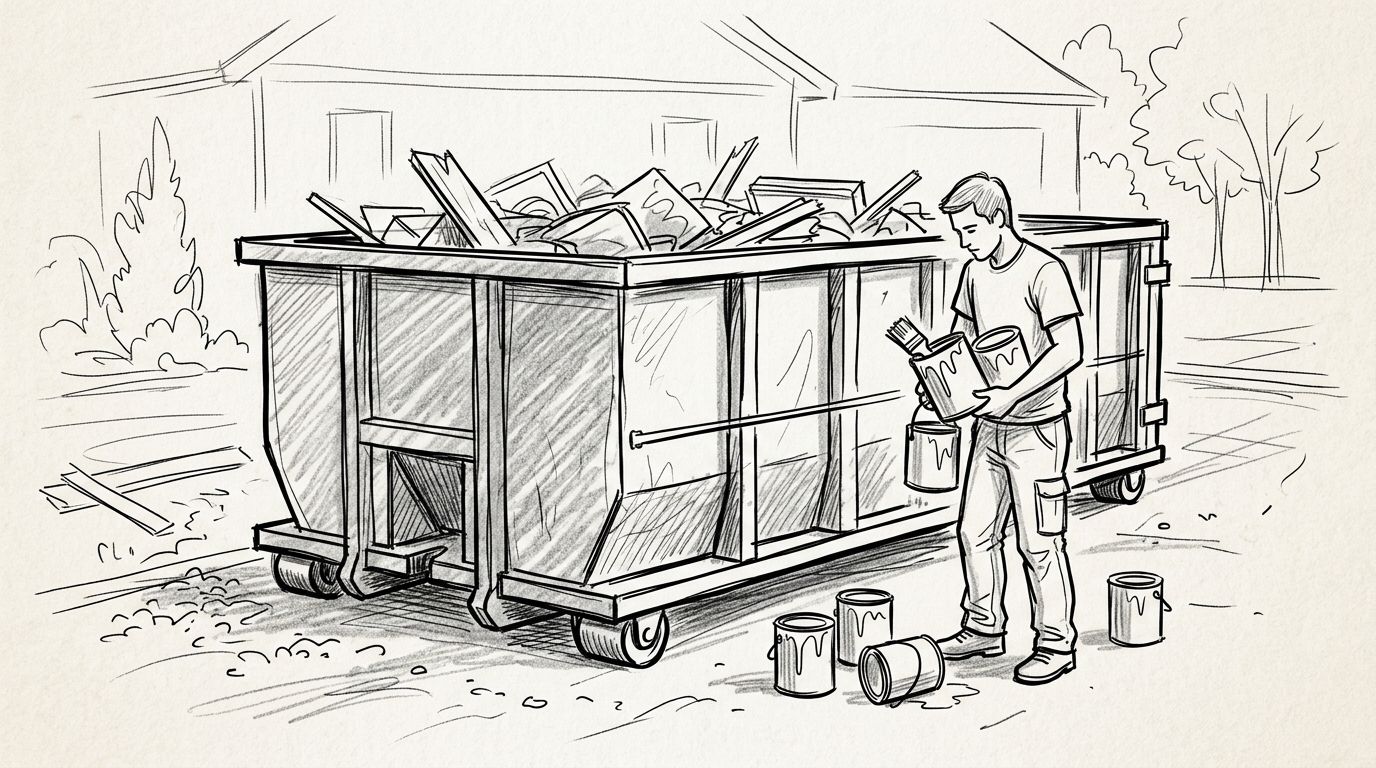
Empty, fully dried paint cans go into a roll-off container without a problem in 2026. Cans still holding wet paint are treated as hazardous waste, and a wet can dropped into a mixed load can get the whole container flagged at the transfer station.
- Empty or fully dried paint cans are accepted in a roll-off container rental in 2026.
- Wet latex or oil-based paint counts as hazardous waste at Valley Services' San Jose transfer station.
- A can with liquid paint still pooled inside gets flagged, even if it's mostly empty.
- Drying latex paint with cat litter or a commercial hardener turns it into solid waste any container size can take.
- Oil-based paint and aerosol cans go to a household hazardous waste facility, never a dumpster rental.
Why this matters on a real job site
A remodel crew clearing out a garage or a painter closing out a job usually has a mix: a few empty five-gallon buckets, half a can of leftover trim paint, maybe an aerosol can of primer. Tossing all of it in the same roll-off container feels efficient. It isn't, if any of those cans still has liquid paint sitting in the bottom.
Valley Services runs its own C&D transfer station in San Jose, which means the load gets inspected before it's processed, not after it's already hauled to someone else's site. A flagged load costs time: the driver has to pull the offending cans, document what came off, and reload before the container clears. On a scheduled job with a tight timeline, that delay is the expensive part, not the paint itself.
Can you put paint cans in a dumpster rental?
The answer depends on whether the paint inside the can is wet or dry, and whether it's latex (water-based) or oil-based. Here's how it breaks down.
| Paint condition | Roll-off container status | Why |
|---|---|---|
| Empty can, no residue | Accepted | Classified as scrap metal, not hazardous |
| Fully dried latex or water-based paint | Accepted | Solidified paint is solid waste, not liquid |
| Wet latex, less than a cup remaining | Case by case | Still counts as liquid until it hardens |
| Wet oil-based paint | Rejected | Classified as hazardous waste under Cal/OSHA and California DTSC rules |
| Aerosol or spray paint cans, any fill level | Rejected | Pressurized and flagged as hazardous regardless of contents |
The short version: dry paint is trash, wet paint is hazardous waste. That line doesn't move no matter how small the amount looks.
Why paint disposal rules vary
A handful of factors decide whether a specific can gets flagged, and they don't always line up with what feels intuitive on site:
- Liquid content, not can size. Cal/OSHA and California DTSC classify by whether paint is still liquid, not by how full the can looks.
- Latex versus oil-based chemistry. Water-based latex paint solidifies and stops being hazardous. Oil-based paint stays wet longer and doesn't convert the same way.
- Transfer station inspection. Every load coming through Valley Services' San Jose facility gets checked before it hits the tipping floor, and hazardous items get pulled on sight.
- Mixed-load risk. One wet can in a load of otherwise clean debris can be enough to hold up the entire container, not just that item.
- Quantity. A few dried cans in a remodel cleanout reads differently than a stack of five-gallon buckets from a painting contractor.
- Local ordinance. San Jose, Santa Clara, Sunnyvale, Mountain View, and Milpitas can layer their own disposal rules on top of state hazardous waste law.
For anything beyond a couple of paint cans, the guide to disposing of hazardous construction materials safely walks through what else falls into this category on a typical jobsite, including solvents and adhesives that get confused with regular debris.
How do you dry out paint cans before throwing them away?
Remove the lid and let the can sit in a well-ventilated area until the paint solidifies, which usually takes a few days for a thin layer of latex. Stirring in cat litter, sawdust, or a commercial paint hardener speeds it up by absorbing the remaining moisture. Once the paint is solid enough that it doesn't shift when the can is tipped, it's no longer classified as liquid waste and goes into a roll-off container with the rest of the debris.
Can you throw away spray paint cans in a dumpster?
No. Aerosol and spray paint cans are rejected from roll-off containers regardless of how much product is left inside, because the pressurized canister itself is the hazard, not just the paint. These need to go through a household hazardous waste program or a retailer take-back option, not a dumpster rental.
What happens if a container gets flagged for hazardous waste?
The container gets held at the transfer station until the flagged item is identified and removed, which delays turnaround on a schedule that's often tight to begin with. On a multi-day project this can push back the next scheduled swap, so it's worth sorting wet paint out before the container is called for pickup rather than after. The guide to loading a dumpster safely and avoiding overage fees covers the same logic for other flagged materials, from batteries to tires.
Paint isn't the only debris type that trips people up. Concrete has its own weight and classification rules that catch just as many contractors off guard, covered in the companion piece on putting concrete in a roll-off dumpster.
FAQ
Can you put paint cans in a dumpster rental?
Yes, if the paint inside is empty or fully dried. Wet latex or oil-based paint counts as hazardous waste and gets pulled at the transfer station.
Is dried latex paint hazardous waste?
No. Once latex paint solidifies it's classified as solid waste and accepted in a standard roll-off container in 2026.
Can you throw away oil-based paint in a dumpster?
No. Oil-based paint stays classified as hazardous waste whether it's wet or partially dried, and needs a household hazardous waste facility.
How much dried paint can go in one container?
There's no fixed limit stated for dried, solidified paint since it's treated as ordinary solid waste, but a load with a large volume of any single material is worth flagging with the rental provider ahead of time.
Do spray paint cans count as hazardous waste?
Yes. Aerosol cans are rejected from roll-off containers because of the pressurized canister, regardless of how much paint is left inside.
What's the fastest way to dry out a can of leftover paint?
Mixing in cat litter or a commercial paint hardener and leaving the lid off in a ventilated area solidifies a thin layer of latex paint within a few days.
Will one wet paint can get an entire dumpster rejected?
It can. A single wet or hazardous item in a mixed load is often enough to hold the container at the transfer station until it's removed.
One last thing
The detail crews miss most isn't the paint can itself, it's the lid. A can left sealed with wet paint inside looks empty from the outside and still gets flagged once it's opened at the transfer station, so popping the lid before the can goes in the container saves a delay later.
Confirm what your load can take
Call before the container ships and skip a rejected load.