Running a restaurant or retail remodel in San Jose or the South Bay means keeping demo debris off the loading dock and out of the dining room while the doors stay open. Commercial dumpster rental for restaurants and retail businesses comes down to three things: right-size container, permit clearance, and a pickup schedule that does not collide with service hours.
- Commercial dumpster rental for restaurants starts with a 20-yard roll-off for most kitchen remodels in 2026. Buy.
- Retail storefront renovations on tight sidewalks need a 10-yard container and a San Jose street permit. Consider.
- Same-day dumpster delivery covers grand-opening deadlines when timelines slip. Buy for genuinely urgent jobs.
- Skip unpermitted street placement in downtown San Jose. It stalls the whole remodel.
- Valley Services runs its own San Jose transfer station, so container swaps stay on schedule.
Why this matters for restaurants and retail
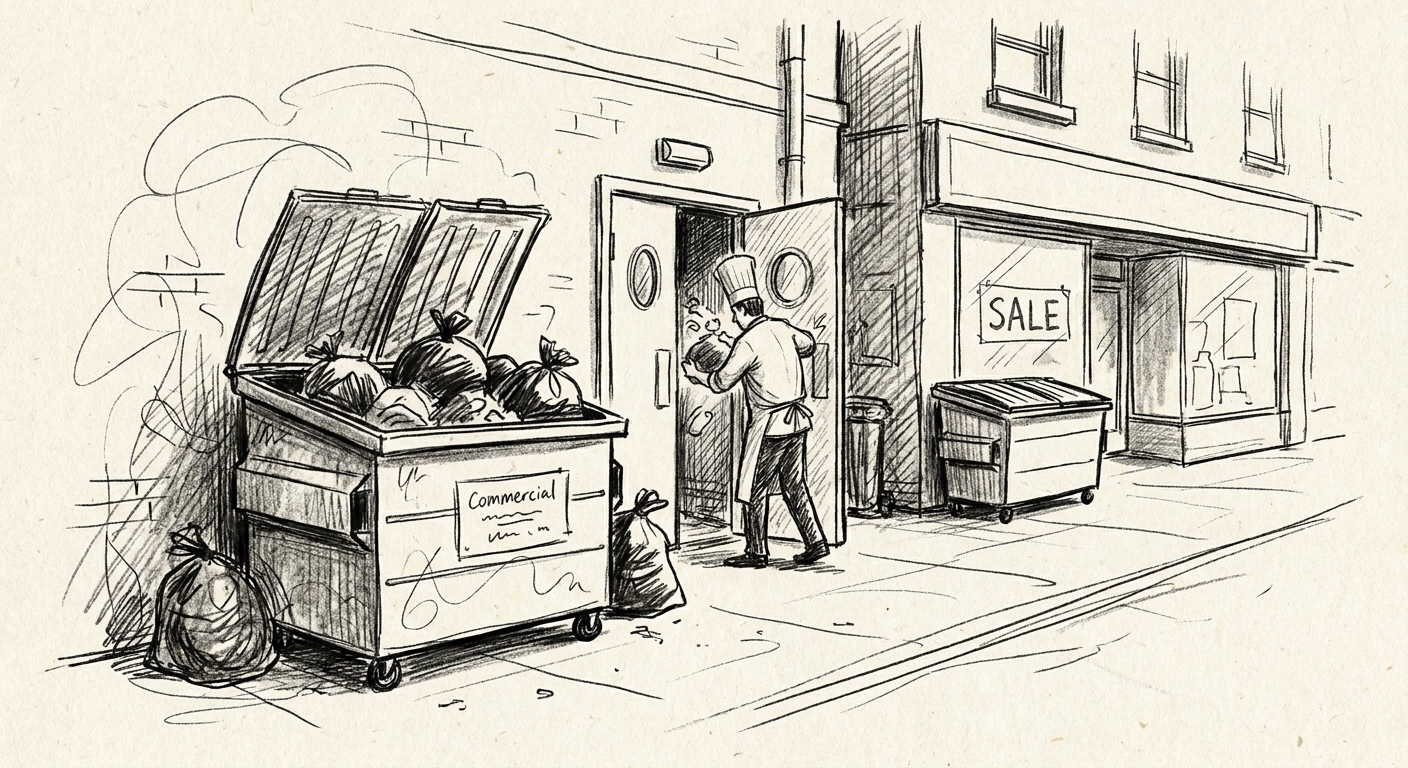
A kitchen remodel generates a different debris stream than a retail fixture swap, and both generate more than a homeowner project. Hood systems, walk-in coolers, tile, and cabinetry come out fast on a compressed timeline because every day the kitchen is closed is a day with no covers served. Retail buildouts add drywall, old shelving, signage, and flooring, often on a sidewalk or shared parking lot with almost no staging room.
Health department reinspection dates and lease turnover deadlines do not move for a slow container swap. In 2026, most San Jose, Santa Clara, Sunnyvale, Mountain View, and Milpitas commercial corridors also require a placement permit before a roll-off container touches the street or a shared lot, which adds a step most contractors forget until the container is already parked.
Who this is for
This guide is for restaurant owners and operators managing a kitchen renovation, retail store managers coordinating a rebrand or fixture swap, property managers running tenant turnovers across a multi-unit retail center, and general contractors handling commercial tenant improvement jobs across the Bay Area. If the job site has a public-facing storefront, a loading dock, or a health permit tied to the address, the container plan needs to account for that from day one.
What to look for in commercial dumpster rental for restaurants and retail
Right-size the container for kitchen and retail demo
A full kitchen gut, hood system, and walk-in cooler removal fills more volume than most contractors estimate on paper. Undersizing means a second container mid-job, which resets the whole schedule. A 20-yard roll-off handles the bulk of single-location restaurant remodels without a second pull.
Permit clearance for street or sidewalk placement
San Jose and neighboring cities require a placement permit when a container sits in the public right-of-way, on a sidewalk, or blocks a shared drive aisle. Skipping this step gets the container red-tagged mid-remodel, and that is a bigger delay than the permit ever would have been.
Scheduling around loading dock and business hours
A retail store or restaurant cannot afford a container blocking deliveries during opening hours. Swap and pickup times need to sit outside the loading dock's busiest windows, not on the driver's default route time.
One call for containers, fencing, and restrooms
A multi-phase retail buildout or a larger restaurant remodel often needs more than a container. Temporary fencing secures the site overnight, and a restroom rental covers crews when the building's plumbing is offline mid-renovation. Coordinating containers, fencing, and restrooms through one vendor keeps all three schedules aligned instead of juggling three separate delivery windows.
Grease and food waste vs. construction debris
Grease-contaminated food waste and demo debris are two different streams, and mixing them into one container invites contamination surcharges. Kitchen renovations that involve an active grease trap need a plan for that waste separate from the drywall and tile going into the roll-off.
Top picks for restaurant and retail dumpster rental
The safe pick: 20-yard roll-off for restaurant kitchen remodels. Fits behind most commercial kitchens without eating the whole back lot, and it is the standard size for a full-service kitchen gut in 2026. Verdict: Buy. See sizing detail in the restaurant renovation container guide.
The tight-lot pick: 10-yard container for retail storefront renovations. Fits in a single parking stall, which matters on a strip mall lot where every space counts, and it clears permit review faster than a larger unit. Verdict: Consider, sized right for cosmetic buildouts, too small for a full gut. Details in the retail store renovation guide.
The turnover pick: dedicated cleanout container for retail and restaurant space between tenants. Old fixtures, shelving, signage, and leftover equipment from the last tenant need to clear before the next buildout starts. Verdict: Buy for any property manager running back-to-back tenant turnovers. Covered in the small business cleanout guide.
The wildcard: same-day delivery for grand-opening deadlines. When a permit delay or a supplier slip compresses the timeline, same-day container delivery is the difference between opening on schedule and pushing the date. Verdict: Consider, use it when the deadline is real, not as a default plan. Details in the same-day delivery guide.
“A container sized for a garage cleanout does not clear a full kitchen gut, and the second pull always costs the schedule more than the first container ever would have.”
What to avoid
- Undersized containers on kitchen gut jobs. A 10-yard unit looks cheaper on paper, but a hood system, walk-in cooler, and full cabinetry pull will overflow it fast, forcing a second container mid-demo.
- Unpermitted street or sidewalk placement. Downtown San Jose corridors and busy retail strips enforce placement permits. A red tag mid-job stops the remodel cold.
- Swap schedules that ignore business hours. Blocking a loading dock during morning deliveries or a lunch rush creates a bigger operational headache than the container itself solves.
Verdict comparison table
| Scenario | Recommended container | Key requirement | Verdict |
|---|---|---|---|
| Full restaurant kitchen remodel | 20-yard roll-off | Loading dock access, off-hours swap | Buy |
| Retail storefront cosmetic buildout | 10-yard container | Street/sidewalk permit in San Jose | Consider |
| Tenant turnover cleanout | 20-yard roll-off | Fast turnaround between leases | Buy |
| Urgent grand-opening deadline | Same-day delivery, size per scope | Confirmed lead time with vendor | Consider |
Plan your remodel container now
Talk through sizing, permits, and pickup windows before the demo starts.
FAQ
What size dumpster do I need for a restaurant kitchen remodel?
Most single-location restaurant kitchen remodels in 2026 use a 20-yard roll-off container. Larger jobs with a full hood system and walk-in cooler removal sometimes need a second pull mid-project.
Can I put a dumpster on the street in San Jose?
Only with a placement permit from the city. Street and sidewalk placement without one gets flagged and can halt the remodel mid-job.
How fast can I get a dumpster delivered for a retail remodel?
Same-day delivery is available for urgent timelines, but confirmed lead time depends on container size and current route schedules. Call ahead once the demo date is set.
What's the difference between C&D debris and general trash in a container?
C&D, or construction and demolition debris, covers drywall, tile, cabinetry, and flooring. Grease-contaminated food waste is a separate stream and should not go into the same roll-off.
Do I need a permit for a roll-off container at a strip mall?
If the container sits on a shared drive aisle, sidewalk, or public right-of-way, yes. A container placed entirely on private parking usually does not need a city permit, but check with the property manager first.
Can one company handle containers, fencing, and restrooms for a retail buildout?
Yes, when the vendor operates all three service lines directly instead of subcontracting. That keeps delivery and pickup schedules aligned instead of coordinating three separate vendors.
How long can I keep a rental container on site during a phased renovation?
Rental terms vary by job and vendor, so confirm swap-out timing when you book. Multi-phase jobs typically schedule a container swap at each phase break rather than holding one unit for the full project.
One last thing
Most competitors haul debris to a third-party disposal site, which means their schedule depends on somebody else's dock hours. Valley Services owns and operates its own C&D transfer station in San Jose, so container swaps and pickups do not wait on another company's timeline. That matters most on a restaurant or retail job where every closed day costs revenue, not just square footage.
Valley Services has run the same San Jose yard since 1986, now in its third generation of family ownership. Call (408) 297-5404 or visit valleyservices.biz to talk through container sizing, permits, and pickup timing for your remodel.