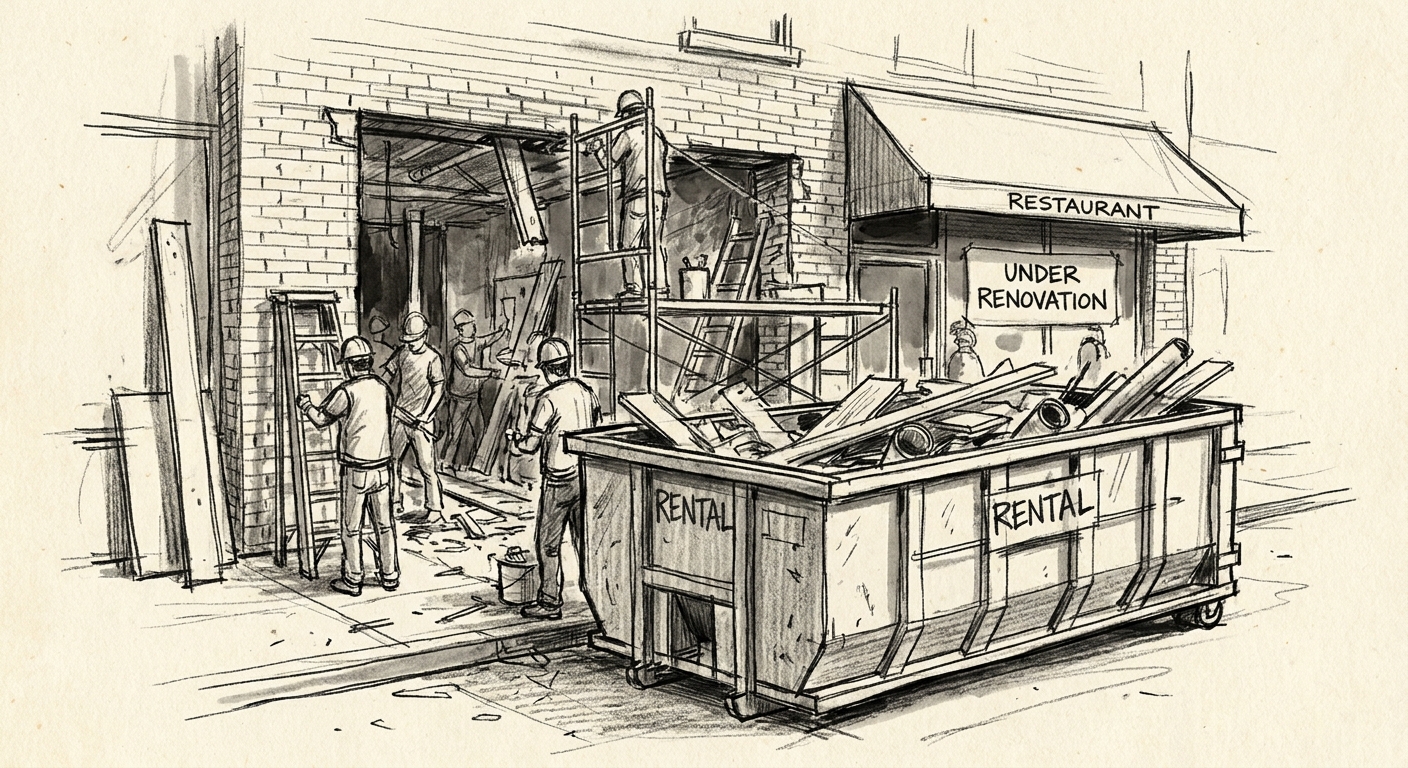
Restaurant renovations run on a tight clock: a two to four week closure window, a kitchen full of heavy equipment, and a curb in downtown San Jose that has room for one container, not three. Picking the wrong roll-off container size or missing a placement permit costs you days you don't have back.
- A 20-yard blue steel roll-off container handles most full kitchen strip-outs for restaurant renovation: Buy for standard remodels.
- A 10-yard container fits tight storefront footprints with no alley access: Consider for small back-of-house jobs only.
- Grease trap and FOG waste never goes in a roll-off container, that debris stream needs separate handling.
- Valley Services runs its own San Jose C&D transfer station, which controls pickup and swap scheduling during short closure windows.
Why this matters
A restaurant renovation isn't a residential remodel with a longer punch list. You're pulling hoods, fryers, walk-in coolers, tile, and cabinetry out of a space built for foot traffic, not construction traffic. The container has to sit somewhere legal, get swapped on a schedule that matches your closure window, and hold weight that a home renovation container never sees.
Get the sizing wrong and you're paying for a second pickup mid-project. Get the placement wrong and the city cites you before your GC finishes demo day one. This guide breaks down what actually matters when you're renting a dumpster for a restaurant renovation in San Jose, Santa Clara, Sunnyvale, Mountain View, or Milpitas.
Who this is for
This is for general contractors and subcontractors running commercial kitchen strip-outs, restaurant owners managing their own renovation during a closure window, and property managers coordinating tenant improvement work on a storefront that used to serve food. If you're clearing out equipment, flooring, drywall, and FF&E on a deadline, keep reading.
What to look for in a dumpster rental for restaurant renovation
Container capacity against kitchen equipment weight
Hoods, fryers, and walk-in cooler panels are dense and heavy compared to drywall and framing debris. A container rated for volume can still hit its weight limit before it's visually full. Match the container to the equipment load, not just the square footage of the space you're clearing.
Street or sidewalk placement and permits
Most San Jose restaurant storefronts sit on a block with limited curb space and no private lot. Placing a roll-off container on a public street or sidewalk usually requires a city encroachment permit, and downtown corridors enforce this closely. Confirm placement rules before the container shows up, not after a citation.
Schedule around your closure window
A renovation that closes the restaurant for three weeks doesn't have room for a delayed swap. Confirm pickup and delivery windows match your actual construction schedule, especially if the job spans a demo phase and a build-out phase that each generate different debris volumes.
Grease trap and FOG waste handling
Grease trap pump-out and fats-oils-grease waste is a separate disposal stream from construction and demolition debris. It cannot go in a roll-off container alongside tile, drywall, and equipment. Confirm your renovation plan accounts for FOG disposal outside the C&D container.
Site access for loading dock versus street pull
Older strip malls and downtown storefronts often have narrow service alleys instead of a loading dock. Measure your actual access point before ordering a container size that won't clear the alley or fit the delivery truck's swing radius.
Coordinating restrooms and site security for longer jobs
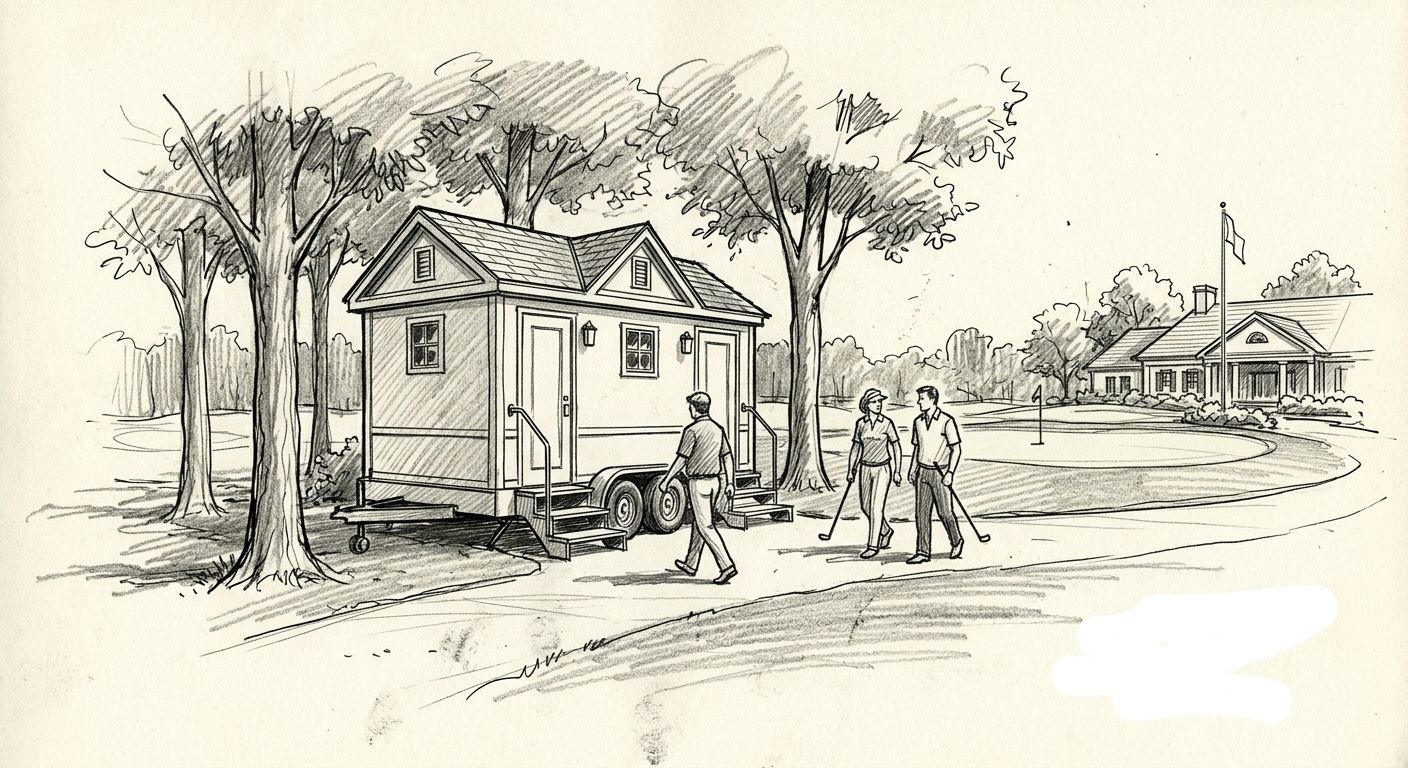
A renovation running past a week or two often needs a jobsite restroom for the crew if the restaurant's own restrooms are torn out first. If the space sits vacant overnight during the closure, temporary fencing around the site keeps materials and equipment secured after hours. Valley Services covers temporary fencing for construction sites alongside container rental, so one call can cover both.
Top picks by container size
The tight-footprint pick: 10-yard container
A 10-yard blue steel container fits in a single parking space and works for back-of-house-only jobs: pulling a hood system, replacing flooring in the kitchen, or a light cosmetic refresh that doesn't touch the dining room. It holds roughly three pickup truck loads of mixed debris. If your storefront has no alley and only street parking, this is the size that avoids blocking two spaces. Verdict: Consider for small, kitchen-only scope jobs.
The standard pick: 20-yard container
A 20-yard container is the default for a full kitchen strip-out: equipment removal, cabinetry, flooring, and drywall from one prep or line area. It handles the bulk of San Jose restaurant renovations without requiring a mid-project swap in a typical three to four week window. Verdict: Buy for standard full-kitchen renovation scope.
The gut-renovation pick: 30-yard container
When the renovation covers both the kitchen and the dining room, a 30-yard container carries the combined debris load: booth seating, flooring, drywall, ceiling tile, plus kitchen equipment. This size is common for a full interior gut where the restaurant is being rebuilt from shell space out. Verdict: Buy for combined kitchen and dining room scope.
The overkill-to-skip pick: 40-yard container
A 40-yard container is built for multi-suite tenant improvement or a building-wide demo, not a single restaurant unit. It rarely fits legally on a city block curb and takes up more footprint than most storefront lots allow. Unless you're clearing more than one commercial suite at once, this size adds cost and access problems without adding value. Verdict: Skip for single-restaurant renovation jobs.
What to avoid
- Oversizing the container to "be safe." A 40-yard unit blocking a fire lane or loading zone gets flagged faster than a right-sized container that fits the space.
- Skipping the placement permit because it's a short job. Cities in the South Bay cite unpermitted street placement regardless of project length.
- Treating grease trap or FOG waste as regular debris. It's a separate disposal stream and mixing it into a C&D container creates a compliance problem, not a convenience.
Verdict comparison
| Container size | Best fit | Street footprint | Verdict |
|---|---|---|---|
| 10-yard | Kitchen-only, small scope | Single parking space | Consider |
| 20-yard | Full kitchen strip-out | Standard curb space | Buy |
| 30-yard | Kitchen plus dining room gut | Larger footprint, check alley clearance | Buy |
| 40-yard | Multi-suite demo | Rarely fits single storefront lot | Skip |
A general contractor running a restaurant tenant improvement alongside other commercial jobs will recognize this sizing logic from broader construction dumpster rental for general contractors work: match container to debris type and weight, not just the empty square footage of the space.
Talk through your renovation timeline
Call to match container size and pickup schedule to your closure window.
FAQ
What size dumpster do I need for a restaurant renovation?
A 20-yard container handles most full kitchen strip-outs in 2026, while a 30-yard unit covers combined kitchen and dining room gut renovations. A 10-yard container works for small, kitchen-only scope where street space is limited.
Can I put grease trap waste in a roll-off dumpster?
No, grease trap pump-out and FOG waste is a separate disposal stream from construction debris and cannot go in a C&D roll-off container. Plan for grease disposal separately from your renovation debris.
Do I need a permit to place a dumpster on the street in San Jose?
Most San Jose storefronts require a city encroachment permit to place a roll-off container on a public street or sidewalk. Confirm the permit before delivery, since downtown corridors enforce placement rules closely in 2026.
How long does a restaurant renovation dumpster rental last?
Most restaurant renovation closure windows run two to four weeks, and container rental should match that schedule with a swap plan if the job runs longer. Confirm pickup timing against your actual construction phases, not just the calendar.
What goes in a construction debris dumpster during a restaurant remodel?
Drywall, flooring, cabinetry, ceiling tile, and non-hazardous kitchen equipment like hoods and prep tables go in a C&D roll-off container. Grease, refrigerant-bearing units, and hazardous materials need separate handling outside the container.
Is a loading dock required for dumpster delivery?
No, a loading dock isn't required, but narrow service alleys in older strip malls can limit which container size fits and how the delivery truck maneuvers. Measure actual access before ordering a container size.
Do I need a jobsite restroom during a restaurant renovation?
If the renovation removes the restaurant's own restrooms early in the project and the crew works on site for more than a few days, a jobsite restroom rental covers the gap. This is common on renovations running past one week.
One last thing
Valley Services owns and operates its own C&D transfer station in San Jose, which means the container swap on your restaurant renovation isn't waiting on a third-party disposal site's schedule. Same yard, same family, since 1986, and that control over the endpoint is what keeps a tight closure window from slipping.
Call (408) 297-5404 or reach out through valleyservices.biz to talk through container sizing and pickup timing for your renovation schedule.