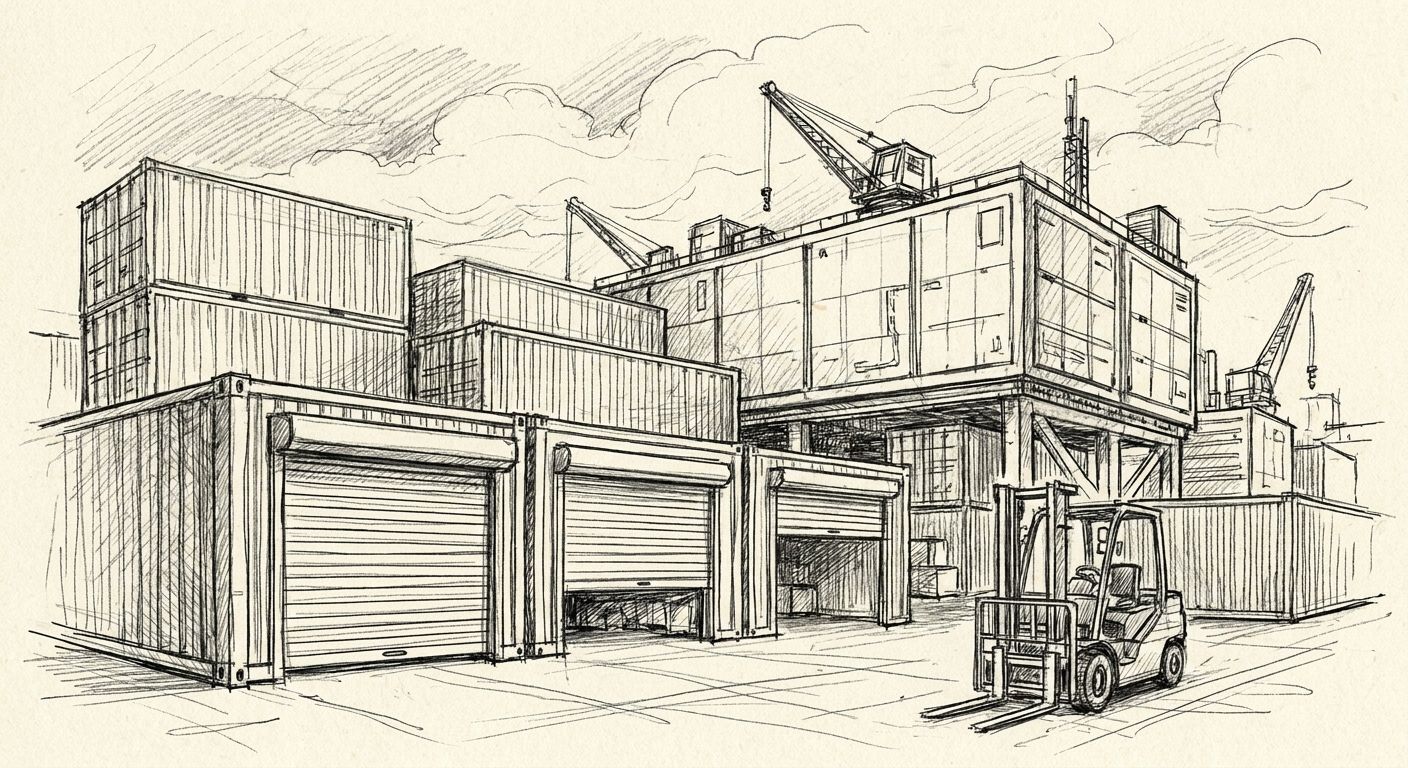
Manufacturing plants and industrial facilities in San Jose and the South Bay generate waste on a schedule that doesn't stop for a slow disposal vendor. Container rental for a manufacturing facility has to match production shifts, scrap volume, and safety walkways, not just fit whatever bin happens to be available.
- 30 to 40 yard roll-off containers handle continuous scrap and production debris better than smaller units for most manufacturing facilities.
- Valley Services runs its own San Jose transfer station, so container swaps for plant shutdowns don't wait on a third-party disposal site.
- Trash compactors beat loose roll-offs for warehouses and distribution centers moving high volumes of cardboard and packaging daily.
- Skip front-load bins with no swap schedule if your line runs multiple shifts, they fill faster than a weekly pickup can clear.
Why this matters
A manufacturing plant doesn't generate waste the way a home remodel does. It generates it continuously, on shift schedules, with scrap metal, packaging, pallets, and production byproduct all mixed into the flow. A container that fills by Tuesday and doesn't get picked up until Friday shuts down floor space and creates a safety hazard around forklift lanes.
Valley Services owns its own C&D transfer station in San Jose. That matters here specifically because plant shutdowns and line changeovers run on tight windows, and a vendor who broker's disposal to someone else's site can't guarantee the swap timing a production schedule needs.
Who this is for
This guide is for plant managers, facilities engineers, and general contractors handling shutdowns, retrofits, or ongoing waste at manufacturing and industrial sites across San Jose, Santa Clara, Sunnyvale, Mountain View, and Milpitas. If your site runs multiple shifts, stores scrap metal outdoors, or has a compliance officer asking about Cal/OSHA walkway clearance around containers, this is written for your job.
What to look for in container rental for a manufacturing facility
Capacity that matches shift volume, not square footage
A 1,000 square foot retail buildout and a 1,000 square foot production floor generate wildly different waste volumes. Manufacturing sites should size containers to daily or weekly output, not floor area. A single 20 yard container that fills in two days on a three-shift line is the wrong call even if it looked adequate on paper.
Swap-out scheduling that survives a shutdown window
Plant shutdowns often run on 48 to 72 hour windows where every hour of downtime costs production. A container vendor needs a swap schedule built around that window, not a standard weekly route. Ask how fast a full container gets swapped for an empty one during a shutdown, not during a normal week.
Scrap metal and mixed industrial debris handling
Manufacturing debris often mixes scrap metal, wood pallets, cardboard, and production waste in the same load. Confirm the container size and load rules account for metal weight, since overloaded containers get flagged or delayed at the scale.
Safety clearance and site placement
Cal/OSHA rules govern walkway clearance, forklift lanes, and container placement on active industrial sites. A container blocking an emergency exit or a forklift turn radius is a citation waiting to happen. Placement planning has to happen before delivery day, not after.
Single-vendor coordination across service lines
A plant shutdown or facility retrofit often needs containers, temporary fencing around a work zone, and restrooms for contractor crews at the same time. Coordinating one vendor for all three cuts down on delivery conflicts and site access confusion.
Direct transfer station access
A vendor that owns its own disposal endpoint controls its own schedule. A vendor that hauls to a third-party site is at the mercy of that site's hours and backlog, which shows up as slower swaps when your shutdown window is already tight.
Top picks for manufacturing and industrial sites
The workhorse pick: 30 to 40 yard roll-off for plant shutdowns
Plant shutdowns generate a high volume of mixed debris in a short window, and the container has to keep pace. A 40 yard blue steel roll-off holds significantly more volume per pickup than a 20 yard unit, which cuts the number of swaps needed during a 48 to 72 hour shutdown.
This is the size most South Bay plants land on for scheduled shutdowns and major line changeovers in 2026. Buy: right-size to a 30 or 40 yard unit for any shutdown longer than a single shift. Read the full breakdown on dumpster rental for manufacturing plant shutdowns.
The volume pick: compactor rental for warehouses and distribution centers
A facility moving high volumes of cardboard, shrink wrap, and packaging daily outgrows loose roll-off containers fast. A compactor crushes that volume down and cuts the number of hauls needed compared to an open-top container of the same footprint.
Distribution centers running daily inbound and outbound freight see the clearest benefit here, since packaging waste piles up between shifts regardless of production volume. Buy: switch to a compactor once daily packaging waste exceeds what a single container clears in a week. Details are in trash compactor rental for warehouses and distribution centers.
The cleanout pick: container rental for warehouse cleanouts
Warehouse cleanouts, whether from a lease turnover or an inventory purge, generate a different waste profile than daily production: old pallets, damaged inventory, obsolete equipment, and packaging all at once. This calls for a container sized for a one-time heavy load rather than a recurring service schedule.
Consider: this fits a single scheduled event better than an ongoing rental, so book it as a defined job, not a standing order. More on sizing and scheduling in container rental for warehouse cleanouts.
The multi-phase pick: coordinated site services for expansions
Facility expansions and retrofits that run in phases need containers, fencing, and restrooms staged to match each construction phase, not delivered all at once on day one. Planning this out before the first phase starts avoids mid-project scrambling for equipment that should already be on site.
Buy: map out equipment needs by phase before the project starts if your retrofit runs longer than a few weeks. The planning approach is covered in how to plan site services for a multi-phase construction project.
What to avoid
- Undersized front-load bins with no swap flexibility. They look cheaper on paper but fill fast on a multi-shift floor and turn into a standing complaint from your production team.
- Vendors who broker disposal to a third-party transfer site. During a shutdown window, a vendor waiting on someone else's yard hours is a vendor who can't guarantee your swap time.
- Booking containers without a Cal/OSHA placement check. A container blocking a forklift lane or emergency exit is a liability the plant manager owns, not the vendor.
Container options compared
| Option | Best for | Turnover speed | Verdict |
|---|---|---|---|
| 40 yard roll-off | Plant shutdowns, major changeovers | Fast swap on shutdown windows | Buy |
| Compactor | High-volume packaging waste | Continuous, scheduled hauls | Buy |
| One-time roll-off (20-30 yard) | Warehouse cleanouts, lease turnovers | Single scheduled pickup | Consider |
| Front-load bin, weekly route | Low-volume, single-shift sites only | Fixed weekly, no shutdown flex | Skip for multi-shift plants |
Plan your facility's container needs
Call to talk through sizing, swap scheduling, and site placement.
FAQ
What size container rental does a manufacturing facility need?
Most manufacturing facilities in the South Bay use 30 to 40 yard roll-off containers for shutdowns and changeovers, sized to shift volume rather than floor area. Smaller 20 yard units work for isolated, low-volume waste streams like office cleanouts within the same plant.
How fast can a full container get swapped during a plant shutdown?
Swap speed depends on the vendor's disposal endpoint. Valley Services operates its own San Jose transfer station, which removes the wait on a third-party site during a tight shutdown window.
Is a compactor better than a roll-off container for a warehouse?
A compactor is better once daily packaging and cardboard waste exceeds what a single roll-off clears in a week. Facilities with lower, steadier volume can stick with a scheduled roll-off.
Can one vendor handle containers, fencing, and restrooms for a facility retrofit?
Yes, coordinating one vendor for containers, temporary fencing, and restrooms cuts down on delivery conflicts during a multi-phase project. Valley Services covers all three service lines out of the same San Jose yard.
Do manufacturing sites need special permits for container placement?
Placement on private industrial property generally doesn't require a city permit, but Cal/OSHA clearance rules around walkways and forklift lanes still apply. Placement in a public right-of-way in San Jose requires a permit regardless of the site type.
What's the biggest mistake plants make when renting containers for a shutdown?
Undersizing the container to fit a standard weekly schedule instead of the shutdown's actual volume. A 48 to 72 hour shutdown generates debris fast, and a container sized for a normal week runs out of capacity mid-shutdown.
How much does container rental cost for an industrial facility in 2026?
Pricing depends on container size, rental duration, and debris type, so contact a vendor directly for a quote specific to your site. Call Valley Services at (408) 297-5404 to talk through your facility's volume and schedule.
Can scrap metal go in a standard roll-off container?
Scrap metal can go in a standard roll-off, but weight limits apply since metal adds density fast compared to bulkier debris. Confirm load limits with your vendor before filling a container with heavy scrap loads.
One last thing
The detail most plant managers miss until it costs them a shift: container swap speed during a shutdown depends entirely on where the vendor hauls to, not how many trucks they own. A vendor hauling to a third-party transfer site is stuck on that site's hours and backlog. Valley Services runs its own C&D transfer station in San Jose, third generation, same yard since 1986, which is the reason swap timing during a shutdown holds up even when the schedule is tight.
Call (408) 297-5404 or visit valleyservices.biz to talk through container sizing and swap scheduling for your facility's next shutdown.