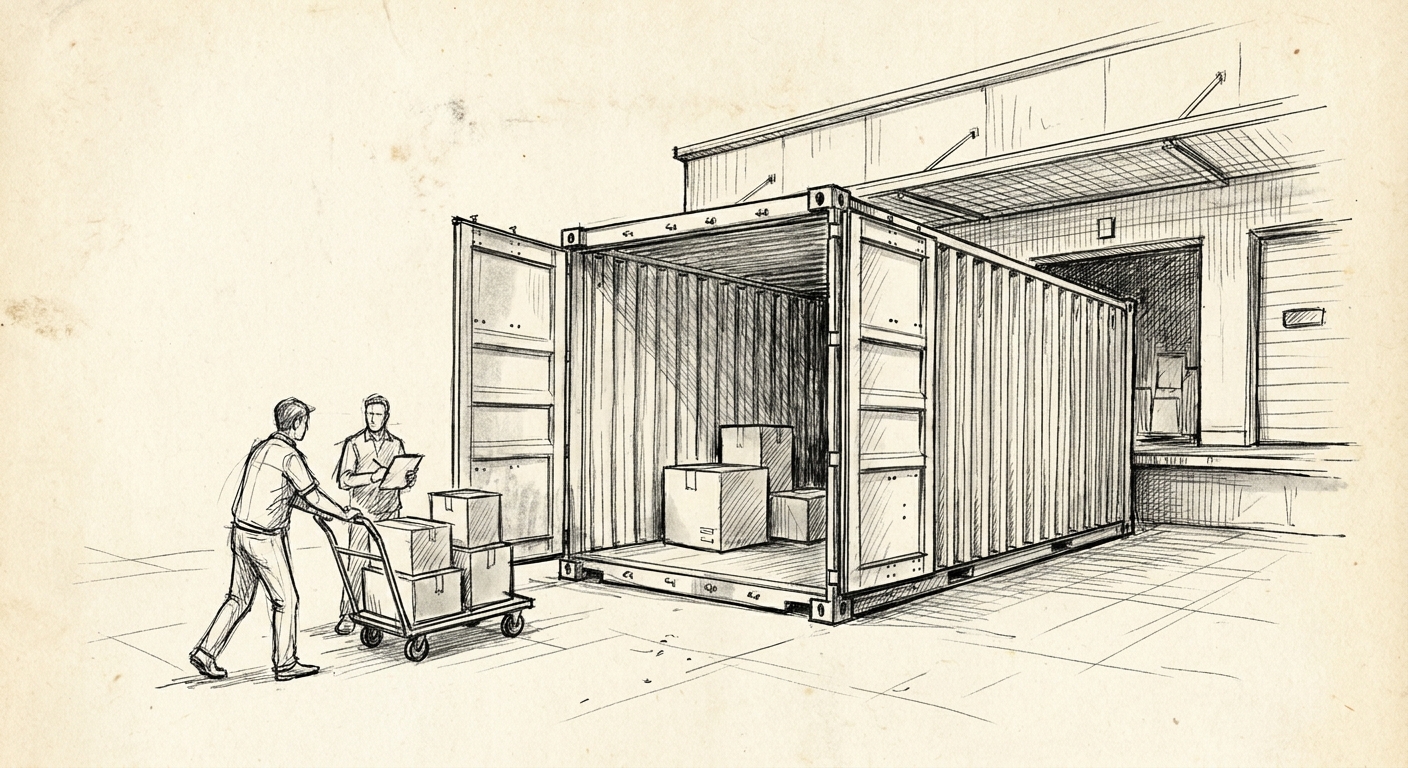
A warehouse cleanout moves fast: racking comes down, pallets stack up, and forklifts need a clear path to the dock. Get the container size wrong and the job stalls while a second container gets scheduled. This guide breaks down container rental for warehouse cleanouts in 2026: yardage, weight limits, dock access, and when temporary fencing belongs on the job.
- A 30-yard roll-off container handles most standard warehouse cleanouts in 2026. Buy.
- 40-yard containers fit full-building strip-outs but need loading dock clearance checked first.
- Containers sized for estate cleanouts stall on racking and pallet loads. Skip them for warehouse work.
- Valley Services runs its own San Jose transfer station, which keeps swap-out schedules predictable on multi-phase cleanouts.
Why this matters
Warehouse cleanouts generate more weight per square foot than almost any other cleanout type. Steel racking, wood pallets, shrink wrap, and leftover inventory add up fast, and a container that looks right for the floor plan can hit its weight limit before it's half full.
Most roll-off providers broker disposal to a third-party site, which means your swap-out timeline depends on someone else's yard. Roll-off container rental through a company that owns its own transfer station keeps that variable out of your schedule. Valley Services has run the same San Jose yard since 1986, third generation, same family.
Who this is for
This guide is written for facility managers clearing a warehouse between tenants, general contractors handling a tenant-improvement demo, and business owners closing or downsizing a location. If the job involves racking teardown, pallet disposal, or a full strip-out ahead of a lease turnover, the sizing logic below applies directly.
What to look for in container rental for warehouse cleanouts
Yardage relative to racking volume, not square footage
Square footage tells you almost nothing about container need. A 10,000-square-foot warehouse with light racking might fill a single 20-yard container, while the same footprint packed with steel shelving and pallet debris can need three 30-yard swaps. Measure by racking runs and stack height, not floor area.
Weight limits before yardage limits
Steel racking and wood pallets are dense. A 30-yard container filled with mixed warehouse debris often reaches its weight limit long before it reaches the top rail. Size the container for weight, not volume, and expect to pay for tonnage, not just the box.
Loading dock and overhead clearance
Warehouses have dock aprons, low canopies, and tight turning radii that residential and commercial lots don't. Confirm overhead clearance and dock apron width before a 40-yard container gets dropped, especially if the dock has a fixed canopy height.
Permit requirements for lot and street placement
Containers placed on a public street in San Jose, Santa Clara, Sunnyvale, Mountain View, or Milpitas typically need a placement permit. Containers staying inside a private lot usually don't, but confirm before drop-off day so the crew isn't waiting on paperwork.
Same-yard disposal control for schedule reliability
Multi-phase cleanouts depend on containers getting swapped on time. A provider that hauls to its own transfer station controls that timeline directly instead of routing through a third-party disposal site. That matters most on jobs running more than one container cycle.
Swap-out cadence for multi-week jobs
A single-phase cleanout might need one container for a week. A full-building strip-out spread over three or four weeks needs a swap schedule built in advance, not arranged reactively once the first container fills.
“Size the container for weight, not square footage. A 30-yard container filled with steel racking hits its limit long before it hits the top rail.”
Top picks for warehouse cleanout container rental
The safe pick: 20-yard container
Best for partial floor clearouts where racking is light and debris is mostly cardboard, shrink wrap, and small fixtures. Fits tight lots and single dock bays without blocking a second bay. Consider this size only when the job is a partial clearout, not a full strip-out. Verdict: Consider.
The workhorse: 30-yard container
This is the standard call for a mid-size warehouse cleanout with mixed racking, pallets, and general debris. It handles the bulk of a single-phase job without needing a mid-job swap on most 5,000 to 15,000-square-foot spaces. Roll-off container rental for general contractors covers the same sizing logic for tenant-improvement and demo work. Verdict: Buy.
The heavy hitter: 40-yard container
Built for full-building strip-outs where racking, mezzanine debris, and packaging waste all come out at once. It needs more clearance than the 20 or 30-yard units, and dock canopy height should get checked before drop-off. Verdict: Consider, pending a dock clearance check.
The wildcard: rotating 30-yard swap schedule
For multi-week strip-outs, a rotating schedule of 30-yard containers beats waiting on a single oversized unit. Coordinated swap-outs keep debris moving off site continuously instead of stacking up between drop-offs, which matters when a lease turnover deadline is fixed. Verdict: Buy for jobs running more than one container cycle.
The add-on few think about: temporary fencing
A warehouse sitting between tenants or mid-cleanout is an open target for scrap theft and unauthorized entry. Temporary fencing for vacant property security keeps the site controlled while containers cycle in and out over multiple weeks. Verdict: Consider if the property sits vacant or unattended between shifts.
Talk through your warehouse cleanout
Call to size the container and lock in a swap-out schedule before demo starts.
What to avoid
- A container sized for a residential cleanout. Estate and home cleanout jobs run lighter debris loads than a warehouse strip-out. A container sized for that kind of job hits its weight limit fast when it's loaded with racking and pallets instead.
- Blocking the only working dock door. Placing a container directly in front of an active dock door stops load-out traffic for the rest of the job. Confirm placement against the dock plan before the container arrives.
- Skipping a check on mixed hazardous items. Old fluorescent ballasts, batteries, and leftover paint show up in warehouse cleanouts more often than people expect, and mixed loads with hazardous items get rejected at drop-off.
Container size comparison for warehouse cleanouts
| Container Size | Best For | Dock Fit | Verdict |
|---|---|---|---|
| 20-yard | Partial floor clearout, light debris | Fits tight lots, single dock bay | Consider |
| 30-yard | Standard cleanout, mixed racking and pallets | Fits most dock aprons | Buy |
| 40-yard | Full-building strip-out | Needs extra overhead and swing clearance | Consider |
| Rotating 30-yard swap schedule | Multi-week, multi-phase strip-out | Requires a scheduled swap slot | Buy |
FAQ
What size roll-off container do I need for a warehouse cleanout?
Most standard warehouse cleanouts in 2026 run on a 30-yard container. Full-building strip-outs with heavy racking often need a 40-yard unit or a rotating swap schedule instead of one oversized box.
Can steel racking and pallets go in the same roll-off container?
Yes, steel racking and wood pallets can go in the same container, but the load hits its weight limit before it hits the top rail. Size the container for weight, not volume, when the debris is mostly racking and pallets.
Do I need a permit for a roll-off container in a warehouse parking lot in San Jose?
Containers placed entirely inside a private lot usually don't need a placement permit in San Jose. Containers placed on a public street typically do, so confirm placement before the drop-off date.
How many containers does a full warehouse strip-out need?
A full-building strip-out over three to four weeks usually needs a rotating schedule of 30-yard containers rather than one container sitting the whole job. The exact count depends on racking volume and debris weight.
What can't go in a C&D roll-off container?
Fluorescent ballasts, batteries, paint, and other hazardous items can't go in a standard C&D roll-off load. Mixed loads containing these items get flagged and can be rejected at the transfer station.
Is temporary fencing necessary during a warehouse cleanout?
Temporary fencing isn't required by code for most warehouse cleanouts, but it's worth adding when the property sits vacant or unattended between work shifts. It controls access to the site while containers cycle in and out.
Why does it matter if a provider owns its own transfer station?
A provider that owns its transfer station controls the disposal endpoint directly, which keeps swap-out schedules predictable. Providers that broker disposal to a third-party site depend on that site's own timeline.
One last thing
The detail most cleanout crews miss isn't the container size, it's the dock canopy height. A 40-yard container that looks fine on paper can get turned away at the gate if the canopy clearance wasn't checked against the truck's tip height before drop-off day.
Call (408) 297-5404 or visit valleyservices.biz to talk through sizing and a swap-out schedule before the first wall comes down.