A basement remodel buries debris behind one stairwell, one driveway, and sometimes one shot at getting a container in before the framing crew shows up. Get the container size or placement wrong and you're paying for a second haul mid-job in 2026.
- A 20-yard roll-off container handles most basement remodel debris in 2026: drywall, framing, subfloor. Buy.
- Skip a 10-yard unit for a full gut job: drywall and plaster alone fill it before framing debris arrives.
- Street placement in San Jose needs a permit. Driveway placement usually does not.
- Concrete or soil from egress window digging needs its own load, separate from general demo debris.
Why this matters
Basement debris is dense, not bulky. Drywall, plaster, subfloor, and old insulation weigh more per cubic foot than the framing lumber and cabinetry that fill a kitchen remodel container. Order by volume alone and you'll hit the weight limit on a roll-off container that still looks half empty. That's the fastest way to an overage charge on a basement job.
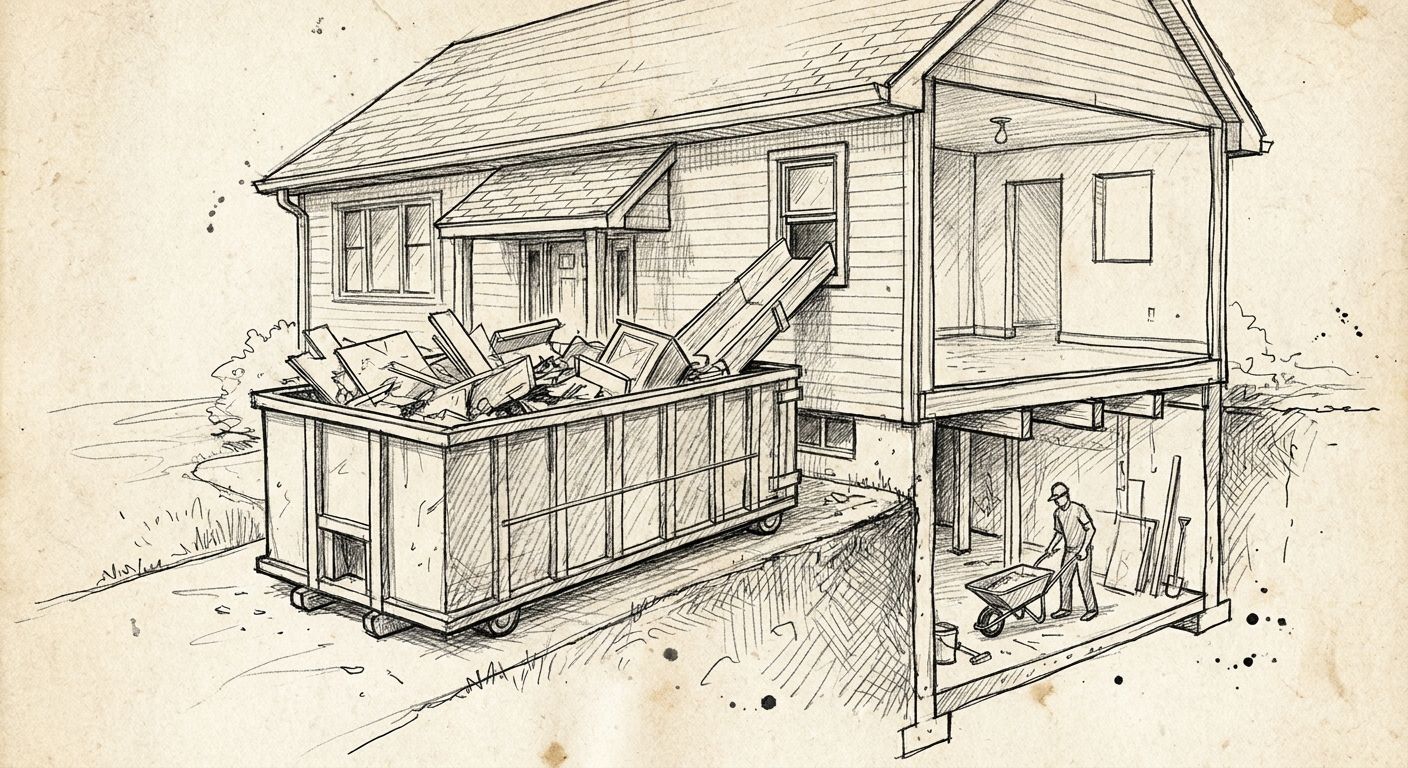
Access is the second problem specific to basement work. The debris comes up one stairwell, gets staged in a driveway or on a small side yard, and loads into a container that has to sit somewhere a truck can reach. In San Jose, Santa Clara, Sunnyvale, Mountain View, and Milpitas, that usually means the driveway. When the driveway is too short or too narrow, the container goes on the street, and the street requires a permit.
Who this guide is for
This is for homeowners finishing a basement, general contractors running a basement remodel or below-grade ADU conversion, and property managers overseeing a basement unit turnover. If your job involves demo debris coming up a stairwell and a driveway with limited clearance, the sizing and placement rules below apply directly to your site.
What to look for in a roll-off container for a basement remodel
Size matched to weight, not volume
Drywall, plaster, and old subfloor pack dense. A 10-yard container looks like it should hold a small basement's demo debris, but the weight limit on the ticket fills up long before the box does. Order a size based on the density of what's coming out, not the square footage of the room.
Driveway and access clearance
A standard single-car driveway fits most roll-off container sizes, but older Bay Area homes often have narrower driveways, shared driveways, or gates that block truck access. Measure before you call. Preparing the driveway before delivery day keeps the truck from idling in the street while someone moves a car.
Permit status for street placement
If the container has to sit on the street because the driveway won't work, San Jose and neighboring cities require a placement permit. Permitting a placement takes lead time, so confirm this before you schedule delivery, not after the truck shows up.
Weight limits and overage terms
Basement debris is where overage fees hit hardest because the material is heavy and the container fills fast on tonnage, not on visible space. Know the weight limit on your container size before the crew starts loading, and read up on how loading order affects overage fees before demo day.
Scheduling across demo and finish phases
A basement remodel runs demo first, then framing and finish. Demo debris is heavy and dense. Finish debris (flooring scraps, drywall offcuts, packaging) is lighter but bulkier. One container swap between phases usually beats trying to force both into one load.
“If the driveway can't fit a 20-yard container without blocking the sidewalk, order a smaller unit and plan a second haul.”
Top picks by basement scope
The tight-driveway pick: 10-yard container. Fits a standard single-car driveway with room to spare and works for a partial basement remodel, like a single bathroom addition or a small wet bar buildout. It fills on weight fast if you're pulling old plaster walls, so it's a poor fit for a full gut. Consider for partial scope jobs only.
The workhorse pick: 20-yard container. This is the standard size for a full basement gut and remodel in 2026: drywall, framing offcuts, old subfloor, and flooring debris in one load. It handles the density of basement demo debris better than a 10-yard without stepping up to 30-yard footprint. Buy for most full basement remodels.
The overflow pick: 30-yard container. Makes sense when the basement remodel runs alongside a main-floor renovation and debris volume from both phases needs one staging point. It takes up more driveway length, so confirm clearance first. Consider for combined-scope projects, skip it for a basement-only job where a 20-yard already covers the tonnage.
The excavation pick: separate load for soil and concrete. Egress window wells and underpinning work generate soil and broken concrete that should not go in with general demo debris. Mixing dense fill material with drywall is the single fastest way to blow past a weight limit. Buy a dedicated load for excavation material if your basement scope includes egress window digging.
What to avoid
- Ordering one container size for the entire job. Demo debris and finish debris have different weight and volume profiles. A size that works for framing waste often falls short on drywall and plaster tonnage.
- Skipping the street permit because the driveway should work. If the driveway is shared, gated, or under 10 feet wide, plan for street placement and the permit lead time that comes with it.
- Loading excavation soil or concrete with general debris. These materials are dense enough to hit a weight limit fast, and they belong on a separate ticket, not mixed with drywall and framing scraps.
Verdict comparison
| Scenario | Recommended size | Access fit | Verdict |
|---|---|---|---|
| Bathroom-only basement addition | 10-yard | Standard driveway | Consider |
| Full basement gut and remodel | 20-yard | Standard to wide driveway | Buy |
| Basement plus main-floor remodel | 30-yard | Wide driveway or street with permit | Consider |
| Egress window or underpinning excavation | Separate dedicated load | Site-dependent | Buy (separate ticket) |
FAQ
What size dumpster do I need for a basement remodel?
Most full basement remodels in 2026 use a 20-yard roll-off container. Partial scope jobs, like a single bathroom addition, often work with a 10-yard unit instead.
Can a roll-off container fit in a Bay Area driveway?
Most standard single-car driveways fit a 10 to 20-yard container. Narrow, shared, or gated driveways may require street placement with a permit instead.
Do I need a permit to place a container on the street in San Jose?
Yes. San Jose requires a placement permit for containers sitting on the street. Driveway placement usually does not require one.
Why did my basement remodel container hit the weight limit so fast?
Drywall, plaster, and old subfloor are dense materials that add tonnage quickly, even when the container still has visible space left. Basement debris typically hits weight limits before it hits volume limits.
Should egress window excavation debris go in the same container as demo debris?
No. Soil and concrete from egress window digging or underpinning should go in a separate load. Mixing it with general demo debris is a common cause of overage charges.
How far ahead should I schedule a container for a basement job?
Schedule as soon as your demo date is set, especially if street placement and a permit are involved. Permit processing adds lead time that driveway placement does not.
Can one container handle both demo and finish debris on a basement job?
It can, but demo debris is heavy and finish debris is bulky, so they fill a container differently. Many basement remodels use one container for demo and a second for finish-phase debris.
What is the difference between a 10-yard and 20-yard container for a basement job?
A 10-yard container suits partial basement scope, like one room. A 20-yard container handles the debris volume and weight of a full basement gut and remodel.
One last thing
The number that trips up most basement remodels isn't the room's square footage, it's the tonnage of what comes out of the walls. A 400 square foot basement with plaster walls and a concrete slab underpinning can out-weigh the debris from a much larger framing job upstairs. Size the container for what's actually going in it, not for how big the room looks on the plans.
Get the right container for your basement job
Sizing, driveway placement, and permit questions answered before delivery day.
Call Valley Services at (408) 297-5404 or visit valleyservices.biz to talk through container size and placement for your basement remodel before the demo crew shows up.