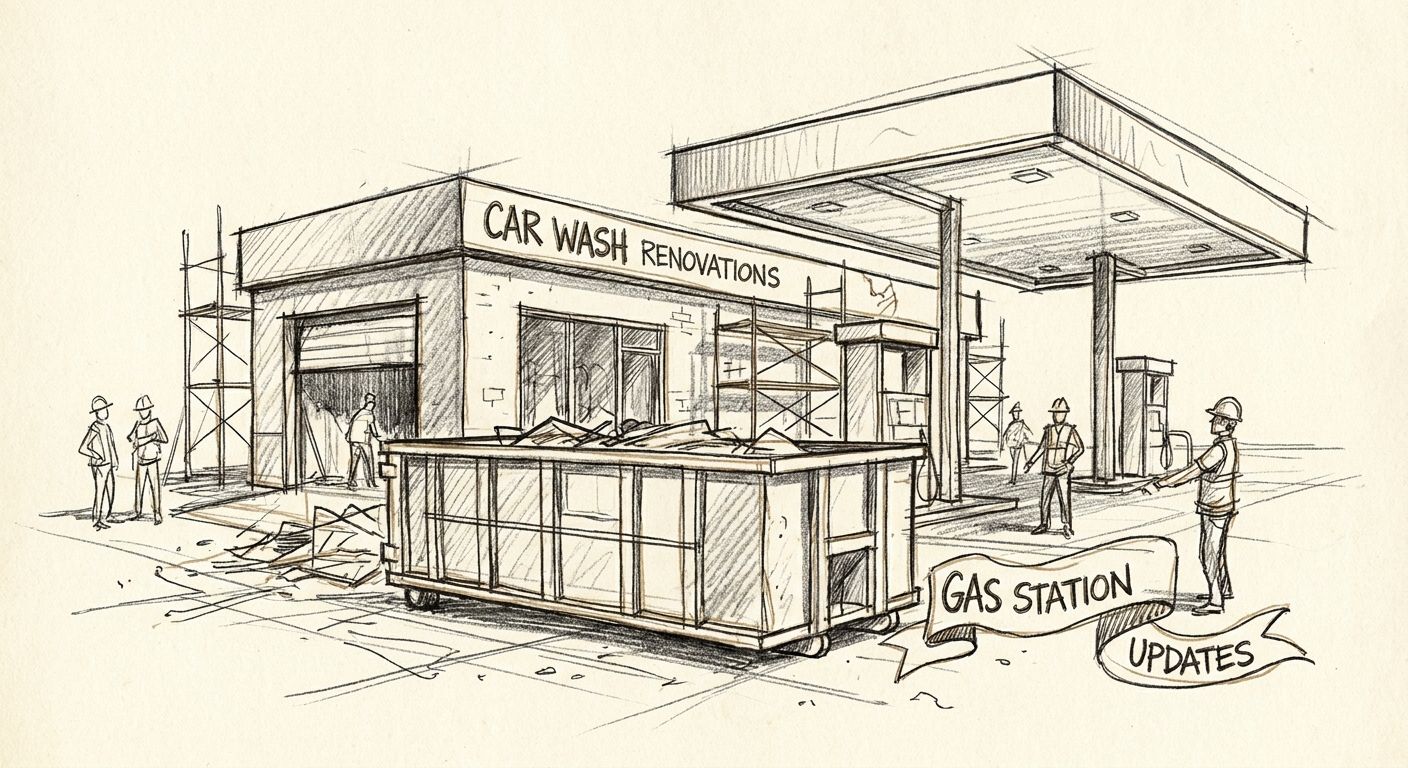
Car wash and gas station renovations produce a mix of debris that most contractors never see on a standard remodel: concrete islands, canopy steel, old fuel dispensers, tunnel equipment, and soil that may be fuel-contaminated. Dumpster rental for car wash renovations and fuel-site upgrades has to account for that mix before a container ever hits the lot, because one wrong load can shut a site down.
- Dumpster rental for car wash renovations typically needs a 30-yard blue steel container for tunnel and equipment tear-out in 2026.
- Gas station renovations require separate handling for fuel-contaminated soil and USTs, never mixed into the roll-off container.
- Valley Services runs its own San Jose transfer station, so container swaps for canopy and island demo don't wait on a broker.
- A permit is required for any container placed in a public right-of-way in San Jose in 2026.
- Skip mixed loads on active fuel sites: separating hazardous debris keeps the project on schedule and off a stop-work order.
Why this matters for car wash and gas station renovations
Most renovation debris is straightforward: drywall, tile, wood, metal. Car wash and gas station sites break that pattern. A tunnel wash renovation means pulling out conveyor rails, brush assemblies, and vacuum stations bolted into concrete. A gas station renovation adds canopy steel, dispenser islands, and soil that sits inches from an underground storage tank (UST).
That combination changes two things: what can legally go in a roll-off container, and how the job site gets inspected. Contractors who treat this like a standard commercial remodel end up with a container the inspector won't sign off on, or worse, a load flagged at the transfer station. Valley Services owns and operates its own San Jose transfer station, which means container swaps and load questions get resolved same-visit instead of waiting on a third-party disposal site.
Planning dumpster rental for car wash and gas station renovations
Work through these steps in order. Skipping the site assessment step is the single biggest cause of delayed renovations in 2026.
Confirm what's underground before you order a container
Gas stations and many older car washes have USTs, fuel lines, or grease interceptors below the surface. Container placement and demolition scope both depend on knowing exactly where those are.
- Pull the site's UST records or Phase I/II environmental report if one exists
- Mark fuel line routes before any excavation or canopy footing removal
- Flag grease interceptor and wash-water reclaim locations for the demo crew
- Confirm with the property owner whether tanks are active, decommissioned, or scheduled for removal
- Loop in a licensed UST contractor if tank removal is part of the scope, since that debris does not go in a standard roll-off container
Choose the right container size for the renovation phase
A full gut of a car wash tunnel generates more volume than a convenience store interior remodel. Size by phase, not by the whole project.
- 20-yard container: fixture swaps, tile, small equipment removal, single-bay work
- 30-yard container: full tunnel gut, vacuum station removal, interior buildout debris
- 40-yard container: canopy replacement, full island demolition, larger site clears
- Order a second smaller container for finish-phase debris instead of overloading the demo container
- Check canopy clearance height before placing a container underneath, since roll-off trucks need vertical room to load and tip
Handle hazardous materials separately from the roll-off container
Fuel-contaminated soil, old dispenser components with residual fuel, and UST-related debris are hazardous material, not general C&D. Mixing them into a roll-off container is a rejected-load problem waiting to happen.
- Segregate any soil or gravel with visible fuel staining or odor
- Keep old dispensers and fuel line sections separate until a hazardous materials contractor confirms disposal method
- Never stage hazardous debris next to a general roll-off container awaiting pickup
- Document segregation with photos for the inspector and for the property owner's records
- Review how to dispose of hazardous construction materials safely before the demo crew starts pulling equipment
Secure the permit before delivery day
San Jose requires a permit for any roll-off container placed in a public right-of-way, including a portion of a gas station apron that touches the sidewalk or curb line.
- Confirm whether the container sits fully on private property or overlaps public right-of-way
- Apply for the encroachment permit before scheduling delivery, not the same week
- Post required signage or barricades if the container narrows a drive lane
- Coordinate permit timing with the demo schedule so the container isn't sitting idle and unpermitted
- Check how to permit a dumpster placement in San Jose for the current process
Plan container placement around fuel islands and active traffic
Many gas station renovations happen while part of the site stays open. Container placement has to protect fuel access and customer sightlines.
- Keep a minimum clearance from active fuel dispensers per your fire marshal's direction
- Position the container so delivery trucks don't cross an active pump lane
- Use temporary fencing or K-rail to separate the demo zone from operating pumps if the site stays partially open
- Reassess placement at each phase, since canopy or island demo may shift what's accessible
Schedule pickup around inspection and reopening dates
A container sitting on site past its useful window blocks parking and slows reopening. Match pickup to your actual milestones, not a flat weekly schedule.
- Time the final pickup to the day after final demo debris clears, not before
- Build in a buffer for inspection delays before scheduling swap-out
- Load the container correctly the first time to avoid a rejected pickup, see how to load a dumpster safely and avoid overage fees
- Confirm reopening date with the property owner before releasing the last container
Container options for car wash and gas station renovations
| Option | Best for | Key limitation |
|---|---|---|
| 20-yard roll-off container | Fixture swaps, tile, small equipment removal | Fills fast with concrete or canopy metal |
| 30-yard roll-off container | Full tunnel gut, vacuum station removal | Needs clear drive-up access for the delivery truck |
| 40-yard roll-off container | Canopy replacement, full island demolition | Requires more site footprint and canopy clearance |
| C&D transfer station drop-off | Contractors self-hauling debris by truck or trailer | San Jose location only, no on-site container involved |
A 30-yard blue steel container is the right starting point for most tunnel car wash renovations, and a 40-yard container is the right call once canopy or island demolition enters the scope.
Talk through your renovation timeline
Call to size containers, fencing, and restrooms for the whole job in one conversation.
Common mistakes on car wash and gas station renovation sites
- Mixing fuel-contaminated soil with general debris. This is the fastest way to get a load flagged and a demo halted mid-project.
- Sizing the container for the whole project instead of the current phase. Canopy steel and interior drywall don't belong in the same load calculation.
- Skipping the encroachment permit because "it's just for a few days." San Jose enforces this regardless of container duration.
- Placing a container without checking canopy clearance. A container that can't be tipped for pickup sits there until someone reorders the placement.
- Not coordinating container swaps with the reopening date. A container still on site past reopening blocks customer parking and reads as an unfinished job.
FAQ
What size dumpster do I need for a car wash renovation in 2026?
Most tunnel car wash renovations need a 30-yard roll-off container to handle conveyor rails, vacuum stations, and interior buildout debris. Fixture-only remodels can often use a 20-yard container instead.
Can I put fuel-contaminated debris in a roll-off container?
No. Fuel-contaminated soil or equipment goes through a hazardous materials process, not a standard roll-off container. Mixing it in risks a rejected load at the disposal site.
Do I need a permit for a dumpster at a gas station in San Jose?
Yes, if any part of the container sits in the public right-of-way, including a sidewalk or curb strip. Confirm placement and apply for the encroachment permit before delivery day.
How long can I keep a roll-off container on an active gas station lot?
Rental duration depends on the permit terms and the project schedule, not a fixed industry standard. Coordinate the pickup date with your demo phase to avoid a container sitting idle on customer parking.
What happens to underground storage tank removal debris?
UST removal debris requires a licensed contractor and a separate disposal path, not a general roll-off container. Handle this scope before ordering containers for the rest of the renovation.
Is a 30-yard or 40-yard container better for a canopy replacement?
A 40-yard container fits most full canopy replacements because of the steel volume and island demolition involved. A 30-yard container works if canopy work is limited to a partial section.
Can one company handle both the dumpster and restroom rental for a renovation crew?
Yes. Valley Services provides roll-off containers, portable restrooms, and temporary fencing from one yard in San Jose, which keeps site logistics on one call.
How fast can a container be delivered for an urgent gas station renovation?
Delivery timing depends on current scheduling and container availability. Call (408) 297-5404 to confirm the current delivery window for your site.
One last thing
The detail contractors miss most on these renovations isn't the container size, it's the canopy clearance. A 40-yard container needs enough vertical room for the delivery truck to tip and load, and a lot of gas station canopies sit lower than crews expect until the truck shows up and can't maneuver. Measure clearance before the container is ordered, not after it's sitting on the apron.
Call (408) 297-5404 or reach out through valleyservices.biz to walk through container sizing, permitting, and site logistics for the renovation before the first phase starts.