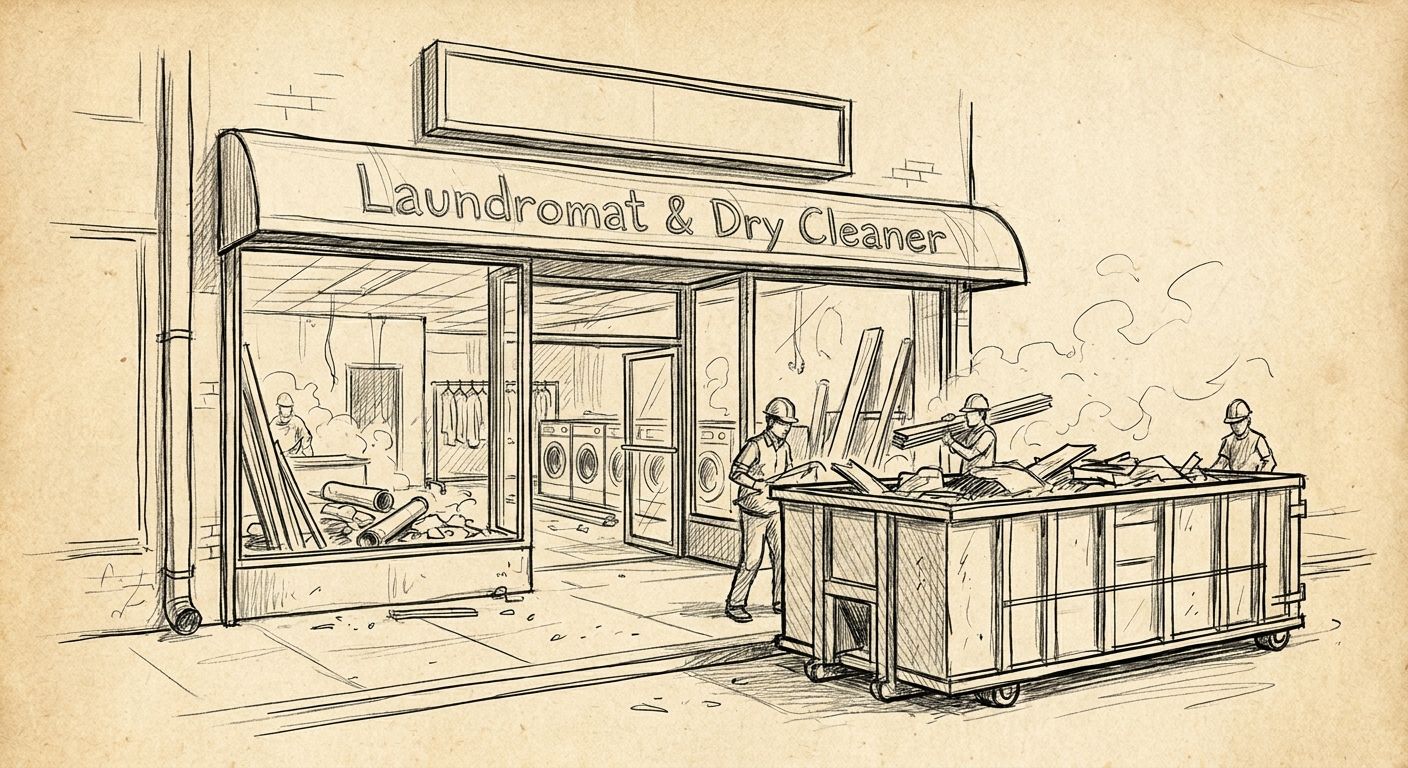
Laundromat and dry cleaner renovation dumpster rental clears washers, dryers, dry cleaning machines, plumbing, and flooring debris off a San Jose or South Bay job site, and the sizing and hazmat rules differ from a standard retail remodel. A laundromat gut job and a dry cleaner buildout both run on tight footprints, shared strip mall parking, and equipment that a general contractor doesn't handle every week.
- A 20-yard roll-off container handles most single-unit laundromat and dry cleaner renovation debris in 2026.
- Perc-based dry cleaning machines cannot go in a standard construction dumpster; they need separate hazmat handling.
- Valley Services owns its San Jose transfer station, so container turnaround doesn't depend on a third-party dump schedule.
- Schedule delivery before opening or after close to keep laundromat operations running during renovation.
- Dumpster rental for laundromat renovations runs on 10 to 30 yard blue steel containers depending on scope.
Why this matters for laundromat and dry cleaner renovations
A laundromat rarely closes completely for renovation. Many run extended hours, some close to around the clock, so the container has to sit somewhere that doesn't block a customer's path to the machines. A dry cleaner adds a second layer: the pressing equipment and drop-off counter run on a schedule tied to customer pickup days, and the dry cleaning machine itself can carry solvent that a roll-off container was never built to hold.
Both business types typically operate out of shared strip mall space in San Jose, Santa Clara, Sunnyvale, Mountain View, or Milpitas, where the parking lot belongs to multiple tenants. Getting the container size, placement, and pickup schedule right the first time matters more here than on a standalone job site, because there's no room for a second delivery attempt while the lot is full.
Valley Services owns and operates its own C&D transfer station in San Jose. That means container swap-out on a laundromat or dry cleaner job doesn't wait on a third-party disposal site's hours or backlog. One call covers the container, and if the renovation also needs temporary fencing or a portable restroom for displaced employee facilities, that's the same phone call.
Separate dry cleaning equipment from the rest of the debris
A dry cleaning machine that ran on perchloroethylene, commonly called perc, can hold residual solvent in the tank and lines even after the business stopped using it. That solvent does not belong in a roll-off container.
- Confirm whether the machine ran on perc or hydrocarbon solvent before it comes off the mounting pad.
- Drain and cap solvent lines before a demo crew unbolts the unit; don't let disconnection happen without a proper shutoff.
- Route the machine itself to a licensed equipment handler, not the construction dumpster.
- Bag and stage lint traps, filters, and solvent-soaked rags separately, they carry vapor even with the machine powered down.
- Photograph removal before loading starts, useful for landlord sign-off and insurance records.
Size the container to the renovation phase, not the whole project
A laundromat renovation that looks cosmetic on the surface, new flooring, new counter, updated lighting, can still generate a full 20-yard load once tile and thinset come out.
- A 10-yard container covers a single fixture swap: counter rebuild, one washer pad, minor drywall.
- A 20-yard container covers a full gut of one laundromat or dry cleaner suite, cabinetry, flooring, drywall, ceiling tile.
- A 30-yard container covers multi-machine pulls, duct removal, and larger buildouts across adjoining units.
- Order one size up when flooring tear-out is part of the scope; tile and thinset hit the weight limit long before the box looks full.
The same logic applies to a restaurant renovation dumpster rental, where plumbing and equipment removal drive container size more than the square footage of the space. Sizing follows the debris type, not the storefront footprint.
Protect the lot before the container lands
Most laundromats and dry cleaners sit in strip malls with shared parking. That lot belongs to every tenant, not just the one under renovation.
- Confirm placement with the property manager or landlord before delivery, shared lots have rules about where a container can sit.
- Use ground protection under the container feet through a Bay Area summer; softened asphalt scars under sustained weight.
- Mark the drop zone with cones so customers don't park in front of the container mid-delivery.
- Keep the container clear of fire lanes and ADA parking stalls, both get flagged fast in a shared retail lot.
Schedule delivery and swap-out around business hours
A container that shows up at the wrong hour blocks the exact customers the business is trying to keep during construction.
- Schedule delivery before opening or after the last wash cycle for laundromats running extended hours.
- Place the container away from the customer entrance for dry cleaners with an active drop-off counter, not on the loading side.
- Time swap-out so a full container doesn't sit through a weekend when the strip mall lot fills with other tenants' traffic.
- Confirm swap-out timing in advance rather than calling once the box is already overflowing.
Pull the right permit before the container hits the street
San Jose requires a permit for a roll-off container placed on a public street or sidewalk. A container staged entirely on private lot parking usually doesn't need one, but strip mall frontage often blurs that line.
- Confirm with the property manager whether the intended spot counts as private lot or public right of way.
- Pull the permit before delivery day, not after a code enforcement notice.
- Keep permit documentation on site through the renovation.
- Review the full process in permit a dumpster placement in San Jose before scheduling delivery.
Handle plumbing and flooring debris separately from general demo
Laundromat renovations pull water lines, floor drains, and standpipes that dry cleaner buildouts often skip. Both pull old tile and slab patch material that's denser than drywall or framing scrap.
- Cap and inspect water lines and floor drains before backfill or new flooring goes in.
- Keep tile, thinset, and slab patch in its own load segment so it doesn't spike container weight unexpectedly.
- Coordinate plumbing debris removal with the rough-in schedule so the container isn't full before drywall and flooring debris arrive.
- Reference general loading discipline in load a dumpster safely and avoid overage fees to keep weight under control through a multi-phase job.
Plan restroom access if the renovation affects employee facilities
Small laundromat and dry cleaner suites often run on a single employee restroom. Renovation work can take that restroom offline for days at a time.
- A portable restroom keeps staff and on-site contractors covered without routing anyone to a neighboring tenant's facilities.
- Confirm placement with the property manager the same way you would for the container; shared lots have limited space for two rental units.
- Line up restroom service before demo starts, not after the existing restroom is already disconnected.
“If the dry cleaning machine still has solvent in the tank, it does not go in a construction dumpster.”
Container options for laundromat and dry cleaner renovations
| Container Size | Best For | Key Limitation |
|---|---|---|
| 10 yard | Single fixture swap, minor plumbing or flooring in a dry cleaner counter area | Fills fast with tile and packaging, not enough for a full gut |
| 20 yard | Full gut of one laundromat or dry cleaner suite | Needs roughly 20 feet of curb or lot clearance |
| 30 yard | Multi-machine removal, duct work, larger buildouts | Weight limit hits fast with wet flooring or tile debris |
| 40 yard | Full strip-out with heavy machinery pads | Rarely fits a tight urban storefront lot in San Jose or Santa Clara |
Verdict: a 20-yard roll-off container is the right starting point for most single-unit laundromat or dry cleaner renovations in 2026, with a 30-yard reserved for multi-machine pulls or duct removal.
Common mistakes on laundromat and dry cleaner renovation sites
- Treating a dry cleaning machine like standard demo debris. A solvent tank loaded into a roll-off container is a hazmat problem, not a cleanup shortcut.
- Undersizing the container because the scope looks cosmetic. Flooring and plumbing debris fill a box faster than framing scrap.
- Skipping the San Jose permit check. A container staged on a sidewalk or street without confirming placement rules can trigger a stop-work notice.
- Scheduling delivery during peak laundromat hours. Blocking customer parking in a shared strip mall lot creates a problem the renovation didn't need to cause.
- Mixing tile and thinset in with lighter debris. Dense material hits the weight limit before the container looks full, and that shows up as an overage charge.
Line up your renovation dumpster
Call to size the container and confirm placement for your San Jose or South Bay job.
FAQ
What size dumpster do I need for a laundromat renovation?
Most single-unit laundromat renovations run on a 20-yard roll-off container, which covers flooring, cabinetry, drywall, and ceiling tile from a full gut. A smaller 10-yard container works for a limited scope like a counter rebuild or one washer pad swap.
Can dry cleaning chemicals go in a roll-off dumpster?
No. A dry cleaning machine that ran on perchloroethylene can hold residual solvent in the tank and lines, and that material needs a licensed hazmat handler, not a construction dumpster. Drain and cap the machine before it comes off the mounting pad.
Do I need a permit to place a dumpster outside a laundromat in San Jose?
Yes, if the container sits on a public street or sidewalk. A container staged entirely on private lot parking usually doesn't need a street permit, but confirm with the property manager since strip mall frontage often blurs that line.
How is a dry cleaner renovation different from a laundromat renovation for waste disposal?
A dry cleaner adds a hazmat concern that a laundromat renovation typically doesn't have: the pressing and dry cleaning equipment can carry residual solvent. Otherwise both share similar plumbing, flooring, and drywall debris.
Can a laundromat stay open during a partial renovation with a dumpster on site?
Yes, if the container is placed away from customer traffic and delivery is scheduled before opening or after the last wash cycle. Coordinate placement with the property manager first since most laundromats sit in shared strip mall lots.
What happens to construction debris after pickup?
Valley Services routes debris to its own C&D transfer station in San Jose rather than brokering disposal to a third-party site. That keeps container turnaround on Valley's schedule instead of someone else's.
Why does tile and flooring debris fill a container faster than expected?
Tile, thinset, and slab patch material are dense compared to drywall or framing scrap. A container that looks half full by volume can already be near its weight limit once flooring debris is loaded.
Does a laundromat renovation need a portable restroom?
If the renovation takes the employee restroom offline, a portable restroom keeps staff and on-site contractors covered without routing anyone to a neighboring tenant's facilities. Confirm placement with the property manager alongside the container.
One last thing
An older dry cleaning machine can still hold residual perchloroethylene in the tank years after the business stopped running solvent cycles, even when the machine looks empty and disconnected. Confirm the tank status before demo crews touch it, not after it's already loaded into a container.
Call (408) 297-5404 or visit valleyservices.biz to size the container and line up delivery around your laundromat or dry cleaner's operating hours.