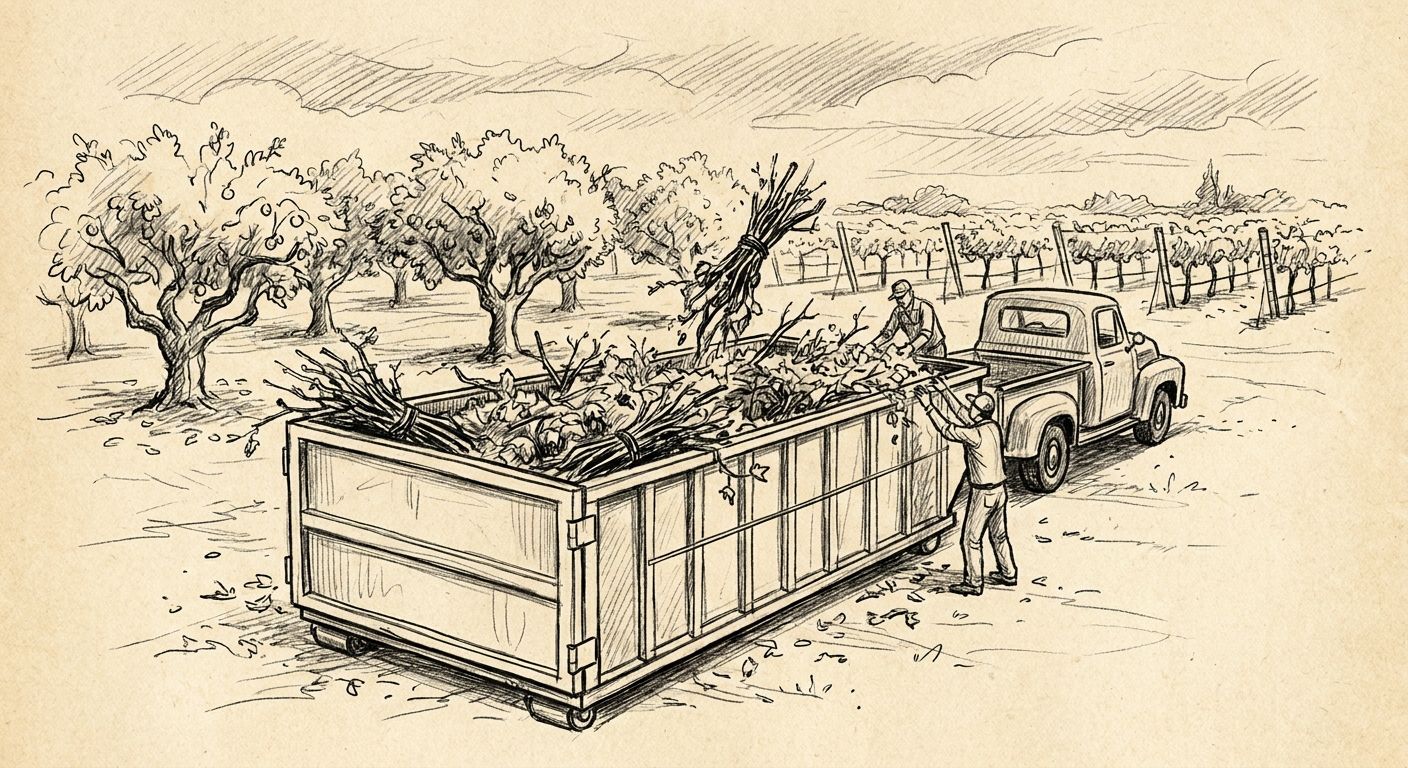
Pruning season and vine pulls generate volume, not weight, and that difference decides which roll-off size actually works for orchard and vineyard cleanup across the South Bay and surrounding Bay Area in 2026.
- A 20-yard container handles seasonal pruning debris for most vineyard blocks under 10 acres. Buy.
- Vine pull and replant jobs need 30-yard capacity for root balls and trellis wire together. Consider.
- Full orchard removal with stumps and posts calls for 40-yard containers, sometimes two hauls. Buy.
- Dumpster rental for vineyard cleanup fails most often when growers underestimate the bulk of light debris.
- Valley Services delivers blue steel roll-off containers from its San Jose yard, operating since 1986.
Why this matters
Orchard and vineyard debris behaves differently than construction debris. Prunings, trellis wire, dead vines, and irrigation line take up space fast but weigh little compared to concrete or roofing material. A grower who sizes a container the way they'd size one for a kitchen remodel usually ends up short on capacity, not over the weight limit. In 2026, that mismatch is the single biggest cause of a second haul on ag cleanup jobs.
Rural access adds a second layer. Vineyard rows, orchard turnrows, and gravel drives aren't graded the way a paved driveway is, and placement decisions matter more here than on a typical residential job.
Who this is for
This guide is for vineyard managers running seasonal pruning and vine-pull programs, orchard growers clearing dead or diseased trees, and ag property owners or contractors handling a full block replant or removal in Santa Clara Valley and the surrounding Bay Area. If your debris list includes trellis wire, drip tape, root balls, or stakes alongside green waste, size and access planning both change from a standard yard cleanup.
What to look for in dumpster rental for vineyard cleanup
Match container size to debris density, not acreage
Acreage tells you almost nothing about how full a container gets. A half-acre of dense trellis wire and posts can fill a 20-yard container faster than three acres of loose pruned canes. Ask what's actually coming out of the ground before picking a size, not how many rows or trees are involved.
Ground protection on wet or soft vineyard soil
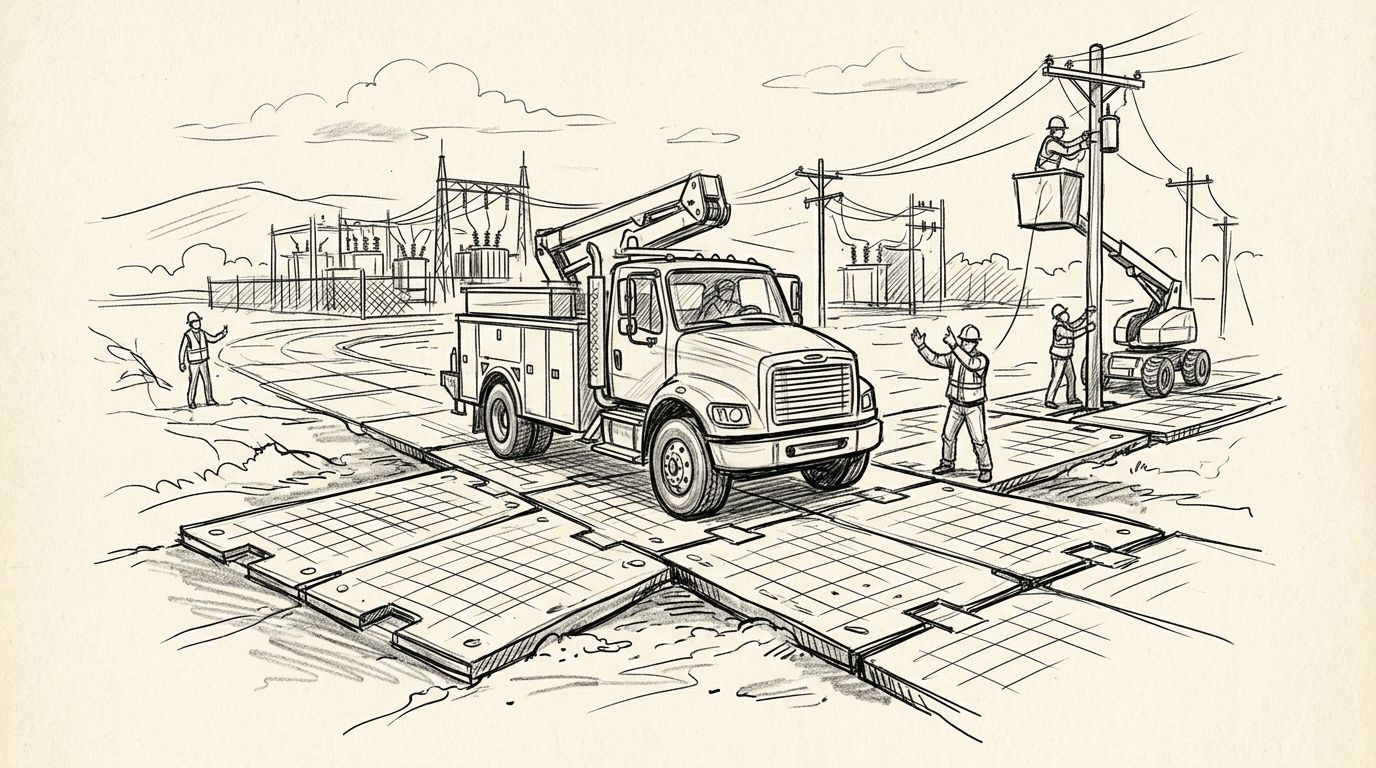
Dormant-season cleanup often happens during the wet months, and vineyard soil compacts and ruts under a loaded roll-off truck faster than a paved lot does. If the container needs to sit on a turnrow or unpaved access road, plan for ground protection before delivery day, not after the truck gets stuck.
Access for rural roads, gates, and turnrows
Gate widths, low canopy branches, and narrow farm roads limit where a delivery truck can maneuver. Measure clearance at the gate and along the intended path before scheduling, and flag any low-hanging limbs that need trimming ahead of time.
Crew site services for multi-day labor crews
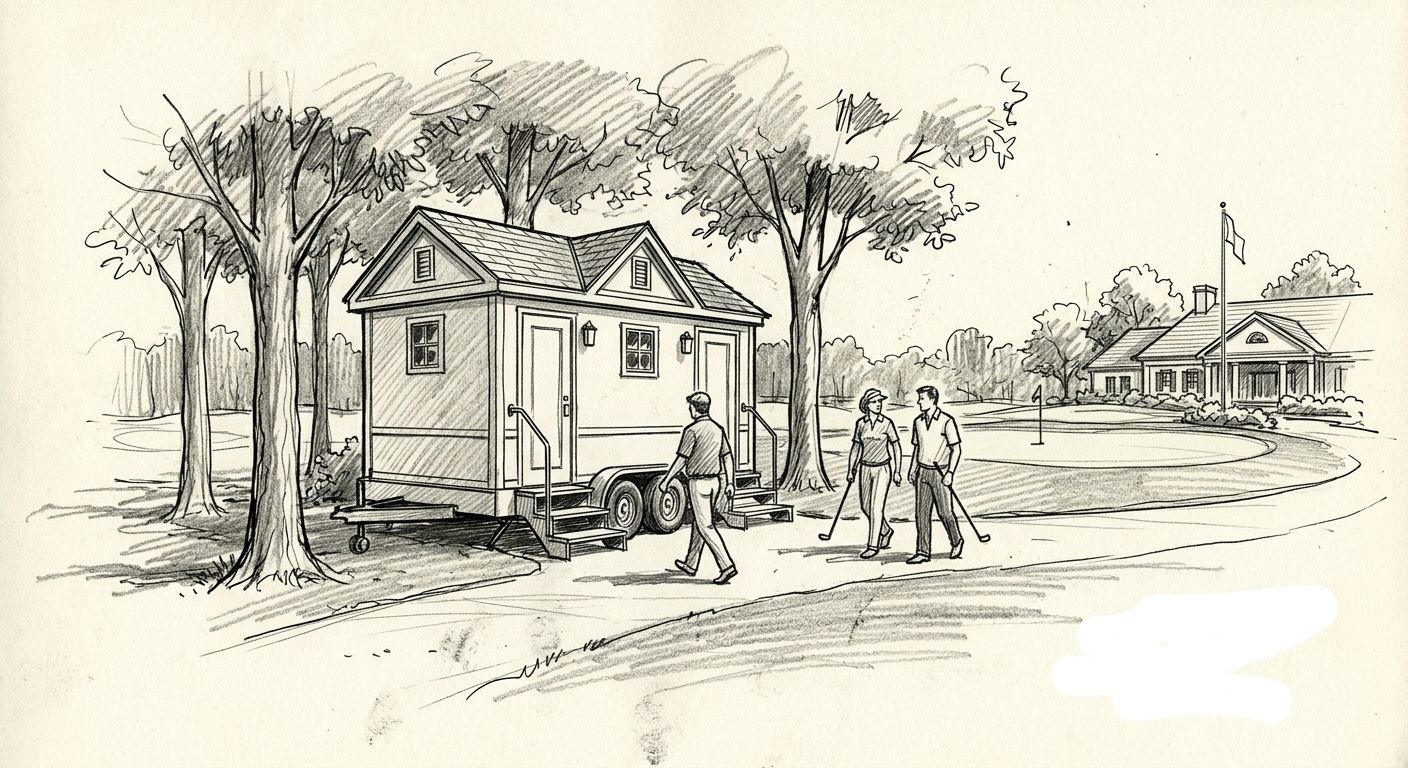
Vine pulls and full orchard removals often run multiple days with a labor crew on-site, and remote vineyard blocks rarely have a bathroom within walking distance. Holding tank rental for agricultural operations covers what a crew needs when the nearest facility is a half-mile of dirt road away.
Scheduling around dormant season and harvest windows
Most pruning and vine-pull work happens in the dormant season, from late fall through early spring, which is also when every other vineyard in the region is scheduling the same service. Book container delivery at least a week ahead during peak dormant months to avoid a gap between when crews finish cutting and when debris actually leaves the property.
Top picks for orchard and vineyard cleanup
The seasonal pruning pick: 20-yard container. One fact that matters here: pruned canes and cover crop debris are bulky but light, which is exactly what a 20-yard container is built for. This size handles a single block's worth of seasonal pruning debris on most vineyard properties without running into weight limits. It's the right call for annual maintenance cuts, not for a full vine pull. How to dispose of yard waste with a dumpster rental covers loading technique for exactly this kind of debris. Buy.
The vine pull and replant pick: 30-yard container. One fact that matters here: root balls and trellis wire together take up far more room than pruned canes alone, so a 30-yard container gives the buffer a 20-yard doesn't. Replant projects mix dead vines, wire, end posts, and irrigation line, and that combination fills space unevenly. Consider this size the default for any block coming out of production entirely. Consider.
The full orchard or vineyard removal pick: 40-yard container. One fact that matters here: tree stumps, trellis structure, and posts from a full removal often require two containers on larger blocks, and a 40-yard unit cuts that down to one haul in most cases. Dumpster rental for shed and barn teardown covers the same sizing logic for structural debris, which applies directly when a removal includes outbuildings or equipment sheds on the property. Buy.
Plan your cleanup with Valley Services
Talk through container size and site access before delivery day.
What to avoid
- Undersizing for wire and stakes. Trellis wire tangles instead of compacting, and it looks like it takes up less room than it actually does once it's loaded loose.
- Skipping ground protection on soft soil. A loaded roll-off truck on wet vineyard soil can rut a turnrow badly enough to need regrading before the next season's equipment passes through.
- Forgetting crew facilities on remote blocks. A multi-day vine pull with no restroom access on-site slows a crew down and creates a problem that has nothing to do with the debris itself.
Verdict comparison table
| Scenario | Container size | Typical debris | Verdict |
|---|---|---|---|
| Annual pruning, single block | 20 yard | Canes, cover crop, drip tape | Buy |
| Vine pull and replant | 30 yard | Dead vines, wire, root balls, posts | Consider |
| Full orchard or vineyard removal | 40 yard | Stumps, trellis structure, posts | Buy |
FAQ
What size dumpster rental works best for vineyard cleanup?
A 20-yard container handles most seasonal pruning cleanup for a single vineyard block in 2026. Vine pull and replant projects usually need 30 yards because root balls and wire fill space faster than pruned canes alone.
Can a roll-off container sit on vineyard soil or a turnrow?
Yes, but ground protection matters more on unpaved or wet soil than it does on a paved driveway. Plan protection ahead of delivery if the container needs to sit on a turnrow during the wet season.
How much trellis wire and irrigation line can go in one container?
Wire and drip tape take up more room than their weight suggests because they don't compact well when loaded loose. Cutting wire into shorter lengths before loading fits noticeably more into the same container.
Do vineyard cleanup crews need portable restrooms on-site?
Multi-day vine pulls and orchard removals on remote blocks usually need a restroom or holding tank on-site since the nearest facility can be a half-mile of dirt road away. This is standard for any labor crew working a full day on a rural property.
When is the best time to schedule dumpster rental for orchard cleanup?
Most pruning and vine-pull work happens during the dormant season, from late fall through early spring, which is the busiest booking window for container delivery. Scheduling a week ahead during that window avoids a gap between finished cutting and debris pickup.
Is a 40-yard container overkill for a small orchard removal?
Not for a full removal that includes stumps, posts, and trellis structure, since those materials fill a smaller container faster than most growers expect. A 40-yard unit often replaces what would otherwise be two hauls on a larger block.
What's the biggest mistake growers make when sizing a container?
Sizing by acreage instead of debris density is the most common error. A dense half-acre of wire and posts can fill a 20-yard container faster than three acres of loose pruned canes.
One last thing
Trellis wire and drip tape are the most common cause of a container filling up faster than expected, because loose wire tangles instead of settling flat the way pruned canes do. Cutting wire into shorter sections before loading, roughly arm's length, lets it pack down instead of bridging air gaps across the container, and that single step often makes the difference between one haul and two on a vine pull.
Valley Services has operated its San Jose yard since 1986, third generation, same family, and runs its own C&D transfer station rather than brokering disposal to a third-party site. Call (408) 297-5404 or visit valleyservices.biz to talk through container size and access before your crew starts cutting.