Field crews and packing operations without sewer hookups need a holding tank sized to acreage, crew count, and pump-out distance, not just whatever unit is sitting on the lot at the yard.
- Holding tank rental for farms works best when tank gallons match crew size and pump-out access, not the cheapest unit available.
- 300 to 1,000-gallon tanks cover most ag labor sites; under 300 gallons on a remote block means a pump truck every few days.
- Cal/OSHA field sanitation rules require a restroom within a quarter mile of workers, which drives tank placement more than tank size.
- Skip units with no pump-truck access road planned in advance: that's the most common holding tank failure on farm sites.
- Valley Services has run holding tanks and field restrooms out of the same San Jose yard since 1986.
Why this matters
A holding tank that's too small for a harvest crew doesn't fail quietly. It backs up mid-shift, pulls a driver off a route for an emergency pump, and puts a crew foreman on the phone instead of in the field. Get the sizing and placement right at the start of the season and it's a non-issue for the next four months.
Valley Services works with ranches, vineyards, orchards, and packing operations across the South Bay and greater Bay Area that need restroom and holding tank service without a sewer line anywhere near the work. One call sets up the tank, the restroom units it feeds, and the pump-out schedule together.
Who this is for
This guide is for farm and ranch operators, ag labor contractors, and packing house managers running crews in fields, orchards, or vineyard blocks where there's no sewer connection and portable restrooms need a holding tank behind them, not a septic tie-in. If you're staffing 15 to 150 workers across a growing season and moving crews between blocks, this is the decision you're making every spring.
What to look for in holding tank rental for farms
Tank capacity versus crew size
A 300-gallon tank handles a small crew on a short rotation. A 1,000-gallon tank is the right call for a labor camp or a packing shed running two shifts. Undersizing the tank is the single most common mistake on ag sites: it looks cheaper on delivery day and costs a same-day emergency pump by week three.
Distance to the work, not the road
Cal/OSHA's field sanitation standard requires a restroom and holding tank within a quarter mile of where employees are working, measured as walking distance across the field, not driving distance on the access road. A tank parked at the ranch gate a half mile from the picking rows doesn't meet the standard even if it's the only flat ground available.
Pump-out access for the service truck
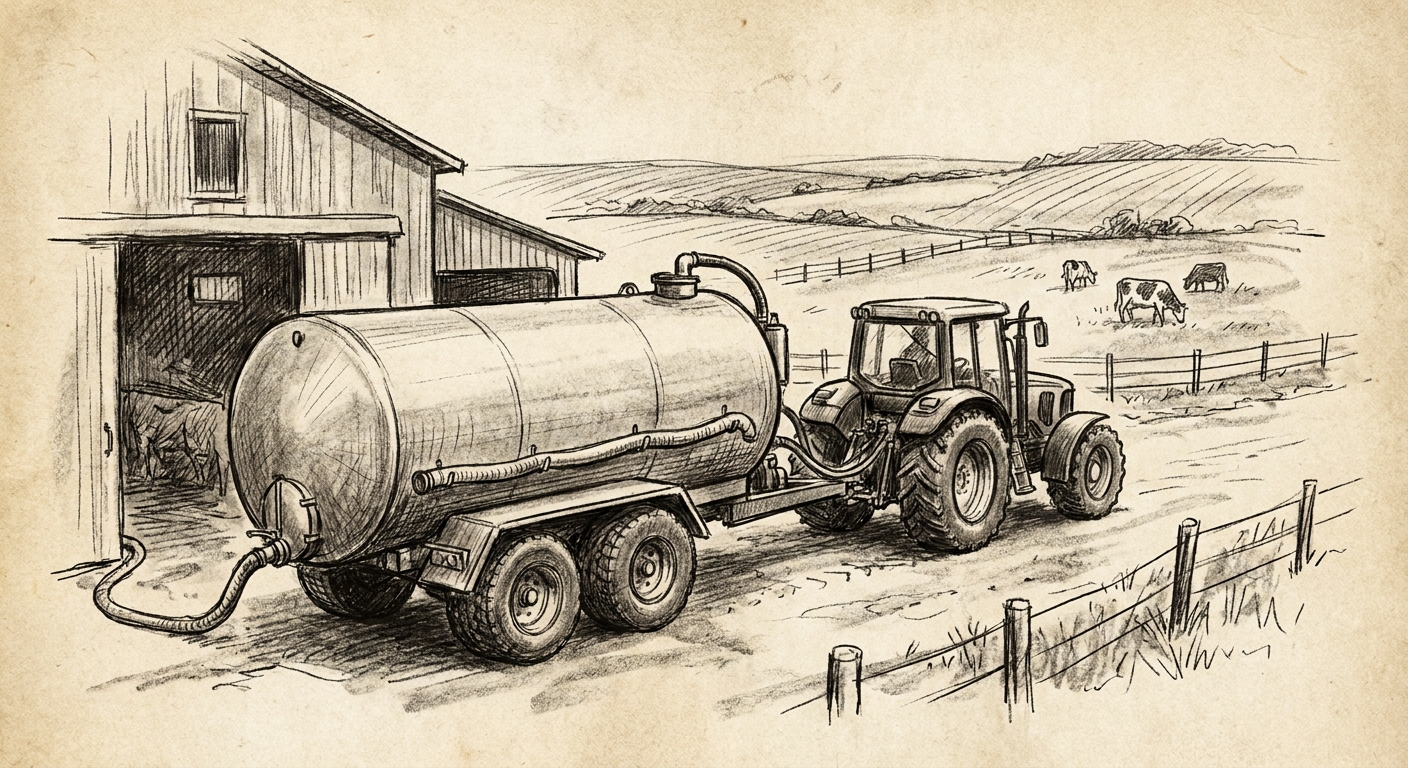
The tank needs a route a pump truck can reach without crossing an irrigation line, driving through soft ground, or backing down a row it can't turn around in. Plan this before delivery day, not after the first truck gets stuck.
Seasonal duration and crew mobility
A harvest crew that moves from block to block every two weeks needs a tank that can be relocated on the same schedule, not a fixed installation. Confirm relocation is part of the rental before the season starts, since moving a tank mid-contract is a different conversation than ordering it once.
Freeze and heat exposure
Central Valley and inland Bay Area heat accelerates tank odor and fill rate; a tank that would run three weeks between pumps in April can need a pump every ten days in August. Adjust the pump schedule for the season, don't set it once in January and leave it.
Combination with hand-wash stations
Field sanitation rules also require hand-washing facilities alongside the restroom. A holding tank rented on its own without a hand-wash unit paired to it leaves half the requirement unmet.
Valley Services runs holding tanks alongside the restroom units and hand-wash stations that go with them, so the tank capacity and the fixture count get sized together instead of ordered separately.
Top picks by farm scenario
The seasonal harvest crew — the standard pick for 20 to 60 workers moving block to block over a 10 to 16 week season. A 300 to 500-gallon tank paired with two to four restroom units covers this size crew without daily pump visits. Verdict: Buy, and confirm relocation terms before the first move. See portable toilet rental for agricultural and farm labor sites for unit counts by crew size.
The fixed labor camp — the right call for a bunkhouse or year-round crew housing where the tank stays in one spot for the season. A 1,000-gallon tank on a set pump schedule, typically every 7 to 10 days in peak season, keeps this configuration from surprising anyone. Verdict: Buy for operations running six months or longer at one site.
The remote vineyard block — the scenario that looks simple and isn't, because the nearest road access can be a half mile from the picking rows. Confirm quarter-mile compliance before ordering, since a tank at the wrong spot on the ranch doesn't satisfy the standard even if it's the only flat pad available. Verdict: Consider, and walk the site with the rental company before delivery. Details on capacity and setup are in holding tank rental for job site restrooms.
The single-season packing shed — a short, high-density job: 40 to 100 workers over 6 to 8 weeks at harvest peak. This needs the largest tank in the lineup and the tightest pump schedule, often every 5 to 7 days once volume peaks. Verdict: Buy, but confirm the pump frequency in writing before the season starts, not after the first overflow. The general process for setting a tank up is covered in how to rent a holding tank for a construction project, and the same setup logic applies to ag sites.
What to avoid
- A tank sized for the average week, not the peak week. Harvest volume spikes hard for two or three weeks; size for that spike, not the season average.
- No documented pump schedule. "We'll call when it's full" is not a plan for a crew of 80 in August. Get the interval in writing.
- Skipping the OSHA distance check. A tank a half mile from the work doesn't satisfy Cal/OSHA field sanitation rules even if it's the only accessible pad on the ranch. Review the standard in how to meet OSHA sanitation requirements with portable toilets before the crew shows up.
“If the pump truck can't reach the tank in one trip, the tank is in the wrong spot.”
Verdict comparison
| Scenario | Tank size | Pump interval | Verdict |
|---|---|---|---|
| Seasonal harvest crew (20-60 workers) | 300-500 gal | 10-14 days | Buy |
| Fixed labor camp (year-round) | 1,000 gal | 7-10 days | Buy |
| Remote vineyard block | 300-500 gal | 14 days, site-dependent | Consider |
| Packing shed, peak season | 1,000 gal | 5-7 days | Buy |
Set up your season's holding tank
Call to size a tank and restroom package before the crew arrives.
FAQ
How big of a holding tank does a farm need?
Most ag labor sites run 300 to 1,000-gallon tanks in 2026, sized to crew count and pump-out interval rather than acreage alone. A 20-worker crew on a two-week rotation needs less capacity than a 100-worker packing shed running two shifts.
How far can a holding tank be from field workers?
Cal/OSHA field sanitation rules require a restroom and holding tank within a quarter mile of where employees are working, measured across the field. A tank at the ranch entrance a half mile from the rows doesn't meet the standard.
How often does a farm holding tank need to be pumped?
Pump intervals run 7 to 14 days depending on crew size and season, with peak summer heat cutting that interval by several days compared to spring. A fixed schedule set at the start of the season prevents mid-week emergency calls.
Can a holding tank move between fields during harvest?
Yes, relocation is standard for crews rotating block to block, but it needs to be arranged as part of the rental terms before the season starts. Confirm the relocation schedule matches your crew's rotation, not a fixed monthly cycle.
Do farm holding tanks need a hand-wash station too?
Field sanitation standards require hand-washing facilities alongside the restroom, so a holding tank rented without a paired hand-wash unit leaves part of the requirement unmet. Order both together for the same crew size.
Is a holding tank different from a septic system on a farm?
Yes, a rented holding tank stores wastewater for scheduled pump-out and has no connection to a septic field or leach line. It's the standard setup for remote blocks and seasonal labor camps with no sewer access.
What size crew needs more than one holding tank?
Crews over roughly 80 to 100 workers on a single site, or spread across blocks more than a quarter mile apart, typically need multiple tanks rather than one oversized unit. Splitting tanks by block also keeps pump-truck routes shorter.
One last thing
The detail that catches most farm operators off guard isn't tank size, it's the access road. A tank ordered at the right capacity still fails if the pump truck can't turn around near it, and by the time that gets discovered it's the middle of harvest with a full tank and no clean route in. Walk the pump route before delivery day, every season, even on a ranch you've used for years, since irrigation lines and crop rows shift the access point year to year.
Call (408) 297-5404 or visit valleyservices.biz to size a holding tank and restroom package before the crew arrives.