Parking garage construction dumpster rental means matching container size and delivery schedule to concrete, rebar, and formwork debris across a multi-level structure, not to a single job-site drop. A tenant improvement job fills one container over six weeks. A parking structure fills three or four containers in the first ten days of demo alone, then goes quiet during the pour. Get the sizing and sequencing wrong and you either overflow a container mid-shift or pay for a unit sitting empty while crews wait on concrete trucks.
Valley Services runs roll-off containers, temporary fencing, and its own San Jose transfer station, which matters on a parking structure job because debris volume swings hard between demo, pour, and finish phases and the disposal endpoint needs to keep up with all three.
- Parking garage construction dumpster rental needs different container sizes per phase, not one size for the whole job.
- Concrete debris runs about 4,000 pounds per cubic yard, so a filled 20-yard container can weigh over 20 tons of solid concrete.
- Ramp weight ratings, not container size, usually decide what can go on an upper deck in 2026.
- Street use permits apply in San Jose whenever a container sits in a lane, sidewalk, or right-of-way.
- Owning the disposal endpoint keeps swap schedules on track when a multi-level job moves fast.
Why this matters for parking garage construction
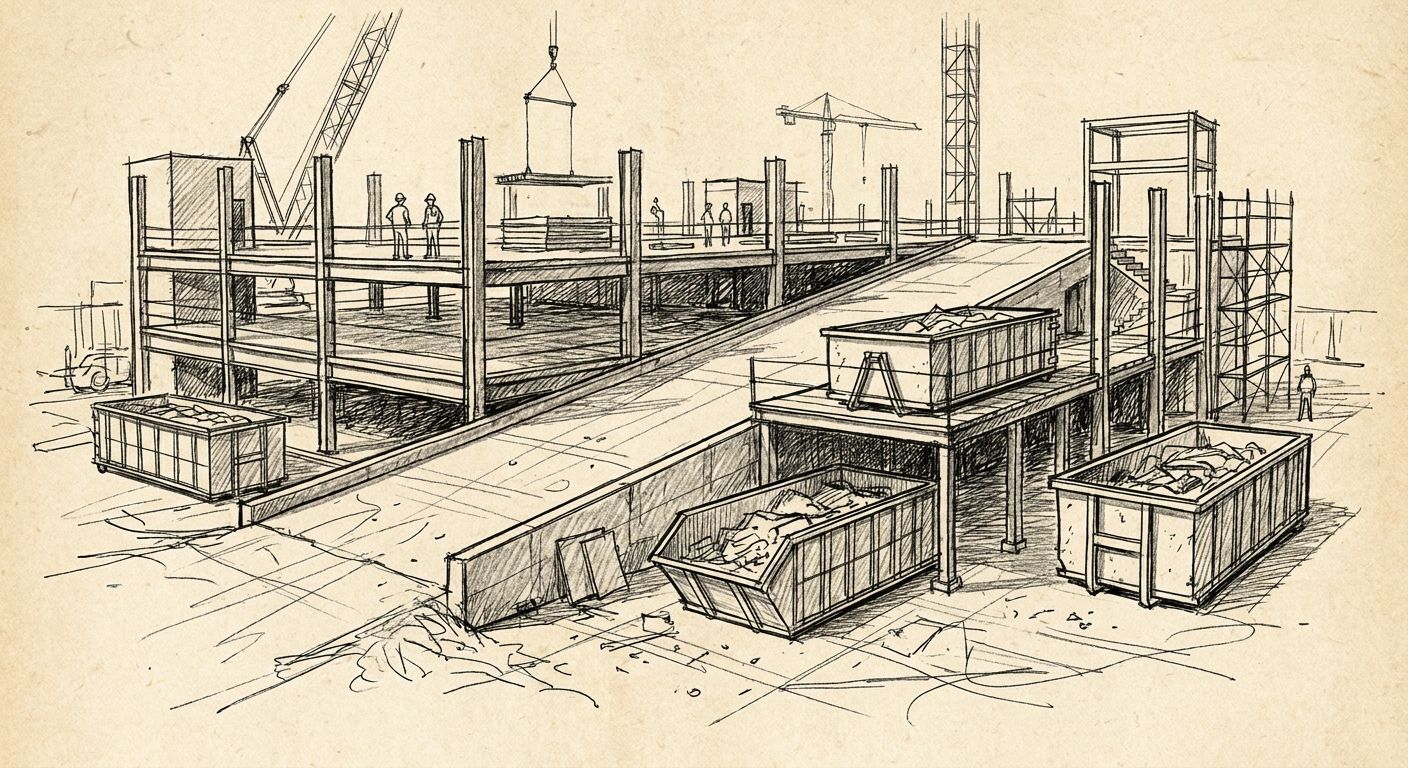
A parking structure is really three or four separate construction projects stacked on top of each other, each generating a different waste stream. Demo produces concrete and rebar. Formwork stripping produces plywood and lumber. Finish trades produce mixed debris closer to what a standard commercial build generates.
A general contractor running this kind of job in 2026 needs container sizing and swap timing that tracks the phase, and needs access planning that accounts for ramps, low overhead clearance, and structural weight limits that a single-story job never has to think about. A general contractor dumpster rental plan built for a flat lot job doesn't transfer directly to a structure with four levels and one ramp in and out.
Size the container for concrete and rebar debris, not volume
Container size on a parking structure job is a weight problem before it's a volume problem. Concrete debris runs close to 4,000 pounds per cubic yard, so a 20-yard container filled with solid concrete chunks can hit 20 tons long before it looks full.
- Use 20-yard containers for interior demo debris on upper levels reached only by ramp.
- Use 30-yard containers for mixed concrete and metal pulled from a single level tear-out at grade.
- Use 40-yard containers for full-depth slab removal where truck access is clear and level.
- Keep rebar and structural steel separate from loose concrete. Loose rebar loaded on top of concrete punctures container walls and slows loading.
- Confirm weight capacity before ordering. A container rated for mixed C&D debris is not rated the same way for solid concrete.
Sequence deliveries around pour and demo phases
A parking structure moves through demo, then form and pour, then finish trades, level by level. A container ordered once for the whole job either overflows during demo week or sits empty during the pour.
- Order a higher-capacity container for the first two weeks of demo, when concrete and rebar volume peaks.
- Scale down to a smaller container during form and pour weeks, when waste drops to packaging and cut lumber.
- Bring capacity back up for finish trades, when drywall, flooring scrap, and packaging return to standard commercial volumes.
- Match delivery dates to the site super's phase schedule, not to a flat weekly rotation.
- Build in a buffer day between phases so a container swap doesn't block a concrete pour.
Plan access for upper deck placement
Ramps built for passenger vehicles are not automatically rated for a loaded roll-off truck. This is the single most overlooked step on structured parking jobs.
- Confirm the ramp's weight rating with the structural engineer before scheduling delivery above grade.
- Check the ramp's turning radius. A roll-off truck needs more clearance than a standard delivery vehicle.
- Use a smaller container, 10 or 20 yard, on upper decks where ramp access limits truck size.
- Stage a larger container at grade level for consolidated loads hauled down by forklift or skid steer.
- Check overhead clearance under lower slab levels. A roll-off truck needs vertical room to tip the container for delivery and pickup.
“If the ramp's weight rating doesn't list roll-off trucks, don't send one up.”
Permit dumpster placement for street or lot use
Parking structures often sit on tight downtown lots where the only staging area is the street or an adjacent sidewalk. San Jose requires a permit whenever a container sits in the public right-of-way.
- Apply for a street use permit before delivery if the container blocks a traffic lane or sidewalk.
- Downtown corner lots often need a traffic control plan attached to the permit application.
- Check with the general contractor whether the project's existing construction permit already covers container placement.
- Keep containers clear of fire lanes and fire hydrant clearance zones regardless of permit status.
- Confirm permit timing matches delivery scheduling. A permit approved after delivery day doesn't help.
Full detail on the application process is in how to permit a dumpster placement in San Jose.
Plan container sizing for your structure
Call to work out phase-by-phase sizing and swap timing.
Schedule swaps to match crew shifts
Multi-shift demo schedules on parking structure jobs mean a container can fill twice as fast as it would on a standard eight-hour job.
- Coordinate swap timing with dispatch to avoid blocking active work during peak crew hours.
- Keep one working container active at all times during round-the-clock demo phases.
- Request swap windows during shift changes, when equipment traffic through the site drops.
- Build swap frequency around inspection days, when a blocked lane or ramp can delay sign-off.
Coordinate fencing and site control around active decks
Parking structure builds usually border occupied buildings, active sidewalks, or a still-functioning lower level of parking. Site control has to hold up at height, not just at grade.
- Use temporary fencing to separate active demo zones from pedestrian and vehicle traffic at street level.
- Use K-rail sections instead of fence panels on ramp edges exposed to vehicle traffic.
- Keep fencing clear of exits still in use by tenants or adjacent businesses.
- Reassess site control layout at each phase change, since the active work zone moves level by level.
Comparing container options for parking structure jobs
| Option | Best for | Key limitation |
|---|---|---|
| 20-yard roll-off | Upper deck demo debris reached by ramp | Fills fast with solid concrete, limited capacity |
| 30-yard roll-off | Mixed concrete and rebar from one level | Too large for most ramp access above grade |
| 40-yard roll-off | Full-depth slab removal at grade | Needs clear, level truck access |
| Compactor | Ongoing waste on long multi-phase jobs | Not built for loose concrete or rebar |
A 20 or 30-yard roll-off container matched to the demo phase and swapped on a schedule tied to the pour calendar is the right call for most parking garage construction projects in 2026.
Common mistakes on parking garage construction jobs
- Ordering one container size for the entire project instead of resizing per phase.
- Loading rebar loose without separating it, which punctures container walls and slows pickup.
- Placing a container on a ramp without checking the structural weight rating first.
- Skipping the street use permit on a downtown site, which can get a container cited or towed.
- Failing to schedule a swap around a scheduled pour, leaving a full container blocking truck access when it matters most.
FAQ
What size dumpster do I need for parking garage demolition?
Most parking garage demolition phases run on a 20 or 30-yard roll-off container, sized by weight rather than volume since concrete debris runs close to 4,000 pounds per cubic yard. Full slab removal at grade can justify a 40-yard container if truck access is clear.
Can a roll-off container go on an upper parking deck?
Only if the ramp and deck are rated to carry a loaded roll-off truck, which is not automatic on structures built for passenger vehicles. Confirm the weight rating with the structural engineer before scheduling delivery above grade.
Do I need a permit for a dumpster on a downtown San Jose site?
Yes, if the container sits in a street lane, sidewalk, or public right-of-way. Corner lots downtown often require a traffic control plan attached to the permit.
How much does concrete debris weigh in a roll-off container?
Concrete runs about 4,000 pounds per cubic yard, so a 20-yard container filled with solid concrete chunks can weigh over 20 tons. That weight, not the container's volume, usually sets the size limit on a demo job.
Should rebar go in the same dumpster as concrete?
Rebar and concrete can share a container but rebar should be cut and stacked flat rather than loaded loose. Loose rebar punctures container walls and slows loading and pickup.
How often should dumpsters be swapped on a multi-phase parking structure project?
Swap frequency should track the phase generating debris: high during the first two weeks of demo, lower during form and pour, back up during finish trades. A flat weekly schedule usually overflows during demo and wastes capacity during pour weeks.
What is the difference between a roll-off container and a compactor for this kind of job?
A roll-off container suits phased demo and pour work where debris type changes week to week. A compactor fits better on long, steady-volume jobs and isn't built for loose concrete or rebar.
Does Valley Services handle disposal at its own site?
Valley Services operates its own construction and demolition transfer station in San Jose, which keeps the disposal endpoint under one schedule instead of routing through a third-party site.
One last thing
The detail that trips up most first-time parking structure jobs isn't container size, it's the ramp. A container rated fine at grade can still be the wrong call three levels up if nobody checked the ramp's load rating against a loaded roll-off truck before delivery day. Confirm that number before the schedule, not after a truck gets turned away.
Call (408) 297-5404 or visit valleyservices.biz to work out sizing and swap timing before demo starts.