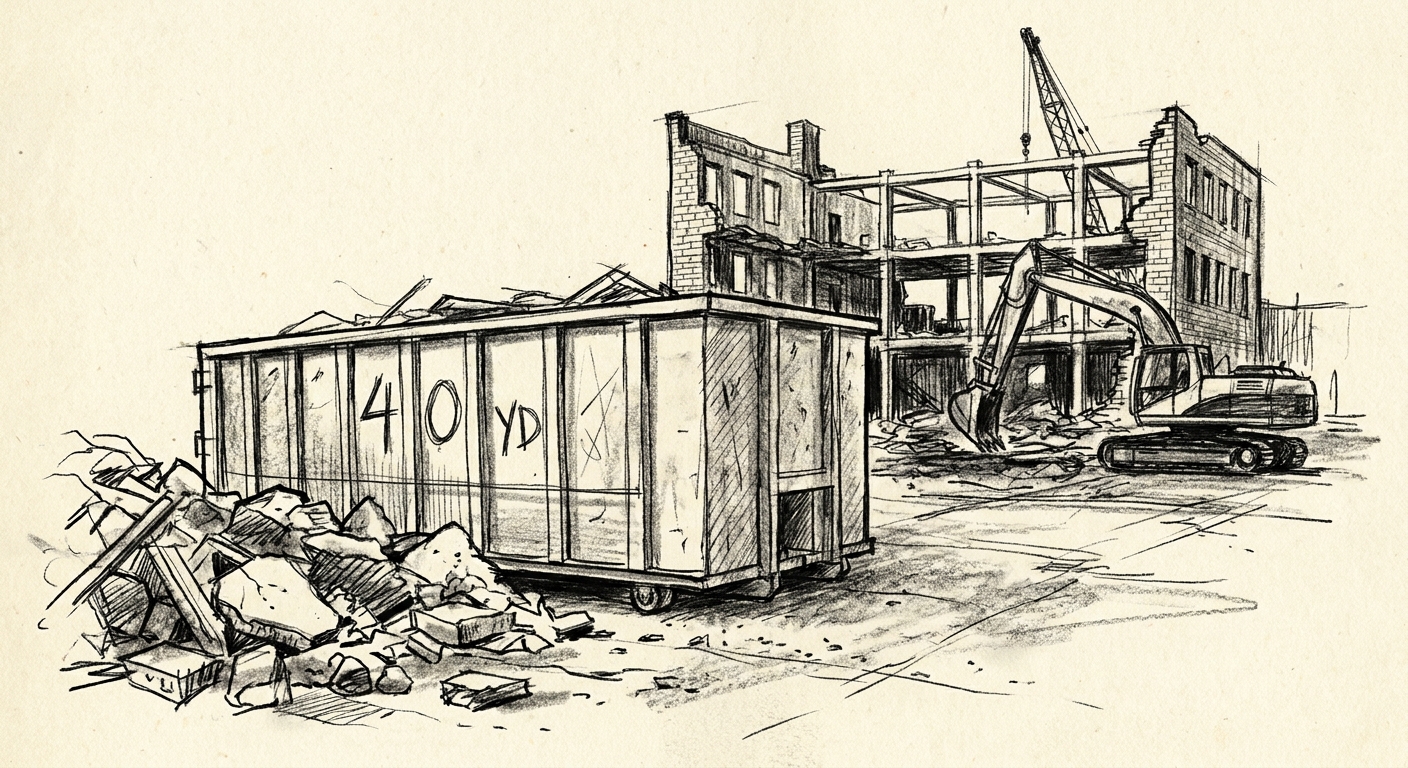
A commercial demolition job doesn't wait on disposal. If the container fills before the crew clears the slab, the whole schedule stalls. This guide breaks down when a 40 yard roll-off container is the right call for demolition work in the Bay Area, and when it isn't.
- A 40 yard dumpster rental for demolition holds roughly 10 to 12 tons of mixed C&D debris per load.
- Valley Services runs its own San Jose transfer station, so container swaps aren't stuck waiting on a third-party site.
- Straight concrete or dirt demo should downsize to a 20 or 30 yard container due to weight limits, not volume.
- Tight urban lots in San Jose or Sunnyvale often need a street placement permit before the container drops in 2026.
Why This Matters
A 40 yard container is the largest standard roll-off size most yards run, and it's built for volume, not necessarily weight. Commercial demolition debris, wood framing, drywall, roofing material, mixed C&D, fills that volume fast. Concrete, brick, and dirt hit the weight cap long before the box looks full. Get this wrong and you're paying for empty space or getting hit with overweight charges on the swap.
Valley Services has run the same yard in San Jose since 1986, now in its third generation. The transfer station on S 7th St is owned and operated in-house, not brokered to a third party. That matters on multi-container jobs where a delayed swap means idle crews.
Who This Is For
General contractors and demolition subcontractors clearing commercial interiors, tenant improvement gut jobs, and light structural teardown across San Jose, Santa Clara, Sunnyvale, Mountain View, and Milpitas. Property managers coordinating a full building strip-out before a remodel also land here. If the job is a single-family kitchen tear-out, a smaller container makes more sense, check the renovation-scale sizing guide instead.
What to Look For in a 40 Yard Roll-Off Container for Demolition
Weight Limit vs. Yardage
Yardage tells you volume, not tonnage. A 40 yard container commonly caps out around 10 to 12 tons of mixed debris before overage fees apply. Framing lumber and drywall are light and bulky, so they fill the box without hitting the cap. Concrete and tile are the opposite: heavy and compact, hitting the cap while the container still looks half empty.
Debris Type and Load Mixing
Mixed C&D loads (wood, metal, drywall, insulation) behave differently than single-material loads. Straight concrete, asphalt, or dirt should go in a dedicated heavy-debris container, not a 40 yard mixed box, because the weight math doesn't work in your favor at that volume.
Site Access and Placement
A loaded 40 yard container needs a clear straight-line pull for the truck and roughly 60 feet of clearance for delivery and pickup. Downtown San Jose lots, parking-constrained sites in Mountain View, and tight infill lots in Santa Clara often can't fit one without blocking a lane, which pushes the job toward a street placement permit or a smaller container split into two swaps.
Turnaround and Swap Scheduling
On a multi-day demo, the container fills before the job finishes. Swap lead time matters more than initial delivery speed. Ask how fast a full container gets swapped, not just how fast the first one arrives.
Permit and Cal/OSHA Site Requirements
Most cities in Santa Clara County require a permit for any container placed on a public street rather than a private driveway or lot. Cal/OSHA site rules also apply to demolition debris handling and container placement relative to excavation or overhead work. Confirm this before the container shows up, not after a code enforcement call.
Top Picks for Commercial Demolition Setups
The straight interior demo pick. Tenant improvement strip-outs, drywall, ceiling tile, carpet, light framing. One 40 yard container typically handles a 3,000 to 5,000 square foot interior gut in a single load. Buy.
The mixed structural teardown pick. Small commercial buildings with framing, roofing, and some concrete footings mixed together. Plan on two containers minimum, since the concrete portion will hit the weight cap well before the box is visually full. Pair the 40 yard with a second heavy-debris box for the concrete pull. Contractors managing this kind of phased job should see the general contractor dumpster guide for sequencing. Buy, but split the load.
The roof tear-off pick. Commercial roof replacement ahead of a demo or remodel generates its own debris stream, often shingles or built-up roofing that's dense and abrasive. That's a different sizing math than interior demo. Check the roofing tear-off container guide before ordering a 40 yard for a roof-only job. Consider, size separately.
The tight-lot pick. Downtown San Jose or dense Santa Clara infill sites where a 40 yard container physically won't fit without a street permit. Downsize to a 20 or 30 yard and run more frequent swaps instead. Skip the 40, downsize.
Line Up Containers for the Full Demo
Call ahead of the swap schedule so the transfer station keeps pace with the crew.
What to Avoid
- Ordering one 40 yard container for a job with heavy concrete or dirt. It looks like the biggest option, but weight limits make it the most expensive way to move dense material. Split heavy debris into a dedicated smaller container instead.
- Skipping the placement permit check on a street-facing lot. A container blocking a lane in San Jose or Sunnyvale without a permit can get flagged before the crew even starts loading.
- Assuming one container covers a multi-week demo. Long jobs need a swap plan set before the first container drops, not after it's full and the crew is standing around.
Verdict Comparison
| Scenario | Container Fit | Weight Risk | Verdict |
|---|---|---|---|
| Interior TI strip-out | 40 yard, single load | Low | Buy |
| Mixed structural teardown | 40 yard plus heavy box | High on concrete portion | Buy, split load |
| Roof tear-off only | Depends on roofing type | Moderate to high | Consider, size separately |
| Tight urban lot, street placement | 20 or 30 yard, multiple swaps | Low, access-driven | Skip the 40, downsize |
FAQ
What's the best dumpster size for commercial demolition?
A 40 yard roll-off container works best for interior strip-outs and framing debris in 2026. Heavy material like concrete or dirt needs a smaller, dedicated container due to weight limits, not a bigger box.
How much weight can a 40 yard container hold for demolition debris?
Most 40 yard containers cap out around 10 to 12 tons of mixed C&D debris. Dense material like concrete hits that cap long before the container looks full.
Do I need a permit for a roll-off container on a San Jose street?
Yes, most Santa Clara County cities require a placement permit if the container sits on a public street rather than private property. Confirm this before delivery, since fines and delays follow if it's skipped.
Is a 40 yard container better than two 20 yard containers for demolition?
It depends on debris type. Light, bulky material like framing and drywall favors one 40 yard box, while dense material favors two smaller containers to stay under the weight cap on each.
How many swaps does a multi-week demolition job need?
Most commercial demo jobs need at least two to three container swaps over a multi-week timeline. Schedule the swap plan before the first container drops, not after it fills.
Can a 40 yard container fit on a tight urban lot?
Not always. A loaded 40 yard container needs roughly 60 feet of clear straight-line access, which many downtown San Jose and Santa Clara lots don't have without blocking a lane.
What debris counts as C&D for a roll-off container?
C&D debris covers construction and demolition material: framing, drywall, roofing, concrete, tile, and similar building waste. It does not cover hazardous material, which needs separate handling.
Why does the transfer station matter for demolition scheduling?
A contractor that owns its own transfer station controls swap timing directly instead of routing through a third-party disposal site. That's the difference between a same-day swap and a multi-day wait.
One Last Thing
The container size isn't the variable that trips up most commercial demolition schedules in 2026, the swap timing is. A crew that finishes framing demo on a Tuesday and waits until Thursday for the next container loses two full days of labor cost sitting idle. Ask about swap turnaround before you ask about container size.
Call Valley Services at (408) 297-5404 or reach out through valleyservices.biz to talk through container count and swap timing for your demolition schedule.