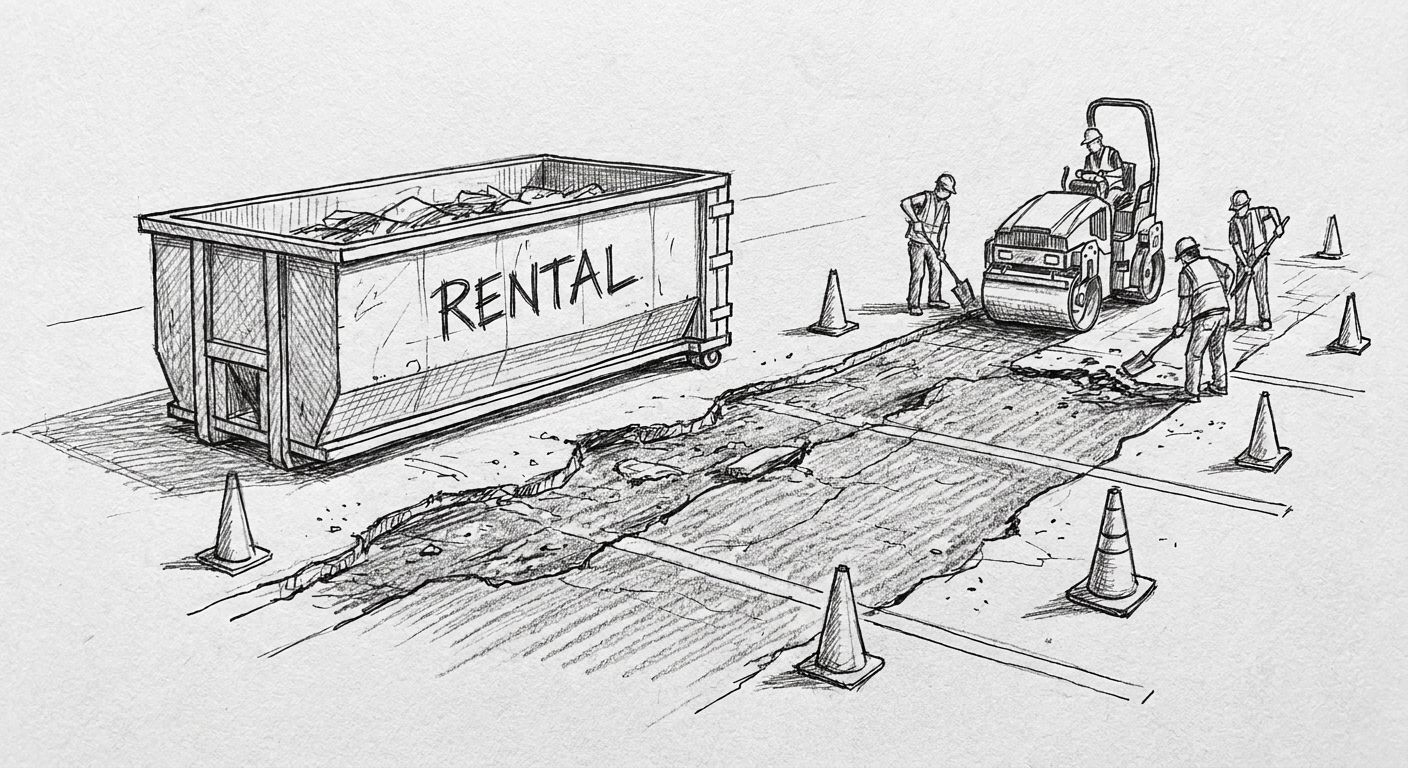
Parking lot and pavement resurfacing dumpster rental means matching a roll-off container to the weight of milled asphalt and saw-cut concrete, not just picking a size off a rate card, and getting that container off the lot before striping crews need the space back.
- Dumpster rental for parking lot resurfacing runs on weight limits, not box size: asphalt millings max out a container long before it looks full.
- Valley Services delivers roll-off containers across San Jose, Santa Clara, Sunnyvale, Mountain View, and Milpitas on the turnaround a mill-and-overlay schedule needs.
- Placement on active pavement calls for a permit and a plan for the one travel lane you can't block.
- A same-day swap between mill day and overlay day keeps a paving crew from losing a shift to a full container.
Why dumpster rental matters for parking lot resurfacing crews
A mill-and-overlay job runs on a tight window, often a single weekend or a set of overnight shifts before a shopping center or office park reopens for business. The debris stream is different from a typical construction job site too. Milled asphalt is dense. A 20-yard container that would hold a full kitchen remodel's worth of drywall and cabinets hits its weight limit on asphalt millings while it's still half empty by volume.
Get the container size wrong on a resurfacing job and you're not calling for an extra pickup next week. You're calling mid-shift, with a paving crew standing around and a lane closure permit burning daylight. Roll-off container rental for this segment is about matching weight capacity to tonnage, not matching cubic yards to a guess.
Valley Services has run roll-off containers out of the same San Jose yard since 1986, and owns the transfer station the debris actually goes to. That matters on a resurfacing job because the schedule for pickup and swap is set by one phone call, not by a broker checking with a third-party disposal site.
Size the container for millings, not for a typical remodel
Standard roll-off containers come in 10, 20, 30, and 40-yard capacities. For asphalt milling and pavement removal, size down from what the square footage alone would suggest, because the material's density fills the weight allowance first.
- Estimate tonnage from the milled area and depth before picking a yard size.
- Default to a 20-yard container for most single-lot resurfacing jobs rather than a 30 or 40.
- Order two smaller containers instead of one large one if the lot has to stay open to traffic between swaps.
- Keep a spare container slot in the schedule for concrete curb or wheel-stop removal that runs alongside the milling.
- Ask about container turnaround time before the mill machine arrives, not after it's already cutting.
Plan placement around active travel lanes
A parking lot resurfacing job rarely gets the whole lot at once. Placement has to work around the lane still carrying traffic, delivery trucks, or emergency access.
- Confirm a standard travel lane runs roughly 10 to 12 feet wide before you commit a container footprint next to it.
- Stage the container on the section already milled, never on pavement still scheduled for cutting.
- Keep a clear path for the paver, roller, and striping truck to move without repositioning the container mid-shift.
- Mark container placement on the phasing plan you hand to the property manager or GC, not as a verbal note.
- Leave room for a second container to swap in without blocking the first while it's still being loaded.
Schedule delivery and pickup around the paving window
Resurfacing jobs run on compressed timelines: mill one day, base repair and patch the next, overlay after that. A weekly pickup schedule doesn't fit that rhythm.
- Book delivery for mill day and a swap or pull for the day the mix truck arrives.
- Confirm same-day swap availability before the job starts, not once the container is already full.
- Build a two-day buffer into the schedule for weather delays on the overlay pour.
- Coordinate pickup timing with striping crews so the container isn't sitting on fresh paint.
- Review how to schedule a dumpster delivery and pickup so timing gets locked before the mill machine is booked.
Load within weight limits to avoid overage charges
Asphalt millings and base rock load heavier per cubic foot than almost anything else that ends up in a roll-off container on a typical job site. Overloading it doesn't just risk a fine, it risks a container the hauler can't legally move.
- Spread millings evenly across the container floor instead of piling them at one end.
- Stop loading well before the container looks full if the material is dense millings or concrete.
- Keep base rock and asphalt separate from lighter debris like wood forms or striping tape to make weight easier to judge.
- Read how to load a dumpster safely and avoid overage fees before the crew starts filling the box.
- Flag the load as dense material when you call for pickup so the driver brings the right truck.
Separate base rock and concrete from milled asphalt
Curb removal, wheel stops, and base rock repair often run in the same phase as milling, but the material isn't the same and shouldn't go in the same container if you can help it.
- Keep a dedicated container for concrete and dirt when curb or gutter work is part of the scope.
- Route saw-cut concrete separately from asphalt millings whenever the job has both.
- Confirm capacity for mixed loads before combining materials in one box, since combined loads hit weight limits faster.
- Ask about container sizing for concrete-heavy loads specifically, since it behaves differently than mixed C&D.
Pull the placement permit before the mill machine shows up
Most Bay Area cities require a permit for any container placed on a public street or lot fronting a right-of-way, and a resurfacing job usually needs that permit before demolition starts, not after.
- Check whether the container sits on private lot space or spills onto a public street or alley.
- Pull the permit through the city before scheduling delivery, since processing takes time you don't have mid-job.
- Confirm the permit covers the full job duration if the resurfacing runs multiple days.
- Review how to permit a dumpster placement in San Jose if any part of the container footprint touches a public way.
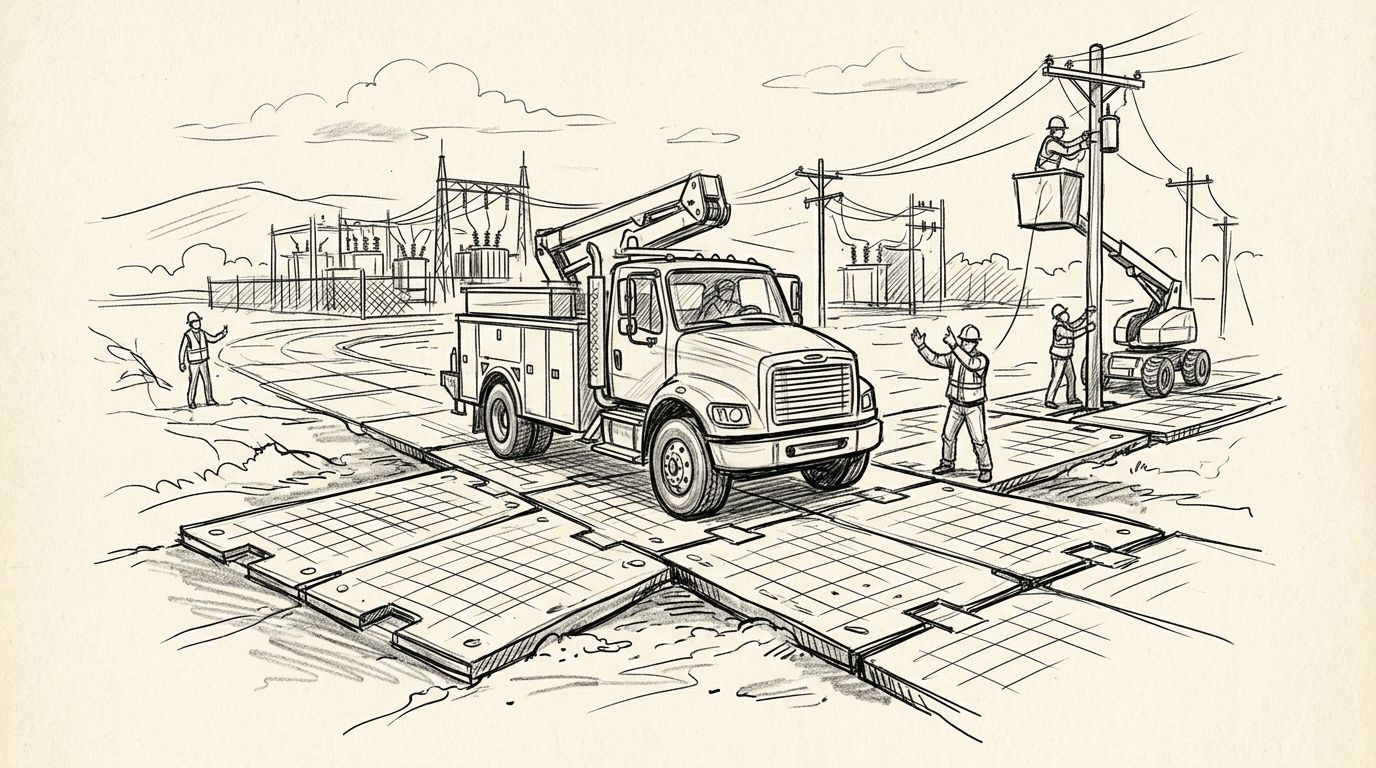
Add temporary fencing or K-rail for multi-day closures
A resurfacing job that spans more than a single shift usually needs some form of site control, whether that's keeping pedestrians off fresh asphalt or keeping vehicles out of a milled section overnight.
- Use K-rail or temporary fencing to hold a closed section overnight between mill day and overlay day.
- Keep fencing lines clear of the container swap path so delivery trucks aren't boxed in.
- Coordinate fencing removal with the striping schedule so lines go down before barriers come off.
- Plan fencing for road-adjacent lots the same way a highway project would, with clear taper zones.
Container options for resurfacing debris
| Option | Best for | Container size | Key limitation |
|---|---|---|---|
| Single 20-yard roll-off | Small lot resurfacing, single-phase job | 20 yard | Fills to weight limit fast on dense millings |
| Dual 10-yard swap | Lots that must stay partly open to traffic | 10 yard each | Requires two delivery and pickup trips |
| 30 or 40-yard roll-off | Large commercial lot, full-depth mill and base repair | 30-40 yard | Needs more staging room and a clear access path |
| Same-day container swap | Jobs on a one-weekend deadline | Varies by job | Depends on driver availability, book ahead |
A 20-yard container sized for weight, not volume, is the right default for most single-lot resurfacing jobs in 2026.
Common mistakes resurfacing contractors make with dumpster rental
- Sizing by square footage alone. A large lot doesn't always need a 40-yard box; milling depth and material density matter more than area.
- Ordering weekly pickup for a two-day job. Resurfacing schedules move faster than a standard rental cycle, and a fixed pickup date leaves a container sitting on the one lane you need clear.
- Skipping the placement permit. Placing a container on a public-facing section of the lot without checking city rules stalls the job the day an inspector drives by.
- Mixing concrete curb debris with asphalt millings. Combined loads hit weight limits faster and complicate disposal at the transfer station.
- Not planning the swap path. A container placed without room for the next truck to pull in forces a mid-job reposition that costs a shift.
Line up your resurfacing job
Call to size containers and lock delivery around your paving window.
FAQ
What size dumpster do I need for a parking lot resurfacing project?
Most single-lot resurfacing jobs in 2026 run on a 20-yard container sized for weight, not volume, since milled asphalt hits the weight limit well before the box looks full. Larger commercial lots with full-depth milling may need a 30 or 40-yard container or a same-day swap plan instead.
Can a roll-off container sit on an active parking lot during resurfacing?
Yes, as long as it's staged on a section already milled and clear of the travel lane still carrying traffic or equipment. Placement touching a public street or right-of-way usually needs a city permit first.
How much does milled asphalt weigh compared to regular construction debris?
Milled asphalt loads heavier per cubic foot than most mixed C&D debris, which is why a container can hit its weight limit while still looking half full. Sizing down and loading evenly across the floor keeps a load within limits.
Do I need a permit for a dumpster on a parking lot resurfacing job in San Jose?
A permit is typically required if any part of the container footprint touches a public street, alley, or right-of-way, and should be pulled before delivery. Placement fully on private lot space may not require one, but check with the city before scheduling.
Can I combine concrete curb removal debris with asphalt millings in one container?
You can, but combined loads hit weight limits faster and complicate sorting at the transfer station. A separate container for concrete and dirt keeps both loads easier to manage on jobs with curb or wheel-stop removal.
How fast can a container be swapped between mill day and overlay day?
Same-day swaps are possible when booked ahead of the job, which matters on a resurfacing schedule that often runs mill, base repair, and overlay within a single weekend. Confirm swap availability before the mill machine is scheduled, not after.
What happens if I overload a dumpster with asphalt millings?
An overloaded container can trigger overage charges and, in some cases, can't legally be hauled until weight is reduced. Spreading material evenly and stopping short of a full-looking load keeps the pickup on schedule.
One last thing
The detail that trips up most first-time resurfacing schedules isn't the container size, it's the swap timing. A mill-and-overlay job that spans a weekend needs the container gone before the overlay crew shows up Sunday morning, and that only happens if the pickup is booked before the mill machine ever starts cutting. Set the swap date at the same time you set the delivery date, not after.
Related guides
- Best dumpster rental for concrete and dirt disposal
- Fence rental for road and highway construction projects
Call (408) 297-5404 or reach out through valleyservices.biz to talk through container sizing and swap timing for your next resurfacing job.