Road and highway crews don't get to fence a site once and forget it. Lane closures shift weekly, staging yards move with the phase, and the fence line has to keep pace or the schedule stalls. This guide covers fence rental for road construction from the buyer's side: what actually holds up on an open corridor and what looks fine in a brochure but fails on a live traffic job.
- Fence rental for road construction needs K-rail for active lanes and chain link for staging yards: buy both.
- Windscreen panels cut dust and headlight glare on open corridors: Consider for daytime paving crews.
- Unweighted chain link panels blow over on open highway corridors above 25 mph: Skip for lane separation.
- Fencing that relocates in hours, not days, matters more than fencing that looks solid: prioritize mobility.
Why this matters
A road or highway job puts workers a few feet from moving traffic for months at a time. Cal/OSHA and most municipal traffic control plans require a physical barrier between the travel lane and the work zone, not a suggestion of one. On a job that lasts through 2026 and into a second construction season, the fence line isn't decoration. It's the only thing between a paving crew and a driver doing 45 mph.
Most general fencing vendors quote one product: 6-foot chain link, delivered once, picked up at the end. Road work doesn't run that way. The barrier configuration changes every time the traffic control plan moves to the next phase, and the vendor who can't relocate fast becomes the bottleneck. Valley Services has run site services out of the same San Jose yard since 1986, third generation, and treats phased relocation as a standard part of a road job, not a special request.
Who this is for
This guide is built for general contractors and traffic control subcontractors running Caltrans or municipal road and highway projects across San Jose, Santa Clara, Sunnyvale, Mountain View, and the surrounding South Bay. If your project has a phased traffic control plan, an encroachment permit, and a fence line that has to move every time the lane configuration changes, this is your buying guide.
What to look for in fence rental for road construction
Traffic separation rating
A road job needs a barrier rated to actually stop or deflect a vehicle, not just mark a boundary. K-rail, the standard temporary concrete barrier, does that job on active lanes. Chain link fencing does not stop a vehicle and belongs on staging areas and material laydown, not the live lane edge.
Relocation speed
Phased road work moves the work zone every one to four weeks depending on the traffic control plan. Fencing that takes a full day crew to pull and reset eats into the schedule every single phase. Ask any vendor how fast a section relocates before you sign, not after the first phase shift.
Wind and dust control
Open highway corridors see wind loads that a standard chain link panel with light ballast can't handle. Windscreen fabric or privacy screen panels cut dust drift toward adjacent lanes and reduce glare from oncoming headlights during night paving. Skip this on short, sheltered urban blocks; prioritize it on open freeway and expressway corridors.
Nighttime visibility
Most highway paving and striping work happens at night. Fencing near the travel lane needs reflective panels or delineator attachment points that read clearly in headlights from 200 feet out, not just daytime visibility.
Permit and encroachment compliance
Any fence line placed in a public right-of-way in San Jose requires an encroachment permit and has to match the approved traffic control plan exactly, including barrier type and taper length. A vendor who understands Caltrans and municipal permit requirements saves you a rejected inspection.
Top picks for road and highway construction fence rental
K-rail: the mandatory pick for active lanes. Standard K-rail runs roughly 32 inches tall and locks section to section, giving a rated barrier between live traffic and the work zone. It's not optional on most Caltrans traffic control plans once a lane shift puts crews within a few feet of moving vehicles. Verdict: Buy for any phase where the work zone borders an open travel lane.
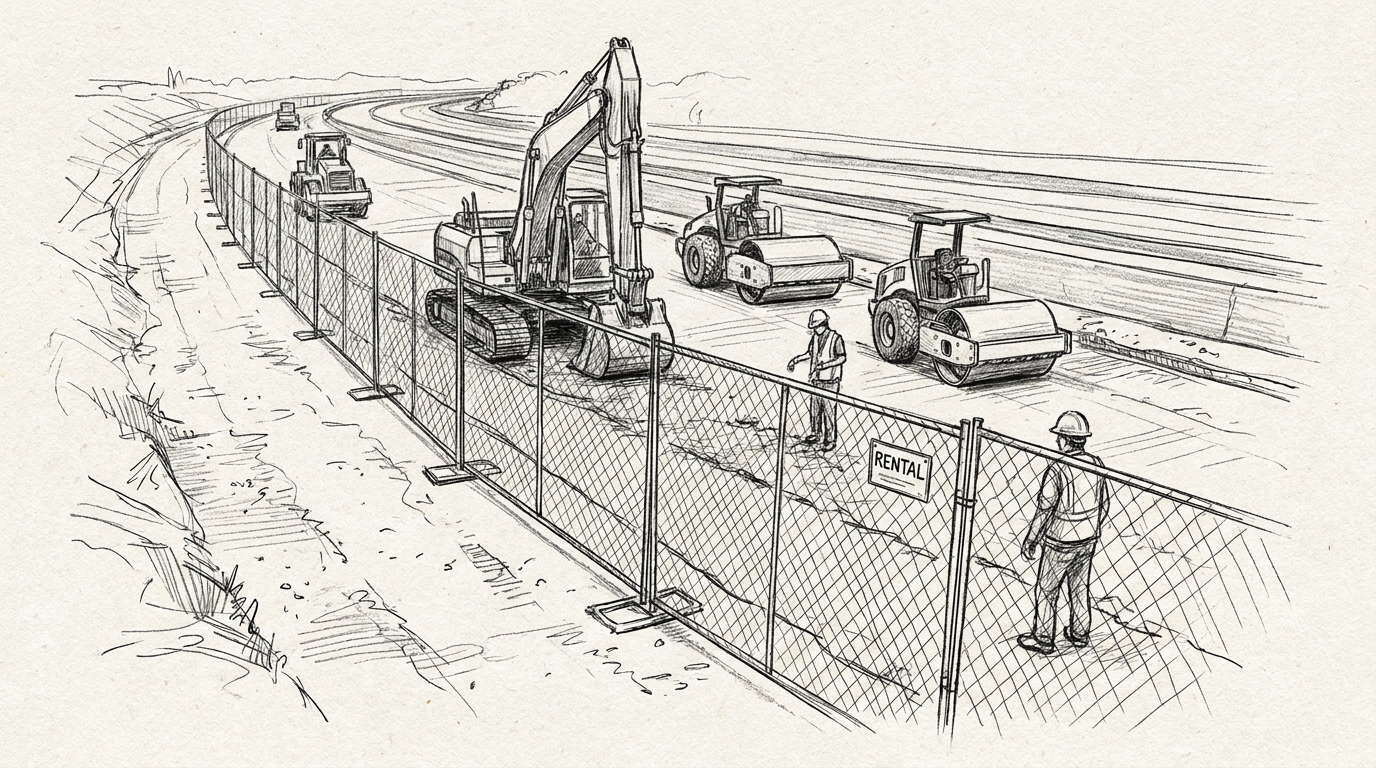
Chain link temporary fencing: the staging-yard pick. Temporary fencing for construction sites at 6 feet high with ballast base panels secures material laydown, equipment parking, and crew staging away from the live lane. It's not a traffic barrier, and it shouldn't be treated like one. Verdict: Buy for the staging perimeter, not the lane edge.
Windscreen and privacy panels: the dust and glare pick. Windscreen fence rental for construction sites attaches to chain link runs and cuts dust drift and headlight glare on open corridors. It adds wind load, so panels need proper ballast or they become a liability in gusty stretches. Verdict: Consider for daytime paving on open freeway sections, Skip on sheltered urban blocks where it just adds cost with no benefit.
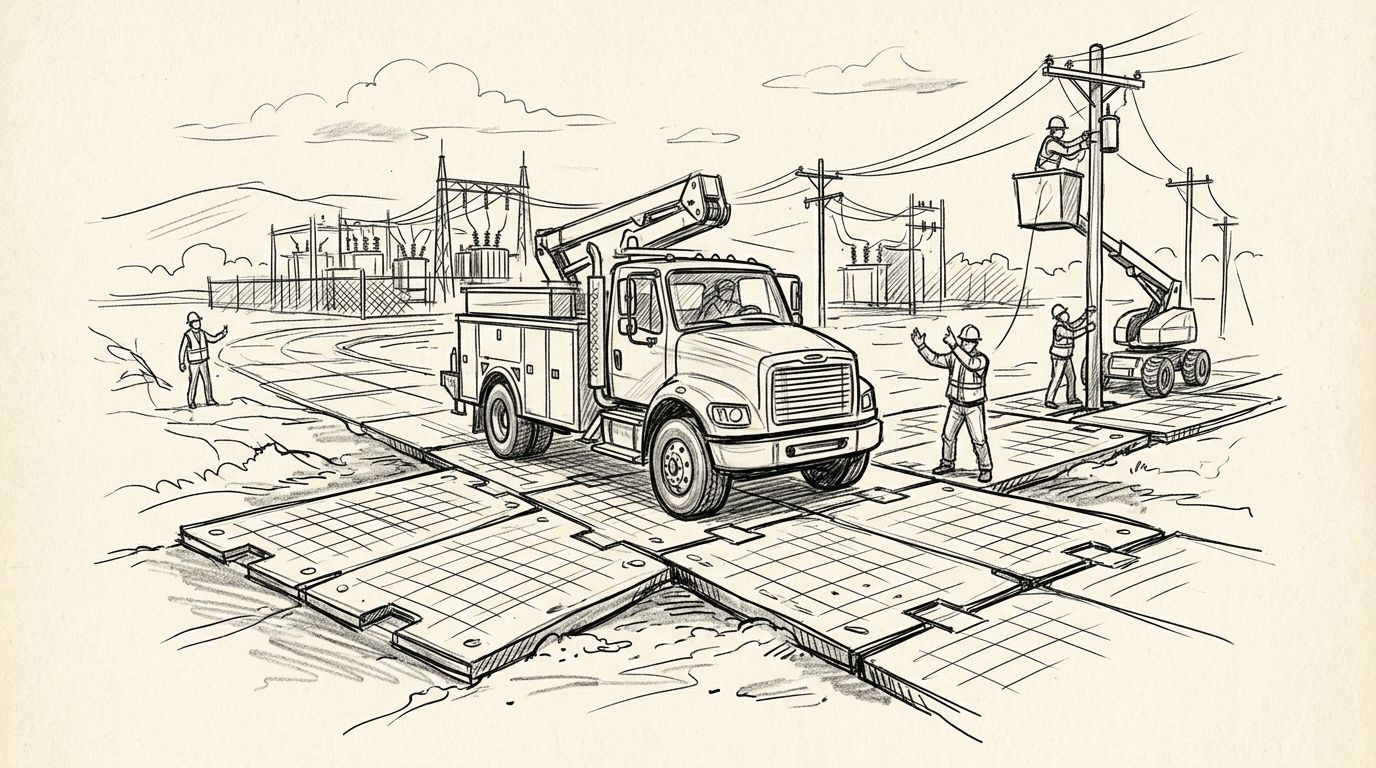
Utility and pipeline corridor fencing: the linear-project pick. Temporary fence rental for utility and pipeline projects is built for the same problem road work has: a long, narrow corridor that moves in sections over weeks or months. The same relocation logic applies whether the trench is for a water main or a road base. Verdict: Buy when your project runs linear and phased rather than a fixed footprint.
What to avoid
- Event-style pipe and drape or picket fencing. It reads fine at a festival gate. On an open highway shoulder with truck wind wash, it goes down in the first storm or the first semi pass.
- Unweighted chain link panels sold as a barrier. A vendor who tells you 6-foot chain link is an acceptable substitute for K-rail on an active lane is either unfamiliar with Caltrans standards or cutting a corner you'll answer for at inspection.
- Fixed-term rental contracts with no relocation clause. A road job's fence line moves with the traffic control plan. A contract that charges a full new setup fee every time the phase shifts turns a routine relocation into a budget problem.
Verdict comparison
| Option | Traffic separation | Relocation speed | Wind/dust control | Verdict |
|---|---|---|---|---|
| K-rail | Rated barrier | Section-by-section, fast | Not applicable | Buy |
| Chain link fencing | Not a barrier | Fast with ballast base | Low without screening | Buy for staging |
| Windscreen/privacy panels | Not a barrier | Attaches to existing runs | High | Consider on open corridors |
| Event-style pipe and drape | Not a barrier | Slow, manual reset | Very low | Skip |
Talk through your road job fencing plan
Call (408) 297-5404 or reach out online before the next phase shift.
FAQ
What's the best fence for road and highway construction sites?
K-rail is the standard for active travel lanes because it's a rated concrete barrier, while chain link fencing covers staging yards and material laydown. Most Caltrans and municipal traffic control plans in 2026 require both on a single phased job.
Is K-rail required for lane closures on Caltrans projects?
Most Caltrans traffic control plans require K-rail whenever the work zone borders an open travel lane. Chain link fencing alone doesn't meet the barrier requirement for active-lane separation.
How much does fence rental for road construction cost in 2026?
Cost depends on linear footage, barrier type, duration, and how many times the line relocates during the project. Call (408) 297-5404 for a quote scoped to your traffic control plan.
Can temporary fencing be relocated as a paving project moves phases?
Yes, chain link and K-rail sections both relocate as the traffic control plan shifts, typically within a single work shift when scheduled ahead of the phase change. Vendors unfamiliar with phased road work often quote relocation as a new setup instead of a routine move.
Does windscreen fencing help with dust control on road jobs?
Windscreen panels reduce dust drift toward adjacent lanes and cut headlight glare during night paving on open corridors. They add wind load to the fence run, so ballast needs to be sized for the site, not just the panel.
How fast can fencing be delivered to a jobsite in San Jose?
Delivery timing depends on quantity, barrier type, and current phase schedule. Same-family operation since 1986 means Valley Services schedules fencing alongside containers and restrooms for one jobsite call rather than three separate vendor calls.
What's the difference between K-rail and chain link fencing for road work?
K-rail is a rated concrete barrier meant to stop or deflect a vehicle, while chain link fencing is a site boundary that keeps people and equipment contained but won't stop a car. Road jobs typically need both in different zones of the same site.
Is a permit required for temporary fencing on a public roadway in San Jose?
Placing fencing or K-rail in a public right-of-way in San Jose requires an encroachment permit matched to the approved traffic control plan. The barrier type and taper length in the field have to match what's on the permit or the inspection fails.
One last thing
Most road and highway fence rental quotes only cover the fence line. The jobs that run smoothest through a full construction season also lock down restrooms and roll-off container service on the same call, so the site services line item doesn't turn into three separate vendor schedules to track through 2026.
Call (408) 297-5404 or go to valleyservices.biz to talk through your traffic control plan before the next phase shift.