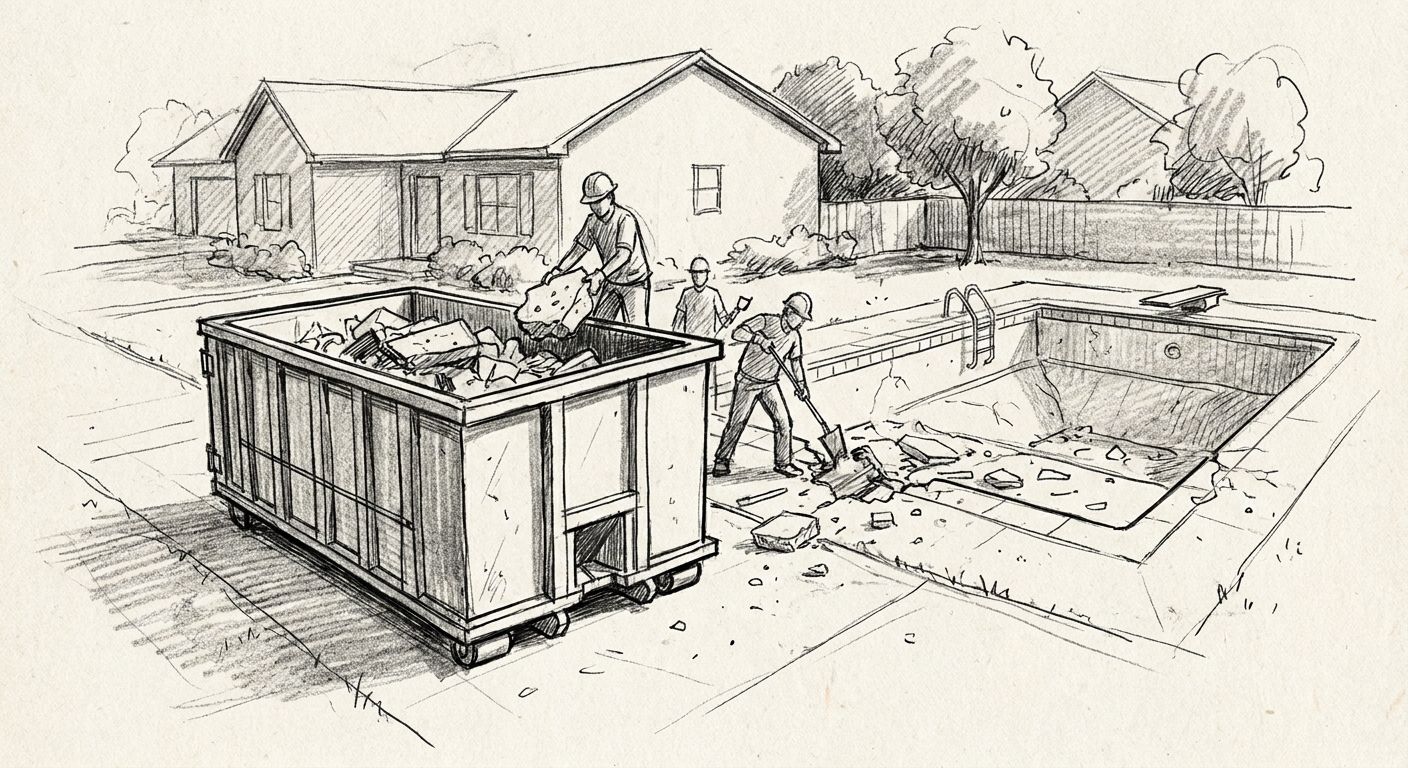
Pulling a pool out of a Bay Area backyard means one thing above all others: managing weight, not just volume. A cracked gunite shell or a fiberglass liner produces debris that overloads a standard container long before it looks full, and getting the container size and site access wrong turns a two-day job into a three-week delay.
- Dumpster rental for pool removal needs weight capacity, not just yardage: gunite debris runs 20 to 30 tons per average pool.
- A 30-yard roll-off container is the workhorse pick for most inground concrete pool demolitions in 2026.
- Fiberglass and vinyl-liner shells are lighter and often fit a 20-yard container without a second swap.
- Street placement in San Jose requires a permit before the container lands, not after.
- Valley Services runs its own C&D transfer station in San Jose, which controls swap scheduling on multi-load jobs.
Why this matters
Pool removal debris is dense. A residential gunite or shotcrete pool, once the shell is broken and the rebar cage is out, commonly generates 20 to 30 tons of material. A standard 30-yard roll-off container tops out on weight well before it tops out on volume, which means the container that looks right on paper can still get flagged for overage at the scale. Fiberglass and vinyl-liner pools run lighter per cubic yard but still need a container rated for the load, not just a box that fits the shell.
Getting this wrong costs schedule. A container that hits its weight limit on the first load means a mid-project swap, and swap scheduling on a residential lot with limited backyard access is where most delays start. Sizing correctly before the excavator shows up avoids that.
Who this is for
This guide is for homeowners managing a pool demolition on their own property, general contractors running pool removal as part of a larger backyard renovation, and landscape or demolition subcontractors who need to size and schedule a roll-off container for gunite, shotcrete, fiberglass, or vinyl-liner removal in San Jose, Santa Clara, Sunnyvale, Mountain View, or Milpitas. If you're also converting the yard afterward, the debris hauling and the eventual renovation waste are two separate loads. Don't plan for one container to do both.
What to look for in dumpster rental for pool removal
Weight capacity, not just yardage
Gunite and shotcrete debris is dense rubble with rebar mixed in. A 30-yard container rated for construction debris handles that density better than a container marketed for general household junk, even at the same yardage. Ask what the container is rated for before you ask what size it is.
Access for a backyard pull
Most pool removal jobs can't put the container next to the hole. Debris gets staged in the driveway or side yard, then loaded, which means the excavator and the container both need clear paths. Measure gate widths and check for low branches or overhead wires before delivery day, not after the truck arrives.
Permit status for street placement
If the container sits in the street or blocks a sidewalk in San Jose, it needs a permit. This is a common miss on pool jobs because homeowners assume driveway placement, then find out mid-project that the driveway can't take the weight or the grade. Sort this before delivery, not the morning the truck shows up.
Load sequencing on larger jobs
A single 15,000-gallon gunite pool with a deep end can exceed what one 40-yard container can carry by weight, even though it fits by volume. Larger jobs need a swap plan: one load hauled and dumped, container returned, second load loaded. Know this going in so the schedule accounts for it.
Endpoint control
When the hauler doesn't own the disposal site, every swap depends on a third party's schedule. Valley Services operates its own C&D transfer station in San Jose, which means container turnaround on a multi-load pool job isn't waiting on someone else's dock.
Roll-off container rental sized correctly up front is the single biggest variable in keeping a pool removal on schedule.
Top picks by pool type
The daily driver: 20-yard container
Fits most fiberglass shell removals and smaller vinyl-liner above-ground jobs. Fiberglass debris is lighter per yard than gunite, so a 20-yard box often clears the job in one load. Buy for fiberglass and vinyl-liner pools under roughly 15 feet by 30 feet.
The workhorse: 30-yard container
Handles the average residential inground gunite or shotcrete pool in one load when the shell is broken into manageable rubble and rebar is separated where possible. This is the size most Bay Area pool demolitions land on. Buy for standard 16-by-32 gunite pools with a single deep end.
The big dig: 40-yard container
Built for larger shells, freeform designs with extensive decking removal, or combined pool-and-spa demolitions. Even at 40 yards, weight can cap the load before volume does on a heavy gunite job, so budget for a possible second haul. Consider for jobs over 600 square feet of shell surface or anything with an attached spa.
The overkill pick: multiple 20-yard swaps
On tight-access lots where a 30 or 40-yard container can't physically get to the loading point, running two or three smaller 20-yard swaps sometimes beats one large container that has to be craned or hand-carried into place. Consider only when access genuinely rules out the bigger box; it costs schedule time in exchange for solved access.
The wrong tool: general household container
A container sized and rated for household junk removal, not construction debris, gets flagged fast on gunite rubble. It looks like the right yardage and fails at the scale. Skip for any inground concrete or gunite pool.
Size your pool removal container
Call (408) 297-5404 or reach out online to plan delivery, weight rating, and pickup.
What to avoid
- Undersized weight rating on gunite jobs. A 20-yard container looks adequate for a small pool footprint but hits its weight cap on dense rubble long before the box is visually full. Check the dumpster rental for concrete and dirt disposal guidance before booking a small box for a gunite job.
- Skipping the street permit. Placing a container in the public right-of-way in San Jose without clearing it first risks a stop-work order mid-project. Confirm permit status through how to permit a dumpster placement in San Jose before the truck rolls.
- Overloading past the fill line. Rebar and broken shell material pile unevenly, and stacking above the container walls or past the rated weight triggers overage charges and safety flags at the transfer station. Review how to load a dumpster safely and avoid overage fees with the crew before the first bucket of debris goes in.
Verdict comparison
| Container Size | Best For | Weight Note | Verdict |
|---|---|---|---|
| 20 yard | Fiberglass, vinyl-liner, small above-ground | Lighter debris, single load typical | Buy |
| 30 yard | Standard inground gunite/shotcrete | Fits average 16x32 pool in one load | Buy |
| 40 yard | Large shells, pool-and-spa combos | May still need a second haul on dense rubble | Consider |
| Multiple 20-yard swaps | Tight-access lots | Solves access, costs schedule time | Consider |
| Household junk-rated box | Any gunite or concrete pool | Fails weight rating fast | Skip |
FAQ
What size dumpster do I need to remove a pool?
Most inground gunite or shotcrete pools in the Bay Area fit a 30-yard roll-off container in one load. Fiberglass and vinyl-liner shells are lighter and often work with a 20-yard container, while larger shells or combined pool-and-spa jobs may need a 40-yard container plus a second haul.
How much does a broken-up gunite pool weigh?
A typical residential gunite or shotcrete pool shell generates roughly 20 to 30 tons of rubble and rebar once demolished. That weight, not the visual fill level, is usually what determines whether a container needs a swap.
Do I need a permit to place a dumpster for pool removal in San Jose?
Yes, if the container sits in the street or blocks a sidewalk in San Jose, a permit is required before delivery. Driveway placement on private property typically does not require a street permit, but check load capacity on the driveway surface first.
Can fiberglass pool shells go in a regular construction dumpster?
Fiberglass shells can go in a standard roll-off container rated for construction and demolition debris. Cut or break the shell into manageable sections first so it loads flat instead of taking up unused volume.
Is one dumpster enough for a full pool demolition?
For an average residential gunite pool, a single 30-yard container often handles the job. Larger pools, spa combinations, or extensive decking removal frequently need a second load due to weight limits, not size limits.
What happens if the dumpster is overweight after pool debris?
An overweight container gets flagged at the scale and typically triggers an overage charge tied to the excess tonnage. Loading rebar and broken concrete evenly, and staying inside the container's rated weight, avoids the issue.
Where does pool demolition debris get hauled to?
Concrete, gunite, and rebar from pool demolition go to a construction and demolition transfer station rated to handle that material. Valley Services operates its own C&D transfer station in San Jose, which keeps swap scheduling on the same yard rather than a third-party site.
Do I need temporary fencing during pool removal?
An open excavation from pool removal is a fall hazard, and many Bay Area jurisdictions expect the site secured while the hole is open. Temporary fencing around the perimeter is standard practice on active pool demolition sites through backfill.
One last thing
The detail most homeowners miss on a pool removal job isn't the container, it's the hole. Once the shell comes out, the excavation stays open until backfill, and an unsecured pit in a residential yard is a liability and often a code issue before the job is even half done. Line up fencing for the excavation period at the same time you book the container, not after the demolition crew has already left for the day.
For sizing help, permit timing, or scheduling swaps around a gunite job in San Jose, Santa Clara, Sunnyvale, Mountain View, or Milpitas, call (408) 297-5404 or reach out through valleyservices.biz.