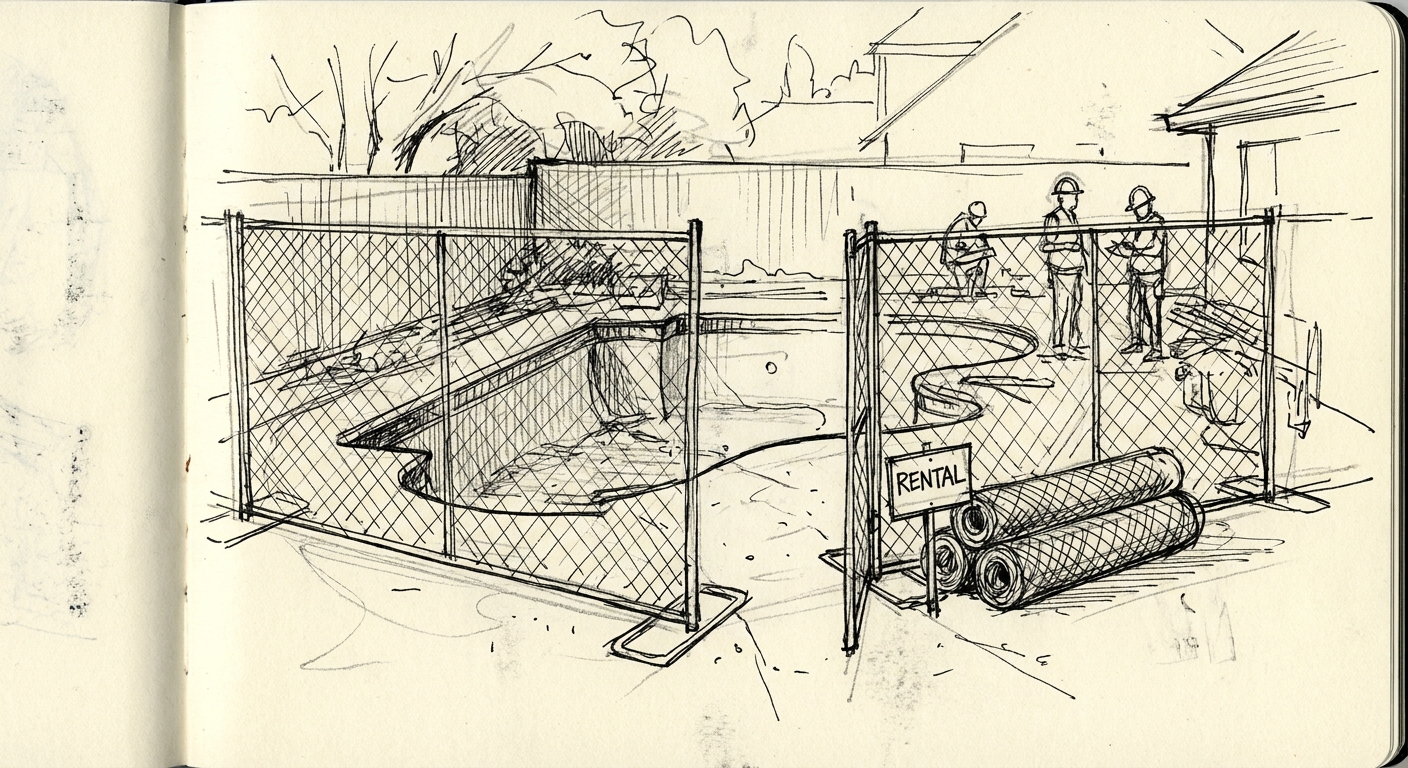
A pool excavation is an open hole that can fill with rainwater overnight, and California treats that hazard the same way it treats a finished pool: it has to be fenced before anyone walks off the job site. Temporary fence rental for pool installation projects covers the gap between the first excavator pass and the day the permanent barrier passes final inspection, and getting the fencing wrong stalls the whole schedule.
- Standard 6-foot chain link panels are the correct call for full-perimeter pool excavation enclosure in 2026: buy, don't substitute decorative fencing.
- K-rail earns a Consider verdict on street-facing lots where equipment staging or spoil piles sit near a sidewalk.
- Green privacy screening solves neighbor sightline complaints on tight South Bay lots, not a code requirement but worth adding.
- Pool jobs in San Jose commonly run 6 to 10 weeks from excavation to final inspection, longer than the fence rental most contractors budget for.
- One call to Valley Services covers temporary fencing rental for pool installation alongside the roll-off container and restroom on the same site.
Why this matters
An open pool excavation is a fall and drowning hazard the moment groundwater or rain collects in it, and California building code requires perimeter fencing around that excavation and around any pool shell before the permanent enclosure and self-latching gate clear inspection. Skip the interim fencing and an inspector can red-tag the site, which means the excavator sits idle and the crew loses a day it can't get back. Cal/OSHA also treats an unfenced excavation as an open trench hazard for anyone who isn't part of the pool crew: delivery drivers, neighbors, kids on the sidewalk.
The fence isn't paperwork. It's the thing standing between an open hole full of rebar and a passerby who wanders onto the lot after hours.
Who this is for
This guide is for pool contractors and subcontractors running excavation-to-decking timelines in San Jose, Santa Clara, Sunnyvale, Mountain View, and Milpitas, and for general contractors coordinating pool work as one piece of a larger backyard remodel. It's also for homeowners pulling their own permit on a smaller residential pool build who need to know what the inspector expects to see at the excavation walk-through.
What to look for in temporary fencing for pool installation
Panel height that clears the inspection standard
The fence has to read as a real barrier, not a suggestion. Six-foot chain link panels are the standard height contractors use to satisfy the excavation enclosure requirement, and going lower invites a rejected inspection. Don't let a supplier talk you into 4-foot panels because they're what's in stock.
Stability on graded, uneven ground
Pool sites aren't flat. Excavation spoil, rebar staging, and shotcrete overspray all reshape the grade week to week, and a fence panel that relies on a flimsy base kit will lean or fall on soft dirt. Self-standing panels with rubber or concrete-filled bases hold on the kind of loose, disturbed soil a pool excavation leaves behind.
Gate width for equipment load-in and load-out
An excavator, a shotcrete pump truck, and a rebar delivery all need to get through the same gate at different phases of the job. A single 4-foot walk gate works for the crew but not for machinery, so the layout needs at least one wide swing or double-panel gate sized for equipment, placed where the access route already runs.
Duration that matches the real timeline, not the proposal timeline
Pool installs in the South Bay commonly run 6 to 10 weeks from excavation to final inspection once plumbing rough-in, gunite cure time, and tile work stack up. Renting fencing for a 3-week window because that's what the original schedule said leaves the site unenclosed right when the shell is holding water and curing, which is exactly when it matters most.
Street-facing lots need K-rail, not just fencing
On lots where equipment staging or spoil piles sit close to a public sidewalk or a narrow street, chain link alone doesn't stop a vehicle from clipping the pile or a pedestrian from walking into the staging lane. K-rail placed between the work zone and the street gives a solid barrier that a fence panel can't, and it's the difference between a clean site and a call from the city.
Privacy screening for neighbor sightlines
An open pool excavation next to a shared fence line invites complaints, dust drift, and neighbors leaning over to watch rebar work. Green privacy screening clipped to the chain link panels blocks the sightline and cuts dust migration onto the next lot over, which matters more on tight infill lots than on larger properties with setback.
Top picks for pool installation fencing
Standard 6-foot chain link panels, the default pick. These are the panels that satisfy the excavation enclosure requirement across San Jose and the surrounding Bay Area, typically supplied in 6-by-10-foot sections with self-standing bases. Use them for the full perimeter from the day the excavator breaks ground through final backfill and decking. Buy.
K-rail, the pick for tight or street-facing lots. Concrete K-rail sections separate equipment staging and spoil piles from a public sidewalk or narrow street, and they hold up to equipment contact in a way chain link never will. Pair K-rail with fencing rather than substituting one for the other. Consider if the lot has less than 10 feet of setback from the street.
Green privacy screening, the neighbor-relations pick. Screening attaches to the existing 6-foot panels and blocks direct sightlines into the excavation while cutting dust drift toward adjacent yards. It doesn't satisfy any code requirement on its own, so it's an add-on, not a substitute for the fence itself. Consider on infill lots with close neighbors.
One-call site services package, the logistics pick. A pool install generates excavation spoil that needs a roll-off container built for landscaping projects, crew restrooms for a multi-week timeline, and perimeter fencing, and coordinating three vendors around one excavation schedule creates delay risk every time one of them runs late. Buy if the job is already juggling a general contractor and multiple subs, since Valley Services runs all three from the same yard on the same schedule.
What to avoid
- Decorative or picket-style temporary fencing. It looks like a fence in a photo but doesn't meet the enclosure height or stability standard an inspector is checking for.
- A broker who doesn't control the pickup date. Pool schedules slip when gunite cure gets delayed by weather, and a fence rental locked to a fixed return date creates a gap right before final decking.
- Skipping fencing during the gunite cure window. A freshly shot pool shell holding groundwater looks finished enough that crews get lax about the barrier, and that's the exact moment it matters most.
Line up fencing before the excavator arrives
Coordinate temporary fencing, K-rail, and roll-off service for one pool site.
Verdict comparison
| Fencing type | Height/spec | Best for | Typical duration on a pool job | Verdict |
|---|---|---|---|---|
| Standard chain link panels | 6 ft, self-standing base | Full perimeter excavation enclosure | 6 to 10 weeks | Buy |
| K-rail | Concrete barrier section | Street-facing or tight-setback lots | Duration of excavation and haul-out | Consider |
| Green privacy screening | Clips to 6 ft panel | Neighbor sightline and dust control | Full install duration | Consider |
| Decorative or picket fencing | Varies, under code height | Not a code-relevant barrier | N/A | Skip |
A pool site that's already coordinating a general contractor's dumpster rental usually benefits from having the same yard handle fencing, since one phone call adjusts the whole site instead of three separate vendor calls.
FAQ
How long do you need temporary fencing for a pool installation?
Most pool installs in the South Bay need fencing for 6 to 10 weeks, covering excavation through final backfill and decking. Budget for the longer end since gunite cure time and inspection scheduling regularly push jobs past the original 3 to 4 week estimate.
What height fence does a pool excavation need?
Six-foot chain link panels are the standard height used to enclose an open pool excavation before the permanent barrier and gate pass final inspection. Lower panels invite a rejected inspection and a delayed schedule.
Do I need K-rail in addition to fencing on a pool job?
K-rail is worth adding when the lot is close to a street or public sidewalk and equipment or spoil piles sit near that edge. Chain link fencing handles the enclosure requirement, K-rail handles the vehicle and pedestrian separation fencing alone can't.
Can I use my own fencing instead of renting?
Most homeowners and contractors don't own enough code-height panels to enclose a full excavation perimeter, and mismatched panel heights are a common reason inspectors flag a site. Renting from one supplier keeps the panel height and base type consistent around the whole perimeter.
Does privacy screening satisfy the fencing code requirement for pools?
No, privacy screening is an add-on that clips to the chain link panel and blocks sightlines, it doesn't replace the enclosure itself. Use it alongside standard 6-foot panels, not instead of them.
When does the fence need to come down?
Temporary fencing stays up until the permanent pool barrier and self-latching gate are installed and clear final inspection. Pulling it early to free up yard space before that inspection is one of the most common reasons a pool job gets a stop-work notice.
What size gate do I need for pool equipment access?
Plan for at least one wide swing or double-panel gate sized for an excavator or shotcrete pump truck, separate from the crew's walk gate. A single narrow gate forces equipment through the same opening as foot traffic, which slows load-in on gunite day.
One last thing
Most pool contractors budget the fence rental against the proposal schedule, not the real one, and gunite cure time alone can add two to three weeks that nobody wrote into the original estimate. Renting fencing month-to-month instead of locking a fixed return date avoids the scramble of an unenclosed excavation the week before final inspection, which is the single most common reason a pool job gets flagged in San Jose and the surrounding South Bay in 2026.
Valley Services runs temporary fencing, K-rail, roll-off containers, and restroom rental out of the same San Jose yard the family has operated since 1986, third generation, same location. Call (408) 297-5404 or reach out through valleyservices.biz to line up fencing before the excavator shows up.