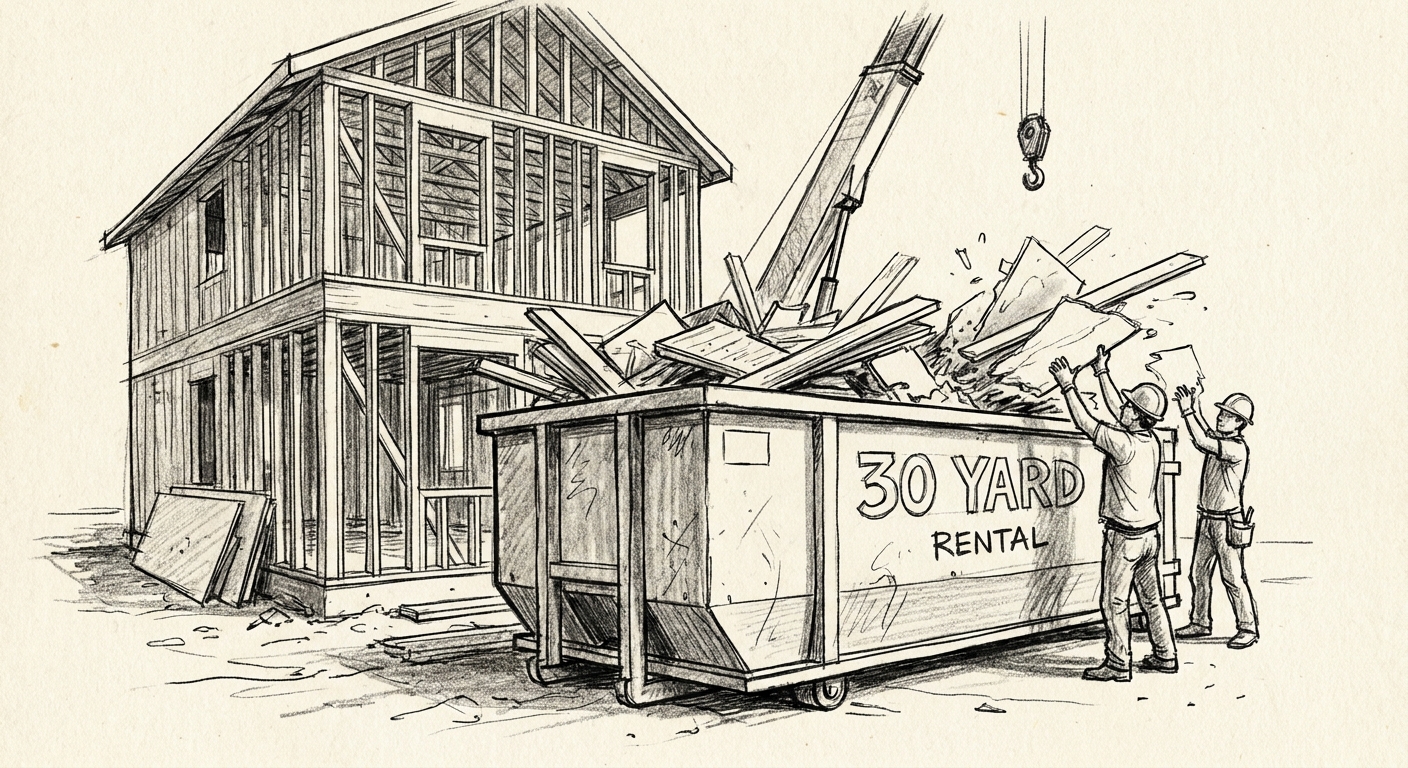
A 30 yard dumpster rental for new construction handles framing offcuts, drywall scrap, and packaging waste across most single-family builds in the Bay Area, and picking the wrong size mid-project stalls crews and forces an extra pickup you didn't budget for.
- A 30 yard roll-off container fits most single-family new builds in San Jose in 2026: Buy.
- 10 and 20 yard boxes undersize framing and drywall debris on multi-phase new construction: Skip as the only unit.
- Valley Services runs its own San Jose transfer station, which keeps swap-out scheduling in-house instead of routed through a broker.
- Street placement in San Jose and Santa Clara usually needs a permit before the container drops.
Why this matters
A new home build generates debris in waves, not one steady pile. Framing produces lumber cuts and packaging. Drywall and finish work add scrap and box waste. Grading and landscaping close-out adds dirt, roots, and hardscape trim.
General contractors running new home construction dumpster rental on a schedule need a container that matches the debris volume for each phase, not a single box sized for the easiest guess. Undersize it and the crew stops working while a swap gets arranged. Oversize it and you're paying for space you didn't need and taking up more of the driveway or street than the job requires.
A 30 yard roll-off container is the size most single-family new builds land on in 2026, but the right call depends on lot access, debris mix, and how many phases the build runs through.
Who this is for
This guide is for general contractors and owner-builders managing a new single-family home from foundation to final grading in San Jose, Santa Clara, Sunnyvale, Mountain View, or Milpitas. It also applies to homeowners acting as their own general contractor on a custom build, and to subcontractors who need to know what size box will already be on site when they show up.
What to look for in a 30 yard dumpster for new construction
Debris type and mixed-load capacity
New construction debris is mixed: wood, drywall, cardboard, and metal banding all land in the same box. A 30 yard container is built for that mix. Straight loads of dirt, concrete, or asphalt are a different weight class and usually call for a separate container, not the same 30 yard box used for framing scrap.
Site access and container footprint
A 30 yard roll-off container needs a clear approach for the delivery truck and enough flat ground to set it down without blocking egress. Narrow lots, steep driveways, or active excavation equipment change where the box can sit. Confirm placement before the truck shows up, not after.
Street placement permits in San Jose and Santa Clara
If the container can't fit on the lot itself, it goes on the street, and that means a permit in most South Bay jurisdictions. Cal/OSHA and local municipal code both come into play once the box sits in a public right-of-way. Sort this out during scheduling, not the morning of delivery.
Swap-out scheduling across build phases
A single 30 yard container rarely covers a full build start to finish. Framing fills one box. Interior finish and punch-list debris fills another. Plan the swap dates against your framing and drywall milestones, not against a guess.
Who controls the disposal endpoint
Most roll-off rental outfits haul to a third-party facility they don't operate. Valley Services runs its own C&D transfer station in San Jose, which means swap-out timing isn't dependent on someone else's dock schedule. That matters most when a build is behind and every day of container downtime costs schedule.
Which build phase needs the 30 yard container
Foundation and framing debris: the workhorse phase
Framing produces the highest volume of mixed debris in the shortest window: lumber offcuts, packaging, drywall scrap, and banding. A 30 yard container matches this phase on most single-family lots. Verdict: Buy.
Demo before groundbreaking: the early pick
If the lot had an existing structure, tear-off debris, including old roofing material, needs to clear the site before framing starts. This is the same debris volume covered in roofing tear-off dumpster rental, and a 30 yard box handles a typical single-family tear-off in one placement. Verdict: Buy.
Interior finish and punch-list debris: the late pick
By the time trim, cabinetry, and paint packaging show up, debris volume drops. This stage looks a lot like the debris load covered in home renovation dumpster rental, and a smaller 20 yard box often covers it without leaving space unused. Verdict: Consider downsizing.
Site grading and landscape close-out: the final pick
Grading, sod removal, and hardscape trim at the end of a build generate a mixed load of dirt, roots, and packaging, similar to what's covered in landscaping project dumpster rental. Heavy dirt and root balls push weight fast, so keep this load lighter than a full framing box. Verdict: Buy for one final swap.
What to avoid
- A single 20 yard box for the whole build. It covers punch-list debris fine but runs out of room the day framing starts.
- Loading dirt, concrete, or asphalt straight into the same 30 yard box used for framing scrap. These materials are a different weight class and often need a dedicated container.
- Skipping the street placement check. If the lot can't hold the container, San Jose and Santa Clara both require a permit before it sits in the right-of-way.
A 30 yard box that fills before framing wraps is one size too small for the job.
“A 30 yard box that fills before framing wraps is one size too small for the job.”
Verdict comparison across build phases
| Build Phase | Recommended Size | Typical Debris | Site Consideration | Verdict |
|---|---|---|---|---|
| Foundation & framing | 30 yard | Lumber, drywall, packaging | Needs clear truck approach | Buy |
| Demo / tear-off | 30 yard | Old roofing, interior demo | Street permit if no lot space | Buy |
| Interior finish / punch-list | 20 yard | Trim, paint cans, packaging | Smaller footprint needed | Consider downsizing |
| Grading / landscape close-out | 20 yard | Dirt, roots, hardscape scrap | Weight climbs fast with dirt | Buy for final swap |
Size the container before the truck shows up
Talk through your build schedule and lot access with Valley Services.
FAQ
What size dumpster do I need for new home construction?
Most single-family new builds in 2026 use a 30 yard container for framing and drywall debris, then downsize to a 20 yard for interior finish and punch-list waste. Lot access and debris mix can shift that recommendation either way.
Is a 30 yard dumpster big enough for a full home build?
A 30 yard container covers the framing and demo phases of most single-family builds, but a single box rarely lasts the whole project. Plan on at least one swap before interior finish and another before final grading.
Do I need a permit for a roll-off container in San Jose?
If the container sits on the street instead of the lot, San Jose and Santa Clara generally require a placement permit. Confirm this during scheduling, since it affects delivery timing.
Can I put concrete or dirt in a 30 yard container?
Concrete, dirt, and asphalt are a heavier debris class than framing scrap and often need a separate container. Mixing heavy material into a 30 yard box meant for framing debris can push it past a safe load.
How many container swaps does a new home build usually need?
Most builds run through more than one container: one for framing and demo, another for interior finish, and sometimes a third for site grading close-out. Timing swaps to your framing and drywall milestones keeps the schedule moving.
What's the difference between a 30 yard and a 40 yard container?
A 40 yard container holds more volume and suits larger demo jobs or commercial-scale builds, while a 30 yard fits most single-family new construction. Valley Services offers containers from 8 to 40 yard depending on the job.
Does the container hauler matter for a new construction project?
Yes. Some roll-off rental companies haul to a third-party disposal site they don't control, which can slow down swap scheduling. Valley Services operates its own C&D transfer station in San Jose, so swap timing isn't dependent on another company's dock schedule.
How far in advance should I book a 30 yard dumpster for a new build?
Book container delivery against your framing start date, not after the crew is already on site. Confirm lot access and any street placement permit before the delivery date so the box is ready when framing debris starts piling up.
One last thing
Most new home builds don't run on one container. They run on a sequence: a 30 yard box for framing and demo, a smaller swap for interior finish, and one more pass for grading close-out. Booking a single size for the whole project is the most common scheduling mistake on South Bay new construction jobs in 2026.
Valley Services has run the same San Jose yard since 1986, third generation, same family. Call (408) 297-5404 or reach out through valleyservices.biz to size the container against your actual build schedule instead of guessing.