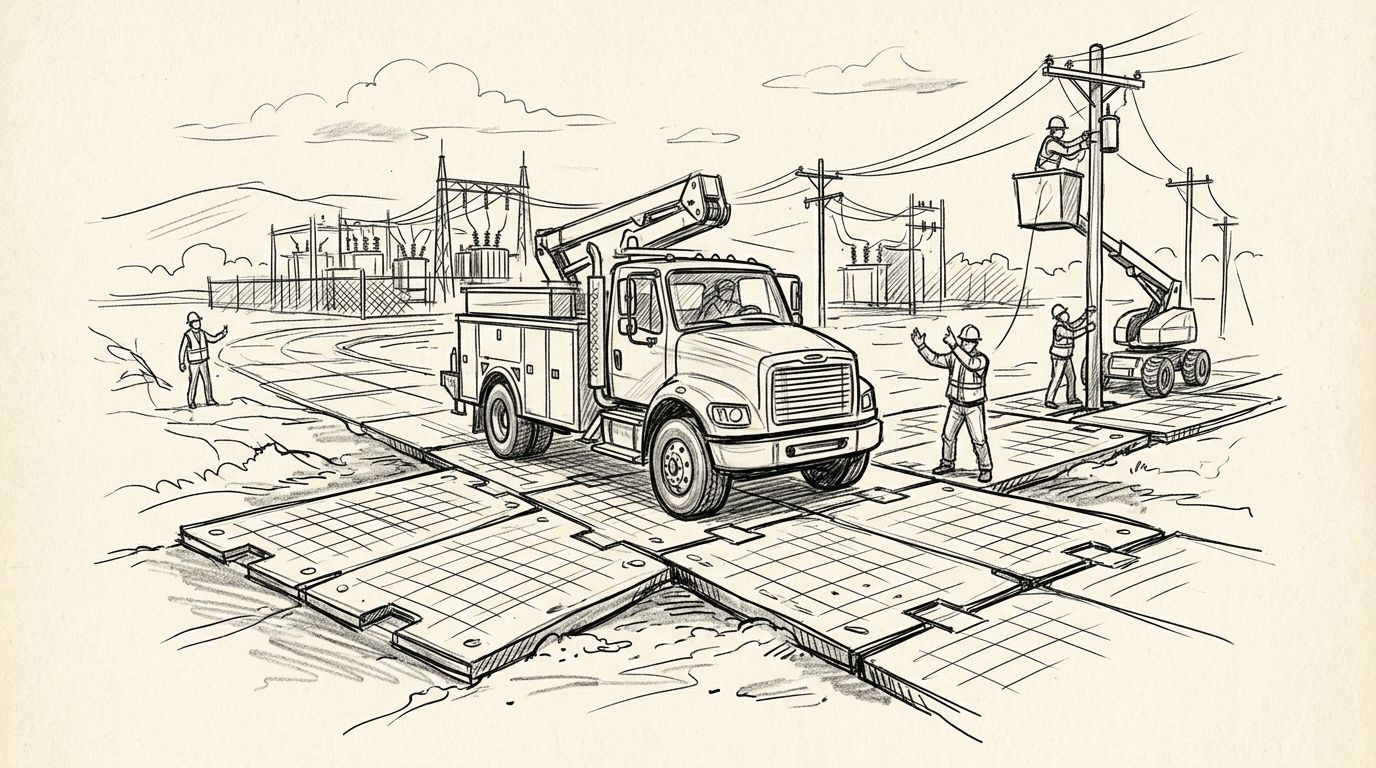
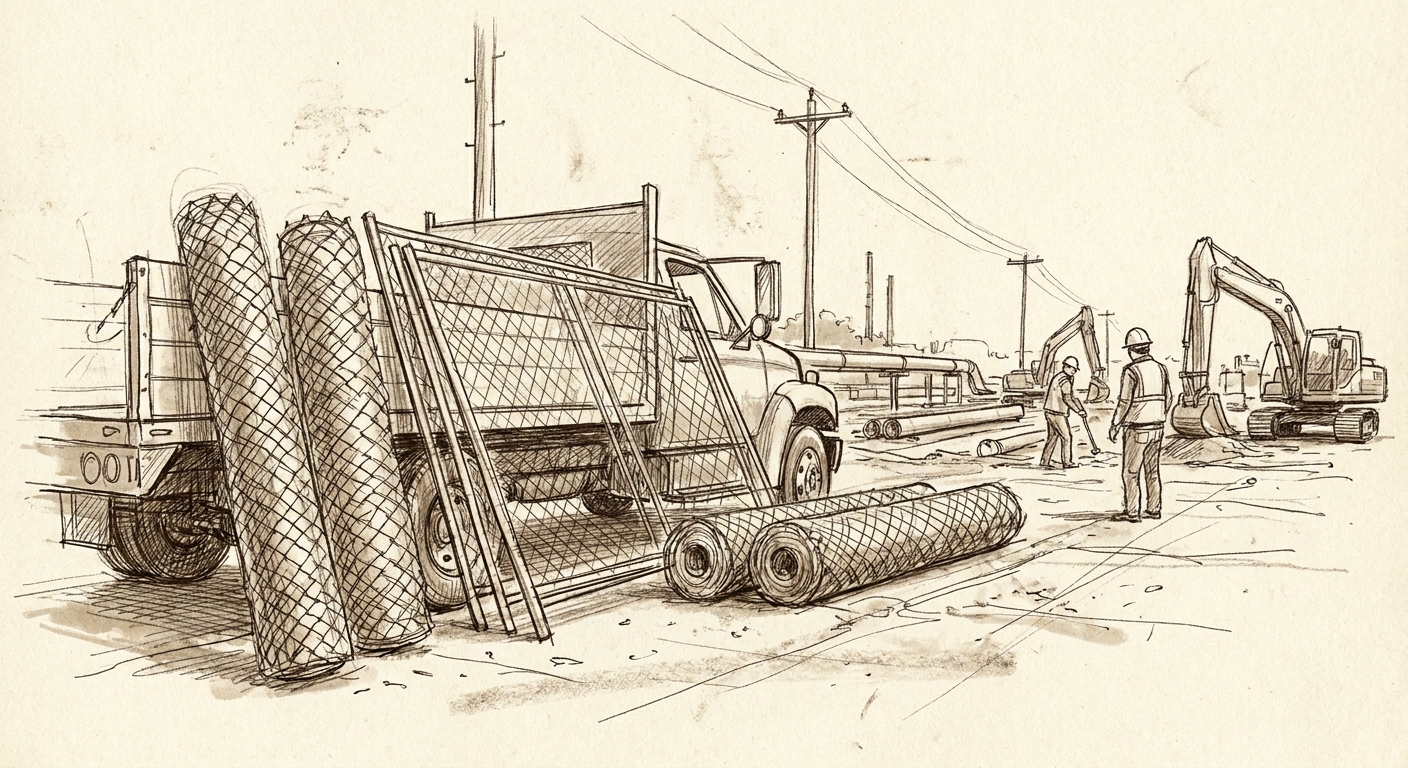
Utility and pipeline crews don't work a fixed lot. The trench moves every day, the bore pit shifts every few weeks, and the perimeter that made sense on Monday is in the wrong spot by Friday. Temporary fence rental for utility and pipeline projects has to keep up with that pace or it becomes dead weight sitting on the shoulder of the route.
- Temporary fence rental for utility projects works best with relocatable 6 ft chain link panels, not fixed installs.
- K-rail separates traffic from open trenches and bore pits on active utility corridors in 2026.
- Privacy screening cuts dust and sightline complaints on residential-adjacent pipeline runs. Consider it.
- Bundling fencing, K-rail, and restroom scheduling under one call keeps multi-week utility jobs on track.
Why this matters
A utility or pipeline job isn't one perimeter. It's a moving line of open trench, staged pipe, boring equipment, and public roadway all in the same corridor. Cal/OSHA excavation rules require protection around open trenches, and most Bay Area municipalities want a documented traffic and pedestrian control plan before you break ground on a road crossing.
Get the fencing wrong and you're either paying a crew to babysit an open cut overnight or explaining to San Jose, Santa Clara, or Milpitas why a resident walked into an unmarked bore pit. Get it right and the fence line becomes part of your traffic control plan, not an afterthought bolted on after the encroachment permit is approved.
Who this is for
This guide is built for utility contractors and pipeline crews running linear infrastructure work across the South Bay: gas line replacement, water district trenching, fiber and conduit installs, and PG&E-adjacent projects that cross public right-of-way. If your temporary fencing for construction sites needs move with the crew instead of sitting in one spot for six months, the criteria below apply directly to you.
What to look for in temporary fence rental for utility and pipeline projects
Panel mobility and relocation frequency
A pipeline job that advances 200 to 400 feet a week needs a fence system that tears down and resets in hours, not days. Freestanding panels on weighted feet move faster than anything anchored into pavement. If your crew is relocating the perimeter weekly, ask about panel count and turnaround before you sign anything.
K-rail for traffic and trench separation
At road crossings and bore pits, chain link alone doesn't stop a vehicle. Concrete K-rail sections give you a physical barrier between traffic and an open excavation, which most municipal encroachment permits expect to see documented before approval.
Sightline and dust control
On runs that pass through residential blocks, an open chain link fence puts the whole operation, spoil piles, staged pipe, idle equipment, on display to every passerby. Privacy screening on the fence line cuts down on complaint calls and keeps curious foot traffic from wandering toward an active trench.
Overnight security for staging and laydown areas
Pipe, fittings, and small equipment sitting in a laydown yard overnight are a theft target, especially on jobs that run for months. A perimeter that's actually secured, not just marked, matters more here than at a job site with a lockable structure.
Permit and encroachment coordination
San Jose, Santa Clara, Sunnyvale, Mountain View, and Milpitas each have their own encroachment permit requirements for work in the public right-of-way. Fence height, K-rail placement, and pedestrian detour signage often need to match what's on the approved traffic control plan, not just what fits the site.
One vendor for the whole corridor
A utility job running for weeks or months usually needs restrooms and roll-off containers along the route in addition to fencing. Coordinating three vendors across five jurisdictions adds scheduling risk that a single call avoids.
Top picks for utility and pipeline fencing
Standard 6 ft chain link panel fencing: the workhorse pick. Panels typically run 6 feet high in 10-foot sections on weighted rubber or concrete feet, no digging or anchoring required. This is the default for linear pipeline routes because it goes up and comes down fast as the crew advances. For crews that need the process documented, how to set up temporary fencing on a job site covers panel spacing and wind bracing. Buy for any linear route with weekly relocation.
K-rail: the traffic separator. Concrete K-rail sections sit at road crossings, bore pit approaches, and any point where the excavation runs parallel to active traffic. It's heavier to move than panel fencing, so plan K-rail placement around your longest-duration crossings rather than daily relocation. Buy for every road-adjacent segment of the corridor.
Privacy screening add-on: the sightline fix. Mesh screening mounted to the chain link cuts visibility into the trench and staging area, which matters most where the route runs through residential blocks. It slows wind loading slightly, so panel weighting needs a second look once screening goes up. Consider it for residential-adjacent segments, skip it on open industrial corridors where sightlines don't matter.
Combination package for demolition-adjacent segments. Where a pipeline or utility route crosses an active demo phase, such as a station retrofit or vault removal, the fencing needs match a demolition site more than a straight trench run. Temporary fencing for demolition sites walks through the tighter perimeter standards that apply once heavy equipment and falling debris are part of the picture. Buy if any part of your route touches a demo scope.
Line up fencing for your route
Call to plan fencing, K-rail, and restrooms across the whole corridor.
What to avoid
- Decorative event-style fencing. Lightweight panels built for a weekend festival perimeter won't hold up to wind loading or vandalism on a working utility corridor over multiple weeks.
- Fixed, anchored installs on a linear job. Anchoring a perimeter into pavement makes sense for a stationary site. On a route that advances daily, it turns relocation into a demolition project of its own.
- Skipping K-rail because the trench looks minor. A shallow trench next to a traffic lane still needs physical separation. Municipal inspectors check for it during encroachment site visits in 2026 as routinely as they check trench shoring.
“If the fence panel can't move with the crew, it's the wrong fence for a pipeline job.”
Verdict comparison table
| Configuration | Mobility | Traffic separation | Sightline control | Best for |
|---|---|---|---|---|
| 6 ft chain link panels | High, relocates in hours | Low | Low | Linear trench runs advancing weekly |
| K-rail | Low, plan around long-duration crossings | High | Low | Road crossings, bore pit approaches |
| Privacy screening add-on | Moderate, adds wind load | Low | High | Residential-adjacent segments |
| Combination demo-grade package | Moderate | High | Moderate | Segments overlapping demolition scope |
FAQ
What's the best temporary fence rental for utility projects in the Bay Area?
Relocatable 6 ft chain link panel fencing on weighted feet is the standard for utility and pipeline routes because it moves with the crew as the trench advances. Add K-rail at road crossings and bore pits for traffic separation.
Is K-rail required for pipeline trenching near roads?
Most Bay Area encroachment permits expect physical traffic separation, and K-rail is the standard method where a trench runs parallel to active traffic. Chain link fencing alone doesn't satisfy that requirement in most jurisdictions.
How often can fence panels be relocated on a pipeline job?
Freestanding chain link panels with weighted feet can be torn down and reset in hours, which supports weekly or even daily relocation as the route advances. Anchored fencing does not offer the same turnaround.
Does temporary fencing need a permit in San Jose?
Fence placement in the public right-of-way typically needs to match the approved encroachment permit and traffic control plan for the jurisdiction, whether that's San Jose, Santa Clara, Sunnyvale, Mountain View, or Milpitas. Check with the municipality before the route crosses a street.
Can fencing, K-rail, restrooms, and roll-off containers be scheduled together?
Yes, and doing so under one vendor call reduces scheduling risk on a multi-week corridor job. Coordinating separate vendors for each service across multiple jurisdictions adds delay when one piece slips.
What's the standard height for temporary construction fencing?
Six feet is the standard panel height for chain link temporary fencing on job sites and utility corridors. Taller screening or K-rail height requirements depend on the specific municipal permit.
Does privacy screening slow down fence relocation?
Screening adds wind load to the panel, which means the base weighting needs a second look once it goes up. It doesn't stop relocation, it just changes how the crew accounts for wind on the reset.
What happens if a fence line isn't relocated fast enough on an advancing route?
An open trench or bore pit without a perimeter becomes a safety and liability exposure the moment work stops for the day. Crews plan fence relocation into the daily schedule rather than treating it as a separate task.
One last thing
Valley Services has run the same San Jose yard since 1986, third generation, same family. Owning the yard means fence relocations on a moving pipeline route don't wait on a subcontractor's schedule, they get built into yours.
Call (408) 297-5404 or visit valleyservices.biz to talk through fencing, K-rail, and restroom scheduling for the full corridor.