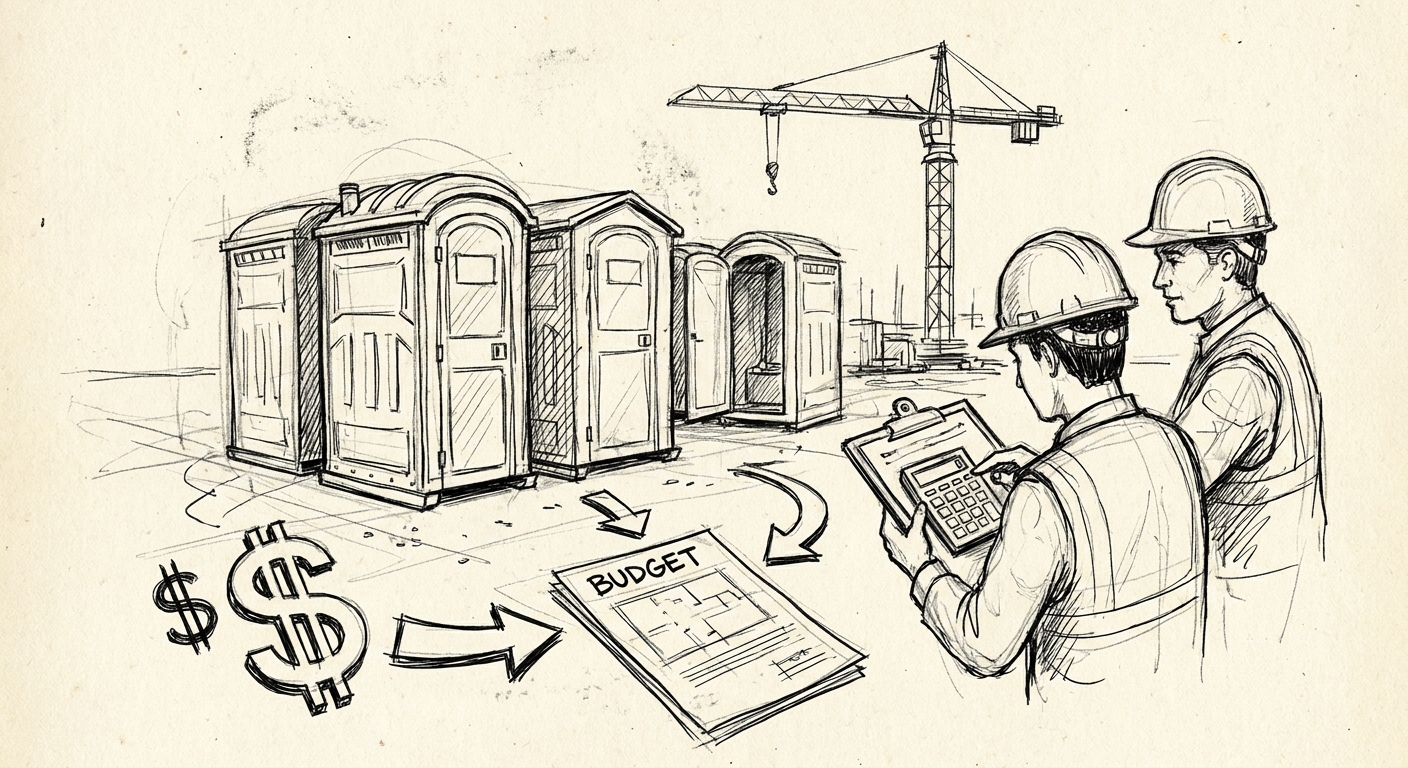
Budgeting for portable toilet rental on a Bay Area job site is not a single line item. It is a schedule decision that touches crew size, project length, and how often a truck can get on site to service the units.
- Portable toilet rental cost job site budgeting hinges on crew size, service frequency, and rental term, not a flat rate.
- Cal/OSHA sets the baseline at one restroom per 10 workers on an 8-hour shift, up to 20 workers per unit at higher counts.
- Standard units work for sites with sewer or dump access nearby. Isolated sites need a holding tank rental instead.
- Weekly service is the default for most construction jobs. High-crew sites often need twice-weekly pickups.
- Valley Services quotes job site restroom packages by crew size and duration. Call (408) 297-5404 before you lock a schedule.
Why this matters
A restroom shortage on a Bay Area job site is not a minor inconvenience. It is a Cal/OSHA violation that can shut down an inspection and it is a crew morale problem that shows up in slower production by week two.
In 2026, general contractors are running tighter labor schedules than five years ago, which means fewer workers doing more, and less tolerance for a unit that is out of service or a truck that never shows for pickup. Budgeting correctly up front, before the job starts, prevents change orders mid-project and prevents a surprise call to swap in a holding tank rental for a construction project three weeks in because the original plan did not account for site access.
Valley Services has run restroom logistics on Bay Area job sites since 1986, third generation, same yard on S 7th St in San Jose. The budget conversation is the same every time: how many people, how long, and can a truck reach the unit.
What you will need
- Total crew count on a peak shift, not average headcount
- Project duration in weeks or months
- Confirmation of sewer or dump access near the placement site
- Site access notes: gate width, grade, overhead lines, weekend lockouts
- Whether the job needs an ADA-compliant unit
- Hand-wash station requirement, separate from the restroom unit itself
The steps
1. Count your crew on the busiest shift
Budgeting starts with the peak headcount, not the average. A job that runs 8 workers most days but hits 22 during a concrete pour needs to plan restrooms for 22, not 8.
Cal/OSHA requires one restroom per 10 employees for crews up to 20 workers on an 8-hour shift, then one per 20 for larger crews. Underestimating this number is the single most common mistake contractors make when they try to save on the unit count.
Common mistake: ordering one unit for a 15-person crew because "it worked on the last job," then scrambling for a second unit when the inspector asks for a headcount.
2. Set your rental duration honestly
Rental term drives cost more than any other factor. A 30-day placement and a 6-month placement are two different budget conversations, and extending a rental mid-project usually costs more in total than booking the realistic term up front.
Look at your permit timeline and your framing-to-final schedule, then add two weeks of buffer. Bay Area inspection delays in 2026 are running longer than contractors expect on multi-phase jobs.
Expected outcome: a duration estimate you can hand to whoever is scheduling delivery, with a buffer that absorbs a permit delay without triggering an emergency call.
3. Decide between a standard unit and a holding tank
A standard portable restroom needs no plumbing hookup, which is why it works on most active construction sites. A holding tank rental makes sense when the site has no vehicle access for a service truck, or when the placement point is far from where a truck can park.
Remote hillside sites, gated estate lots, and multi-acre commercial parcels in the South Bay are the usual cases where a holding tank rental for job site restrooms replaces the standard unit entirely.
Common mistake: ordering a standard unit for a site the service truck cannot reach, then paying for an emergency reroute the week the tank fills.
4. Set your servicing frequency before delivery, not after
Most Bay Area construction jobs run weekly service. Crews above 20 workers, or sites running two shifts, usually need twice-weekly pickups to avoid a unit reaching capacity mid-week.
A unit serviced too infrequently is a compliance problem and a crew complaint generator by day four. Set the frequency at booking so the truck route is locked before day one, not adjusted after the first overflow call.
5. Confirm delivery access and placement before the truck arrives
A restroom unit needs a level pad, a gate wide enough for a service truck, and clearance from overhead lines. Sites with locked weekend access need to flag that at booking so pickup crews are not turned away at the gate.
This is the same access conversation contractors already have for dumpster placement. If you are also running a container on the same job, review how to prepare a driveway for a roll-off dumpster for the shared logistics: both units need level, unobstructed ground and truck clearance.
Common mistake: placing the unit behind a locked gate with no key left for the service crew, which turns a scheduled pickup into a missed one.
6. Factor in ADA and hand-wash requirements separately
ADA-compliant units and hand-wash stations are separate line items from the standard restroom count. Public-facing job sites, and any site with public right-of-way encroachment, typically need at least one ADA unit regardless of crew size.
Build this into the plan before delivery day. Adding an ADA unit after the fact means a second delivery trip.
7. Get one quote that covers the whole restroom scope
Once you have crew count, duration, unit type, and service frequency locked, call for one quote that covers the full scope rather than pricing units piecemeal. Contractors who compare portable toilet rental companies for construction sites unit by unit tend to miss the service-frequency variable that actually drives the total.
Get your job site restroom quote
Call with crew size and duration. One quote covers the full scope.
Troubleshooting
Unit is full before the scheduled service day. Crew count grew mid-project or a second shift was added. Call to bump the service frequency rather than waiting for the next scheduled pickup.
Service truck can't access the unit. Usually a locked gate or a grade change since delivery. Flag access issues before the truck is dispatched, not after a missed pickup.
Inspector flags restroom count during a walkthrough. Recount your peak-shift headcount against the Cal/OSHA ratio and add units before the next inspection, not after a citation.
Job runs longer than the original rental term. Extend the rental before the term expires. A lapsed rental with no active order creates a scheduling gap that a same-day swap cannot always fix.
Site switches from sewer access to a remote parcel mid-project. Swap from a standard unit to a holding tank rental rather than trying to force truck access to a spot it cannot reach.
Tools and resources
- Holding tank rental for a construction project: the setup guide for sites without truck access
- Best holding tank rental for job site restrooms: sizing guidance for remote parcels
- Best portable toilet rental companies for construction sites: what to check before you compare vendors
- Cal/OSHA restroom-per-worker ratio: one per 10 workers up to 20, one per 20 above that count
What to do next
If your job also needs a roll-off container on the same site, line up both budgets together rather than booking them separately. Review how to estimate dumpster rental costs for a remodel for the same duration-and-frequency logic applied to debris disposal.
FAQ
How much does portable toilet rental cost on a job site?
Portable toilet rental cost on a job site depends on unit count, service frequency, and rental duration, not a flat price list. Call Valley Services at (408) 297-5404 for a quote scaled to your crew size and schedule.
How many portable restrooms does a construction site need?
Cal/OSHA requires one restroom per 10 workers for crews up to 20 people on an 8-hour shift, then one per 20 workers above that count. Peak-shift headcount, not average headcount, sets the number.
Is a holding tank rental better than a standard unit for a construction site?
A holding tank rental only makes sense when a service truck cannot reach the site, such as a remote parcel or locked hillside lot. Standard units work on any site with normal vehicle access and cost less to service on a routine schedule.
How often do job site restrooms need to be serviced?
Most Bay Area construction jobs run weekly service. Crews above 20 workers or sites running two shifts usually need twice-weekly pickups to avoid units reaching capacity.
Do construction sites need ADA-compliant restrooms?
Public-facing job sites and any site with public right-of-way encroachment typically need at least one ADA-compliant unit regardless of crew size. Build this into the order before delivery day.
What happens if a job runs longer than the rental term?
Extend the rental before the term expires to avoid a scheduling gap. A lapsed order with no active extension can create a delay before a replacement unit is dispatched.
Can one company handle restrooms, containers, and fencing on the same job site?
Yes. Valley Services runs roll-off containers, portable restrooms, and temporary fencing out of the same San Jose yard, which means one call covers the full site services scope for a job.
One last thing
The detail contractors miss most in 2026 is access, not headcount. A restroom order that accounts for every worker but ignores a locked gate or a hillside grade still ends up with a missed pickup. Confirm the truck route before delivery day, every time.
Valley Services has run restroom, container, and fencing logistics out of the same San Jose yard since 1986, third generation. Call (408) 297-5404 or visit valleyservices.biz to talk through crew size, duration, and access before you lock a job site restroom budget.