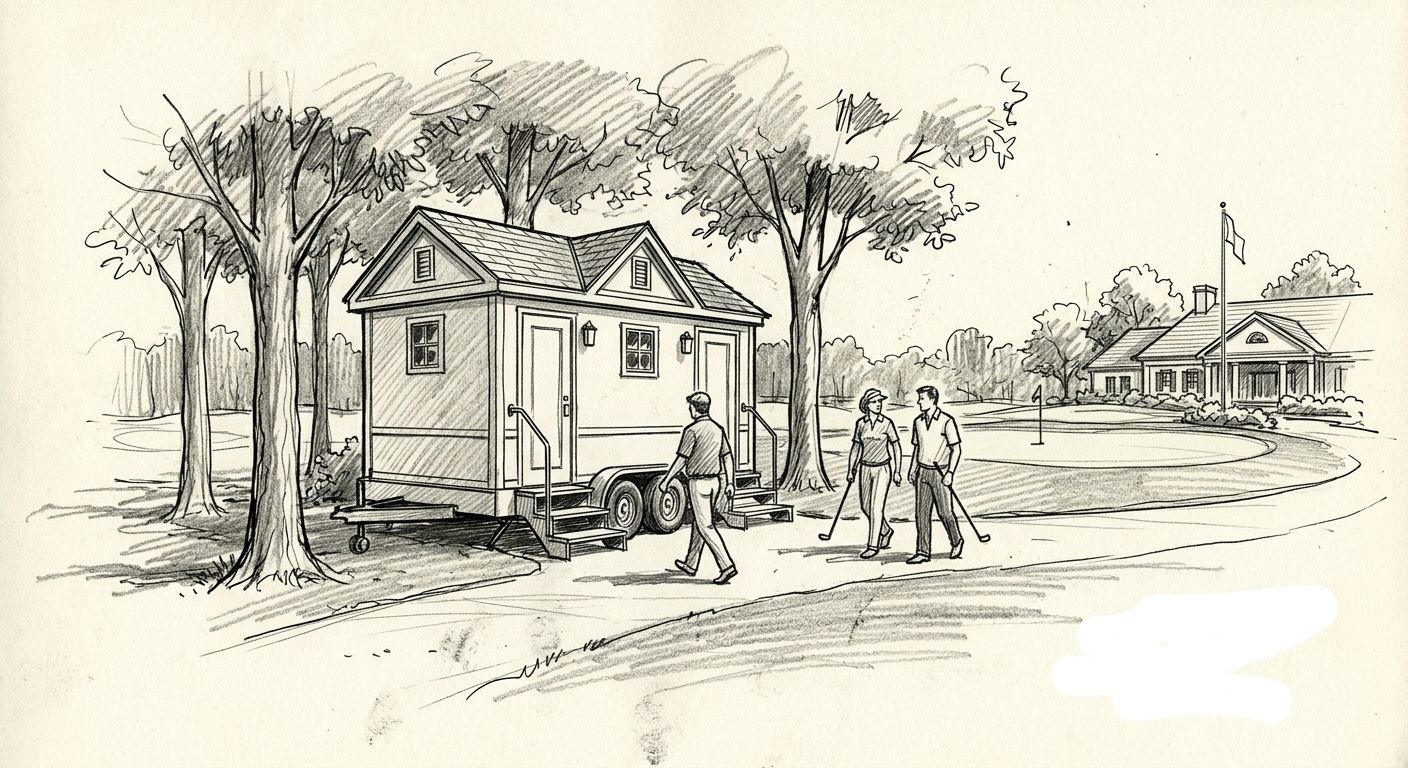
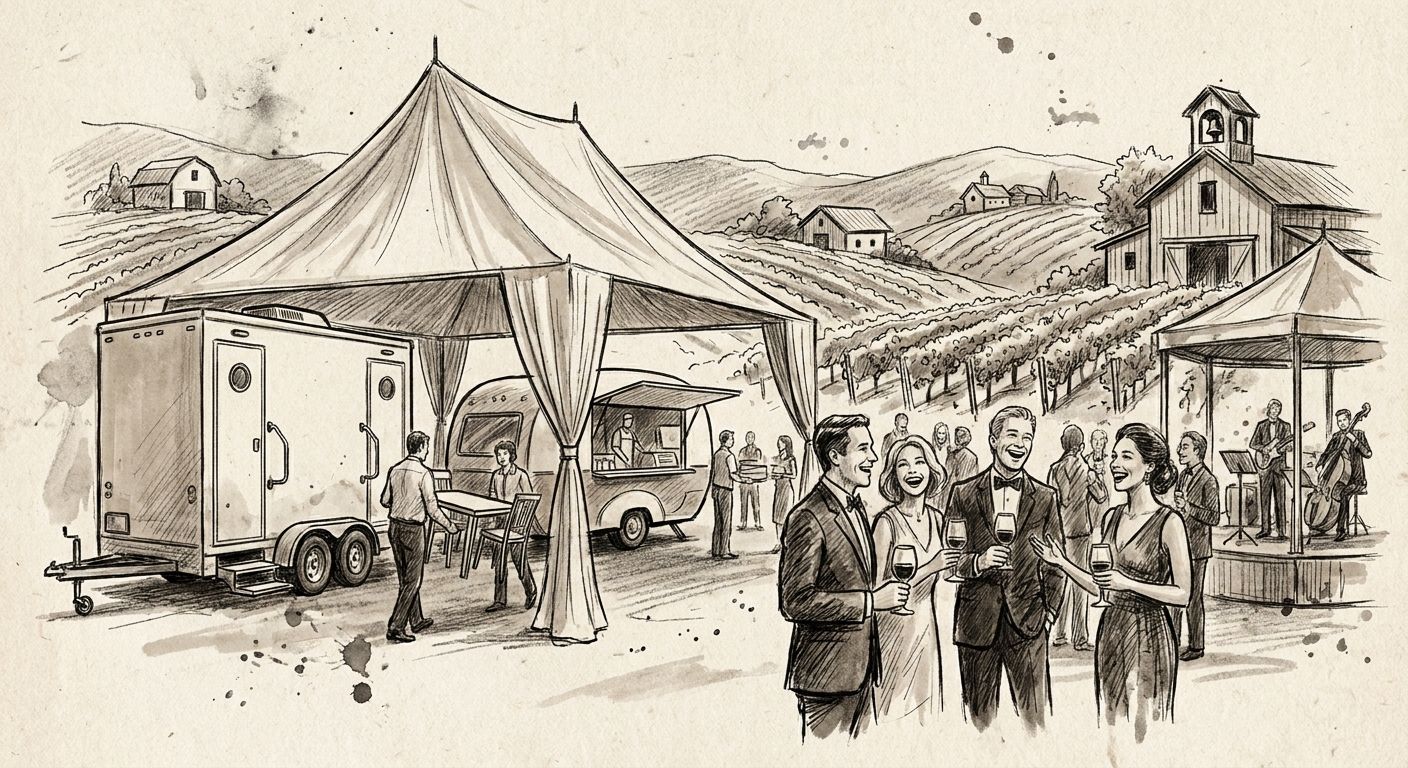
Vineyard and winery events run on open land with no permanent restrooms, no dumpster service, and no fencing to control where guests and vehicles go. The fix is renting the same three site services a construction job uses: restrooms, temporary fencing, and a roll-off container, sized to guest count and event duration, and delivered with enough lead time to walk the site before guests arrive. The hidden cost most planners miss is holding tank service for wash stations and kitchen operations, which needs its own pump schedule separate from restroom units.
- Plan site services for a winery event around three categories: restrooms, fencing, and roll-off waste, sized to guest count and hours in service.
- Vineyard sites usually have no municipal sewer nearby, so holding tank rental for wash stations runs on its own schedule.
- Temporary fencing at a vineyard event controls both crowd flow and vehicle access across rows and equipment paths.
- Valley Services runs containers, restrooms, and fencing from one San Jose yard, which keeps a single delivery window for all three.
Why this matters
A vineyard is not a parking lot. Rows of vines, irrigation lines, and uneven grade change where a restroom trailer can sit level and where a roll-off container truck can back in. Get the site walk done in 2026 before you sign a rental order, not after the tent is up.
Most wineries also do not have a loading dock or dumpster enclosure built into daily operations, since a working winery generates barrel wraps and packaging waste on a normal week, not event-scale waste. That means event waste and restroom demand both hit a site with zero existing infrastructure for either.
How to plan site services for a winery event
Start with three questions before calling any vendor: how many guests, how many hours, and where does the delivery truck actually park. Those three answers size every rental on the list below.
| Service | What it covers | Key sizing input |
|---|---|---|
| Restrooms or restroom trailer | Guest and staff sanitation | Guest count times hours in service |
| Holding tank | Wash stations, catering, kitchen rinse | Number of food and beverage stations |
| Temporary fencing | Row access control, crowd boundary, vehicle paths | Perimeter length and number of access points |
| Roll-off container | Event teardown, packaging, barrel wrap, decor waste | Guest count and event type (wine tasting vs. wedding vs. corporate) |
Work through the table in order. Restroom count drives the rest of the layout because restroom trailers need a level pad and a pump-out access point, which then dictates where fencing lines and container placement can go.
Restrooms for a vineyard event
Guest restroom count scales with attendance and how long the event runs, and wine events carry higher restroom demand per guest than a typical outdoor gathering because alcohol service increases usage frequency. A restroom trailer rental built for outdoor festivals covers multi-hour events with heavier guest turnover better than standalone units, since a trailer holds more capacity per unit footprint. For exact unit counts by guest number, work from the ratio method in how to calculate portable toilets needed for an event rather than guessing.
Cal/OSHA sanitation standards under Title 8 also apply to event crew and staff working the site, separate from guest units. Vineyard events with catering staff, security, and load-in crews need staff-designated restrooms counted apart from the guest total.
Holding tanks for wash stations and kitchen service
Vineyards rarely have sewer hookups near the tasting area or event lawn, which is exactly why holding tank rental for wineries and vineyards exists as its own line item separate from restroom rental. Wash stations for glassware, catering rinse points, and any mobile bar setup all draw water and need somewhere for greywater to go. A holding tank sized for the event's food and beverage stations, not just the guest count, keeps kitchen operations running through the full event without a mid-event pump call.
Fencing for site control and vehicle access
Open vineyard acreage has no natural crowd boundary, and vines themselves are not a barrier anyone should walk into after two glasses of wine. Temporary fence rental for wineries and vineyard events sets the guest perimeter, blocks off working rows and irrigation equipment, and defines the single vehicle path for catering, delivery, and load-out trucks. Fencing goes up before restrooms and containers land, since it defines where those trucks can and cannot drive.
Roll-off waste for event teardown
A winery event generates decor breakdown, packaging, food service waste, and in some cases barrel or crush-season debris if the event overlaps harvest operations. Valley Services runs blue steel roll-off containers from 8 to 40 yard, sized to the event's guest count and whether teardown includes tents, staging, or heavier decor material. Container placement needs the same site walk as the restroom trailer: level ground, truck access, and distance from vine rows the driver cannot cross.
Why site service needs vary by event
- Guest count and hours in service set restroom unit count and holding tank draw.
- Alcohol service increases restroom usage frequency compared to a dry event of the same size.
- Site grade and vine row layout limit where restroom trailers and containers can physically sit level.
- Number of food and beverage stations drives holding tank sizing independent of guest count.
- Overlap with harvest or crush season adds waste volume beyond standard event teardown.
- Single-entry versus multi-entry site layout changes how much fencing and how many access points the perimeter needs.
A vineyard event with no fencing plan usually ends with guests wandering rows the venue never intended to open.
How far in advance should you book site services for a winery event?
Book restrooms, fencing, and roll-off service as soon as the guest count and date are confirmed, ideally weeks ahead for weekend events in peak season. Vineyard and event-season demand in the South Bay and greater Bay Area peaks in spring and fall, which is when delivery windows fill first.
Do wineries need separate restrooms for staff and guests?
Yes, staff and guest restrooms should be counted separately, since Cal/OSHA sanitation standards apply to crew working the event independent of guest headcount. Caterers, security, and load-in staff need their own designated units, not a share of the guest allocation.
Can one vendor handle restrooms, fencing, and waste for the same event?
A single vendor covering all three cuts down on separate delivery windows and separate site walks for the same event. Valley Services runs roll-off containers, restrooms, and temporary fencing from one San Jose yard, which is why one call covers all three for a Bay Area winery event.
Plan your winery event site services
Call (408) 297-5404 to line up restrooms, fencing, and roll-off for your date.
FAQ
What site services does a vineyard event need?
A vineyard event needs restrooms, temporary fencing, and roll-off waste service at minimum, with a holding tank added when the event has wash stations or catering rinse points. Sizing for each depends on guest count, event duration, and site layout.
How many portable restrooms does a 200-guest winery event need?
Restroom count for 200 guests depends on event duration and whether alcohol is served, since drinking events run higher restroom usage per guest than a dry event of the same size. Use the guest-count-times-hours method in the portable toilet calculation guide rather than a flat number.
Does a winery need a holding tank if it already has restrooms on site?
Yes, if the event includes wash stations, a mobile bar, or catering rinse points, a holding tank handles greywater separate from restroom units. Vineyard sites rarely have sewer hookups near the event area, so this is usually a separate rental.
How much fencing does a vineyard event perimeter need?
Fencing length depends on the perimeter of the guest area plus any working rows, equipment, or irrigation lines that need blocking off from guest access. A single defined vehicle access point for catering and load-out trucks also factors into the fencing layout.
What size roll-off container fits a winery event?
Container size runs from 8 to 40 yard depending on guest count and teardown scope, including tents, staging, and decor material. A wine tasting with light decor needs less capacity than a full wedding or corporate event with a built-out setup.
Do vineyard events need separate crew restrooms under Cal/OSHA?
Yes, Cal/OSHA sanitation standards require restroom access for working crew separate from guest facilities. Caterers, security, and load-in staff should have their own designated units.
How far ahead should a winery book event site services in 2026?
Book as soon as the date and guest count are set, since peak season weekends in the Bay Area fill delivery windows fastest. Spring and fall 2026 event dates are the tightest for restroom, fencing, and roll-off scheduling.
One last thing
The detail most event planners skip is the truck path: a restroom trailer and a 40 yard roll-off both need level ground and a straight backing lane, and vine rows do not bend to fit either one. Walk the delivery route before booking anything, not after the tent contract is signed.
Valley Services has run containers, restrooms, and fencing from the same San Jose yard since 1986, third generation, same family. One call covers all three for a Bay Area vineyard or winery event: (408) 297-5404 or valleyservices.biz.