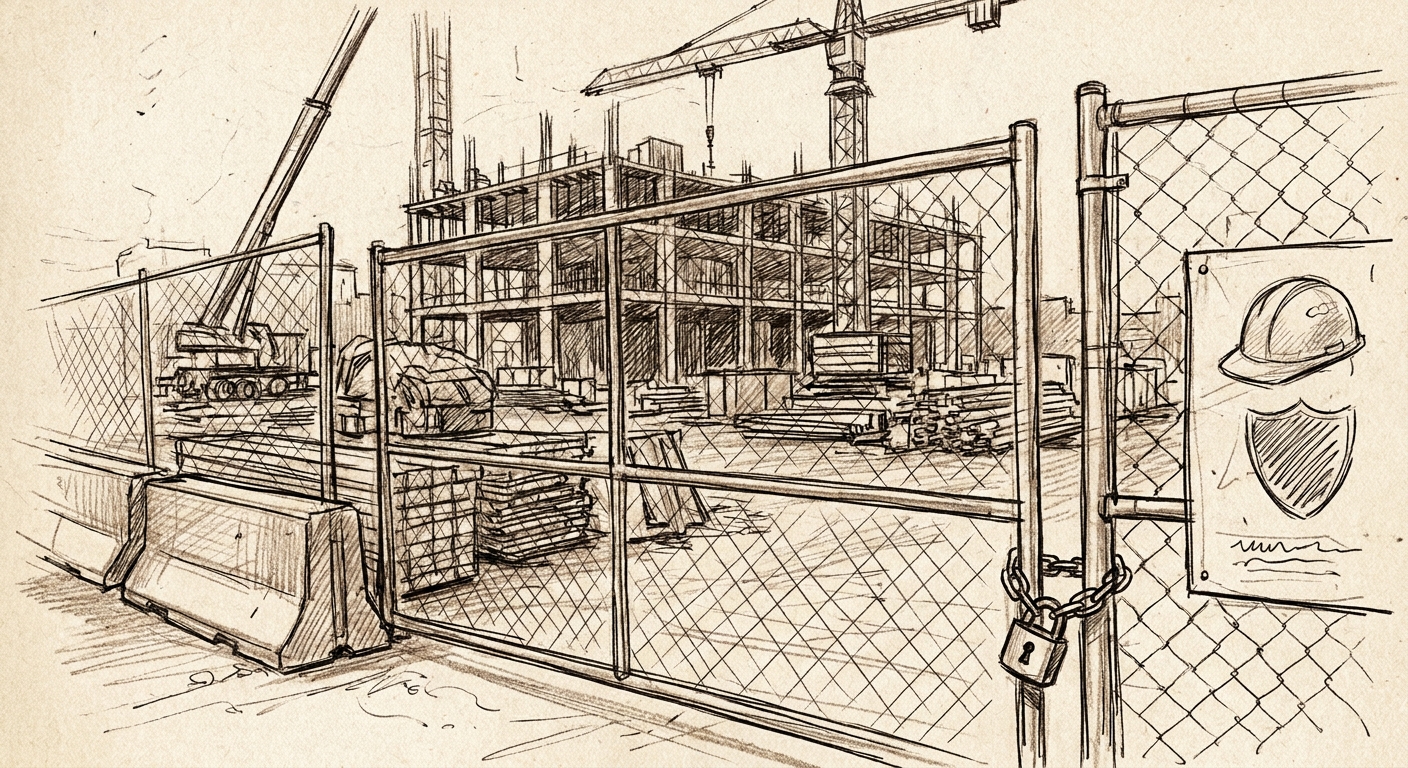
A construction site without a secured perimeter is an open invitation for trespassers, theft, and OSHA citations. Temporary fencing solves all three when it's sized, placed, and anchored correctly for the job.
- 6-foot chain link panels with anti-sight mesh are the standard to secure a construction site with temporary fencing in 2026.
- Gate openings need at least 12 feet of clearance for equipment and delivery trucks.
- Ballast blocks at every panel joint stop wind-related collapses during Bay Area gusts.
- K-rail replaces fence panels where vehicle separation, not just visibility control, is the goal.
- Valley Services delivers and sets temporary fencing across San Jose and the South Bay on the same call as containers and restrooms.
Why this matters
A site fence isn't decoration. It's your first line of defense against liability, and Cal/OSHA and local building departments both expect a defined, secured perimeter on active job sites in 2026. Insurance carriers ask about it too, especially after a theft claim or a trespasser injury.
A loose or undersized fence job creates three problems at once: unauthorized entry, equipment theft, and a paper trail that makes you look negligent if something goes wrong. Get the layout right before the crew mobilizes, not after a break-in.
What you'll need
- Site plan or plot map showing property lines, active work zones, and material staging
- 6-foot chain link fence panels, sized to your perimeter in linear feet
- Ballast blocks or feet for every panel, doubled at corners and gate posts
- One or more lockable gate sections, minimum 12 feet wide for equipment access
- Privacy screening if the site faces a street, school, or residential property
- K-rail sections if you need vehicle separation instead of just sight-line control
- Signage: no trespassing, hard hat required, and site contact information
- A temporary fencing delivery scheduled 24 to 48 hours ahead of mobilization
The steps
1. Walk the perimeter before you order panels
Measure the actual linear footage you need to enclose, not the footprint of the building. Include staging areas, dumpster placement, and any material laydown outside the structure's footprint. Most Bay Area lots run 150 to 400 linear feet of perimeter for a single-family remodel and well over 1,000 feet for commercial builds.
Common mistake: fencing only the structure and leaving the dumpster or material pile exposed outside the line. That's the spot thieves hit first.
2. Set gate width for your largest piece of equipment
A roll-off truck needs about 12 feet of clear width to back in and set a container. A skid steer or mini excavator needs less, but if you're moving a scissor lift or a delivery flatbed through the same gate, plan for 14 to 16 feet.
Undersized gates get propped open all day, which defeats the purpose of the fence. Size the gate once instead of forcing crews to bypass it.
3. Anchor every panel with ballast, especially at corners
Standard 6-foot chain link panels are not self-supporting in wind. Every panel gets a ballast block or foot, and corners and gate posts get doubled ballast because that's where wind load concentrates.
A fence line that gets knocked flat in a February storm isn't securing anything. It's a liability sitting on the ground.
4. Add privacy screen only where visibility control matters
Mesh screening blocks sight lines into an active demolition or a site with exposed excavation, which matters for both privacy complaints and OSHA visibility requirements around fall hazards. It also adds wind load, so screened runs need heavier ballast than open chain link.
Don't screen the whole perimeter by default. Screen the sides facing the street, adjacent occupied buildings, or a school. Leave working access sides open for sight lines your crew needs.
5. Use K-rail where the threat is vehicles, not people
Chain link stops foot traffic. It does not stop a vehicle. If your site sits on a street with traffic, or you're separating an active work zone from a parking lot still in use, K-rail is the right call, not fence panels.
K-rail sections interlock and don't need ballast, which makes them faster to place along a long vehicle boundary. Combine K-rail on the vehicle side with chain link on the pedestrian side for full coverage.
6. Lock every gate at the end of every shift
This sounds obvious and it's the step crews skip most. A fence with an unlocked gate is worse than no fence, because it signals an active, staffed site to anyone watching, then leaves it wide open overnight.
Assign gate lock responsibility to one person per shift, not whoever leaves last.
7. Post signage at every gate and every 100 feet of run
Signage isn't optional in most Bay Area jurisdictions for active construction. No trespassing, hard hat required past this point, and a site contact number cover the basics. Space signs so someone walking the perimeter sees one within 100 feet from any point.
Expected outcome after these seven steps: a perimeter that holds in wind, moves equipment without bottlenecks, and gives you a documented, defensible site boundary if a claim or citation comes up.
Get temporary fencing on site fast
Same call covers fencing, containers, and restrooms for your San Jose jobsite.
Troubleshooting
Panels keep getting knocked over in wind. Add a second ballast block at every joint and remove or reduce privacy screening on exposed runs. Screened panels catch far more wind load than open chain link.
Gate gets propped open during work hours. Widen the gate opening if equipment can't clear it without a second attempt. A gate crews have to fight with gets left open out of habit.
Trespassers cut through at a specific spot every time. That's usually a low-visibility corner or a section without signage. Move a light or a camera there and add ballast weight, since a loose panel is easier to lift and squeeze past.
City inspector flags the fence during a walkthrough. Confirm you're meeting local height and setback rules, which vary by jurisdiction across San Jose, Santa Clara, and Sunnyvale. A temporary fencing for construction sites setup that passed inspection on your last job can still fail on a different lot with different setback requirements.
Screening rips loose in a storm. Check ballast weight first, then check whether the mesh is rated for the wind exposure of that specific side of the site. South Bay corridor sites near open lots see higher sustained wind than infill lots.
Tools and resources
- How to set up temporary fencing on a job site for layout basics
- Temporary fencing for demolition sites if your perimeter needs change mid-project
- Best temporary fence rental for construction sites for sizing and panel count
- A tape measure or laser distance tool for perimeter walk-throughs
- Site plan or plat map from your permit file
What to do next
Once the fence is up, the next site control question is usually debris and restrooms. If you're staging a roll-off container inside the fenced perimeter, check driveway and placement requirements before delivery day.
FAQ
How tall does temporary construction fencing need to be?
Six feet is the standard height for temporary chain link fencing on construction sites in 2026. Taller panels exist for high-security sites but add cost and wind load without adding much practical deterrence.
How much does temporary fencing cost to rent for a construction site?
Pricing depends on linear footage, screening, and rental duration, so check current rates directly with a rental provider. Ask for a quote based on your actual perimeter measurement, not a rough estimate.
Is K-rail better than chain link fencing for job site security?
K-rail stops vehicles, chain link stops foot traffic, and most sites need both types on different sides of the perimeter. Use K-rail along active streets or shared parking areas and chain link everywhere pedestrians are the concern.
How far in advance should I schedule temporary fencing delivery?
Schedule 24 to 48 hours before mobilization in most Bay Area markets. Larger commercial perimeters or K-rail orders benefit from a week of lead time to confirm panel counts against your site plan.
Does temporary fencing need a permit in San Jose?
Some jurisdictions require a permit for fencing that encroaches on a public right of way or sidewalk. Check with your local building department before placement if any part of the fence line touches city property.
Can temporary fencing be used for a residential demolition project?
Yes, homeowners running a demolition or major renovation use the same 6-foot chain link panels as commercial sites, sized to a smaller perimeter. Privacy screening is especially useful on residential jobs facing a neighbor's yard.
What's the difference between chain link fence and privacy screen mesh?
Chain link alone is open and lets sight lines through, while privacy screen mesh attaches to the panels to block visibility. Screened panels need heavier ballast because the mesh catches significantly more wind.
How many gates does a construction site fence need?
Most single-structure sites need one main gate wide enough for equipment and a secondary pedestrian gate for crew access. Larger commercial perimeters with multiple staging zones often need two or three gate points.
One last thing
The fence line you draw on day one rarely matches the site by month three. Staging areas move, dumpster placement shifts, and a phase-two excavation opens a new hazard zone. Walk the perimeter every few weeks in 2026 and adjust panel placement instead of treating the initial layout as permanent.
Call (408) 297-5404 or visit valleyservices.biz to line up temporary fencing alongside your container and restroom rental for the same jobsite.