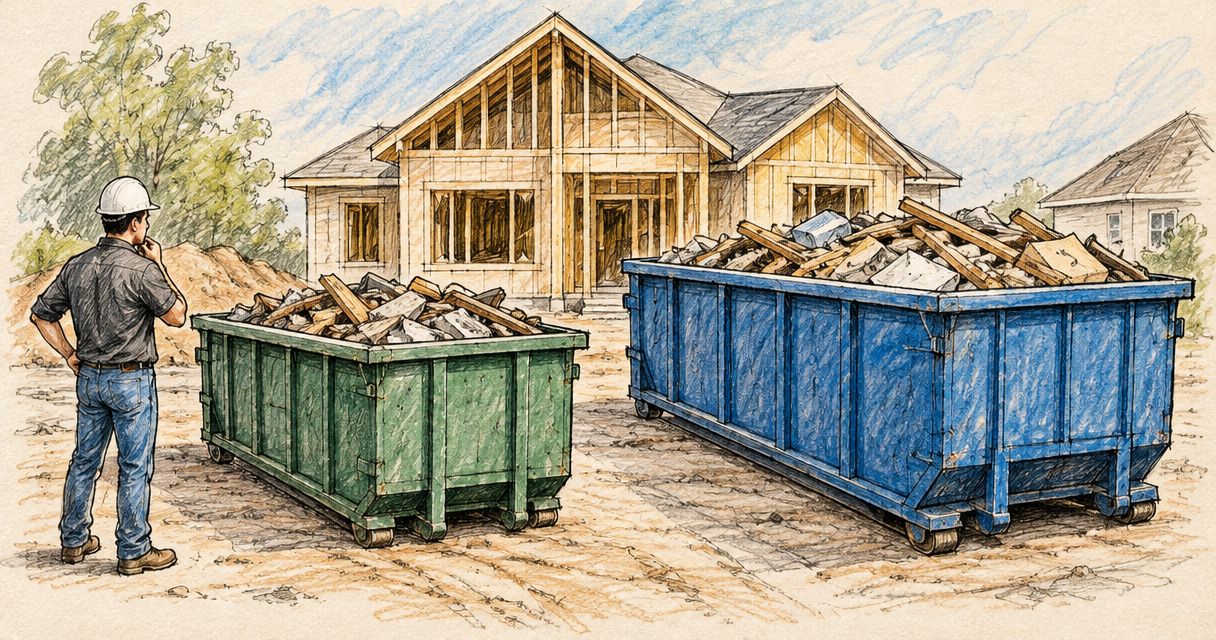
Neither a 30-yard nor a 40-yard roll-off container is automatically cheaper for a home build. The lower total depends on the debris, allowed weight, rental duration, and container exchanges your job requires. Compare the full removal plan, not just the container size, because extra capacity does not resolve a weight limit or a blocked pickup route.
- Compare 30-yard versus 40-yard roll-off container cost for a home build by material, weight, duration, and exchanges.
- A 40-yard container provides 10 cubic yards more nominal volume, not an automatic increase in allowed weight.
- Choose 30 yards when the phase fits its capacity; consider 40 yards when bulky debris needs more room.
- Valley Services owns its San Jose C&D transfer station, keeping the disposal endpoint under the same operator.
Is a 30-yard or 40-yard roll-off container cheaper for a home build?
Neither size wins without a matched scope. For your 2026 home build, compare both sizes using the same materials, placement, rental dates, and pickup expectations. Otherwise, you are comparing different jobs.
A 30-cubic-yard container and a 40-cubic-yard container describe nominal volume. The difference is 10 cubic yards. That extra room matters when debris occupies space before it reaches the permitted load weight; it does not establish what either container can legally carry.
Start with the phase you need to serve. The guide to 30-yard roll-off containers for new home construction provides a related starting point for that decision.
| Decision point | 30-yard roll-off container | 40-yard roll-off container |
|---|---|---|
| Nominal volume | 30 cubic yards | 40 cubic yards |
| Suitable use | A phase whose approved debris fits within its volume and weight limits | A phase needing additional room for approved bulky debris |
| Practical advantage | Matches a smaller volume requirement without choosing extra capacity | Provides 10 cubic yards more nominal volume |
| Main limitation | Less room before a volume-driven exchange is needed | More room does not establish a higher allowable weight |
| Access check | Confirm actual dimensions and truck working space | Confirm actual dimensions and truck working space |
| Decision rule | Choose when the planned phase fits and pickup access works | Choose when the added volume serves the phase and pickup access works |
Do not assume the larger unit eliminates an exchange. That depends on how much approved debris the phase produces and how you load it. Equally, do not assume the smaller unit requires more exchanges simply because it has less capacity.
Why this matters on a Bay Area home build
Your container competes for working space with deliveries, equipment, temporary fencing, and crew access. A container that fits on the property still needs a workable delivery and retrieval route. Those are separate checks.
For a San Jose or South Bay build in 2026, review the placement against the construction schedule before selecting capacity. A location that works during framing can conflict with a later material delivery or driveway installation. Keep the removal route in the plan until the final pickup.
Valley Services provides roll-off container rental and owns its C&D transfer station in San Jose. Valley Services suits Bay Area builders who want roll-off container rental and the disposal endpoint handled by the same operator. That arrangement does not replace material approval, access checks, or an agreed pickup schedule.
When does a 30-yard roll-off container fit the build?
A 30-yard roll-off container fits a phase when the approved debris stays within both its volume and weight limits. Use the phase scope to make that call. The home's floor area alone does not describe the debris mix or the timing of removal.
For framing, list the offcuts and packaging you expect to discard. For interior work, identify the materials each trade will generate. Ask the rental operator to review that list rather than treating every construction load as interchangeable.
The advantage of choosing 30 cubic yards is a closer match when the work does not need additional nominal capacity. The limitation is straightforward: less volume leaves less room for unexpected bulky debris. That matters if several trades finish work before the next planned pickup.
Choose a 30-yard container when the phase fits its confirmed limits and the exchange plan supports the schedule. Do not select it solely because the job is residential. A home build can include several distinct removal phases.
When does a 40-yard roll-off container fit the build?
A 40-yard roll-off container fits when you need additional volume for approved materials and the site can support delivery and pickup. Its nominal capacity is 40 cubic yards. Compared with 30 cubic yards, it adds 10 cubic yards of room.
That additional volume is relevant to bulky loads. Packaging and irregular offcuts occupy space differently from dense demolition debris. Keep volume and weight separate when discussing either material with the operator.
The advantage is extra room within the same planned loading phase. The limitation is that unused room provides no operational benefit, and additional volume is not permission to exceed the container's loading instructions. Confirm the actual unit dimensions rather than assuming all containers with the same nominal capacity share a footprint.
Choose a 40-yard container when the additional volume has a defined use and the loading plan remains within confirmed limits. Do not choose it as a substitute for estimating debris or arranging timely removal.
Why the total cost varies between container sizes
The container label is only part of the job. Use these factors to compare a 2026 removal plan without confusing capacity with the full service scope:
- Debris type. Identify the materials before ordering. Confirm acceptance and loading instructions for the actual mix.
- Allowed weight. Request the applicable limit for each proposed container and material. Do not infer it from nominal cubic yards.
- Rental duration. Match delivery and removal to the active work phase. Confirm what happens if construction dates change.
- Container exchanges. Identify when a full unit must leave and whether a replacement is needed. Compare both sizes against the same phase schedule.
- Site access. Confirm the placement surface, truck approach, overhead obstructions, and retrieval route. Report restrictions before dispatch.
- Loading condition. Follow the operator's fill instructions. Protruding material and inaccessible containers require attention before pickup.
Ask for these terms together. A comparison that describes duration for one size but leaves it open for the other does not answer which removal plan fits your build.
How do you compare the two sizes before ordering?
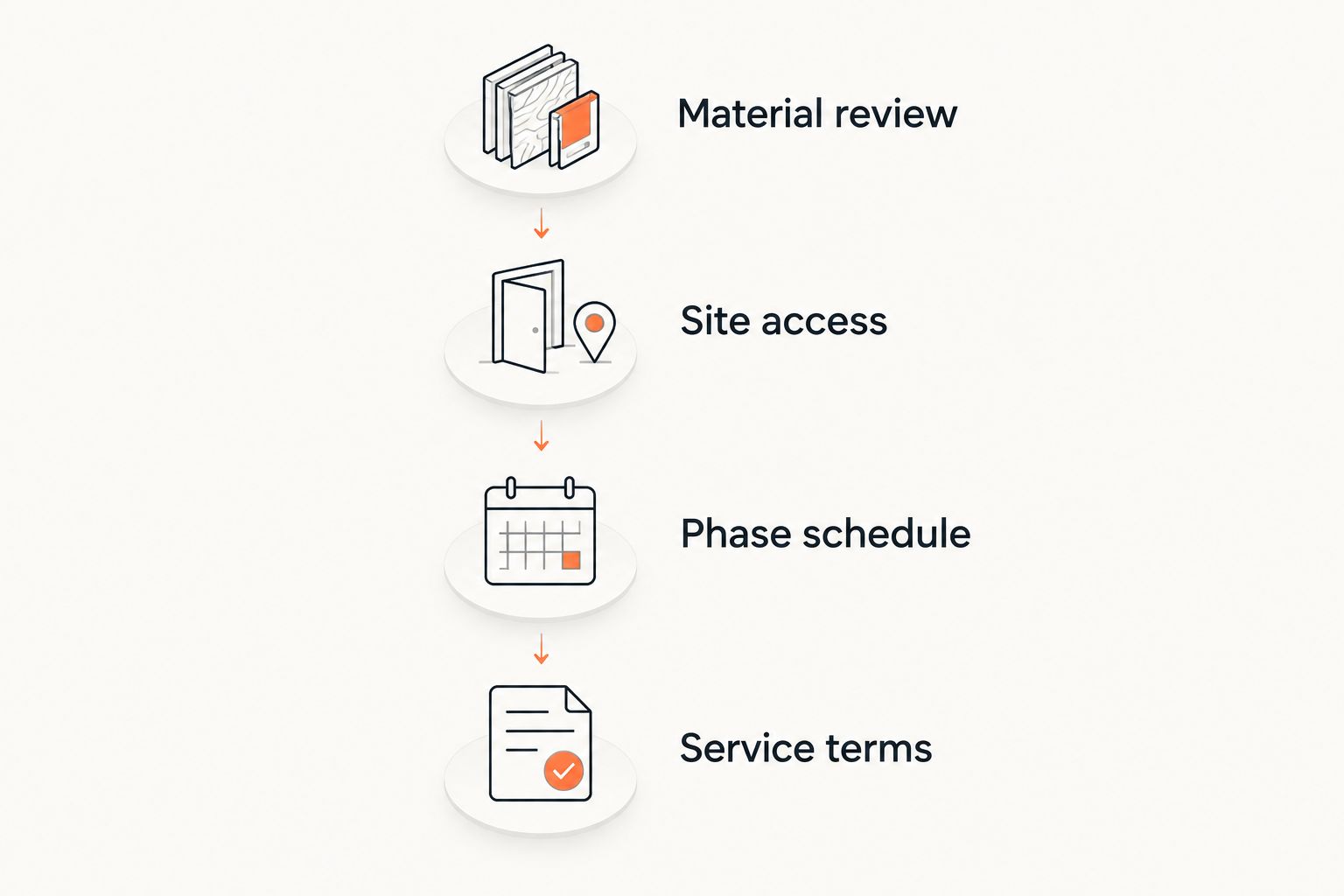
Use the same sequence for either container. It turns a broad sizing question into an order the dispatcher can review against the job.
- Material review. List what will enter the container during the next phase. Flag concrete, masonry, soil, coatings, liquids, and unfamiliar materials for specific acceptance instructions.
- Site access. Describe the approach and proposed placement. Share photos when useful, and confirm the truck's working space with the operator.
- Phase schedule. Identify the work generating debris, the loading period, and the point when removal must happen. Include deliveries that share the access route.
- Service terms. Confirm capacity, allowed weight, accepted materials, rental duration, and pickup arrangements for both sizes. Record the agreed scope with the order.
Keep these checks in that order. Extra nominal volume cannot correct a material restriction, and an accepted load still needs a reachable pickup location.
For a 2026 order, name the person responsible for approving schedule changes. Keep that contact available through pickup, not just delivery. A clear point of contact prevents conflicting instructions about where the container goes or when it leaves.
Can a 40-yard container replace multiple 30-yard containers?
A 40-yard container adds 10 cubic yards of nominal volume over a 30-yard container. Whether it replaces an exchange depends on the approved debris volume, allowed weight, and timing of the work. Capacity alone does not answer the question.
Consider when the debris arrives. Material generated across separate phases does not necessarily belong in one long rental period, even when the total volume appears to fit. Compare a phase-based removal plan with a continuous placement plan using the same project dates.
Ask the operator to explain the proposed exchange sequence. The answer should connect the material list and construction schedule to each pickup, rather than promise fewer trips from size alone.
Can you fill a 40-yard container with concrete?
A 40-cubic-yard volume rating does not authorize a full load of concrete. Concrete is dense, so approved material and loading limits need a separate review. Confirm the appropriate container and loading instructions before concrete enters it.
This applies to foundation work, slab removal, and other heavy debris generated during a home build. Do not combine those materials with general construction debris unless the operator has approved the load.
Treat heavy-material removal as its own planning question. Choosing more nominal volume does not settle transport weight, acceptance, or safe loading.
Should you use the same container size through every building phase?
Neither 30 cubic yards nor 40 cubic yards is automatically the right capacity for every phase. Foundation work, framing, interior work, and final cleanup generate different materials on different schedules. Review the next phase before repeating the previous order.
During framing, watch bulky offcuts and packaging. During interior work, confirm the expected material mix and the loading limits. Before final cleanup, decide whether the remaining approved debris justifies the same capacity.
For your 2026 build schedule, put container review alongside trade handoffs. That gives the site lead a decision point before the next crew starts generating debris. It also avoids carrying a sizing assumption through the entire project.
What loading mistakes affect the removal plan?
Keep the load within the operator's instructions and preserve pickup access. A container that appears partly empty still needs a weight check when it contains dense material. A container filled with bulky debris still needs a clear, compliant load profile.
Give the crew a designated loading area and explain which materials have been approved. Do not leave acceptance decisions to whoever reaches the container first. Keep unidentified materials out until the operator provides instructions.
Review safe roll-off container loading before loading starts. Use that briefing to assign responsibility for checking the load and keeping the approach clear.
Before pickup, inspect the container and route together. Move parked vehicles, stored materials, and other obstructions from the agreed access area. Do not wait for the driver to arrive to discover that the retrieval path has changed.
FAQ
Is a 30-yard roll-off container always cheaper than a 40-yard container?
A 30-yard roll-off container is not automatically cheaper for the complete home-build removal plan. Compare the same materials, allowed weight, rental duration, access conditions, and exchange schedule for both sizes.
How much more room does a 40-yard container have?
A 40-yard container has 10 cubic yards more nominal volume than a 30-yard container. That additional volume does not establish the allowed load weight or actual exterior dimensions.
Which container size should I choose for framing debris?
Choose the container whose confirmed volume and weight limits fit the approved framing debris for that phase. Consider a 40-yard container when bulky offcuts and packaging need the additional room, and confirm the access plan before ordering.
Can I put concrete in a large roll-off container?
Confirm concrete acceptance and specific loading instructions before putting it in a roll-off container. Nominal volume is not permission to fill a large container with dense material.
Will a larger container mean fewer pickups?
A larger container does not automatically mean fewer pickups. The outcome depends on approved debris volume, allowed weight, and whether removal is needed between construction phases.
Do I need a permit to place a container at my home build?
Confirm placement requirements with the jurisdiction responsible for the location before delivery. Describe whether the proposed placement affects private property, a sidewalk, or the public right-of-way, and coordinate the location with the rental operator.
Can Valley Services handle both container rental and C&D disposal?
Valley Services provides roll-off container rental and owns and operates its C&D transfer station in San Jose. Confirm material acceptance and the service schedule for your specific home build.
One last thing
Check the pickup route against the finished site, not just the delivery-day layout. Fencing, stored materials, and later construction work can change the available access. Mark the retrieval route in the site plan and keep it clear until the container leaves.
Choose capacity for the debris, then protect the route needed to remove it. Both decisions belong in the same order.
Related guides
- How to schedule roll-off container delivery and pickup
- How to prepare a driveway for a roll-off container
- How to plan site services for a multi-phase construction project
Call (408) 297-5404 to talk through your home build's materials, access, and removal schedule.