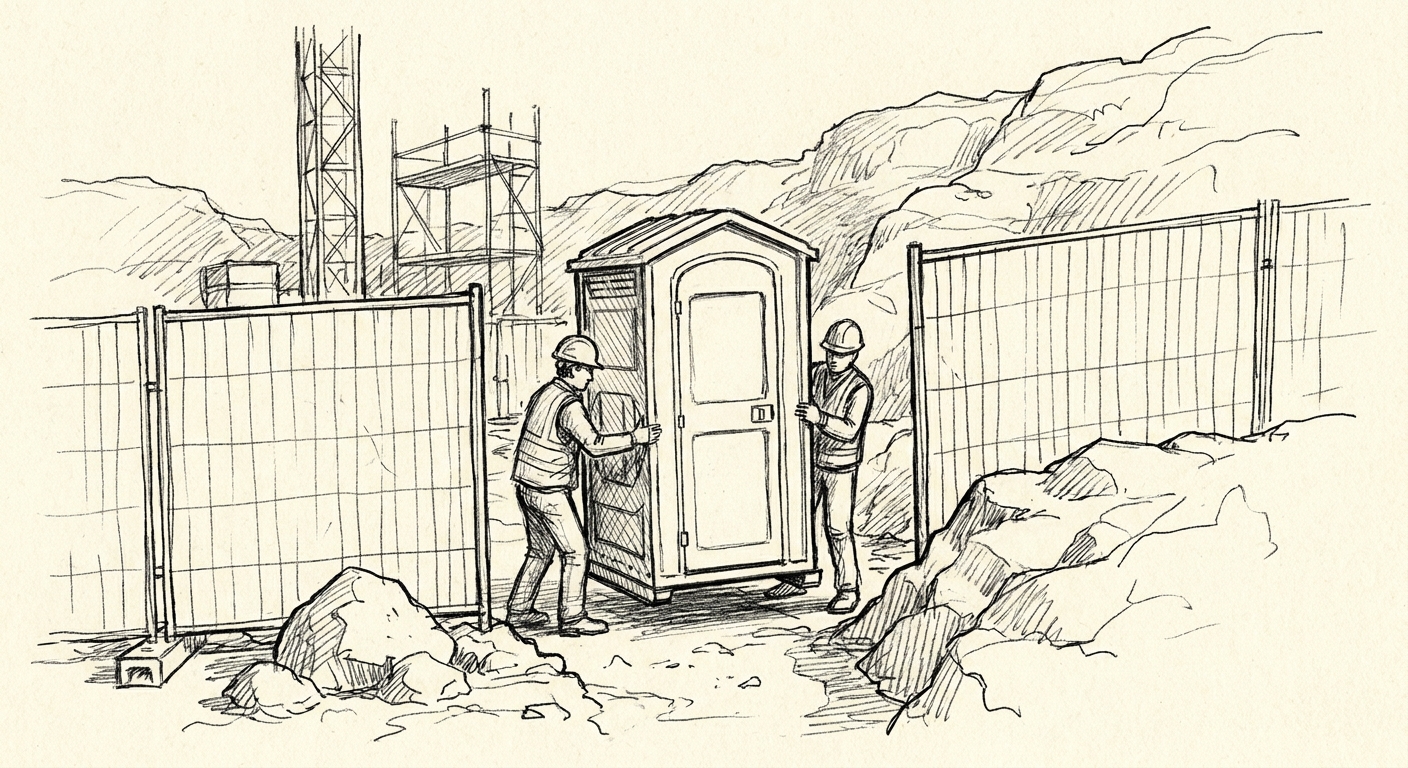
Job sites with a single narrow driveway, a fenced perimeter with no rear approach, or a schedule that moves through three or four phases change the math on portable restroom placement. Get the unit type wrong and you're either paying for extra service trips or blocking your own egress route.
- Standard portable restrooms work fine when a pump truck has a clear approach and turnaround; anything tighter calls for a holding tank unit instead. Standard unit: Buy for open lots.
- Holding tank rentals stretch service intervals when the pump truck can't reach the unit every week, which is the real fix for limited access sites in 2026. Holding tank: Buy for landlocked footprints.
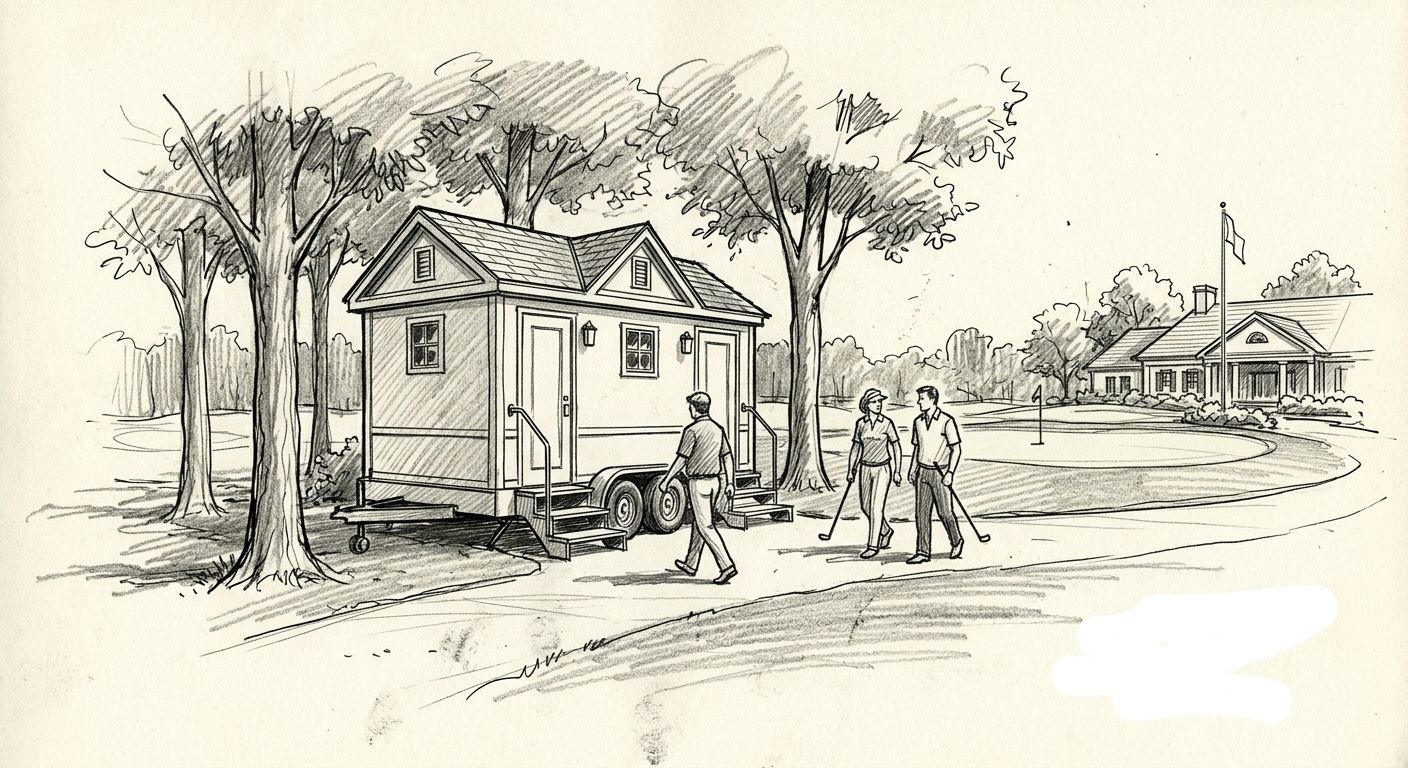
- Luxury restroom trailers need a level hardstand and a water hookup, so they're a poor fit on tight urban infill lots. Luxury trailer: Skip on constrained sites.
- Multi-phase jobs need a written relocation plan for the restroom pad before the fence line moves, not after.
Why this matters
A portable restroom rental for a limited access site isn't a smaller version of a normal rental. It's a different placement problem. Every unit still needs periodic pump-out, and if the service truck can't get within reach of the tank valve, the unit becomes dead weight on your site plan by week two.
Valley Services has run site services out of the same San Jose yard since 1986, and access constraints show up on nearly every downtown, hillside, or phased-construction job. Planning the restroom footprint before delivery avoids a mid-job relocation, which is the single most common delay on tight lots. Getting the portable toilet rental budget right up front also keeps service frequency from becoming a surprise line item later in the job.
Who this is for
This guide is for general contractors and subcontractors working urban infill lots, remodels behind existing structures, hillside builds with a single switchback driveway, and any multi-phase project where the fence line and access road shift as work progresses. Property managers handling occupied-building renovations with restricted loading zones fit here too. If your site has open frontage and a paved lot, standard placement rules apply and access isn't your constraint.
What to look for in portable restroom rental for limited access sites
Pump truck turning radius and drop zone
A service truck needs enough clearance to park within hose reach of the tank valve and to turn around without backing across active work. Measure the actual approach, not the site plan. A unit placed 40 feet past a blind corner with no turnaround costs you a special-handling visit every single service cycle.
Holding tank capacity versus service interval
Limited access usually means fewer service visits, not more. A larger holding tank compensates for a longer interval between pump-outs. If the crew size or duration doesn't match the tank capacity, you'll see overflow complaints before the next scheduled visit.
Level, stable footing on grade
Units set on unlevel or soft ground shift, and a shifted unit can crack a tank fitting or tip on a slope. Hillside and unpaved-lot jobs need a compacted pad or plywood base before the unit lands, not after the first rain.
Egress and Cal/OSHA sightline compliance
The restroom placement can't block a secondary exit or a fire lane, and it needs to sit where crews can actually reach it without crossing active excavation or material staging. Cal/OSHA sanitation requirements assume the unit is reachable, not just present on site.
Phased relocation planning
A site that changes shape over four construction phases needs a restroom pad location for each phase, agreed on before the first fence panel goes up. Moving a unit mid-phase because it landed in next month's excavation zone is an avoidable delay.
Top picks for limited access sites
Standard portable restroom. The workhorse unit for any site with a driveway or lot frontage a pump truck can reach directly. Works for crews up to roughly a dozen workers on a standard weekly service cycle. Buy for open or semi-open lots.
Holding tank rental. The fix when the service truck can't get to the unit every week. A holding tank rental extends the interval between required pump-outs, which matters most on landlocked infill lots or hillside sites with a single access point. Buy for landlocked or long-interval jobs.
ADA-compliant unit. Wider footprint, needed on any site with public-facing work or where accessibility is a permit condition. The larger footprint means it needs more clearance than a standard unit, so confirm the pad size before committing it to a tight corner. Consider when the permit requires it.
Deluxe flush unit. Better for client-facing or executive-visit situations than for crew use on a constrained site. It carries the same access requirements as a standard unit but adds servicing complexity. Skip unless the job specifically calls for it.
Luxury restroom trailer. Needs a level hardstand, generator or power hookup, and water service. That combination rarely fits a tight urban lot or a site still under active grading. Skip on constrained footprints; reserve it for sites with real hardstand space.
“If the pump truck can't turn around, the tank runs the job, not the calendar.”
What to avoid
- Placing a unit behind a blind corner with no turnaround. It looks fine on the site plan and costs you a special trip charge every service cycle.
- Skipping the pad on sloped or soft ground. A unit that shifts even a few inches can crack a fitting, and that's a mid-job service call you didn't plan for.
- Assuming a luxury trailer solves an access problem. It doesn't. It adds a power and water requirement on top of the same physical access constraint the standard unit already had.
One more point worth planning around: if your site is running containers, fencing, and restrooms at the same time, a multi-phase site services plan keeps the restroom pad location, the fence line, and the container drop zone from fighting each other as the job moves.
Talk through your site access before delivery
Valley Services plans restroom, fencing, and container placement around your actual access, not the site plan.
Verdict comparison table
| Unit type | Footprint | Pump truck access needed | Best for | Verdict |
|---|---|---|---|---|
| Standard portable restroom | Small | Direct, weekly | Open lots, standard crews | Buy |
| Holding tank rental | Small to medium | Periodic, extended interval | Landlocked or hillside sites | Buy |
| ADA-compliant unit | Medium | Direct, weekly | Permit-required public sites | Consider |
| Deluxe flush unit | Small to medium | Direct, weekly | Client-facing sites | Consider |
| Luxury restroom trailer | Large | Direct plus utility hookup | Sites with hardstand and power | Skip on tight lots |
FAQ
What's the best portable restroom rental for a limited access construction site?
A holding tank rental is usually the best fit because it extends the interval between required pump-outs when a service truck can't reach the site every week. Standard units work fine if the lot has direct pump truck access.
Is a holding tank rental better than a standard portable restroom on a tight lot?
Yes, when the service truck can't reach the unit weekly. A holding tank rental carries more capacity between pump-outs, which matters most on landlocked or single-access sites.
How much clearance does a pump truck need to service a portable restroom?
The truck needs enough room to park within hose reach of the tank valve and turn around without crossing active work. Measure the actual site approach before delivery, not the drawn site plan.
Can a luxury restroom trailer work on a site with limited access?
Rarely. Luxury trailers need a level hardstand plus a power and water hookup, which most tight urban or hillside lots can't provide alongside restricted access.
How do I plan restroom placement for a multi-phase construction project?
Set a pad location for each construction phase before the first fence panel goes up. Moving a unit mid-phase because it landed in the next excavation zone causes avoidable delays.
What Cal/OSHA requirements apply to portable restroom placement on job sites?
Cal/OSHA sanitation rules assume workers can actually reach the unit without crossing active excavation or blocking an exit route. Placement has to account for reachability, not just presence on site.
Do ADA-compliant portable restrooms need more clearance than standard units?
Yes. ADA units have a larger footprint, so they need a wider pad and more clearance for the service truck than a standard unit on the same lot.
How often does a portable restroom need pump-out service on a limited access site?
It depends on crew size and tank capacity, but limited access sites should match a larger holding tank to a longer service interval rather than trying to force weekly visits onto a hard-to-reach unit.
One last thing
Access problems rarely show up on delivery day. They show up on the third or fourth service visit, when the truck that made it in once can't make it in again because material staging shifted or a second fence line went up. Walk the actual service route before the unit lands in 2026, not just the delivery route.
Valley Services has planned restroom, container, and fencing placement around constrained Bay Area sites since 1986, including work supporting Super Bowl LX and the San Jose Marathon. Call (408) 297-5404 or visit valleyservices.biz to talk through the access on your job before delivery.