When a disaster response stands up a staging area, restrooms have to show up before the second shift arrives, not after the first complaint. Portable toilet rental for disaster relief in 2026 comes down to three things: deployment speed, servicing frequency, and units that hold up through an incident that might run for weeks instead of days.
- Portable toilet rental for disaster relief works best with standard units paired to holding tanks, not sewer hookups. Buy that combination first.
- ADA-compliant portable toilet rental for construction sites doubles as the compliance answer for shelters and staging areas. Put at least one on every site.
- Skip luxury restroom trailers for the first response window. Hold them for extended recovery phases once power and water are confirmed.
- Hand wash station rental isn't optional when running water is down. Pair one station with every four restrooms.
- Valley Services stages containers, restrooms, and fencing from one San Jose yard. One call covers the whole site.
Why this matters
A disaster staging area isn't a normal job site. Crews rotate through in shifts that run longer than eight hours, water and sewer service in the area may be down entirely, and command staff answer to state and federal auditors who check restroom ratios against headcount. Get the sanitation plan wrong and the whole operation slows down, not just the crew using the units.
Valley Services has run site services out of the same San Jose yard since 1986. Containers, restrooms, and fencing come from one contact, which matters when a staging area needs all three set up in the same 48 hours.
Who this is for
This guide is for emergency management staff, municipal incident command, relief organizations, and general contractors standing up debris removal or rebuild work after a declared disaster in the Bay Area. It's also for facilities teams converting a warehouse or parking lot into a staging area on short notice. If you're planning restrooms for a wedding or a concert, the calculation is different: see the guide on how to calculate portable toilets needed for an event instead.
What to look for in portable toilet rental for disaster relief
Holding tank capacity and service interval
Disaster zones often lose sewer access entirely, which means every restroom on site runs on a holding tank until infrastructure is repaired. Confirm the service interval up front, not after the tanks fill during a weekend when access roads are still blocked.
Deployment speed
A staging area that opens Monday morning needs restrooms in place Sunday night. Ask any vendor how fast they can place units after an order, and get a specific answer, not a general one.
Cal/OSHA and ADA compliance
Cal/OSHA's field sanitation standard calls for roughly one restroom per 20 workers per shift on active work sites, and that ratio gets checked during incident audits. ADA-compliant units are typically required regardless of total headcount, so plan for at least one on every staging site from day one.
Hand wash access when water is down
A restroom without a hand wash station next to it is a health citation waiting to happen, especially when the surrounding water system is compromised. Pair stations directly with restroom clusters instead of centralizing them at one end of the site.
Weather and ground stability
Wildfire debris fields, flood zones, and earthquake-damaged lots rarely offer flat, stable ground. Units need placement that accounts for ash, mud, or uneven terrain, and that placement decision affects servicing access for the whole rental period.
One contact for multiple site services
A disaster staging area usually needs restrooms, roll-off containers for debris, and temporary fencing for site control at the same time. Coordinating three separate vendors on a compressed timeline adds risk that a single call avoids.
“A restroom without a hand wash station next to it is a health citation waiting to happen, especially when the water system around it is compromised.”
Top picks for disaster relief restroom setups
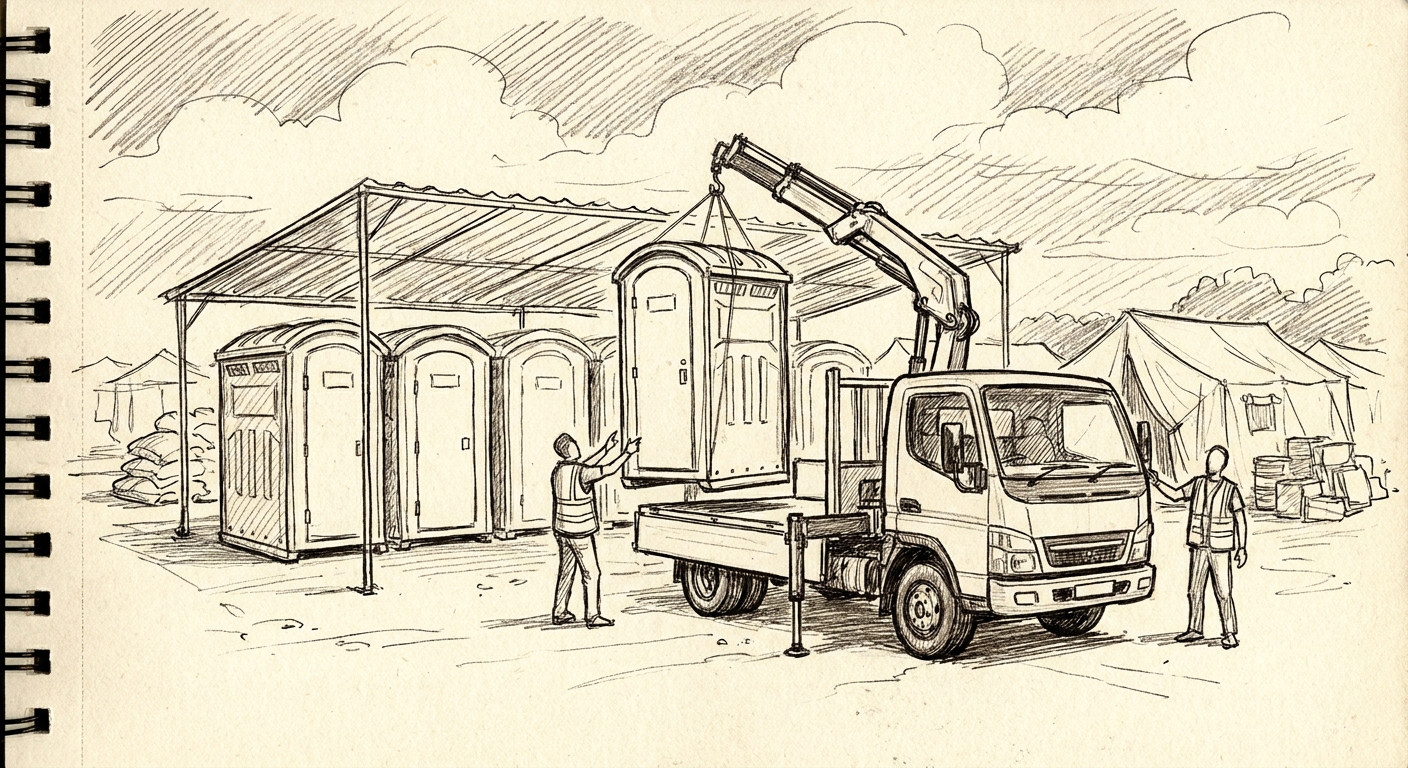
Standard restroom units on holding tanks, the workhorse pick. These run independent of sewer connections, which matters when the surrounding infrastructure is the reason there's a disaster response in the first place. Size the count against the Cal/OSHA ratio of roughly one unit per 20 workers per shift, then add a margin for rotation. Verdict: Buy.
ADA-compliant portable toilet rental, the compliance pick. At least one accessible unit belongs on every staging site regardless of total headcount, and skipping this step is the fastest way to fail an incident audit. See the ADA-compliant restroom units guide for placement specs. Verdict: Buy.
Holding tank restrooms for job sites, the extended-duration pick. When an incident runs past the first week, servicing frequency and tank capacity matter more than unit count. Confirm the holding tank rental for job site restrooms schedule before crews double up on shifts. Verdict: Buy.
Hand wash stations, the add-on that isn't optional. Pair one station with every four restrooms, especially on sites where the municipal water system is down or unconfirmed. Check the hand wash station rental specs for placement near restroom clusters. Verdict: Buy.
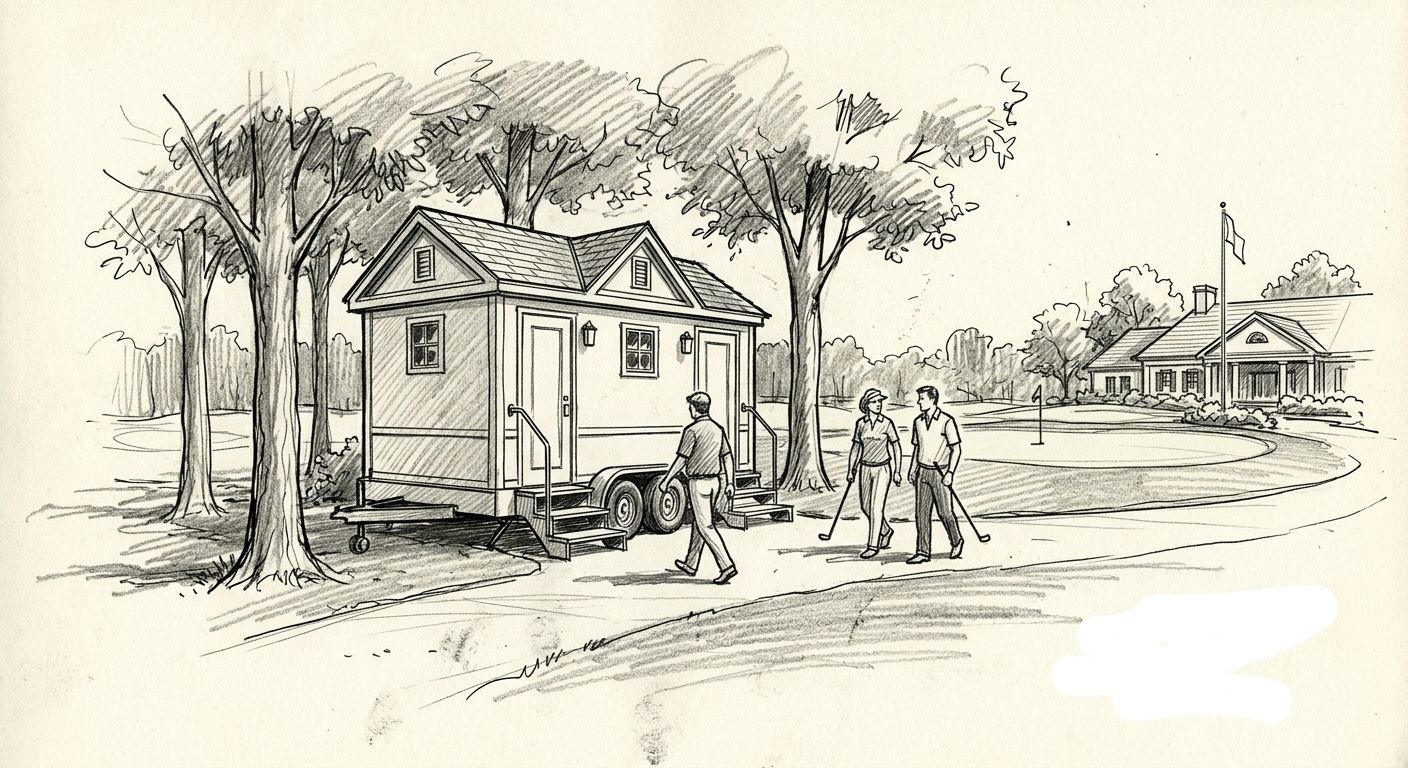
Luxury restroom trailers, the wildcard. These need stable power and a confirmed water source, both of which are unreliable in the first 72 hours of an incident. Once power and water are verified, they're a reasonable upgrade for a recovery phase that runs 30 days or more. Verdict: Consider, only after the first response window closes.
What to avoid
- Sewer-dependent units in a damaged infrastructure zone. If the disaster took out sewer lines, don't order restrooms built to connect to them. Holding tank units are the only reliable option until repairs are confirmed.
- Separate vendors for restrooms, containers, and fencing. Coordinating three schedules across a 48-hour setup window adds failure points a single site services contact avoids.
- Skipping ADA units to save on unit count. Federal and state disaster response sites get audited, and a missing accessible unit is one of the fastest findings in that audit.
Verdict comparison
| Unit type | Deployment speed | Servicing need | Compliance fit | Verdict |
|---|---|---|---|---|
| Standard unit + holding tank | Fast, no sewer needed | Regular tank service | Meets Cal/OSHA ratio | Buy |
| ADA-compliant unit | Fast | Standard service | Required on-site | Buy |
| Hand wash station | Fast | Refill service | Health code fit | Buy |
| Luxury restroom trailer | Slower, needs power/water | Higher-touch service | Best for extended recovery | Consider |
Coordinate restrooms, containers, and fencing
One call sets up the full staging area from the San Jose yard.
FAQ
What's the best portable toilet rental for disaster relief operations in 2026?
Standard restroom units paired with holding tanks are the safest first choice for disaster relief in 2026, since they don't depend on sewer service. Add ADA-compliant units and hand wash stations to round out the setup.
How many portable restrooms does a disaster relief site need?
Size the count against roughly one restroom per 20 workers per shift, the same ratio Cal/OSHA applies to construction sites. Add units for shift overlap and rotation during multi-day incidents.
Is ADA-compliant portable toilet rental required for emergency sites?
Yes, at least one ADA-compliant unit typically belongs on every staging site regardless of total headcount. This gets checked during incident audits, so it's not a step to skip.
How fast can portable restrooms deploy after a disaster declaration?
Deployment speed depends on the vendor's yard proximity and existing inventory. A same-region provider with its own equipment can typically place units faster than one brokering from a third party.
Do disaster relief sites need hand wash stations separate from restrooms?
Yes, hand wash stations should be placed directly next to restroom clusters, especially when the surrounding water system is compromised. One station per four restrooms is a workable ratio.
Can portable restrooms run without a sewer connection?
Yes, units paired with holding tanks run independent of sewer service and are the standard choice when infrastructure is down. Servicing frequency depends on tank capacity and crew size.
How much does portable toilet rental cost for disaster relief?
Costs vary by unit count, service frequency, and rental duration. Call for a quote based on the specific site and incident timeline.
What's the difference between a holding tank restroom and a restroom trailer for relief work?
Holding tank restrooms run independent of power and water, making them the first-response option. Restroom trailers need confirmed power and water access, which makes them better suited to extended recovery phases.
One last thing
Most vendors broker restroom servicing to a third party once tanks fill, which adds a scheduling layer during exactly the window when schedules can't slip. Valley Services runs its own transfer station in San Jose and controls the schedule for containers, restrooms, and fencing from the same yard, so a disaster staging area gets one point of contact instead of three.
Call (408) 297-5404 or reach out through valleyservices.biz to talk through the setup for your site.