Summer camp organizers in the Bay Area need portable restroom counts that match camper headcount, session length, and site access, not a generic event formula. A day camp running 9 to 4 on a school field has different needs than a two-week overnight camp in the hills above Los Gatos. Get the ratio wrong and you either overpay for units nobody uses or run a health department violation by week two.
- Portable toilet rental for summer camps in 2026 starts at one unit per 40 campers and staff for full-day sessions, more for overnight camps.
- ADA-compliant units are required whenever a camp enrolls a camper or staff member who needs one, not just for large public events.
- Hand wash stations near meal service are a common county health department requirement that camps miss during first-year planning.
- Valley Services delivers restrooms, hand wash stations, and dumpsters for the same camp site from one San Jose yard.
Why portable restroom planning matters for summer camps
Camps run on fixed schedules with fixed budgets, and a bathroom shortage during week one of an eight-week season is not a problem you fix quietly. Kids and counselors use restrooms in bursts, right after activity transitions and right before meals, so unit count matters more than it does at a single-day event with steady foot traffic spread across ten hours.
County health departments treat day camps and overnight camps as temporary facilities and inspect them the same way they inspect fairs and festivals. Santa Clara County and most Bay Area counties expect a documented restroom-to-camper ratio, accessible units where enrollment requires it, and hand washing within reach of any food service area. Camps that skip this planning step during permitting find out during an unannounced inspection, which is the wrong time to learn it.
Count campers, staff, and session length before you call anyone
Start with three numbers: total campers per session, total staff and counselors on site, and hours per day the camp runs. A common industry planning ratio for full-day outdoor programs is one restroom per 40 people. Overnight camps push that ratio tighter because restroom use spreads across a 24-hour clock instead of an 8-hour day.
- Full-day camp, 9 to 4, no overnight stay: plan on the 1-per-40 ratio as a baseline
- Overnight or resident camp: add units for nighttime use and reduce the per-camper ratio
- Multi-week sessions: confirm servicing frequency covers the full run, not just week one
- Special-needs or inclusion programs: identify ADA requirements before the session starts, not after enrollment closes
If you want a fast way to run these numbers against your actual headcount, calculating how many portable toilets you need for an event walks through the same math camps use, adjusted for hours and group size.
Choose unit types that match camp activity, not just camp size
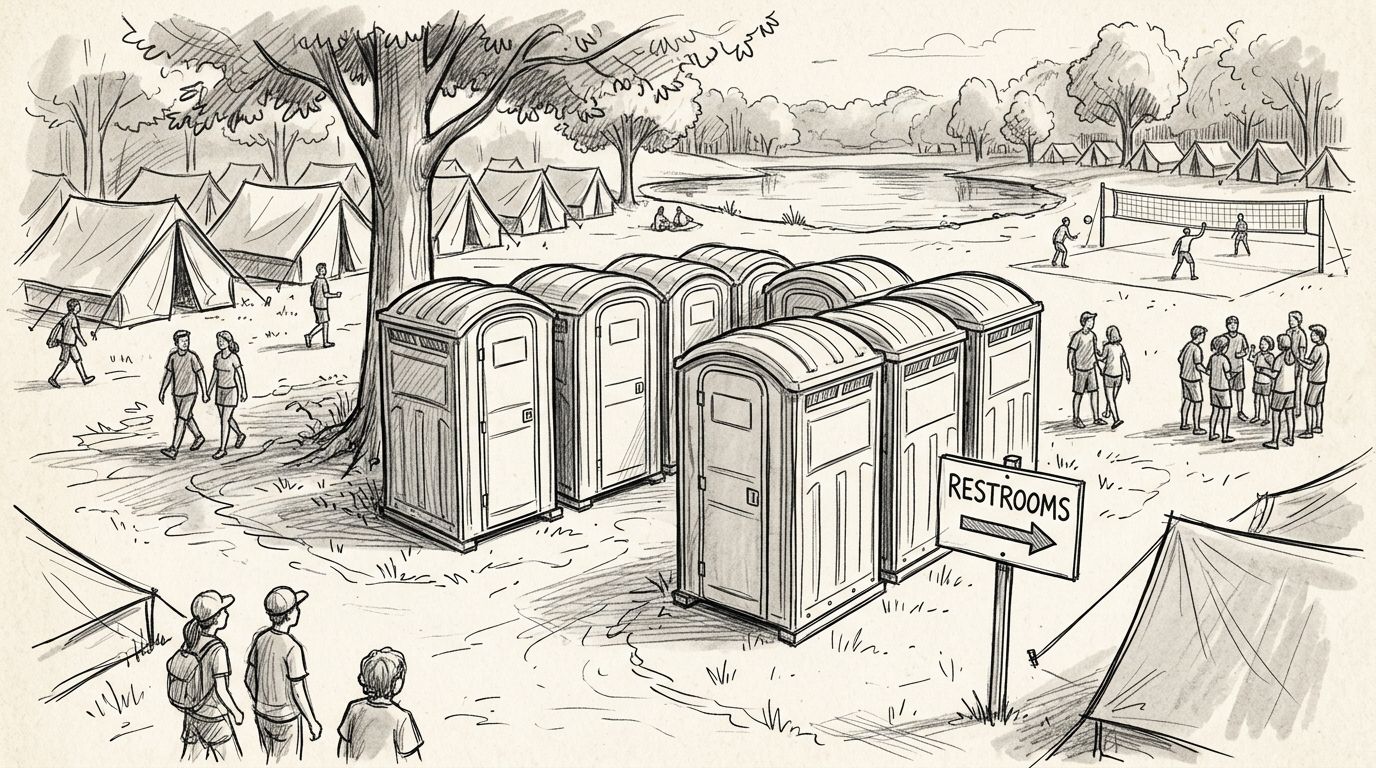
A camp with a swim program, an arts and crafts building, and a sports field has three different traffic patterns in one property. Matching unit type to zone activity keeps lines short and keeps restrooms closer to where kids actually are.
- Standard units for general camper traffic across activity zones
- ADA-compliant units wherever enrollment or staffing requires accessible access
- Hand wash stations positioned near meal service, art activities, and after swim areas
- Higher-frequency service units near the dining hall or snack area
- Units placed away from direct sun exposure where the site allows it
Map placement across every camp zone before delivery day
Camps are rarely one flat lot. Cabins, a mess hall, a pool, a sports field, and a parking area for drop-off all pull campers in different directions throughout the day. Placement planning matters as much as unit count.
- Group units near cabin clusters for overnight camps, not just near the main office
- Keep at least one unit within a short walk of the pool or water activity area
- Place hand wash stations at every meal and snack service point 2026 county guidance in most Bay Area jurisdictions expects hand washing access within 100 feet of food service, a detail first-year camp directors frequently miss during initial site layout.
Set a servicing schedule that matches session length
A one-day event and an eight-week camp season need different service plans. Servicing frequency should track camper volume and session length, not a flat weekly default.
- High-enrollment day camps: twice-weekly service minimum during full sessions
- Overnight camps: service frequency increases with nighttime and shower facility use
- End-of-session pickup should align with the camp's actual last day, not an estimated one
- Mid-summer schedule changes (enrollment surges, weather events) should trigger a service call, not wait for the next routine stop
For camps running restrooms for six weeks or longer, monthly portable toilet service for long-term job sites covers the same planning logic camps use for a full season.
Confirm ADA and health department requirements early
ADA compliance is not optional once a camp enrolls a camper or hires staff who require accessible facilities, and it applies regardless of camp size. Health department sanitation requirements sit on top of that and vary by county.
- Confirm at least one ADA-compliant unit per camp zone where enrollment requires it
- Document restroom-to-camper ratios for health department permitting before the season starts
- Keep hand wash stations stocked and serviced on the same schedule as restrooms
- Verify placement meets setback requirements from food prep and dining areas
ADA-compliant portable toilet options for job sites covers unit specs and placement rules that apply directly to camp programs with inclusion enrollment.
Add hand wash stations at every meal and activity transition point
Camps generate more hand washing demand per capita than most job sites because kids move between dirt, water, and food multiple times a day. Standalone hand wash stations at these transition points cut line pressure on restroom units and meet health code expectations.
- Position stations at camp entry, before meal service, and after swim or water activities
- Service frequency should match camper volume, not a flat weekly default
- Stock levels (soap, towels) need daily checks during peak enrollment weeks
Camps planning both restrooms and hand washing for the first time can use hand wash station planning for outdoor gatherings as a working reference, since the county requirements overlap closely with farmers market and outdoor event rules.
Schedule delivery before day one and pickup after the last session
Delivery timing matters more for camps than for most rental customers because a camp's opening day is fixed and public. Units need to be in place, tested, and stocked before the first camper arrives, not delivered the morning of.
- Confirm delivery at least one full day before camp opens
- Build in a buffer day for placement adjustments after walking the site
- Schedule pickup for the day after the final session, not the same day
- Flag any access restrictions (locked gates, narrow roads to remote camp sites) before delivery week
Comparison: restroom options for summer camp programs
| Option | Best for | Key limitation |
|---|---|---|
| Standard portable unit | General camper traffic across activity zones | No hand washing built in, needs a paired station |
| ADA-compliant unit | Camps with inclusion enrollment or accessible staffing needs | Larger footprint, needs level, accessible ground |
| Standalone hand wash station | Meal service and activity transition points | Not a restroom substitute, needs restroom units nearby |
| Restroom trailer | Longer overnight sessions, staff and counselor use | Needs a level pad and power hookup at most sites |
Common mistakes summer camps make
- Sizing for average attendance instead of peak attendance. Camps with rotating enrollment or visitor days need units sized to the busiest day, not the typical one.
- Forgetting hand wash stations until after health department review. Restroom counts alone do not satisfy most county sanitation checklists.
- Placing all units near the main office instead of near cabins and activity zones. Long walks to the nearest restroom during a 20-minute activity block create lines and complaints from parents.
- Skipping ADA units until a specific enrollment forces the issue. Confirming accessible needs before the season starts avoids a scramble mid-summer.
- Scheduling one service visit for an eight-week season. Session length should set service frequency, not a default weekly stop built for a single event.
Plan restrooms for your camp season
Call to size units and hand wash stations before opening day.
FAQ
How many portable toilets does a summer camp need?
A common planning ratio for full-day camps is one restroom per 40 campers and staff. Overnight camps need a tighter ratio because restroom use spreads across nighttime hours as well as the daytime schedule.
Do summer camps need ADA-compliant portable restrooms?
Yes, whenever a camper or staff member enrolled in the program requires accessible facilities. This applies to day camps and overnight camps regardless of total enrollment size.
How often should portable restrooms be serviced at a camp?
Full-day camps with high enrollment typically need at least twice-weekly service during full sessions. Overnight camps with shower facilities need more frequent service tied to nighttime and early morning use.
Are hand wash stations required separately from restrooms at camps?
Most Bay Area county health departments expect hand washing access near food service areas, separate from restroom units. Standalone hand wash stations at meal and activity transition points meet this requirement without pulling campers away from restroom zones.
How far in advance should a camp schedule portable restroom delivery?
Units should arrive at least one full day before camp opens, giving staff time to walk the site and adjust placement. Waiting until opening morning removes any buffer for access issues or placement changes.
Can one rental company handle restrooms, hand wash stations, and dumpsters for a camp site?
Yes. Valley Services covers restrooms, hand wash stations, and roll-off containers for the same camp property from one San Jose yard, which keeps delivery and pickup scheduling on one call instead of three vendors.
What is the difference between a portable restroom and a restroom trailer for a camp?
A standard portable unit is a self-contained single stall with no plumbing hookup. A restroom trailer offers multiple stalls and sink fixtures but needs a level pad and, in most cases, a power connection, making it a better fit for longer overnight sessions.
Do remote camp locations affect portable restroom delivery?
Yes. Narrow access roads, locked gates, and unpaved lots at rural or hillside camp sites should be flagged before delivery week so the delivery crew can plan the route and placement in advance.
One last thing
The detail most first-year camp directors miss is not unit count, it is hand wash placement. County sanitation checklists in 2026 look for hand washing within about 100 feet of any food service point, and that requirement trips up more camps during inspection than restroom ratios do. Walk your meal service area first, then plan restroom placement around it.