Restaurants and retail stores don't generate waste the way a framing crew does, and the wrong container sitting on a sidewalk in downtown San Jose costs you customers before it costs you a dime in fees. Here's how the setups rank for 2026, from kitchen tear-outs to daily grocery volume.
- A 20-yard roll-off container is the right call for restaurant kitchen renovations in 2026. Book it.
- Front-load compactors beat roll-off containers for daily grocery and retail waste volume. Book it.
- Curb placement without a San Jose permit gets tagged. Skip street setups until the permit clears.
- Same-day delivery covers emergency tenant turnovers, but confirm the slot before you count on it.
- Valley Services runs its own San Jose transfer station, so a container swap doesn't wait on a broker's schedule.
Why This Matters for a Restaurant or Retail Site
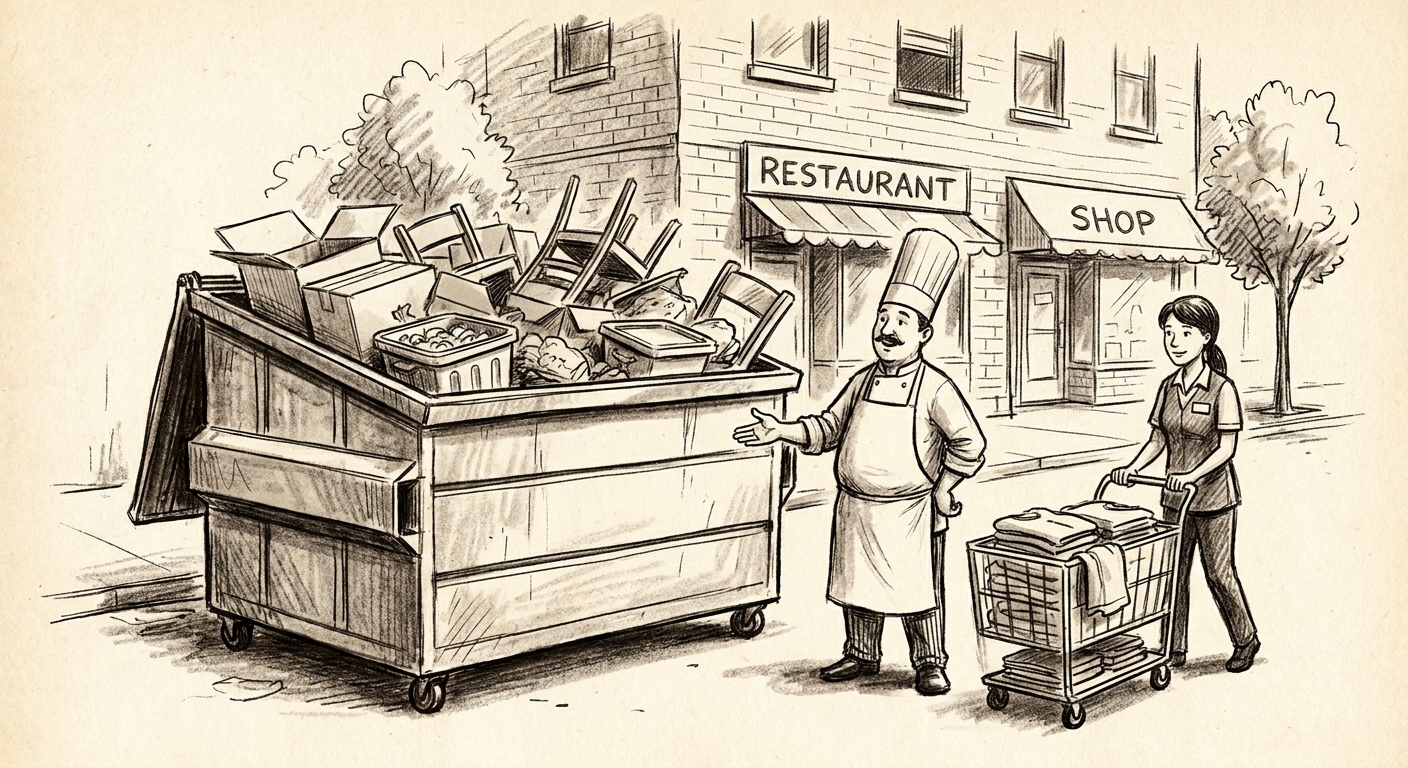
A restaurant renovation produces heavy, mixed debris: tile, cabinetry, plumbing fixtures, old equipment. A retail store running daily operations produces a different problem entirely: steady cardboard, packaging, and food waste that piles up between pickups. Treating both like the same job is how operators end up with an overflowing bin during a Saturday rush or a container that sits half-empty for three weeks eating up curb space.
The full breakdown of setups and sizing lives on the commercial dumpster rental for restaurants and retail businesses page. This guide ranks the specific configurations that fit South Bay restaurant and retail sites in 2026, and where each one falls short.
One more operational fact worth knowing: Valley Services owns and runs its own C&D transfer station in San Jose. Most rental companies broker disposal to a third-party site, which means their schedule depends on someone else's yard. Valley Services controls the endpoint, so a same-day swap or an added container mid-project doesn't get stuck behind another company's queue.
How These Setups Are Ranked
The ranking below isn't based on lab testing or spec sheets. It's based on the waste patterns Valley Services sees across restaurant build-outs and retail turnovers throughout San Jose, Santa Clara, Sunnyvale, Mountain View, and Milpitas: how much debris a job produces, how much curb or loading dock space is realistically available, and whether the job is a one-time renovation or ongoing daily operations.
Each setup below gets ranked on three things: fit for the debris type, fit for the site's physical constraints, and fit for the timeline. A setup that scores well on all three gets a clear verdict. One that only works in a narrow situation gets flagged as a Consider, and anything that creates a permit, safety, or overflow problem gets a Skip.
The Ranked List: Best Dumpster and Compactor Setups for 2026
1. 20-Yard Roll-Off Container: the renovation workhorse
A 20-yard roll-off container is the standard pick for a restaurant kitchen renovation in 2026. It handles cabinetry, flooring, drywall, and old equipment without needing a mid-project swap on most single-kitchen jobs.
The container sits within Valley Services' 8 to 40 yard blue steel lineup, sized for jobs bigger than a single-room remodel but smaller than a full building gut. Details on scheduling drop-off and pickup around a kitchen renovation timeline are on the roll-off dumpster rental for restaurant renovations page.
Verdict: Book it for any kitchen or dining room renovation running two to six weeks.
2. Front-Load Compactor: the daily grind
A front-load compactor is the better fit once a store or restaurant is open and generating steady cardboard, packaging, and food waste every day, not a one-time debris pile. Grocery and retail locations that run high foot traffic overflow a standard bin fast, and a scheduled pickup rotation keeps the loading dock clear.
Sizing and pickup frequency for grocery and retail operations are covered on the compactor rental for retail and grocery stores page.
Verdict: Book it for any retail or grocery site generating daily waste volume, not project debris.
3. 10-Yard Roll-Off: the tight footprint pick
A 10-yard container fits a single-fixture swap, a small storefront cleanout, or a limited renovation where curb space is the real constraint, not debris volume. Downtown San Jose and Santa Clara storefronts often have no dedicated loading zone, and a smaller footprint keeps the container off a metered space longer than a day requires.
Verdict: Consider it when the job is small but parking or sidewalk access is tight.
4. 30-Yard Roll-Off: the full gut job
A full retail store gutting ahead of a tenant improvement produces more debris by weight than most operators expect: flooring, drop ceiling, old fixtures, and demolition waste stack up fast. A 30-yard roll-off keeps a full gut job from needing a second container mid-demo.
Verdict: Consider it only when the scope is a full interior demo, not a partial remodel.
5. Same-Day Delivery: the emergency fix
Tenant turnovers don't always run on a two-week notice. A vacated retail space that needs to be cleared before a new tenant's build-out starts, or a restaurant that failed inspection and needs debris gone fast, needs a container the same day the call comes in.
Verdict: Consider it as a backup plan, and confirm the delivery slot before you commit a crew's schedule to it.
6. Unpermitted Curb Placement: the ticket you didn't need
Placing a container on a public street or sidewalk in San Jose without a placement permit is the fastest way to turn a renovation into a fine. Cities enforce curb and sidewalk obstruction rules on commercial corridors more actively than residential streets, since foot traffic and ADA access are on the line.
Verdict: Skip any curb setup until the permit is in hand. Keep the container on private property, in a loading dock, or in a lot whenever the site allows it.
Line up your restaurant or retail container
Call to talk through sizing, timing, and site access before delivery day.
Side-by-Side Comparison
| Setup | Best For | Size | 2026 Verdict |
|---|---|---|---|
| 20-Yard Roll-Off | Kitchen renovation debris | 20 yard | Book it |
| Front-Load Compactor | Daily grocery/retail waste | N/A | Book it |
| 10-Yard Roll-Off | Small cleanout, tight curb space | 10 yard | Consider |
| 30-Yard Roll-Off | Full interior demo | 30 yard | Consider |
| Same-Day Delivery | Emergency tenant turnover | Varies | Consider |
| Unpermitted Curb Placement | Street setup, no permit | N/A | Skip |
How to Book the Right Setup
- Confirm access before you call. Loading dock height, gate width, and overhead clearance decide which container size actually fits, not just the debris volume.
- Get the permit before delivery, not after. San Jose enforces curb and sidewalk placement rules on commercial corridors, and a container without a permit is a liability the day it lands.
- Match the container to the phase, not the whole project. A restaurant renovation that runs demo, then buildout, then final cleanup often needs a size change partway through, not one container sized for the biggest phase sitting idle the rest of the time.
Valley Services has run the same San Jose yard since 1986, third generation, same family. One call covers the container, restrooms for the crew, and temporary fencing if the site needs to be secured overnight, all from the same yard.
“One call covers containers, restrooms, and fencing for the same jobsite, because the schedule only holds together if one company controls all three.”
FAQ
What size dumpster does a restaurant need for a renovation?
Most single-kitchen renovations run on a 20-yard roll-off container in 2026. Full interior gut jobs with flooring, ceiling, and fixture removal typically need a 30-yard container instead.
Is a compactor better than a roll-off for a retail store?
A front-load compactor works better for daily operating waste like cardboard and packaging, while a roll-off container fits one-time renovation or cleanout debris. Stores running steady daily volume should book a compactor, not a roll-off.
Do I need a permit to place a dumpster in San Jose?
Any container placed on a public street or sidewalk in San Jose needs a placement permit. Containers kept on private property, in a lot, or in a loading dock generally don't need one, but confirm with the site's jurisdiction.
Can a restaurant use a roll-off container for daily trash?
A roll-off container is built for project debris, not daily food and packaging waste. Restaurants generating steady daily trash volume are better served by a scheduled compactor or bin pickup rotation.
How often should a retail store schedule compactor pickups?
Pickup frequency depends on foot traffic and packaging volume, and it should be set based on how fast the compactor fills between visits, not a fixed calendar schedule. High-traffic grocery and retail sites usually need more frequent rotation than a small storefront.
Is same-day dumpster delivery available for retail emergencies?
Same-day delivery is available for urgent tenant turnovers and emergency cleanouts, but availability depends on the day's route schedule. Confirm the slot with a call before counting on same-day service.
What happens to debris from a restaurant renovation after pickup?
Construction and demolition debris from a restaurant renovation goes to a C&D transfer station for processing. Valley Services operates its own transfer station in San Jose, which keeps the schedule from depending on a third-party disposal site.
One Last Thing
Retail operators often assume a standard waste hauler's front-load bin covers a six-week storefront buildout. It doesn't: buildout debris is bulky and irregular, not daily trash, and a single drywall or shelving drop overflows a bin sized for packaging. Size the container for the demo phase specifically, even if it means a second, smaller setup for the daily operating waste that follows once the store reopens.
Call (408) 297-5404 or check current availability at valleyservices.biz to talk through sizing and scheduling before delivery day.