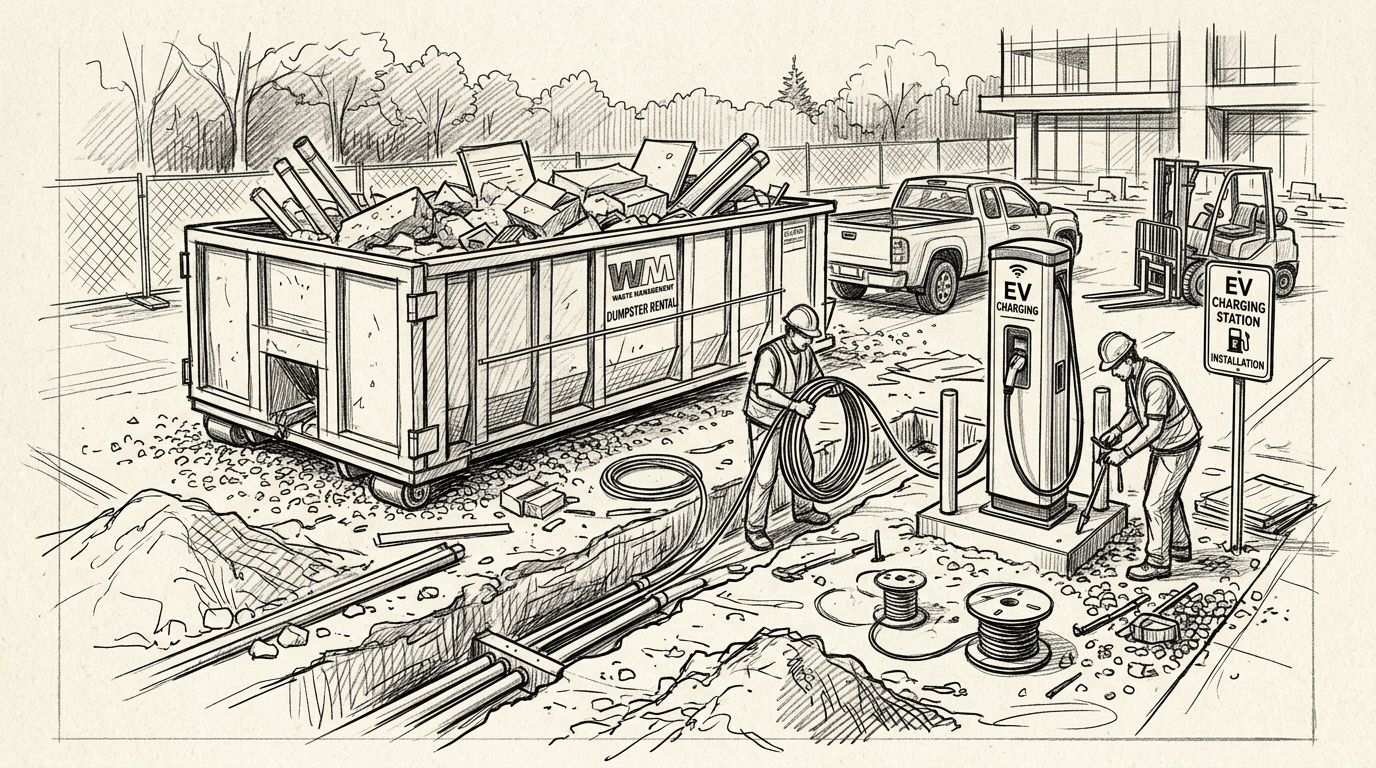
An EV charging station installation is not a typical remodel job. You're trenching for conduit, cutting concrete or asphalt for footings and bollards, and sometimes demolishing a section of parking lot to run power from the panel to the stalls. The right container size keeps that debris moving off site instead of piling up next to an active parking lot.
Best overall: the 20-yard roll-off container, sized for standard Level 2 charger bank installs and the trenching debris that comes with a 2 to 6 stall job. Best for a single-charger retrofit: the 10-yard roll-off container. Best for multi-bay commercial or fleet depot installs: the 30-yard roll-off container. Best for structural retrofits and parking garage or DC fast charger infrastructure: the 40-yard roll-off container.
- The 20-yard roll-off container is the best fit for most EV charging station installations with 2 to 6 Level 2 stalls.
- A 10-yard container handles a single-charger retrofit on a driveway or small commercial lot without wasted space.
- A 30-yard container fits multi-bay commercial charging lots and fleet depot buildouts with heavier concrete cutting.
- A 40-yard container is built for parking garage retrofits and DC fast charger infrastructure with structural demolition.
- Valley Services runs its own San Jose transfer station, so container turnaround on a phased EV project stays on Valley's schedule, not a third party's.
Why an EV charging station install needs the right container size
EV charger installs generate a mix of light and heavy debris on the same job: cardboard and packaging from the charger units, cut conduit and wire spool, plus asphalt or concrete cuttings from footings and trenches. Concrete and asphalt are heavy for their volume, and an undersized container fills on weight before it fills on space.
Most installs also happen on a working parking lot or an active commercial site, not a fenced construction yard. That means placement, timing, and pickup scheduling matter as much as size. Valley Services runs container delivery and pickup out of its own San Jose yard, and controls its own C&D transfer station rather than hauling to a third-party site, which keeps pickup timing predictable on a multi-phase EV project through 2026 and beyond.
What makes the best roll-off container for an EV charging station installation
- Volume matched to the debris mix: trenching spoils, cut asphalt, and concrete footing waste fill fast by weight, not just by volume.
- Placement flexibility: the container has to sit on a live lot or driveway without blocking charger bays under construction or customer parking.
- Load rating for demolition material: concrete and asphalt debris load differently than framing or drywall waste.
- Delivery and pickup tied to inspection milestones: EV installs often have a trenching phase, a pour phase, and an equipment-set phase, each with its own debris load.
- Permit compliance: containers placed in a right-of-way or public parking area in San Jose need a placement permit before drop-off.
- One-vendor coordination: containers, temporary fencing around open trenches, and restrooms for a multi-day crew all come from the same call.
Roll-off container options for EV charging station installs at a glance
| Container size | Best for | Standout feature | Key limitation |
|---|---|---|---|
| 20-yard | Standard 2 to 6 stall Level 2 install | Handles mixed trenching and concrete debris without overfilling | Too large for a single-charger driveway retrofit |
| 10-yard | Single-charger residential or light commercial retrofit | Fits tight driveways and small lots | Fills fast if concrete cutting runs deep |
| 30-yard | Multi-bay commercial or fleet depot buildout | Covers heavier concrete and asphalt removal across multiple stalls | Needs more clear space for placement and truck access |
| 40-yard | Parking garage retrofit or DC fast charger infrastructure | Sized for structural demolition and heavy footing removal | Overkill for a standard Level 2 bank install |
1. 20-yard roll-off container: best for a standard Level 2 charger bank install
A 20-yard container is the workhorse for a typical 2 to 6 stall Level 2 charging install. It handles conduit trenching spoils, cut asphalt from footing prep, and packaging waste from the charger units without needing a mid-job swap.
20-yard pros:
- Big enough for trenching and footing debris on a standard install
- Fits most parking lot and driveway placements without special access
- One container usually covers the full install cycle
20-yard cons:
- Can fill on weight fast if the job hits unexpected concrete
- Not ideal for a single-stall retrofit where the debris volume is light
Best for: contractors running a standard commercial or multi-family Level 2 charger bank install in 2026.
Verdict: Book it.
2. 10-yard roll-off container: best for a single-charger retrofit
A 10-yard roll-off container fits a single Level 2 charger retrofit on a residential driveway or a small commercial pad. Debris is usually limited to a short trench run, a small footing cut, and packaging.
10-yard pros:
- Fits narrow driveways and tight residential access
- Right-sized for a one-charger job, no wasted capacity
- Easier to place without blocking a working lot
10-yard cons:
- Not enough capacity if the job scope grows to multiple stalls
- Concrete-heavy footing work can fill it faster than expected
Best for: homeowners and small commercial property owners adding one charger.
Verdict: Book it.
3. 30-yard roll-off container: best for multi-bay commercial or fleet depot installs
Fleet depots and multi-bay retail charging lots generate more concrete and asphalt debris across a wider footprint. A 30-yard container covers the extra volume without cycling containers mid-project.
30-yard pros:
- Covers heavier demolition across multiple charger bays
- Reduces the number of pickups needed on a multi-week install
- Works well for phased buildouts with staged debris
30-yard cons:
- Needs more clear ground space and truck turning room
- Placement on an active retail lot takes more planning around customer traffic
Best for: fleet operators and retail sites building out four or more charging bays.
Verdict: Book it.
4. 40-yard roll-off container: best for parking garage or DC fast charger infrastructure
Parking garage retrofits and DC fast charger infrastructure projects involve structural demolition: cutting into slabs, removing old footings, and sometimes breaking out sections of the garage deck. A 40-yard container is built for that volume.
40-yard pros:
- Handles heavy structural debris from garage or infrastructure work
- Cuts the number of swaps on a large-scope project
- Matches the pace of a multi-week infrastructure build
40-yard cons:
- Oversized and inefficient for a standard Level 2 install
- Needs significant clear space, which some garage sites don't have
Best for: general contractors on parking structure retrofits or DC fast charger infrastructure projects.
Verdict: Book it.
How we ranked these container sizes
The ranking runs on the criteria above: debris volume by job scope, load weight from concrete and asphalt, placement fit on an active lot, and how well the size matches a typical EV install phase in 2026. The 20-yard container wins overall because it matches the debris profile of the most common install, a 2 to 6 stall Level 2 bank, without under- or over-sizing.
Which roll-off container size should you book for your EV charger install?
If you're not sure which way to go, start with scope. A single retrofit points to the 10-yard. A standard commercial or multi-family install points to the 20-yard. A fleet depot or multi-bay retail buildout points to the 30-yard. A parking garage or DC fast charger infrastructure job points to the 40-yard. The 20-yard roll-off container is the right default for most EV charging station installations in the South Bay in 2026, and Valley Services can size up or down once the site scope is confirmed.
Multi-day installs on active lots often need more than a container. Open trenches around a charging bay need temporary fencing or barrier protection while power runs are exposed, and crews on a multi-week job need restrooms on site. One call to Valley Services covers containers, fencing, and restrooms for the same job.
Size your EV charger install container
Call to confirm the right size for your site scope.
FAQ
What size roll-off container do I need for an EV charging station installation?
A 20-yard roll-off container fits most standard Level 2 charger bank installs with 2 to 6 stalls. A single-charger retrofit fits a 10-yard, and a multi-bay commercial or fleet depot build usually needs a 30-yard or 40-yard.
Can I place a roll-off container on an active parking lot during a charger install?
Yes, but placement has to avoid blocking charger bays under construction and customer traffic lanes. Confirm clear ground space and truck access before delivery.
Do I need a permit for a roll-off container in San Jose for an EV charger project?
A container placed on a public street or right-of-way in San Jose needs a placement permit before drop-off. A container placed entirely on private property usually does not.
How long does a roll-off container rental last for a typical charger installation?
Rental length depends on the install phase, not a fixed schedule. Most single-charger retrofits fill and clear one container in a few days, while multi-bay commercial jobs run longer with staged pickups.
What goes in the container during an EV charging station install?
Expect cut asphalt or concrete from footings and trenches, conduit and wire packaging, and old paving material if a lot section is being repaved. Keep hazardous materials like old fuel lines or contaminated soil out of a standard container.
Is a 10-yard or 20-yard container better for a single Level 2 charger retrofit?
A 10-yard container is right-sized for one charger with a short trench run and small footing cut. Move up to a 20-yard only if the job includes extra concrete demolition or a longer conduit run.
Do I need temporary fencing during an EV charger installation?
Open trenches and exposed conduit runs on a multi-day install are a hazard on an active lot, so temporary fencing or barrier protection around the work zone is standard practice through the trenching and pour phases.
How much notice do I need to schedule a roll-off container for a charging station job?
Book as soon as the install date is set, especially for a multi-phase commercial job with staged pickups. Same-scope residential retrofits typically need less lead time than a multi-bay commercial buildout.
One last thing
The debris that trips up most EV charger jobs isn't the trenching spoil, it's the old asphalt or concrete cut out for the new footing. That material is heavy for its volume, and it's the reason a job that looks like a 10-yard on paper sometimes needs a 20-yard once the demo starts. Confirm the footing and pad scope before locking in a container size for a 2026 install.