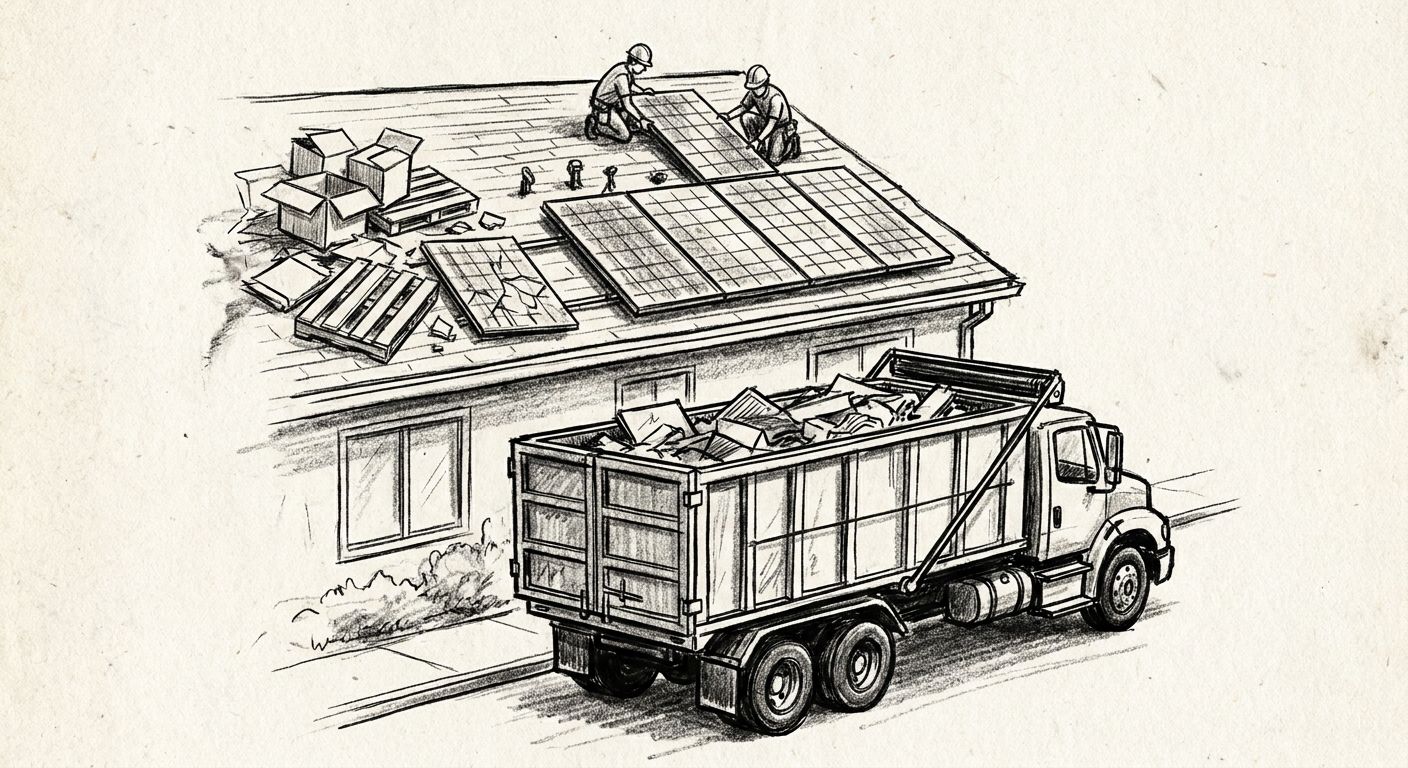
Solar installers tearing off old shingles before mounting racking generate a debris mix that doesn't behave like a typical remodel: aluminum rails, mounting hardware, conduit, old panels pulled during a retrofit, and torn-off roofing material, all in one pile. This guide covers container sizing, weight limits, and placement rules for a dumpster rental for solar installation debris on Bay Area jobs in 2026.
- A 20-yard roll-off container handles most residential solar-plus-reroof jobs in San Jose in 2026. Buy.
- Metal racking is dense: a 10-yard container hits its weight limit long before it looks full.
- San Jose requires an encroachment permit for any dumpster placed on a public street, not just the driveway.
- 40-yard containers fit commercial rooftop retrofits with full tear-off, not small residential add-on installs. Consider.
Why this matters
Solar crews that order the wrong container size end up paying for a second haul mid-project or watching a crew stand around while a full container waits for pickup. Racking debris and tear-off shingles don't weigh the same per cubic foot, and a container that looks half-empty can already be at its rated weight limit. Getting the size and placement right before the crew shows up keeps the schedule intact.
Who this is for
This guide is for solar installation contractors, roofing subs handling a tear-off-and-reroof-with-solar job, and homeowners managing a residential solar retrofit that includes panel removal or a partial reroof. If the job is a straight rooftop roll-off container rental for roofing tear-offs with no racking involved, that guide covers sizing on its own. Solar jobs add racking, conduit, and sometimes old panels to that same tear-off pile, which changes the math.
What to look for in a dumpster rental for solar installation
Weight capacity, not just yardage
Aluminum racking and steel mounting hardware weigh more per cubic foot than loose shingles. A container rated for a given yardage can hit its weight limit well before it's visually full, which is what drives overage fees on solar jobs more than volume ever does.
Site access and driveway clearance
Most residential solar retrofits place the container on the driveway, and a standard roll-off truck needs roughly 60 feet of straight clearance to drop and later pull the box. Narrow San Jose and Sunnyvale driveways with tight side-yard gates sometimes need the container staged on the street instead.
Permit and placement rules
Any container that sits on a public street or right-of-way in San Jose needs an encroachment permit before delivery, not after. Driveway placement usually doesn't require one, but confirm before assuming the crew can just drop the box wherever is convenient.
Turnaround tied to inspection schedule
Solar jobs run on a schedule set by the utility interconnection and the final electrical inspection, not just the install date. A container that sits full on site past the pickup window because of a scheduling gap becomes a hazard and a liability on an active jobsite.
Mixed-load handling for racking and tear-off together
Metal racking and torn-off roofing can go in the same container on most jobs, but they load differently. Metal goes in first and flat, tear-off material goes on top, and the load stays balanced instead of shifting during transport.
Top picks by job size
10-yard: the small-retrofit pick. Fits a standard single-car driveway and works for panel add-ons or racking swaps with no full tear-off involved. It holds roughly three pickup-truck loads of mixed debris before it's at weight capacity. Buy for retrofit-only jobs with no reroofing.
20-yard: the workhorse pick. This is the size most residential solar-plus-reroof jobs land on in 2026, covering a full tear-off on an average-size roof plus the racking and hardware pulled during install. It holds close to eight pickup-truck loads. Buy for standard residential jobs.
30-yard: the multi-trade pick. Fits larger residential roofs or small commercial retrofits where tear-off, racking, and old conduit all come off in the same pass. It needs more driveway or street length to place. Consider when the roof footprint runs larger than a typical single-family home.
40-yard: the commercial pick. Built for full commercial rooftop solar retrofits with extensive tear-off and racking replacement across a large structure. It's oversized for anything residential and eats up more site footprint than most driveways allow. Skip unless the job is commercial-scale.
Line up the right container size
Call to talk through your solar job's tear-off and racking volume before delivery.
What to avoid
- Undersizing for a full tear-off job. A 10-yard container looks like it should handle a small roof, but add racking and hardware to a full shingle tear-off and it hits weight capacity fast, triggering an overage charge on pickup.
- Skipping the placement check. Confirm whether the container sits in the driveway or the street before delivery. Placement on a San Jose street without an encroachment permit is the fastest way to get a container flagged or cited.
- Loading intact panels without checking first. Some jurisdictions handle whole solar panels differently than standard C&D debris because of the electronic components inside them. Confirm with the yard before loading full panels rather than assuming they go in with the tear-off pile.
Verdict comparison table
| Size | Best for | Truck-load equivalent | Verdict |
|---|---|---|---|
| 10-yard | Retrofit or racking swap, no tear-off | ~3 loads | Buy for small retrofits |
| 20-yard | Standard residential reroof plus solar | ~8 loads | Buy for most residential jobs |
| 30-yard | Larger residential or small commercial | ~12 loads | Consider for bigger footprints |
| 40-yard | Full commercial rooftop retrofit | ~16 loads | Skip for residential jobs |
FAQ
What size dumpster do I need for a solar panel installation?
Most residential solar-plus-reroof jobs use a 20-yard roll-off container in 2026. A retrofit with no tear-off can often use a 10-yard container instead.
Can I put old solar panels in a construction dumpster?
Sometimes, but confirm first. Some jurisdictions treat intact solar panels as electronic waste rather than standard C&D debris, so ask before loading whole panels into a mixed container.
How much weight can a roll-off container hold for solar racking debris?
Weight limits depend on container size, and metal racking weighs more per cubic foot than shingles or wood. A container can look partially full and still be at its rated weight limit on a solar job.
Do I need a permit for a dumpster on a solar installation job in San Jose?
Only if the container sits on a public street or right-of-way. Driveway placement usually doesn't require a permit, but street placement in San Jose does.
Is a 10-yard or 20-yard container better for a residential solar retrofit?
A 10-yard container fits a retrofit-only job with no tear-off. A full reroof-plus-solar install on an average home usually needs a 20-yard container.
How long can I keep a dumpster rental on site during a solar install?
Rental duration depends on your project schedule and utility interconnection timeline. Coordinate pickup with the final electrical inspection so the container isn't sitting full mid-permit.
What's the difference between dumpster rental for roofing tear-offs and solar installs?
A straight roofing tear-off is mostly shingles and underlayment by weight. A solar install adds aluminum racking, mounting hardware, and conduit to that same load, which changes the weight math even if the yardage stays the same.
Can scrap metal racking go in the same container as roofing debris?
Yes on most jobs, loaded correctly. Metal racking goes in flat on the bottom of the container first, with tear-off shingles loaded on top so the load stays balanced.
One last thing
Load order matters more than most crews think on a solar job: metal racking goes in flat first, tear-off shingles go on top. A container loaded shingles-first with racking dropped on top shifts weight to one side during the haul, and that's how a container ends up rejected at pickup or, worse, tips during loading.
Valley Services runs its own C&D transfer station in San Jose, which means container scheduling for a solar job doesn't depend on a third-party disposal site's availability. Call (408) 297-5404 or check valleyservices.biz to line up container size and delivery timing before the crew shows up.