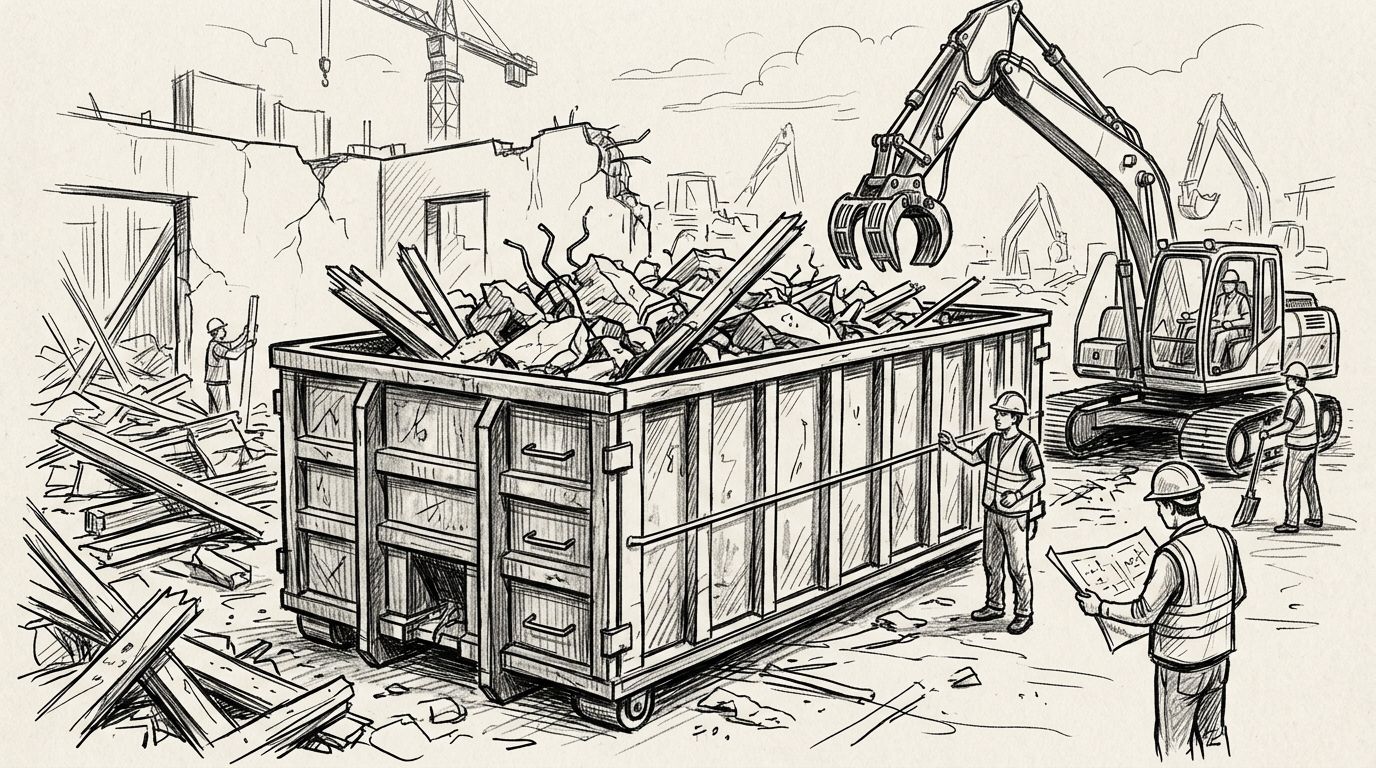
Container rental for demolition contractors means matching a blue steel roll-off, or a rotation of them, to a teardown schedule instead of a remodel schedule: heavier loads, faster fill rates, and debris that shifts from framing lumber to concrete and rebar inside the same week. A demo crew that orders containers the way a kitchen remodeler does will run out of capacity by day two.
That difference in load profile is why sizing and swap-out cadence matter more here than on almost any other job type. Valley Services runs container rentals out of its own San Jose yard and its own transfer station, which means a full box doesn't sit waiting on a third-party disposal slot while your crew stands around.
- Container rental for demolition contractors needs 30 to 40 yard roll-offs rated for mixed concrete, block, and framing debris.
- Valley Services operates its own San Jose C&D transfer station, so swap-outs aren't held up by a third-party dump slot.
- Concrete and block are dense enough that a 40 yard box can hit legal road weight before it looks full.
- Hazardous materials found during demo, like asbestos siding or lead paint, need separate handling before the roll-off ever gets loaded.
Why container rental matters for demolition contractors
A remodel crew fills one container over two or three weeks. A demolition crew can fill the same 40 yard box in a single shift once the excavator starts pulling foundation and slab.
That speed changes the math on scheduling. If the container sits full for even a half day waiting on pickup, the crew either stops working or starts staging debris on bare ground, which creates its own safety and access problems. Multi-day teardowns in San Jose, Santa Clara, Sunnyvale, Mountain View, and Milpitas run tighter when the disposal end of the job is controlled by the same company delivering the container, not brokered out to a separate hauler.
Valley Services has operated out of the same San Jose yard since 1986, now under third-generation family ownership, and controls its own transfer station rather than routing loads to someone else's site. For a demolition contractor juggling swap-out timing against an excavator rental, that ownership is the difference between a same-day exchange and a next-available-slot conversation.
The demolition container rental process, step by step
Size the container to the demolition phase, not the whole job
Don't order one container size for a job that has a demo phase, a hauling phase, and a finish phase. Size for what's coming out of the ground this week.
- Interior strip-out and framing debris: 20 yard container handles most single-family jobs
- Slab, foundation, and masonry teardown: 30 to 40 yard container, because weight fills the box before volume does
- Multi-structure or commercial teardown: 40 yard dumpster rental with a swap-out schedule built in
- Mixed metal and lumber from a partial demo: keep a separate container if the volume justifies it
Confirm the debris type before you order
Concrete, block, brick, and dirt are dense. A container that would hold three days of framing lumber can hit the truck's legal road weight on concrete alone before it looks full.
- Ask what's classified as C&D versus what needs its own load: clean concrete, asphalt, and dirt often get handled separately
- Flag mixed loads up front so the container isn't rejected at the transfer station
- Keep drywall and insulation out of concrete-heavy loads when possible, since it changes the weight-to-volume ratio
- Confirm whether rebar and metal need to be pulled before loading or can ride in the same box
Schedule swap-outs before the site fills up
Demo crews that wait until a container is visibly full lose the rest of the shift waiting for the empty box to show up. Schedule the next swap before the current one hits capacity.
- Book same-day or next-day swap-outs for multi-container teardowns
- Confirm truck access to the site before the first delivery, since demo sites often have less clear drop zones than remodel sites
- Keep a buffer container on standby for jobs with unpredictable daily output
- Coordinate swap timing around excavator and hauling crew schedules, not just container fill level
Handle hazardous and prohibited materials separately
Demolition uncovers things a remodel crew never sees: old asbestos siding, lead paint, buried fuel tanks, treated wood. None of that goes in a standard roll-off.
- Test suspect materials before demo starts on any structure built before the 1980s
- Route flagged hazardous materials to licensed disposal, not the standard container
- Keep the container clear of paint cans, batteries, and fluorescent tubes
- Review how to dispose of hazardous construction materials safely before the first swing of the excavator
Secure the site alongside the container
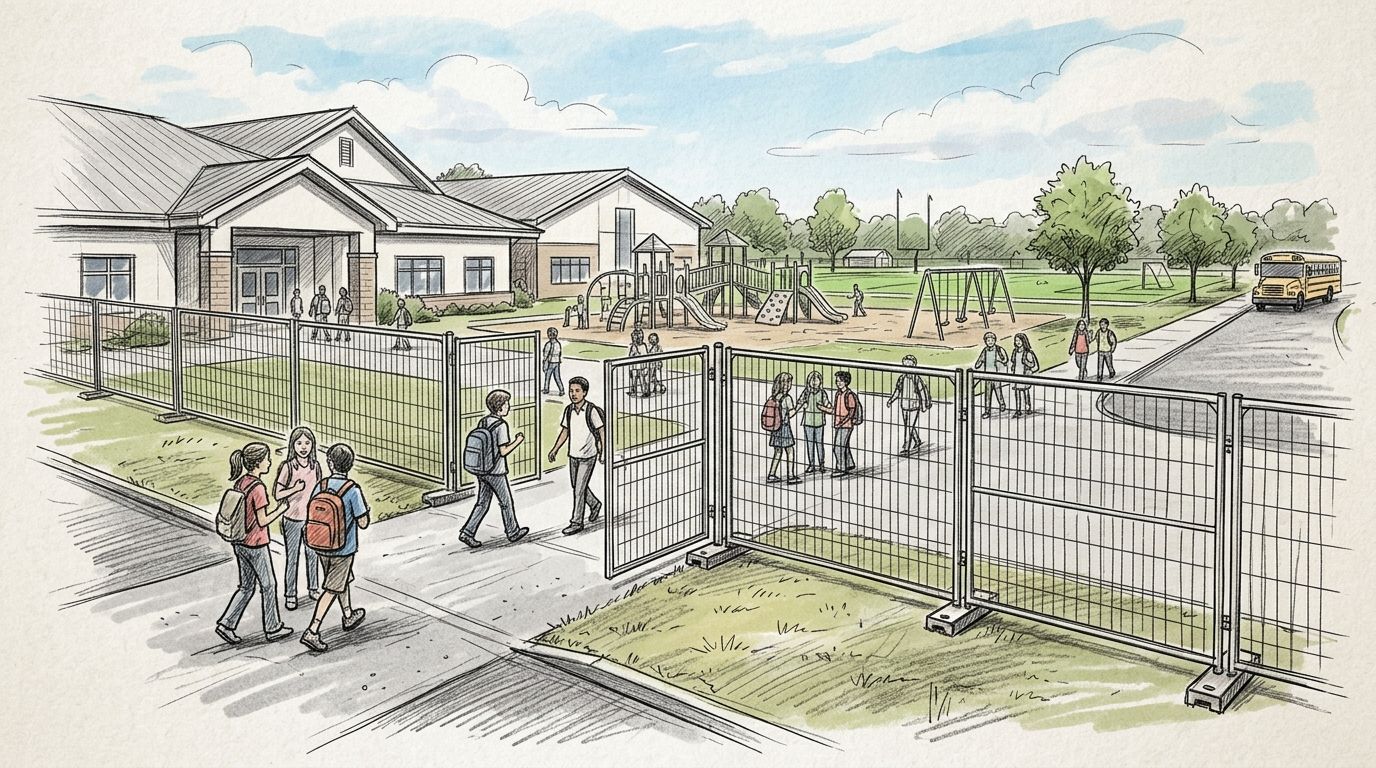
A demo site with an open perimeter and a full container is an invitation for illegal dumping and unauthorized foot traffic. Fencing and container placement need to happen together, not in sequence.
- Fence the perimeter before demolition debris starts accumulating on-site
- Place containers where they don't block the only fenced access point
- Use K-rail where vehicle separation matters more than a fence line
- Lock down site access after hours, especially on vacant-lot teardowns
Track load weight to avoid overage charges
Overage charges come from guessing instead of tracking. A crew that eyeballs a container's fill level on dense debris almost always underestimates weight.
- Track loads by material type, not just visual fill level
- Separate concrete and dirt loads from mixed C&D when the job allows it
- Confirm weight limits per container size before the first load goes in
- Review how to load a dumpster safely and avoid overage fees with the crew lead, not just the site super
Close out with a documented final haul
The last container off a demo site should leave a clean, fenced lot behind it, not a pile of leftover debris staged for a future pickup that never gets scheduled.
- Confirm final pickup date before the last container fills
- Walk the site for missed debris before the crew demobilizes
- Remove fencing and K-rail only after the final haul is confirmed off-site
- Document the final load for permit closeout where the jurisdiction requires it
Container options for demolition contractors compared
| Option | Best for | Key limitation |
|---|---|---|
| 20 yard roll-off | Interior strip-out, small structure teardown | Fills fast on concrete or masonry debris |
| 30 yard roll-off | Mixed framing and masonry debris | Still weight-limited on dense concrete loads |
| 40 yard roll-off | Full structure or commercial teardown | Requires clear truck access for delivery and swap |
| Multi-container swap rotation | Multi-day or multi-structure demolition | Needs tight scheduling coordination with the excavator crew |
A 40 yard roll-off from Valley Services is the right call for full structure teardowns in San Jose and the South Bay, provided the site has clear truck access for swap-outs. Interior strip-outs with light debris don't need that capacity and should stay on a 20 yard box.
Common mistakes demolition contractors make with container rental
- Ordering one container size for the whole job. Demo debris is denser than framing debris. The container that worked for the strip-out phase will overflow or overweight during the teardown phase.
- Skipping the hazardous material check on older structures. Any structure built before the 1980s needs a check for asbestos and lead before demo starts, not after debris is already in the box.
- Placing the container before securing the site. An unfenced demo site with a container on it draws illegal dumping overnight, which then gets billed back as overage.
- Waiting until the container is full to call for a swap. By the time a box is visibly full on a demo job, the crew has already lost productive time waiting on the next one.
- Mixing concrete and framing debris without checking the container's weight rating. Dense debris fills the legal weight limit long before it fills the visual volume, and that mismatch is where overage charges come from.
Line up containers for your next teardown
Call to size roll-offs and swap-out schedules for your demolition site.
FAQ
What size container do demolition contractors need in 2026?
Most demolition contractors need a 30 to 40 yard roll-off for structure teardowns in 2026, since concrete and block hit weight limits before they fill the box visually. Interior strip-out work with lighter debris can run on a 20 yard container.
Can concrete and framing debris go in the same container?
Yes, but mixed loads fill the legal weight limit faster than pure framing debris would. Confirm the container's weight rating before combining dense and light debris in one box.
How fast can a demolition container be swapped out?
Same-day or next-day swap-outs are standard for active teardown sites once the schedule is set up in advance. Calling after the container is already full slows the job down.
Do demolition sites need temporary fencing along with the container?
Most active teardown sites in the Bay Area need perimeter fencing to control access and prevent illegal dumping into an open container. Fencing and container placement should be planned together, not separately.
What happens if asbestos or lead paint turns up during demolition?
Suspect materials need testing and separate licensed disposal before demo continues, since they can't go into a standard roll-off container. Structures built before the 1980s should be checked before the first swing of the excavator.
Why does Valley Services control disposal differently than other container rental companies?
Valley Services owns and operates its own C&D transfer station in San Jose rather than hauling to a third-party site. That means swap-out timing on a demolition job isn't dependent on another company's disposal schedule.
How do overage charges happen on demolition jobs?
Overage charges come from underestimating the weight of dense debris like concrete, block, or dirt relative to the container's rated limit. Tracking loads by material type instead of visual fill level prevents most of it.
What's the difference between container rental for demolition and for a remodel?
Demolition debris is denser and fills containers faster by weight than remodel debris, which is mostly lumber, drywall, and fixtures. Demo jobs need tighter swap-out scheduling because containers reach capacity in hours, not weeks.
One last thing
The detail that trips up most out-of-town crews working a Bay Area teardown isn't sizing, it's access. San Jose demo sites are often tighter than suburban lots, and a 40 yard container needs a straight shot for the delivery truck. Confirm the swap-out path before the first container lands, not after the excavator has already boxed it in.
Call (408) 297-5404 or visit valleyservices.biz to talk through container sizing and swap-out timing before the teardown starts.