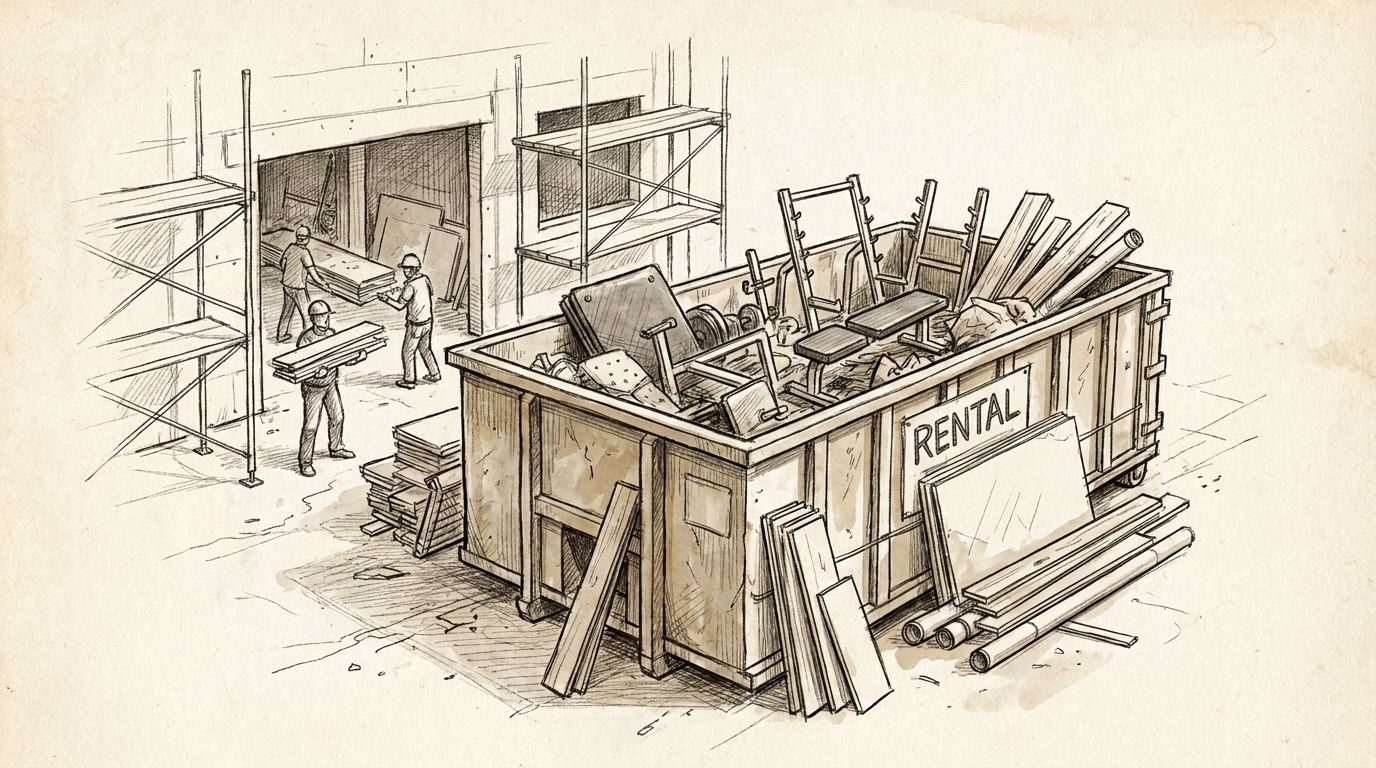
Gym and fitness studio buildouts generate a mix of debris most rental companies aren't set up to handle in one load: rubber flooring, drywall, mirror glass, dropped ceiling grid, and sometimes a dead treadmill or two. Pick the wrong dumpster size for a gym buildout and you're either paying for a second haul or watching your crew stack debris against the wall because the container filled up on day three.
- A 30-yard roll-off handles most 2,000 to 5,000 sq ft studio buildouts; use 40-yard for full gut jobs. Buy.
- Rubber flooring and mirror glass add weight fast; underestimating tonnage causes overage fees, not overflow.
- Shopping center placement usually needs written landlord approval plus a City of San Jose permit if the container sits on a public right-of-way.
- Valley Services runs its own San Jose transfer station, so gym buildout crews get schedule control instead of waiting on a broker's third-party site.
Why this matters
A gym buildout runs on a lease clock. Landlords set a fixed date for opening, and every day a dumpster sits full and unemptied is a day your electrician or flooring crew can't get in to finish their scope. Dumpster rental for a gym buildout isn't just about volume, it's about matching container size to a fast, dense demo phase followed by a lighter finish phase, and knowing which debris types push you past the container's weight limit before it's visually full.
Who this is for
This guide is for general contractors and tenant improvement crews converting retail or warehouse space into a gym, CrossFit box, yoga studio, or boutique fitness concept anywhere in San Jose, Santa Clara, Sunnyvale, Mountain View, or Milpitas. It also applies to gym owners managing their own construction dumpster rental on a smaller studio buildout without a full GC on site. If you're demoing a former retail box into a fitness floor, you're dealing with a heavier, denser debris stream than a typical office tenant improvement, and that changes the size math.
What to look for in dumpster rental for a gym buildout
Container size matched to square footage, not just demo debris
Gym buildouts generate debris in two distinct phases: heavy demo (old flooring, framing, ceiling tile) followed by lighter finish waste (packaging, trim scrap, drywall dust bags). Sizing for the demo phase alone means you'll run out of room before finish work even starts. Match the container to your total square footage and plan for a swap or a second pull if the buildout runs past four weeks.
Weight capacity, not just cubic yards
Rubber gym flooring, free weights, mirror glass, and steel rack components are dense. A container can look half full and still be at its weight limit, which triggers an overage charge that has nothing to do with how much space is left inside the box. Ask about tonnage limits before the container drops, not after it's picked up.
Placement and site access
Most gym buildouts happen in strip malls, shopping centers, or mixed-use retail space where the landlord controls the parking lot. Confirm where the container can legally sit, whether it blocks fire lanes or ADA paths, and whether other tenants need continued access during your build. A container placed in the wrong spot gets a call from center management on day one.
Permit requirements for public right-of-way placement
If there's no room on private property and the container has to sit on the street, San Jose requires a placement permit. Skipping this step risks a citation and a forced relocation mid-project. Review how to permit a dumpster placement in San Jose before you schedule delivery, not after.
Turnaround speed on delivery and pickup
Gym buildouts run on tight lease timelines, often 30 to 90 days from lease signing to opening day. A rental company that can't deliver within a day or two, or that takes a week to swap a full container, becomes the bottleneck on your schedule. Ask about same-day or next-day availability before you commit.
One vendor for the whole site, not three
A gym buildout with active construction on an occupied commercial lot often needs more than a container: temporary fencing to secure tools and materials overnight, and restrooms if the space has no working plumbing yet. Coordinating containers, fencing, and restrooms through one company cuts down on scheduling conflicts between three separate vendors showing up on three separate timelines.
Top picks by container size
The safe pick: 20-yard roll-off
One spec that matters: roughly 20 cubic yards, suited to buildouts under 2,000 square feet. A small yoga studio or single-room training space doing a light cosmetic renovation, new flooring, paint, minor drywall patching, fits comfortably in one 20-yard container without a swap. Verdict: Buy for compact studio renovations without structural demo.
The workhorse: 30-yard roll-off
One spec that matters: roughly 30 cubic yards, the size most 2,000 to 5,000 square foot fitness studio buildouts land on. This covers a typical strip mall unit converting from retail to a CrossFit box or personal training studio: old flooring pulled up, drop ceiling removed, partition walls demoed, new drywall hung. Verdict: Buy for the majority of standard studio buildouts.
The big-box pick: 40-yard roll-off
One spec that matters: roughly 40 cubic yards, built for full gut demos of large-format gyms over 8,000 square feet, think former grocery or big-box retail space converting into a full-service fitness center. Expect multiple loads if the site includes concrete slab work or a full HVAC tear-out on top of interior demo. Verdict: Buy for large-format conversions, and plan on more than one pull.
The wildcard: paired container and fencing package
For buildouts in occupied shopping centers where materials and tools sit overnight, pairing a roll-off with temporary fencing for construction sites keeps the site secure between crew shifts. This isn't a container size decision, it's a site control decision that matters once your buildout runs past a single week. Verdict: Consider if the site sits in a public-facing retail center.
What to avoid
- A 10-yard container for anything beyond a single-room studio. It looks economical on paper and gets swapped out three times before the buildout is halfway done, costing more in delays than a properly sized container would have.
- Mixing rubber flooring and mirror glass into a general C&D load without checking weight limits first. These materials are dense enough to hit tonnage caps well before the container looks full. Review how to load a dumpster safely and avoid overage fees before demo day.
- Placing a container in a shopping center lot without landlord sign-off. Even if the spot looks unused, property managers control every square foot of a retail lot and will require the container moved if it wasn't cleared first.
Container size verdict comparison
| Container | Best for | Approx. sq ft range | Verdict |
|---|---|---|---|
| 20-yard | Cosmetic studio renovation | Under 2,000 sq ft | Buy |
| 30-yard | Standard fitness studio buildout | 2,000 to 5,000 sq ft | Buy |
| 40-yard | Full gut demo, big-box conversion | 8,000+ sq ft | Buy |
| 10-yard | Not recommended for gym buildouts | Any | Skip |
Plan your gym buildout containers now
Talk through sizing, placement, and permits before demo day.
FAQ
What size dumpster do I need for a gym buildout?
Most fitness studio buildouts between 2,000 and 5,000 square feet use a 30-yard roll-off container. Smaller studios under 2,000 square feet with cosmetic-only work fit a 20-yard container, while full gut demos over 8,000 square feet typically need a 40-yard container and more than one pull.
Is a 20-yard or 30-yard dumpster better for a CrossFit box conversion?
A 30-yard container is the better fit for most CrossFit box conversions because they usually involve flooring removal, partition demo, and ceiling work in a 2,000 to 5,000 square foot footprint. A 20-yard container is better reserved for cosmetic-only renovations without structural demo.
Can rubber gym flooring go in a roll-off dumpster?
Yes, rubber flooring can go in a roll-off container, but it's dense and adds weight quickly. Confirm the container's tonnage limit before demo starts so you don't hit an overage charge before the box looks full.
Do I need a permit for a dumpster placed at a gym buildout in San Jose?
You need a placement permit if the container sits on a public street or right-of-way in San Jose. If the container sits entirely on private property, such as a shopping center parking lot, you need landlord approval instead of a city permit.
How long can I keep a rented dumpster on a gym buildout site?
Rental periods vary by scope, and most gym buildouts run 30 to 90 days from demo to opening. Confirm your rental term and swap schedule with the rental company before delivery so the container doesn't sit full mid-project.
What do I do with old gym equipment during a buildout?
Old cardio machines, weight racks, and free weights can go into a roll-off container as long as the load stays within the container's weight limit. Heavy steel equipment adds tonnage fast, so plan for a larger container or an additional pull if you're clearing out a full equipment floor.
Does a gym buildout need temporary fencing along with a dumpster?
Temporary fencing makes sense for buildouts in occupied shopping centers or mixed-use retail sites where tools and materials sit overnight. It's a site security decision separate from container sizing, and it matters more as the buildout timeline stretches past a single week.
One last thing
Most dumpster rental companies broker their disposal to a third-party site, which means your schedule depends on someone else's yard. Valley Services owns and operates its own C&D transfer station in San Jose, which means the container that leaves your gym buildout site goes straight to a yard Valley controls, not a broker's queue. That's the difference between a same-day swap and a two-day wait when your opening date is fixed and your flooring crew is standing around. Call (408) 297-5404 or reach out through valleyservices.biz to talk through container sizing for your buildout timeline.