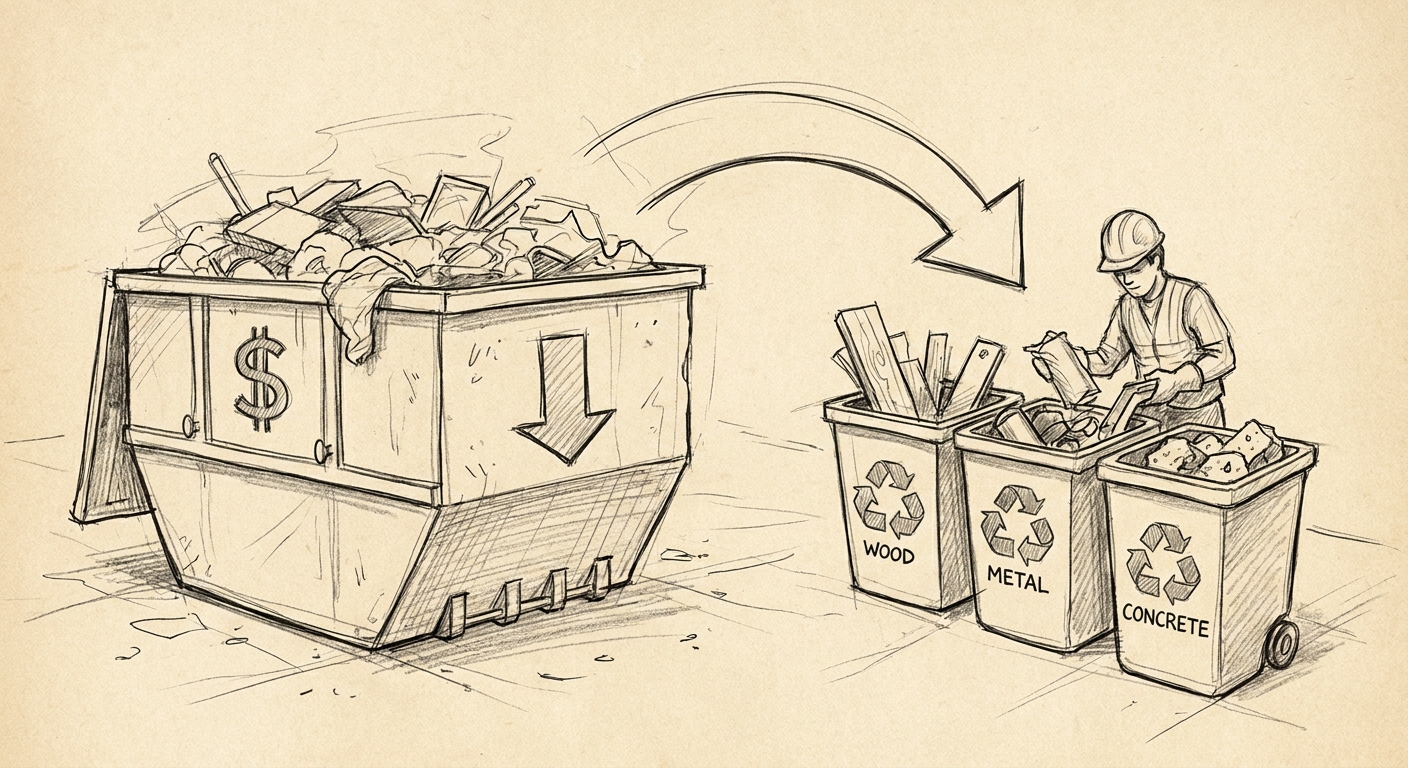
Sort your loads by material before the container leaves the yard and you cut disposal cost more than any other single move on a Bay Area jobsite in 2026. Mixed construction and demolition (C&D) debris hauls heavier, fills faster, and triggers overage fees that sorted loads avoid entirely.
- Cutting construction waste disposal costs in 2026 starts with sorting loads by material before pickup, not after.
- Mixed C&D loads run heavier than sorted concrete, wood, or metal loads and trigger more overage fees.
- Valley Services owns its own San Jose transfer station, which controls sorting and scheduling on the back end.
- Overage fees, not the container rental itself, are the biggest avoidable cost on most 2026 jobsites.
- Right-sizing the container to the work phase beats swapping a bigger container mid-project.
Why This Matters
A roll-off container invoice has two parts: the rental and the disposal weight. Contractors who watch only the first number get surprised by the second. Overage fees, extra pickups, and mixed-load surcharges account for most of the cost overruns Valley Services sees on Bay Area jobsites in 2026, not the base container rental itself.
A blue steel roll-off container that leaves the site loaded with concrete, wood, drywall, and cardboard all mixed together weighs more per yard than the same container loaded with sorted material. Haulers price by weight past a threshold, so mixed loads cost more even when the volume looks identical on the truck.
What You'll Need
- A rough breakdown of your debris by material: wood, concrete or masonry, metal, cardboard, mixed C&D
- The right container size for the current phase of work, not the whole project, from an 8-yard unit up to a 40-yard unit
- A pickup schedule tied to your production rate, not a flat weekly swap regardless of fill level
- A clear, level loading zone with straight-truck or trailer access for delivery and pickup
- A hauler who can tell you where the load actually goes after it leaves your site
The Steps
1. Pull heavy material out of the mixed pile first
Concrete, brick, dirt, and tile weigh more per cubic yard than almost anything else on a demo site. A single container loaded mostly with concrete can hit weight limits well before it looks full. Set aside a dedicated container for masonry and dirt whenever a job generates more than a pallet's worth. Expected outcome: your general debris container runs lighter, fills more predictably, and avoids the weight penalty that drives most overage billing. Loading correctly also matters here: see how to load a dumpster safely and avoid overage fees for load-height and distribution rules that keep a load under the line.
Common mistake: crews toss concrete rubble on top of a half-full mixed container because it's convenient. That single load can push the whole container over its weight allowance.
2. Separate metal before it goes in with everything else
Rebar, conduit, wiring, HVAC ductwork, and structural steel scrap add up fast on renovation and demolition jobs. A container dedicated to metal cuts the weight out of your general debris load and simplifies billing on the metal side. On multi-week jobs, a small container parked next to the main unit for scrap metal pays for itself in avoided overage on the main container. Review scrap metal container rental for contractors for how to set this up on an active site.
Common mistake: letting scrap metal sit mixed in with drywall and lumber until the container is nearly full, then trying to sort it out at pickup. Sort as you go, not at the end.
3. Right-size the container to the current phase
A 40-yard container makes sense for a full structural tear-off. It's overkill and inefficient for a kitchen gut where a 20-yard unit clears the debris in one load. Sizing to the actual phase, rather than renting one large container for the entire job, keeps you from paying for capacity you don't use and keeps loads under weight thresholds you'd otherwise hit with a single oversized unit doing everything.
Common mistake: ordering the biggest container available to avoid a second call. Bigger containers still bill by weight, so oversizing doesn't protect you from overage, it just costs more upfront in yard space and delivery logistics.
4. Schedule pickup before the container is full, not after
A container loaded above the fill line by even a few inches gets flagged, and drivers won't haul an overloaded unit for safety reasons. That means a delayed pickup, a second trip, and standby cost on your crew while they wait for a resolution. Set a swap schedule based on your fill rate for the week, not a generic calendar date. See how to schedule a dumpster delivery and pickup if your production rate is inconsistent week to week.
Common mistake: waiting until the container is visibly overflowing to call for a swap. By then you've lost the loading window and added a rush fee to the mix.
5. Consolidate site services under one vendor and one schedule
Coordinating a container hauler, a restroom vendor, and a fencing company separately means three delivery windows, three pickup calls, and three points of failure if any one of them slips. Running containers, restrooms, and fencing through a single site services vendor cuts the coordination overhead that eats crew time on multi-service jobsites.
6. Route loads to a hauler who owns the endpoint
Most container rental companies broker disposal to a third-party facility they don't control. That adds a layer of scheduling risk and cost that shows up on your invoice as delay fees or higher per-load rates. Valley Services owns and operates its own C&D transfer station in San Jose, which means the container hauler and the disposal endpoint are the same operation. That single point of control is why Valley Services can hold a schedule that a broker-model hauler often can't.
7. Track loads against budget weekly, not at project close
Reviewing your container weight tickets and pickup count every week catches a cost problem while you can still fix it. Reviewing it after the job wraps only tells you what went wrong, too late to change it. If you're estimating for a full remodel, run the numbers before the first container lands: see how to estimate dumpster rental costs for a remodel.
Talk through your jobsite before the first container lands
One call covers containers, restrooms, and fencing for the same site.
Troubleshooting
The container filled faster than expected mid-week. Call ahead for an early swap instead of piling debris above the rim. A driver can't legally haul an overloaded unit, so an early call beats a refused pickup.
A load got flagged as mixed at drop-off. Sort at load-in going forward, not at the container. A second small container for metal or masonry solves this within a day.
An overage fee came in higher than expected. Ask for the weight ticket and compare it against what actually went into the container that trip. Mixed concrete or wet debris is almost always the cause.
Production stalled waiting on a swap. Move to a standing pickup schedule tied to your weekly production rate instead of calling reactively when the container looks full.
Multiple vendors are billing separately for containers, restrooms, and fencing on the same site. Consolidate under one site services vendor so scheduling gaps between three companies stop costing you crew hours.
Tools And Resources
- A weekly debris breakdown sheet by material category
- A fill-rate log tied to your project schedule, updated by the site super
- A single point of contact with your hauler for delivery, swap, and pickup calls
- Valley Services, 1611 S 7th St, San Jose, CA 95112, (408) 297-5404
What To Do Next
If you're still working from a rough guess on total disposal cost for the project, stop and run the estimate now while you can still adjust container size and schedule. Get the full breakdown in how to estimate dumpster rental costs for a remodel before you commit to a container count for the job.
FAQ
What's the fastest way to cut construction waste disposal costs?
Sort heavy material like concrete and metal out of the mixed debris pile before it goes in the container. Mixed loads weigh more and trigger overage fees; sorted loads stay under weight thresholds more consistently in 2026.
Does container size affect disposal cost more than sorting?
Sorting matters more. A large container loaded with mixed heavy debris still bills by weight, so oversizing doesn't prevent overage charges, it just adds unnecessary rental capacity.
How much does an overage fee usually add to a container bill?
Overage fees vary by hauler and load weight, so check current terms directly with your provider. The way to avoid the fee is sorting heavy material and scheduling pickup before the container exceeds its fill line.
Is it worth renting a separate container for scrap metal?
On jobs generating regular metal scrap, yes. A dedicated metal container pulls weight out of the general debris load, which reduces the odds of hitting an overage threshold on the main container.
Why does a hauler that owns its own transfer station matter for cost control?
A hauler that owns the disposal endpoint controls both the container schedule and the drop-off schedule. Valley Services operates its own C&D transfer station in San Jose, which removes the broker layer that adds delay and cost for other haulers.
How often should I schedule a container swap on an active jobsite?
Base the swap schedule on your weekly production rate, not a fixed calendar date. A container that's swapped before it's full avoids rush fees and keeps crews from standing idle waiting on pickup.
Can combining containers, restrooms, and fencing under one vendor lower cost?
It lowers coordination cost, which shows up as fewer scheduling conflicts and less crew time spent managing multiple vendors. Valley Services runs all three site service lines from one San Jose yard.
What's the biggest mistake contractors make with disposal budgeting?
Reviewing weight tickets and pickup counts only at project close. Checking them weekly catches a cost problem while there's still time to change container size or sorting practice on the job.
One Last Thing
The single biggest lever most contractors overlook isn't container size or pickup frequency, it's the sequence of the sort. Pulling concrete and metal out of the pile before the general debris container fills does more for the final invoice than any scheduling trick, because weight, not volume, drives most disposal billing in 2026.
Valley Services has run containers, restrooms, and fencing out of the same San Jose yard since 1986, third generation, same family. Call (408) 297-5404 or visit valleyservices.biz to talk through sorting and scheduling for your next job before the first container lands.